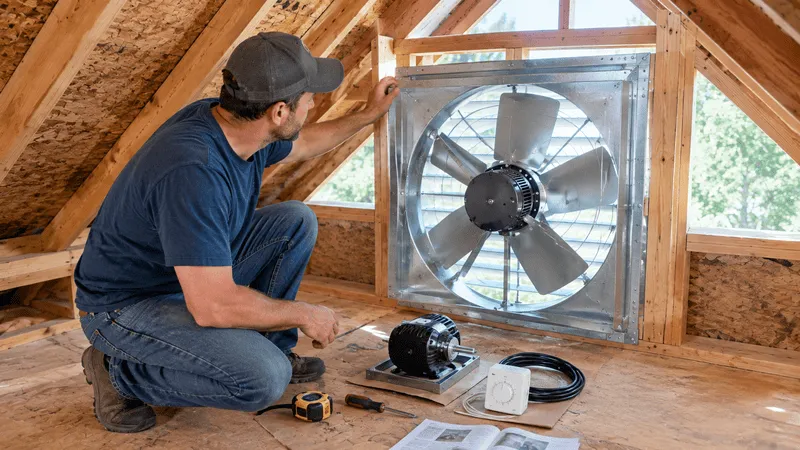
When your attic fan suddenly stops working or squeaks or rattles, it can be frustrating, particularly during hot weather. A small vindsfläkt repair can fix the issue before replacing the entire unit.
If some basic attic fan troubleshooting does not resolve the problem, consider replacing your old unit with a new high-efficiency wall mount vent fan. But many times, the gavelfläkt på vinden can be repaired by testing its power supply, cleaning moving parts, or tightening loose hardware. Let’s explore how you can fix an attic fan.
How to Fix Attic Fan That Is Not Working
Do not assume that the motor has failed if an attic fan stops operating. Focus on the easiest and gradually progress to more complicated checks. This method will allow you to diagnose the problem without replacing a part that is functioning correctly.
Kontrollera strömförsörjningen först
Always check if the attic vent fan is getting electricity first. Check that the fan is plugged into a wall switch, thermostat, or controller and that the control is switched on and set properly. Also, check that the relevant circuit breaker is on.
Shut off the power before working with electrical parts. Use a voltage tester to check that the wires are de-energized before working near the electrical connections, as per the reference guide.
If you’re not comfortable testing electrical connections and attic fan troubleshooting, stop at this point and get a qualified electrician to examine the fan.
Rekommenderas för ditt projekt
Check Blades and Moving Parts
If the fan is on but not spinning, check for obstructions in front of the blades. The gable ventil fläkt may fail to function properly due to dust, debris, and/or a loose component.
Once the power is off, see if the blades rotate easily. Also check if the blade is rubbing on the housing. If a fan starts slowly, tries to turn, and makes a scraping noise, it doesn’t necessarily mean it’s just a power problem.
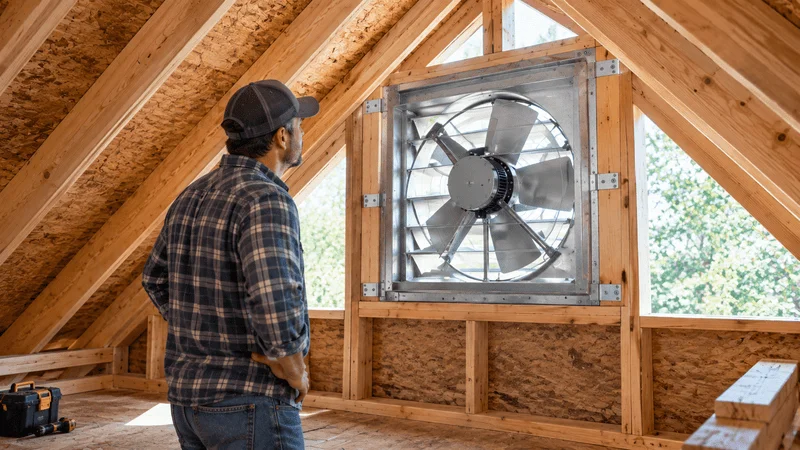
Verify the Thermostat/Controller
Övrigt attic fans have an automatic thermostat or controller. If the fan fails to operate even though the attic is hot, it may be due to the controller failing to operate properly.
Adjust and test settings and connections in accordance with the instructions of the fan manufacturer. If the fan operates when the controller is shorted out or manually turned on, the controller may require maintenance rather than the fan motor.
How Can I Tell If the Attic Fan Motor Needs Repair?
Even after the motor gets energized, if the attic vent fan not working, it means the motor may be defective; or, if it does start, it may be running too slowly, overheating or making strange mechanical noises; the motor might need to be repaired or replaced. If the attic fan starts and stops repeatedly, this may also be a motor or control issue.
Do not presume that all noisy or slow fans have a broken motor. Similar symptoms can be caused by cleaning, loose parts, or limited movement.
| Problem | Möjlig orsak | Vad ska man kontrollera |
| Fan won’t start | Power or controller issue | Breaker, switch, thermostat |
| Fan runs slowly | Dirt or motor problem | Blades and moving parts |
| Pipande | Moving component | Mekaniska delar |
| Skramlande | Lös hårdvara | Screws and mounting |
Watch the video demo of gable exhaust fans:
@dwscustoms badrumsfläkt med ljuseffekt #avgasfläkt #badrum #ledljus #vevor #kingscoot21 #dwscustoms #fyp
♬ originalljud – King Scoot
Typical Attic Fan Issues and How to Fix Them
To fix attic fan problems like a rattling sound or running slowly, follow these attic fan repair steps:
1. Fix a loud attic fan
Loose screws, dirty blades, and worn motor bearings can all cause noisy attic fans. Turn off the circuit breaker before inspecting the fan, and verify power is off. Wipe off dust and debris from the blades and tighten loose mounting screws and brackets.
If the motor bearings need lubrication, use only the lubricant recommended by the manufacturer’s manual. If grinding or squealing persists, call a professional to check or replace the motor.
2. Fix if Attic Fan Running Slow
Slow operation may be caused by dirty blades , obstructions or a failing motor. Disconnect power and wipe blades with a soft brush or cloth. Check to see if the blades are rubbing on the housing, or if they appear damaged.
Check the thermostat setting. If the fan still runs slow or overheats, have the motor checked by qualified service personnel.
3. Fix the attic fan that rattles
Rattling is generally attributed to loose hardware, debris or damaged blades. Power down, clean accessible parts and tighten loose fasteners as per the manufacturer’s instructions. Look for obvious damage to blades and mounting brackets. If fan vibration persists, discontinue use until the problem is diagnosed.
Säkerhetstips: Do not work on live electrical components, or keep restarting a fan that is overheating or tripping the circuit breaker.
When Should You Repair or Replace an Attic Fan?
If the fault is in a replaceable part (e.g., loose mounting parts, build-up of dust, etc.), it may be more cost-effective to repair the fan instead of trying to fix attic fan. Replacement is more desirable if the motor continues to overheat, the frånluftsfläkt is experiencing ongoing problems or multiple parts are worn.
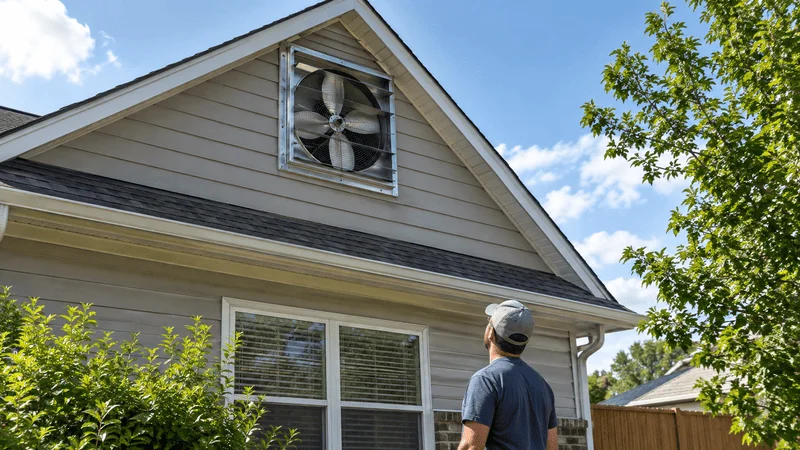
When Should You Replace an Attic Fan That Is Making Noise?
Noise alone doesn’t automatically mean that the fan needs to be replaced. Figure out what is making the noise. It is simpler and cheaper to fix a loose screw than a broken motor.
Om VEVOR vindsfläkt is making loud noises but they can be fixed with simple repairs, if there is significant mechanical wear on the fan, or if repairs are necessary often to keep the fan running, replacement is reasonable. When there is damage to the housing, blades or motor, the cost of replacing the unit may be more practical than replacing individual parts.
Consider the size of the attic, airflow needs, available power, and the installationsprocessen when selecting an appropriate replacement. The reference guide stresses the importance of providing the right amount of fans for a given attic size and sufficient intake ventilation to give the frånluftsfläkt a good airflow path.
Is Replacing an Attic Fan Motor a DIY Job?
The challenge will vary depending on the fan design and replacement motor. An experienced do-it-yourselfer can replace a mechanically compatible motor, but electrical connections add risk.
When wiring needs to be installed, new wiring, unrecognized electrical connections, or changes to the existing circuit occur, it is best to choose a qualified electrician. The reference also advises professional assistance in case you are not confident about the fan wiring.
If homeowners determine that the existing unit is irreparable, then VEVOR’s attic ventilation equipment comes in various configurations, and it is advisable to compare the sizes of the various fans, airflow, controls, and installation requirements prior to the purchase of a replacement unit.
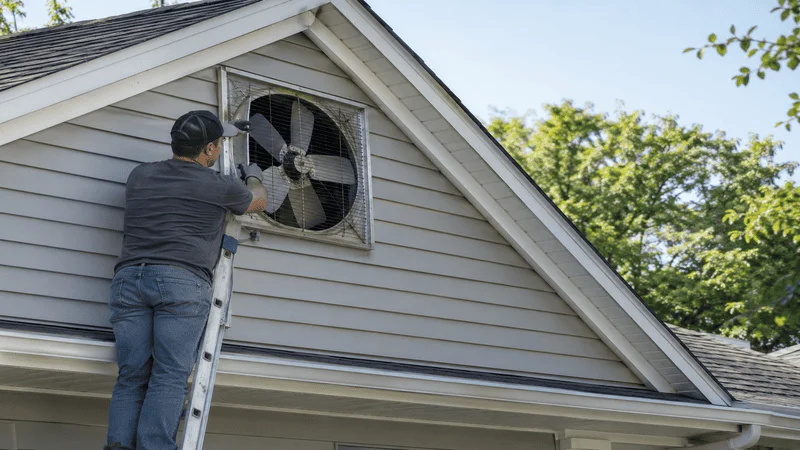
How to Maintain an Attic Fan and Prevent Future Repairs
Switch the power off and check the fan on a regular basis. Ensure that accessible blades and shutters of exhaust fans are cleaned; check mounting screws, if any, and inspect for visible wiring damage. Notice any variations in noise or airflow when the attic vent fan not working.
If you maintain the electrical wiring regularly, you can spot minor issues before they become major repairs. Dust and debris can damage moving parts and loose hardware can cause vibration and noise.
Once a year, the manual suggests inspecting blades and shutters, screws and wiring.
It’s also important to have good airflow around the fan. An frånluftsfläkt must have adequate intake ventilation; otherwise, it may not perform well and won’t cool the living space.
Sammanfattning
Det första steget in vindsfläkt repair is to determine the cause of the problem, rather than replacing the fan itself. Inspect the power, controller, mounting hardware and motor symptoms in that order. Sometimes a dirty, loose hardware, or other simple issues can be repaired, but sometimes the motor or mechanical damage can be too serious to warrant replacement.
You can also detect unusual noises, worn items and airflow problems and then do attic fan repair as described above before they create larger problems with attic fan maintenance. Order your VEVOR hybrid attic fan i dag!
Vanliga frågor
What are the signs of an Attic Fan Motor that needs repair?
If the fan operates with power but fails to start, runs slowly, becomes hot, or stops and starts, the motor may need attention. Eliminate the most obvious causes like a clogged blade, loose hardware or a controller issue.
How to fix attic fan that makes squeaking noises?
Shut off the power and take a look at the blades, mounting parts, and other easily accessible moving parts. Remove loose debris and fix any major looseness. If the noise persists, the motor or other internal parts might require expert checking.
How do I know if my attic fan needs replacing?
Your attic fan should be replaced if it is making grinding or squealing noises, not turning on, blowing hot air or tripping your circuit breaker, or making your attic too hot and sweaty.
When should I replace an attic fan that is making noise?
Change it if noise is due to serious motor or mechanical deterioration or if repeated repairs do not resolve the issue. A squeak/rattle can be caused by a worn part, and only a cleaning, tightening or replacement is necessary.