When the attic temperature is too high, it causes energy loss through heat loss, mold growth, and internal roof shingle damage. This is why a hot attic is noisy in one sense. Installing a gable attic fan is among the few DIY projects a competent DIYer can complete in a weekend with a power drill, a jigsaw, and a ladder.
Let’s explore gable attic fan installation, from choosing the right size unit to sealing it, helping you select the best gable mount attic fans and successfully install them.
What Should I Consider When Installing an Attic Fan?
The size determines if the attic fan will do its job, and if you want to learn how to install an attic gable fan, you should choose according to the square footage; a 14-inch shutter exhaust fan with a smart programming controller is advisable for smaller attics, sheds, and garages.
Odporúčané pre váš projekt
Attic Size and Airflow
Compare the CFM rating of the fan to the square footage of your attic. A good rule of thumb is 1 CFM per square foot, meaning a 1,500-square-foot attic needs a 1,500-CFM fan. A 10- or 12-inch model is right for smaller rooms, while a 16-inch can cool bigger attics. Below are the larger models.
| Modelka | Airflow | Motor and Controls |
| 36-inch shutter fan | 11,000 CFM | AC motor, heavy-duty steel |
| 30-inch shutter fan | 6,900 CFM | AC motor, heavy-duty steel |
| 20-inch smart fan | 4,800 CFM | EC motor, variable speed, timer |
| 24-inch speed controller fan | 3,320 CFM | AC motor, speed controller |
| 20-inch wall-mount fan | 3,000 CFM | Wall mount, heavy-duty steel |
| 24-inch smart fan | 2,900 CFM | EC motor, variable speed, timer |
Enough Intake
Make sure there are enough intake vents for the exhaust fan, such as soffit or low gable vents; otherwise, the fan will suck conditioned air out of the house. Resolve this issue before learning how to install attic fan gable, because a well-functioning fan requires free-flowing air within an attic space.
Výkon
Confirm the power source and cable run before drilling any holes. Speed controller models or those with smart programming are preferable to manual switches because they allow temperature and time settings.
How To Install an Attic Gable Fan?
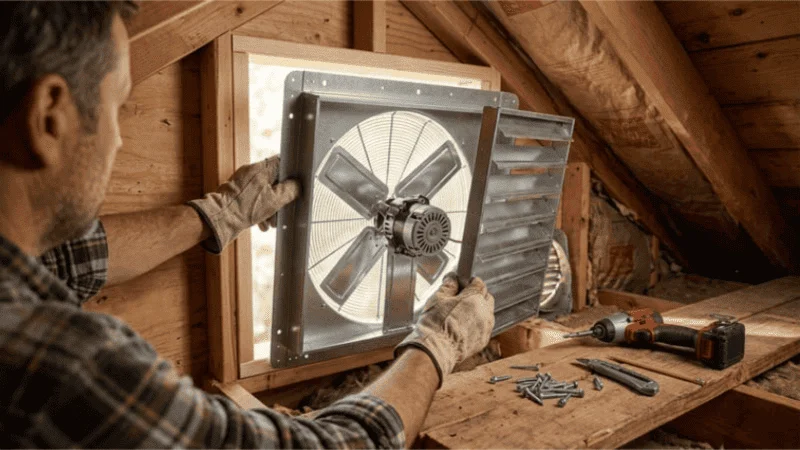
If you can handle a ladder, jigsaw and a few wires, you can install a gable attic fan. The four-step process outlined here will walk you through how to install gable attic fans safely. Be sure to have the manual out or follow VEVOR’s shutter exhaust fan installation steps while you gather your drill, jigsaw, level, measuring tape, caulk, sealant, wire nuts, and safety equipment.
VEVOR also has gable attic fan installation demo videos; for example, check the exhaust fan with shutter step-by-step guide:
@vencedor707 Respuesta a @Moises Jaimes521
♬ originál sonido – Vencedor 707
Step 1: Mark and Cut the Opening
Choose a high spot on the gable wall that is free of any overhead obstructions, such as a rafter or electrical wiring, after double-checking with a ladder and looking from inside the attic.
Sketch a template of the fan, drill a pilot hole, and use a jigsaw to make the cut along the template. The old saying goes that you should measure twice before cutting, and this step shapes the whole gable exhaust fan installation.
Step 2: Mount the Fan
Position the fan into the cutout, ensuring that it is level, and fasten it to the top framing. For instance, a 20-inch wall-mount attic fan with variable speed control mounting requires the same approach as the smaller attic fan above, except that it is mounted near the edge. That is how to install attic gable fan units of all sizes: by making sure everything is level and secure before using a caulking gun to seal the edges.
Step 3: Wire the Controller
Turn off the breaker and test the wires with a voltmeter to ensure they’re dead. Connect the controller and match the wires by color. The VEVOR 24-inch fan with the speed controller is a perfect choice to install; if you’re not confident in your wiring skills, consider hiring an electrician to do the job of how to install a gable attic fan.
Step 4: Caulk and Test
Caulk around the perimeter of the exterior frame so that pests and water cannot get inside. Restore the power, set your desired temperature and check if it’s sufficient to start the rotation smoothly and not make any rattling sounds.
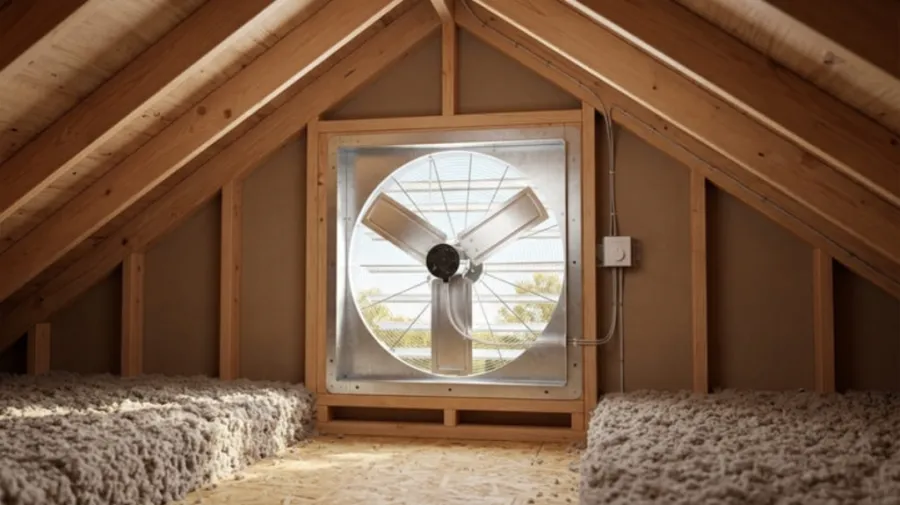
Gable attic fan installed view in a home
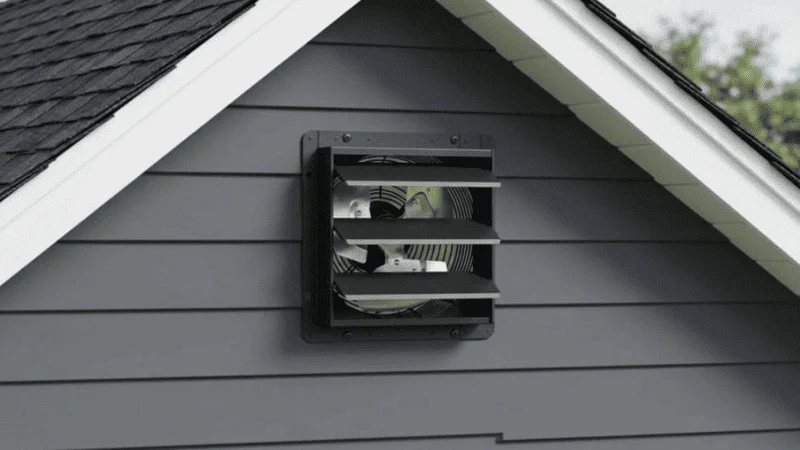
What Are the Benefits of Installing a Gable Vent Fan?
VEVOR attic gable vent fan is ideal for removing hot, humid air from the attic and bringing in cooler air through the intake vents. There are three main benefits of installing a gable attic fan.
Nižšie náklady na chladenie
The attic’s hot air escapes through the eaves, transferring into the living area, making your air conditioning work harder. Removing it by venting will reduce the run time of your AC. Especially in a hot climate, having your attic fan can be cost-effective in the long term. This 24-inch attic fan with variable speed and timer will only run when the temperature in your attic requires it.
Less Moisture and Mold
Air that is full of moisture and stuck in the attic will escape through the rafters, keeping the wood and insulation from getting wet. It minimizes the risk of mold developing in the critical parts of the house. In areas where the climate is very humid, it ensures that the insulation does not get damp within a few seasons.
A Longer-Lasting Roof
The lifespan of the attic may be shortened by insulation, particularly in extremely hot weather. The roof tiles can blister from the heat, and the insulation will be compromised.
How Do I Install a Thermostatic Attic Fan Safely?
The two main safety concerns when venting are live electrical wires and the height of the ladder, so take your time nailing these steps to avoid any mishaps.
Turn off the power at the breaker and test the wire connections before working on them. Set your ladder on a stable surface and protect your hands and eyes.
Keep the power cords away from where you’ve placed the blades. If a thermostat-controlled attic fan is your choice, test the controller as shutter fan setup guide explains before boxing it up, and set it to a lower temperature; after a couple of days, see for yourself the fan’s running frequency and change the settings.
This is how to install an attic gable fan is also essential if you plan to install gable attic fan units.
zhrnutie
The gable attic fan’s installation mainly focuses on how to choose the correct size, have enough intake vents, wire the controller safely, and weatherproof it well. Now you know how to install gable attic fan from scratch and how to install gable attic fan models of all sizes; head over to our gable mount attic fan range and choose the one that suits your needs.
Často kladené otázky
How Do I Install a Gable Vent in My Roof?
A gable vent is installed on the gable wall, not the roof because a roof vent is a different product. Ensure you’ve marked the top edge of the opening and cut a hole in the upper part of the wall. Then, attach the framing for the gable vent to the wall and make the installation secure. A bigger opening is necessary if you want to install a 24-inch shutter fan with a speed controller. The layout is similar to installing any other gable exhaust fan.
Can I Install Gable Vents and Exhaust Fans Together for Better Attic Ventilation?
You can install gable attic fan and vents on either side of the attic, creating a natural airflow across the top of the house. This way, you can avoid placing the intake vents alongside the fan. It’s essential to make this decision and mark the spots for both openings before venting day. If you’re wondering how to install attic gable fan, this is a handy guide to help.
Can I Install Attic Vents Myself, and What Tools Do I Need?
You can do it yourself since many homeowners have the skills of how to install attic gable fan. The main tools needed for this project are a drill, jigsaw, level, and caulk gun, plus a ladder. If you’re thinking about roof vents, they require a different type of work, as you have to work on the shingles. If height is a concern, it’s probably best to leave it to the professionals.
What Are the Best Practices for Installing and Maintaining Attic and Window Fans?
Ensure the fans are the correct size, the intakes are not blocked, and everything is well-sealed. Perform some maintenance procedures such as cleaning the blades and shutters, checking the screws, and inspecting the wiring yearly. The window fans should rotate in the same direction as the attic ones and not in the opposite.