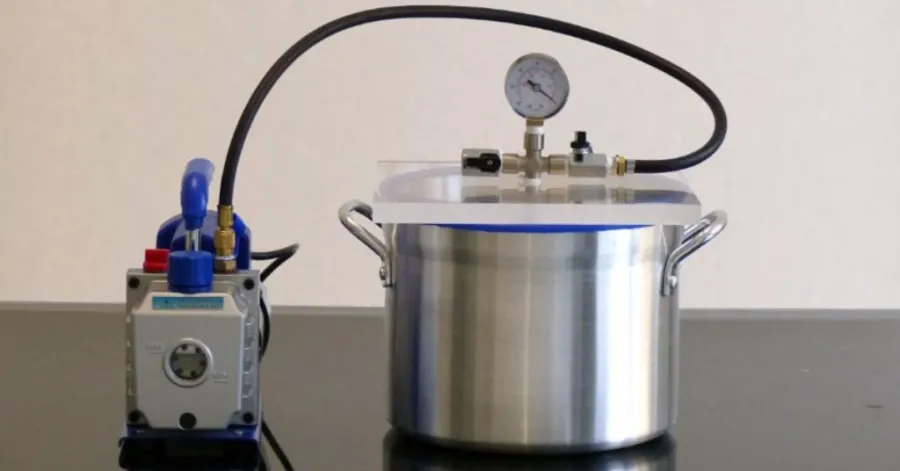
Selecting an appropriate type of Pompă de vid for degassing is crucial to achieving high-quality, bubble-free results in resin casting, silicone molding, laboratory work, and the manufacturing of industrial products. This is because the right pump enhances efficiency, reduces processing time, and helps produce stronger, smoother finished products. The choice of the appropriate model is, however, not always easy, since vacuum depth, pumping speed, chamber size, and material type can all influence performance. This guide how to choose a vacuum pump for degassing explains the most significant factors to consider, the types of pumps, and their most common uses. You can make a sure choice by buying the appropriate equipment to fit your specific degassing needs with the right information.
Cuprins
Understand Your Degassing Requirements
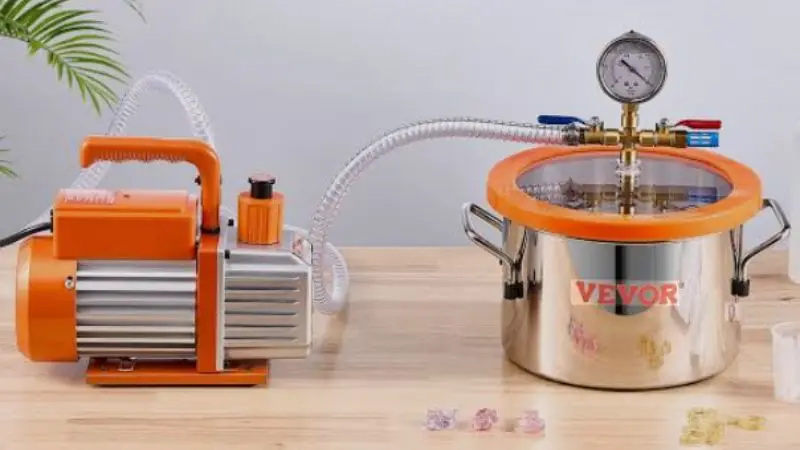
Each degassing task has varying vacuum requirements based on the material, production volume, and required vacuum level. It is much easier to select the correct equipment once you know what you are processing and the level of dirt or the vacuum depth you need. These are the steps to follow before you learn how to choose a Pompă de vid for degassing: The first step is to identify your use case. This can assist you in choosing a pump that delivers good performance, conserves materials, and enhances the quality of the end product.
Recomandat pentru proiectul dvs
Choose the Right Pump for Resin and Epoxy Degassing
During the process of combining epoxy and resin, air bubbles often become trapped in the mixture, diminishing the strength and appearance of the final product. An epoxy resin Pompă de vid is used to degas the resin before it solidifies to create a smooth, transparent, and solid finish. A single-stage or two-stage rotary vane pump is often suitable for small hobby or workshop projects, but commercial production typically requires higher pumping speeds to process larger batches simultaneously. The right vacuum pump for degassing also reduces processing time, enhances uniformity, and prevents deformities that may compromise the strength and appearance of the end product.
@ashtonbrown007 Set pompă de vid și manometru Vevor #VEVOR #PompăDeVid #InstrumenteHVAC #ReparațiiRefrigerare #PictogrameCreator
♬ sunet original - AshtonBrown007
Select the Best Pump for Silicone Rubber Degassing
Silicone rubber does not act as most other materials when subjected to vacuum processing. The silicone quickly expands as vacuum pressure increases and then contracts as air is trapped in its place. The vacuum chamber should be complemented by a Pompă de vid of silicone rubber degassing to allow this temporary expansion to safely take place. Even the tiniest air bubbles are eliminated by a pump capable of creating a deep, stable vacuum, resulting in smooth molds free of bubbles and high-quality castings. Ensuring good equipment also enhances efficiency in production and minimizes wastage of materials and unnecessary remakes that are very expensive.
Match the Pump to Laboratory and Industrial Applications
Chemicals, oils, adhesives, coatings, and specialty materials are also frequently processed in laboratories and manufacturing facilities, where vacuum conditions may vary. A vacuum degassing pump for use in laboratories must provide clean, reliable service and prevent contamination of delicate samples. Oil-free diaphragm pumps, dry scroll pumps, or rotary vane pumps can be the most appropriate. A chemical-degassing industrial Pompă de vid is designed to withstand continuous use and rigorous production processes, with adjustable vacuum levels. Similarly, a vacuum pump to degas composite materials can be used to remove the trapped air in composite resin, enhancing the structural strength, surface quality, and overall manufacturing consistency.
Diferite tipuri de pompe de vid
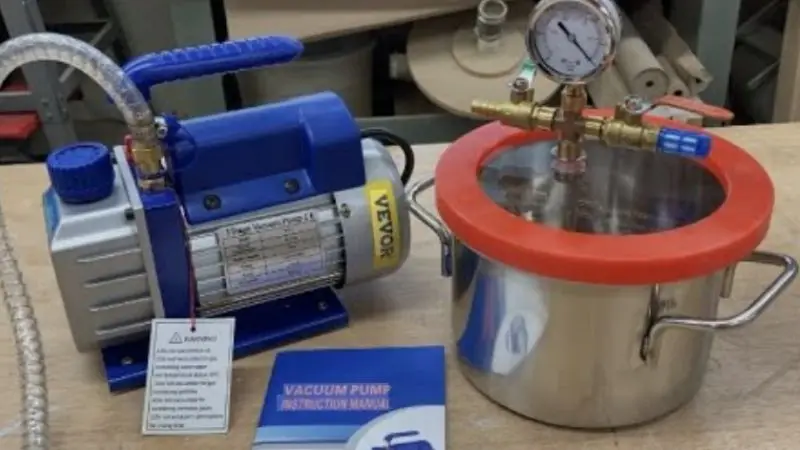
Există o varietate de Pompă de vid designs, and each works best for some form of degassing. The correct option depends on the required vacuum level, the material you are working with, and the equipment’s frequency of use. Given the variety of pump types, choosing a vacuum pump for degassing is easier and lets you pick a model that delivers consistent, efficient, and promising results.
Single-Stage Vacuum Pumps for Light-Duty Degassing
Pompe de vid monoetajate are a convenient option suitable for novices, hobbyists, and small workshops that undertake occasional degassing operations. They offer moderate vacuum rates, which are suitable for low-resin casting projects, silicone crafts, and other light-duty applications. A single-stage vacuum pump for degassing is typically inexpensive, easy to use, and requires minimal setup, making it a good choice for home use. It is not as effective as more advanced models at reaching the deepest vacuum, but it works well at stripping small batches of most of the entrained air bubbles at very low operating costs.
Two-Stage Vacuum Pumps for Professional Applications
Two-stage vacuum pumps are designed to achieve a greater depth of vacuum and provide more stable operation than single-stage types. They have common uses in professional resin casting, silicone mold production, composite manufacturing, and other processes that require complete air removal. A high-quality vacuum pump for epoxy resin degassing or a vacuum pump for silicone rubber degassing may have a two-stage design due to its ability to remove the tiniest air bubbles that may influence the end product. These pumps are also faster, more efficient, and more effective for businesses that are undertaking frequent or large-scale evacuations in terms of scale.
Oil-Free Vacuum Pumps for Clean and Sensitive Processes
When low maintenance and clean operation are of utmost importance, oil-free pompe de vid are the best choice. Because they do not require vacuum pump oil, they eliminate the risk of oil contamination and can be used in laboratories, food processing, pharmaceutical manufacturing, and other sensitive areas. A vacuum degassing laboratory pump will have a diaphragm that is commonly an oil-free, or dry-scroll, design to ensure sample purity and achieve dependable vacuum performance. Even though these pumps might not achieve the lowest achievable vacuum levels, they provide reliable operation, low maintenance, and a green solution for many clean-room and precision degassing applications.
Select the Right Pumping Speed for Your Work
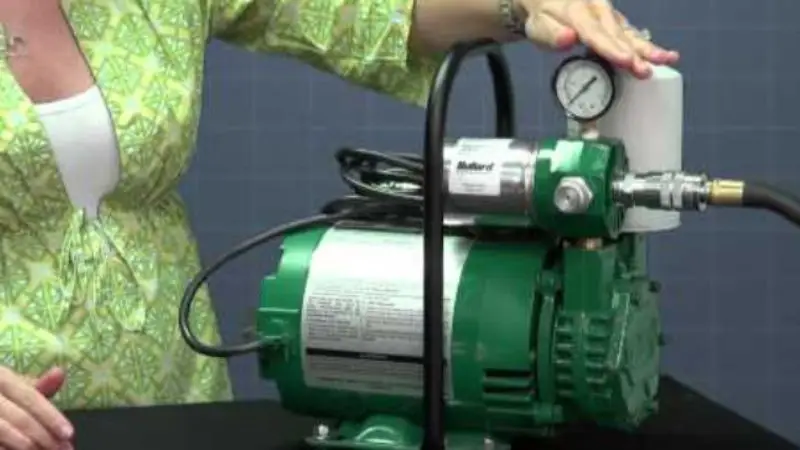
The speed of the pump dictates the rate at which a Pompă de vid withdraws air from the chamber and directly impacts efficiency and the time required to produce. It is usually measured in CFM (cubic feet per minute) or L/min (liters per minute). The proper pumping speed will help to get your materials degassed without wasting energy and incurring higher operating costs. Optimal speed varies with the size of your vacuum chamber and the amount of material you process per cycle.
Pumping Speed for Small Vacuum Chambers
Pumps between 2 and 4 CFM are effective for small vacuum chambers used in jewelry production, craft projects, model building, and resin casting. An appropriately sized Pompă de vid used to remove trapped air is energy-efficient. Large pumps can lead to high equipment costs without a considerable advantage for small batches. Regardless of whether you are dealing with resin or silicone, the right choice of pumping speed will help achieve smoother, bubble-free output and improve the overall quality of the final products, without wasting power.
Pumping Speed for Medium-Sized Degassing Projects
Larger molds, several parts, or frequent production batches are served by medium-vacuum chambers, with pumps in the range of 4 to 7 CFM. Evacuating air with these pumps is faster, reducing waiting time and improving workflow. When you deal regularly with epoxy, silicone, or composite materials, the speed of the pump you select can make a big difference in productivity. A composite material degassing Pompă de vid with adequate airflow is used to ensure removal of air bubbles, as well as to maintain the performance of the vacuum. Balancing pump capacity with chamber size also helps reduce equipment wear and supports quality production.
Pumping Speed for Large Industrial Vacuum Chambers
To remove vast amounts of air in a short period of time to sustain efficient production cycles, large industrial vacuum chambers need high-capacity pumps, which in most cases have a capacity of above 8 CFM. A chemical-degassing industrial Pompă de vid is designed to provide sustained performance in harsh manufacturing conditions where timely and dependable operation is required. Increased airflow will reduce evacuation time, will raise productivity, and will facilitate large-scale processing of chemicals, composites, adhesives, and specialty materials. To achieve consistent vacuum operation, it is necessary to select a pump with sufficient pumping speed, minimize downtime, and ensure the quality of each production batch.
Avoid Common Mistakes When Choosing a Vacuum Pump
Achiziționarea a Pompă de vid without considering what you will use it for may result in inefficient performance, increased operating expenses, and unpredictable degassing outcomes. Most customers are concerned with the price they will pay, but not with critical issues such as the vacuum depth, pump speed, maintenance, or even durability. Knowing these pitfalls will enable you to make a wiser investment and guarantee that your vacuum pump used to degass your food provides efficient, reliable operation over the coming years.
Focusing Only on the Lowest Price
The best option to save money is to choose the cheapest vacuum pump, which may save initially but can lead to poor performance and higher long-term costs. Inexpensive designs might not provide sufficient vacuum or airflow to achieve effective degassing, particularly in challenging environments. When choosing a vacuum pump for degassing, it is necessary to look beyond the price and consider its longevity, pumping efficiency, craftsmanship, and long-term dependability. A high-quality pump typically leads to higher productivity, less material waste, and less downtime, making it a more cost-effective long-term solution.
Choosing the Wrong Pump Capacity
One common pitfall is choosing a pump that lacks the required capacity to degas efficiently. A pump with a low CFM rating will be slower to clear air and may leave trapped bubbles in resin, silicone, or composite. Depending on whether you require a Vacuum pump to remove air from your epoxy resin or from your composite material, the airflow capacity of your pump must match the size of your vacuum chamber and production volume. Proper capacity selection enhances evacuation speed, yields more uniform outcomes, and minimizes unwarranted load on equipment during typical operation.
Forgetting About Long-Term Maintenance Costs
Most consumers are interested in the purchase price of a vacuum pump, not the cost of maintaining it. Changing oil regularly, changing filters, seals, and other service components are all part of the overall cost of ownership. Depending on the design and where it will be used, a vacuum degassing pump used in the laboratory might need different maintenance than a vacuum pump used in chemical degassing. Maintaining an existing pump before purchasing will help you estimate long-term maintenance costs, avoid unexpected repairs, and choose a pump that will perform reliably with minimal downtime and service.
Învelire
La selectarea optimului Pompă de vid for degassing, there is a need to balance performance, reliability, maintenance, and application requirements. You can enhance your production efficiency and have a consistently smooth, bubble-free result by choosing the right type of pump, the right pumping speed, and the right vacuum capacity. Do you need a vacuum pump to degas silicone rubber, a Vacuum degassing pump for laboratory use, or a Vacuum pump for composite material degassing? The trick is to fit the equipment to your requirements to be successful in the long term. An appropriate vacuum pump conserves energy, minimizes the cost of operation, and provides reliable operation in hobby and industry.
FAQ
Which type of vacuum pump should I use in the process of degassing?
Take into account your material, chamber size, vacuum depth, pumping speed, maintenance requirements, and production volume. Matching these factors guarantees efficient air removal and consistent degassing performance.
What vacuum pump is most suitable to use in order to degas epoxy resin?
An epoxy resin vacuum casting is achieved at a deep level in a two-stage rotary vane Vacuum pump, which is an efficient way to remove all the air bubbles in resin and achieve a strong, smooth, and professional level of quality resin castings.
Can silicone and resin be used with the same vacuum pump?
Yes. Most good vacuum pumps are capable of resin and silicone use, as long as they can provide the necessary depth of vacuum and pumping rate to be successful in removing the bubbles.
Can oil-free vacuum pumps be used in the laboratory?
Yes. A laboratory vacuum degassing pump is oil-free, minimizes contamination, requires less maintenance, and offers reliable operation for sensitive laboratory processes.
What is the significance of pump capacity regarding degassing?
Optimal pump capacity will result in increased evacuation speed, optimal air removal speed, a shorter processing duration, and uniform outcomes without excessively demanding the vacuum pump and chamber.