A betongslipeskive clogs and wears out fast when it does not match the job. Thin-set mortar left after tile removal is the classic case: the disc loads up with residue within minutes and stops cutting. Switching to a diamond concrete cutting wheel will not help, because cutting wheels make cuts rather than grind. This guide covers disc types, how to choose a diamond disc for concrete, what works on thin-set mortar, how to fit your grinder, and basic safety tips.
What Types of Concrete Grinding Discs Are Available?
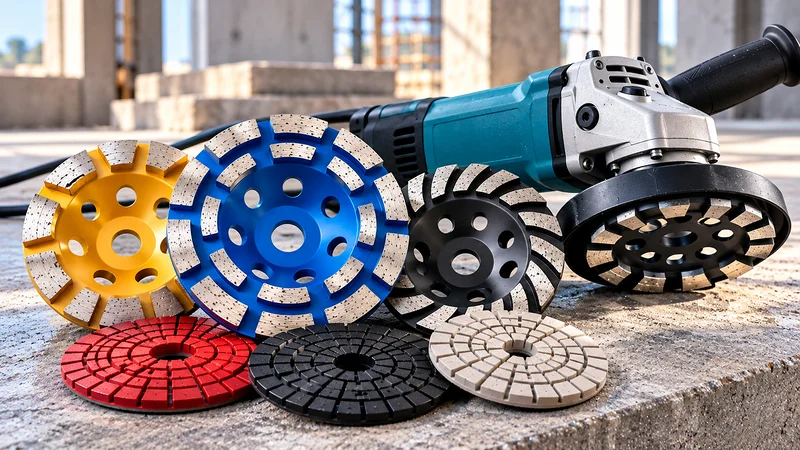
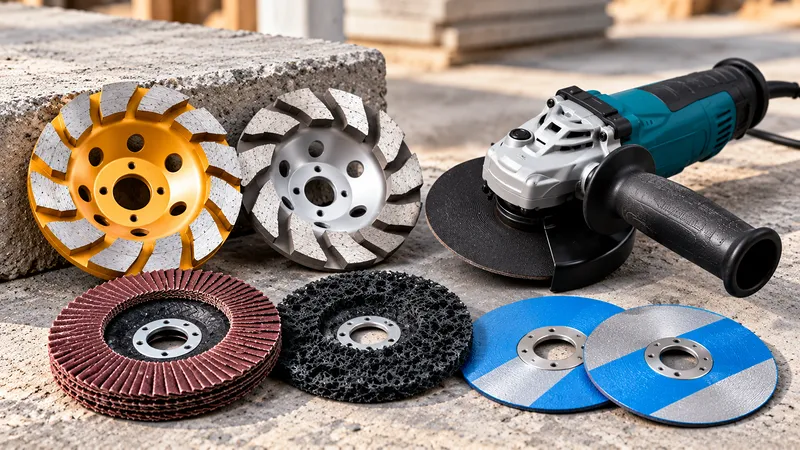
Most concrete grinding discs are diamond cup wheels, with diamond segments attached to the wheel periphery. The segment configuration determines the disc’s purpose. Turbo and double-row patterns flatten the concrete surface and remove its highs. The T-segment configuration suits edge grinding, corner grinding, and finishing because it minimizes vibration. Polycrystalline diamond wheels strip coatings, so they aren’t suitable for bare concrete.
| Skivetype | Best for | Se etter |
| Double row cup wheel | Leveling bare concrete and high spots | Not the best choice for soft coatings |
| Turbo cup wheel | Leveling and smoother grinding | Check the listing for wet or dry use |
| T-segment cup wheel | Edges, corners, and finishing | Slower on large open areas |
| PCD cup wheel | Epoxy, glue, and thin coatings | Not for bare concrete |
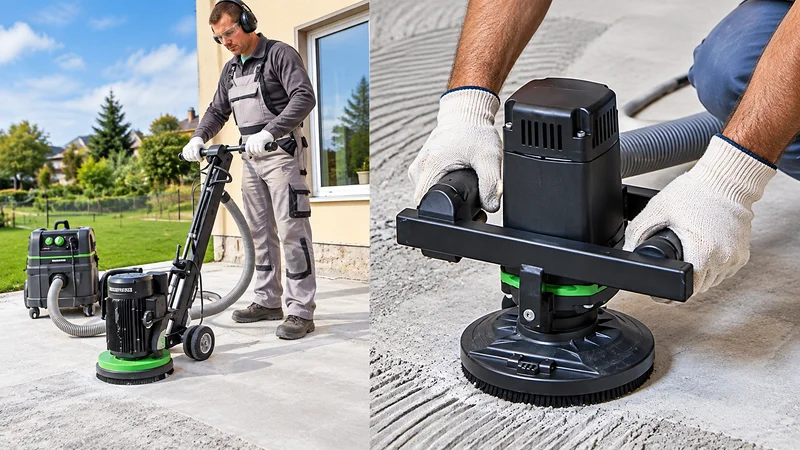
A floor machine is quite different. Concrete floor grinders are walk-behind machines that use concrete floor grinding discs that fit the plate size rather than threads, so the concrete grinder model determines the suitable disc. Coatings make the standard diamond wheel ineffective, as do glazing at low speeds and segment dulling. In any case, the wheel manufacturer’s specification sheet is the final word on which materials it is appropriate for.
Knowing what a grinding disc is not is also helpful. Grinding discs remove surface material, whereas masonry cutting wheels create through cuts. So, if your work requires cutting, use the cutting wheel; if it requires smoothing, leveling, or removing coatings, use the grinding disc.
How Do I Choose a Diamond Grinding Disc for Concrete?
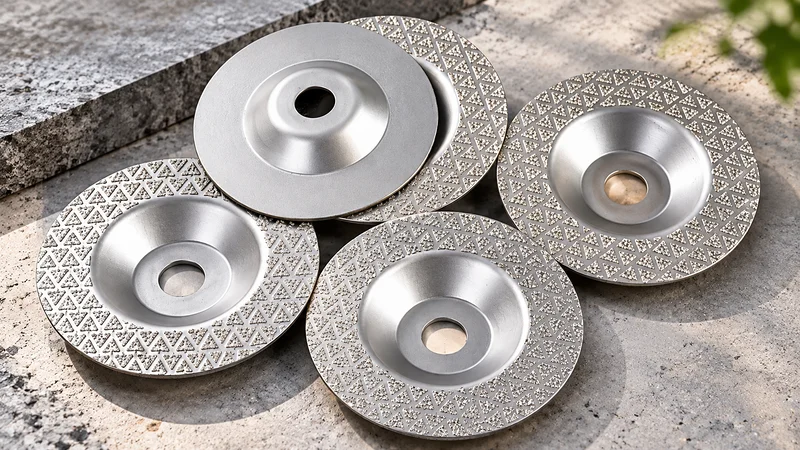
First, consider the task. Next, choose a disc based on size, arbor, and speed rating to fit your grinder. Grinding bare concrete requires either a double-row wheel or a turbo wheel; grinding edges requires a T-segment wheel; and grinding coated concrete requires a PCD.
Compare the disc’s highest RPM with your grinder’s highest speed, then decide whether you’ll work wet or dry. No single disc is the best disc for grinding concrete. The best one fits both the task and the tool, whether that is a handheld concrete grinder for edges or the 10-inch walk-behind grinder for open floor.
How Do I Check Whether a Diamond Grinding Disc Is Compatible With My Angle Grinder?
Check these four items before you mount the disc on your concrete grinder.
- Arbor size. Most cup wheels use 5/8″-11 threads, but some Bosch models have a 7/8″ bore, so confirm the bore for your specific model.
- Diameter. The disc diameter should match what your grinder and its guard allow, per the manual.
- Hastighet. A DEWALT 5 in double-row wheel is rated for 12,200 RPM, so a faster grinder won’t match.
- Mounting system. A matching thread alone doesn’t prove a wheel fits your angle grinder.
| Merke og modell | typen | Arbor and speed | Merknader |
| VEVOR 5 in cup wheel with dust shroud | Diamond grinding cup wheel | Arbor not listed | Sold with a universal shroud for 4-5 in angle grinders that connects to a vacuum cleaner |
| Bosch DCDR0502 | 5 in double row | 5/8″-11 arbor | 0.177 in segment height, made for concrete grinding |
| DEWALT DW4777 | 5 in double row | 5/8″-11 arbor, 12,200 RPM | Concrete, masonry, and stone; listed for dry grinding, with no wet-use statement |
| Milwaukee 49-93-7790 | 5 in turbo, 18 segments | 5/8″-11 arbor, 12,000 RPM | Listed for concrete grinding, leveling, and adhesive removal; one listing says wet and dry use |
VEVOR offers a kit with dust control, including a dust shroud and a 5 in diamond cup wheel that fits 4-5 concrete grinding discs for an angle grinder and works with vacuum cleaners. However, the listing doesn’t mention the product’s thread, so you must confirm compatibility before purchasing. The remaining wheels in the table are listed individually and do not include dust control.
Concrete Grinding Disc for Floor Grinder
The walk-behind machine will not have the same tooling as the hand-held grinder and will require its own tooling and dust setup. One machine is the 7-tommers 1.7 hk gulvsliper, which operates at 1720 RPM and is designed for dry operation, requiring an industrial vacuum.
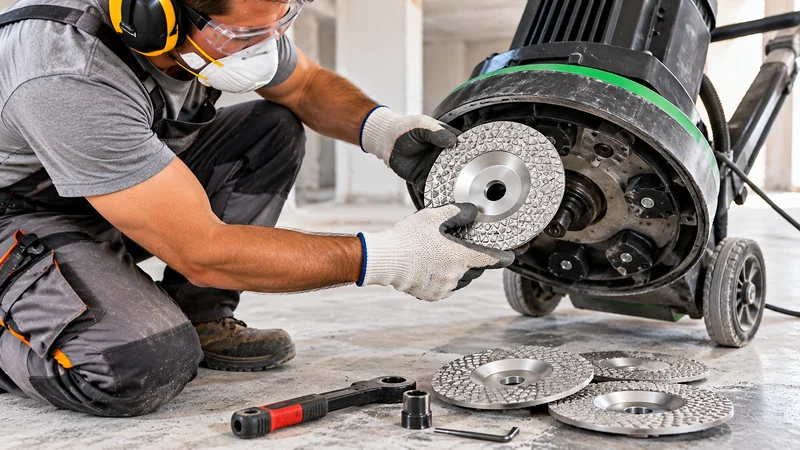
The floor grinder uses its own tooling and mounting system, not the thread cup wheels used on the hand-held machine. Speeds and mounting systems vary by machine, so choose the disc according to the manual, not the disc diameter. Comparing the machines will save time when choosing tooling, as explained in the Kjøpeguide for elektrisk betonggulvsliper.
Anbefalt for ditt prosjekt
Which Concrete Grinding Disc Works Best for Removing Thin-Set Tile Mortar?
A diamond cup wheel may help remove the thin-set that remains when removing tiles. One listing recommends a Milwaukee turbo wheel for adhesive and thin-set removal. However, the right concrete grinding disc depends on mortar thickness, concrete condition, and the grinder attachment. PCD wheels are designed for coatings and adhesives, not bare concrete, so only apply them to the coating you want to strip. Read the manufacturer’s instructions, and make sure that the wheel is compatible with your vinkelsliper før du begynner.
Using the correct wheel, work systematically and frequently evaluate your progress. Slow grinding can glaze the segments, so keep the wheel moving. Dry grinding creates a lot of dust quickly, so run the vacuum at all times. Soft or sticky residue can clog the wheel. If this happens, stop and unclog the wheel rather than pressing further, and stop if the tooling overheats.
You may need to strip thicker mortar mechanically before grinding finishes the job. A betongferner strips the thick mortar, while your concrete grinding disc thins it. The listing shows it has a vacuum port and an adjustable cutting depth of up to 1/8 in, so you need to connect the vacuum and set the depth correctly. It uses gasoline, so keep it outside during operation. Asbestos may be found in old glue underneath the tiles. Test the glue before you start grinding, as grinding asbestos is extremely dangerous. After you remove the mortar, you can choose garage floor tiles or epoxy .
What Safety Precautions Should I Follow When Using a Concrete Grinding Disc?
Dust is the biggest danger, since grinding concrete produces respirable crystalline silica that harms your lungs. OSHA recommends using a commercially produced shroud attached to a vacuum with a filter that captures 99 percent or more of respirable particles.
If you are working outdoors, you could add water to your process to reduce dust; however, remove slurry before it dries, and use a ground-fault circuit interrupter with electric equipment in a wet environment. A grinder with a port makes this task easier; the 1400W kvern has a 50 mm vacuum port and can be used only in dry conditions.
The same guidelines caution that the shroud and vacuum alone will not reduce exposure risk, and that you should include ventilation and a respirator as additional safeguards. Do not use compressed air to remove the dust from the site. Before starting the task, ensure the wheel’s rpm is compatible with the grinder’s rpm.
Wear appropriate safety gear, including goggles, a face shield, and a respirator, and read the manual for proper guard and hand positioning. Prepare the workspace by clearing tools and loose materials, and keep people and pets out while you grind. Replace the concrete grinding wheel when it no longer cuts effectively. When you finish, vacuum up the residue, as covered in how to clean a garage floor.
Konklusjon
For a concrete grinding disc to be effective, it should suit the task, fit your concrete grinder, and include dust management. Ensure that the size and RPM rating of the arbor are compatible with your tool. Read the manufacturer’s guidelines and test any new adhesive material used to mount the wheel before grinding.
Always wear safety equipment, and clean up afterward by vacuuming. Take your time the first time so the small area shows you what will happen to the whole floor. If you are choosing a machine too, a betongsliper with a vacuum port keeps the work cleaner.
Ofte Stilte Spørsmål
Which concrete grinding disc does a walk-behind floor grinder use?
The walk-behind floor grinder uses tooling made to match its plate and mounting configuration. Consult the manufacturer’s manual for the disc diameter and appropriate tooling, as a handheld cup wheel may not be compatible.
Can I use a diamond grinding disc for wet concrete?
It all depends on the disc. One disc for the wheel is for dry grinding only, while another wheel works for wet and dry grinding. Always read the label, and use a ground-fault circuit interrupter for wet grinding.
Is a concrete grinding disc the same as a cutting wheel?
No . A grinding wheel strips away a floor’s surface to make it flat, smooth, or stripped, while a cutting wheel makes through cuts.
How do I know a concrete grinding disc is worn out?
Glazing indicates either dull segments or a process that is moving too slowly. If the wheel does not remove material normally, change the disc.