בחירת הזכות tile cutter tool can make the work easier, faster, and more accurate. The type of tile and the type of cutting job will determine which equipment to choose, and selecting the right equipment involves more than price or looks. Different materials, such as ceramic, porcelain, glass, and natural stone, may have different cutting techniques. Another factor to consider is whether you are cutting straight or curved, or making small adjustments or holes for fixtures. Knowing what’s out there can help you choose the right tile-cutting tools for your job and prevent needless damage. For both novices and experts, from simple small home repairs to a big renovation project, understanding the key points can guide you in choosing the right cutter.
תוכן העניינים
What to Consider When Choosing a Tile Cutting Tool
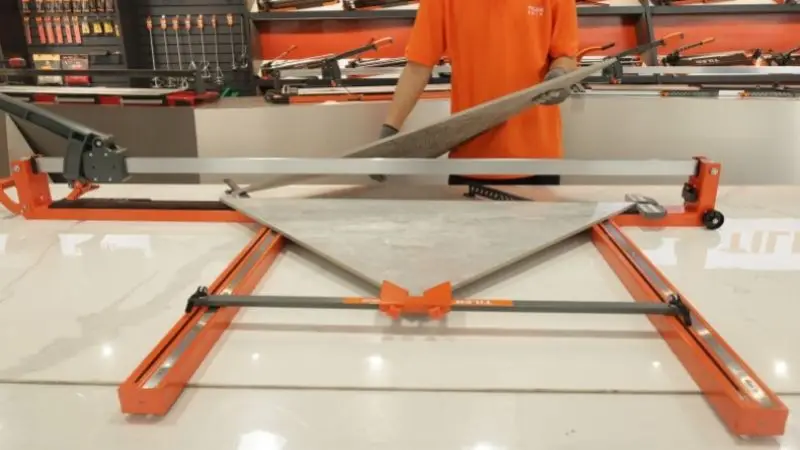
The type of cut isn’t the only factor you need to consider when it comes to בחירת הכלי הנכון. Results can vary based on the tile type, thickness, size, and project requirements.
Knowing this helps you choose the best tile-cutting tools for the job and prevent damage, waste, or difficult cuts.
מומלץ לפרויקט שלך
Choose a Tool for Your Tile Type
Firstly, verify the type of tile and the thickness. Porcelain tends to be harder and may need a more powerful cutting tool, whereas ceramic tiles tend to be easier to cut. You may need special equipment and appropriate blades for natural stone, glass, and thicker tiles. Tile thickness also affects the tool’s cutting ability and performance. If you are comparing כלי חיתוך אריחים, remember that the cutting tool should be created for the kind of tile that you are using. Using a tool that is compatible with the type of tile can result in cleaner cuts and minimise the risk of cracking or chipping the tile. Before beginning your project, consult the manufacturer’s recommendations if in doubt.
Choose a Tool for the Type of Cut
The cuts you make should also be a factor. Many מסורים רטובים are suitable for straight cuts, but curved and irregular cuts require more specialized equipment or manual cutting. Small adjustments can be made with a tile nipper, and curved shapes can be cut with an angle grinder fitted with the right diamond blade. If you have a hole around a pipe, faucet, or fixture, a diamond hole saw might be more apt. Choose the most suitable tile-cutting tools based on your project’s design. When choosing a saw, match the cut you need to make to make the job easier and produce a cleaner, more accurate result.
Consider Tile Size and Project Needs
Depending on the dimensions of your tile and the project you’re working on, either of these cutting tools may be most convenient. Different sizes of tile might be manoeuvrable using a manual cutting table, and the large format cutting table may need cutting machine equipment with higher cutting capacity and strong tile support. Keep in mind the number of tiles required to be cut, too. If you have a small bathroom job to do, or a project to work on here and there, a small tool might suffice. In the case of a larger flooring install or renovation job, a more competent cutter would save time and effort. Taking into account your project requirements also helps you choose the חותך אריחים הטוב ביותר לשימוש ביתי.
Consider Cutting Speed and Accuracy
When you want the same results on multiple tiles, speed and accuracy count. Manual מִספָּרַיִם can be set to cut quickly without the need for electricity, and wet saws can be used for more exact cuts and are handy for harder materials. The right one to use will depend on the level of accuracy that your project calls for and how often you need to do some cutting. When working in visible areas, cleaning edges and taking accurate measurements become more important. If you’re looking for the best tile cutting tools for beginners, consider the tool’s control and its ability to deliver predictable results. A balance of speed, accuracy, and ease of handling can make the cutting process a lot smoother.
Consider Cost and Ease of Use
Your budget and experience should also be a factor in your decision. Advanced cutting equipment can provide increased power and versatility, but can be more expensive and have a learning curve. For any projects that you do at home now and then, a simpler cutter might be the only investment you need to make. When purchasing tile cutting equipment, as a beginner, always seek a machine that is simple to operate, with easy-to-use controls. When choosing a חותך אריחים, do not only compare the price with the ability of the product but also consider the project you are doing. With a balance of cost, performance, and ease-of-use, you can select a tool that you’ll feel confident about using.
Which Tile Cutting Tool Is Right for Your Project?
| Tile Cutting Tool | הכי טוב | Suitable Tile Types | יתרון עיקרי |
| חותך אריחים ידני | חתכים ישרים | Ceramic, some porcelain | פשוט ונייד |
| מסור אריחים רטוב | Thick and large tiles | Porcelain, stone, ceramic | חיתוך מדויק |
| דיסק חיתוך | Curved and detailed cuts | קרמיקה, פורצלן, אבן | Flexible for shapes |
| קוצצי אריחים | התאמות קטנות | Ceramic, porcelain | Good for small pieces |
| Tile Hole Saw | Fixture holes | Ceramic, porcelain, glass | Creates round openings |
There are various tools for cutting tiles; some are more suited to certain materials, certain tile sizes, and certain shapes of tiles. The selection of this option can help make your project easier and cleaner.
Manual Tile Cutter for Straight Cuts
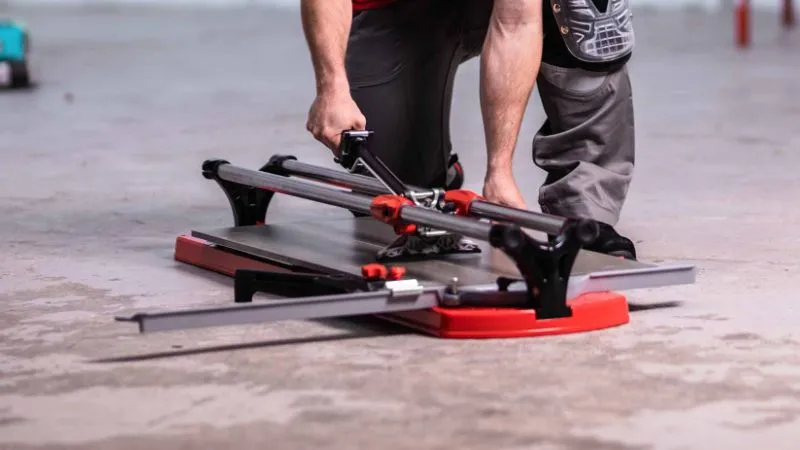
When clean, straight cuts are needed, particularly with ceramic and some porcelain tiles, a חותך אריחים ידני is a viable option. It utilizes a scoring wheel to score the surface before the pressure is applied that separates the tile along the marked line. Easy to use in small home projects and occasional repairs, as it doesn’t need electricity or water. A manual cutter may also be easier to set up and take around than bigger equipment. When it comes to the best tile cutting tools for beginners, a manual cutter might be a worthwhile option as it is relatively easy to operate. But it is mostly used for straight cuts, rather than curves, notches, or holes.
Wet Tile Saw for Thick or Large Tiles
A מסור אריחים רטוב is best for thick, hard, and large format tiles that are hard to cut with a hand saw. It is a diamond blade cutting machine that uses water to control dust. The cutting surface stability may also facilitate the accurate straight cuts made on larger tiles. Wet saws are especially helpful in renovation and flooring work where there are many tiles to be cut. When it comes to the question of what is the best tool for cutting tile, if your job requires cutting thick porcelain, stone, or large tiles, a wet saw might be the better alternative. It, however, is typically more expensive and takes up more space for setup than a manual cutter.
Angle Grinder for Curved Cuts
If your tile job calls for curved, rounded, or detailed cuts that aren’t easily achieved with a חותך ידני, an angle grinder might come in handy. With a suitable diamond blade, it can be used to bit by bit form the tile to corner, edge, and even odd layouts. This makes it a good choice for more intricate work. But an angle grinder must be handled with caution since it comes with dust and can take away material fairly fast if it’s not held lightly. It may take some practice to achieve smooth edges. Therefore, it is not always suitable for simple and straight cutting, and is more suitable for some experience DIY projects that require flexibility.
Tile Nippers for Small Adjustments
Tile nippers are used to cut small pieces of tile rather than to push a straight line across the edge of a tile. These are particularly handy when making subtle adjustments around corners, curves, or odd shapes. They can be used following the scoring of a tile, or when the cut is larger, to shape the piece as desired. Nippers are small, inexpensive, and easy to store and can be useful for a few home projects. They are not, however, intended to be a substitute for a primary cutting tool. When you are making the selection of what tools you need to cut tile, you should think about how to use tile nippers as a support tool to make detailed adjustments rather than using a main tool for cutting the tiles.
Tile Hole Saw for Fixture Holes
If you need to make round holes for plumbing pipes, faucets, electrical fittings, or anything else, then you should use a tile hole saw. These tools are usually equipped with a diamond-edged cutting edge to create a controlled hole in tile. The proper size is determined by the pipe or fixture that you would like to fit around. Hole saws are especially handy when fitting bathroom or kitchen tiles, which frequently need to be cut with exactitude. They can’t be used for standard straight cuts; they are best used with another cutting tool. Correctly selecting the hole saw size and exercising care can lead to a clean hole without undue damage to the tile.
How to Choose the Right Tool for Different Tile Materials
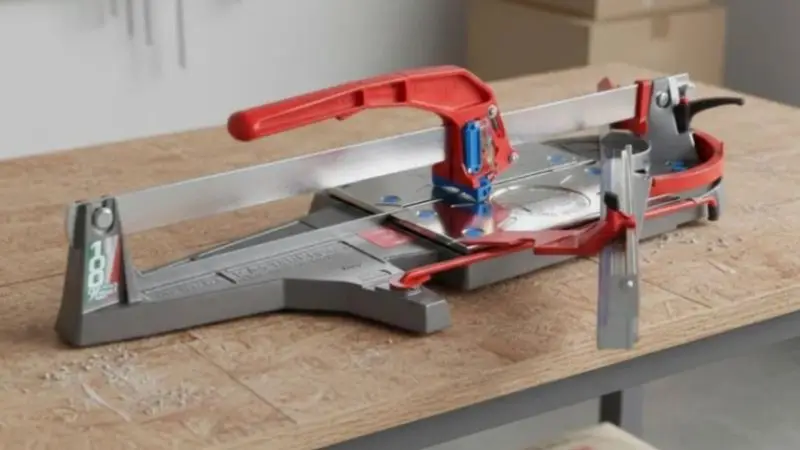
The hardness of various tile materials will vary and may react differently to various types of cutting. Selecting the right tool for the material can help you get a cleaner cut and minimize cracking and chipping.
Best Tool for Ceramic Tiles
Since ceramic tiles are less hard than harder materials, a manual tile cutter is a feasible choice for many straight cuts. A scoring wheel is used to score the glazed surface so that the tile can then be snapped on the scored line. A wet tile saw is a tool that can be more powerful for cutting ceramic tiles, especially in larger projects or when cutting through thicker tiles; it can also create smoother results. This depends on the thickness of the tile, the number of cuts, and the type of cut requested. When it comes to the top כלי חיתוך אריחים, it’s best to use tools specifically suited for the tile and project at hand, not a single tool for all situations.
Best Tool for Porcelain Tiles
Porcelain is denser than regular ceramic tile and stronger, thus may need a stronger and more precise cutting approach. For straight cuts, if the thickness of the tile is within the high-quality porcelain manual cutter capacity, then a high-quality cutting machine can be used. For thick porcelain, large format tiles, or jobs where multiple cuts are needed, a wet tile saw with an appropriate diamond blade can be more convenient. When looking at the top tools to cut tile, consult whether that tool is made especially for porcelain. Equipment that has the proper cutting capacity can help minimize chipping and create cleaner edges while installing.
Best Tool for Glass Tiles
Glass tiles must be cut properly, as the surface of the tile may chip, crack, or break if the appropriate tool or method is not used. Depending on the tile and cut, a glass-specific tile cutter or wet saw with a suitable diamond blade might be appropriate. A special scoring tool might be effective for straight cuts, and a wet saw will offer more control for more challenging cuts. Please read the manufacturer’s guidelines before cutting glass. Among the best tile cutting tools for beginners, select one that offers a high level of control and is designed for use with glass, not one that is designed to be used with a standard tile.
Best Tool for Natural Stone Tiles
Natural stone tiles like marble, granite, and slate are typically dense and may have different hardness, thickness, and structure. A wet tile saw fitted with the right diamond saw blade will often work well for slicing cleanly through a wide range of natural stones. Water may be used to cool the blade during cutting and may control airborne dust. You may also need specialized tools for detailed shapes or small adjustments. Make sure you know what kind of stone you are working with and the thickness of the stone before you select a tool. This will help you with determining the option of picking the ideal tile cutter that can cut the materials properly and safely.
Common Mistakes When Choosing a Tile Cutting Tool
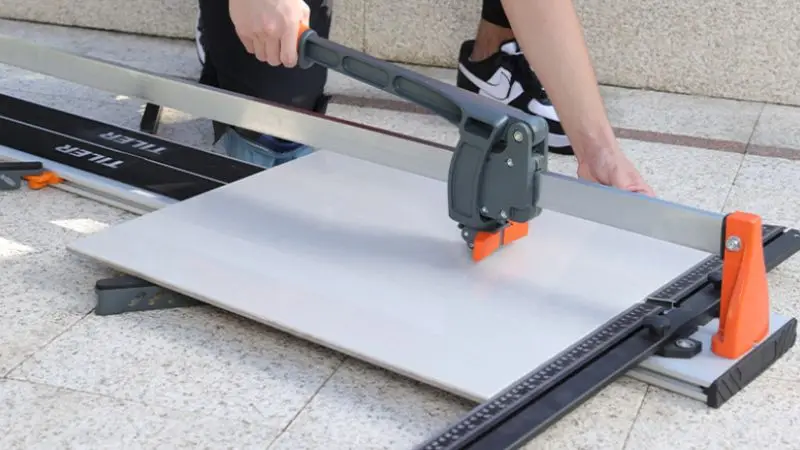
אם תבחר א tile cutting tool without considering your tile and project, the job will be harder, and you risk damaging materials. There are a few common pitfalls to avoid when using a tool, as long as you know what it’s supposed to do.
Choosing a Tool That Cannot Handle the Tile
A basic error is choosing the wrong cutter for the job; either the cutter can’t cut the material, or it can’t handle the tile’s thickness. Thin ceramic may not work well on thick porcelain or natural stone. When you are looking to buy or use a cutter, be sure to verify its recommended cutting capacity and be sure that it is appropriate for your tile. The blade or scoring wheel should also not be improper for the material to be cut. Not picking the right gear can result in cracked or chipped edges or incomplete cuts. Consider compatibility, not just looks, when choosing tile-cutting tools. By matching the tool to the tile, you give yourself a better chance of getting clean, consistent results.
Ignoring the Type of Cut
Another error is choosing a tool without considering the shape of the cut you want. A manual cutter may be great for straight lines, but is not intended for making curved openings or round holes. Many straight cuts and a few angled cuts can be done with a wet saw, but detailed shapes and openings may be better made with an angle grinder or a hole saw. Take a look at the tile design and determine what cuts you will need during the project before choosing a tool. Being familiar with the various cutting methods can help you select the best cutting tool to get the job done and prevent buying equipment that you can’t use.
קנייה על סמך מחיר בלבד
While cost is high, it’s not necessarily the most sensible choice to go for the lowest-priced cutting machine. An inexpensive tool might not have enough cutting power, durability, or accuracy for your tile. However, it isn’t the best option for a small home project to purchase the most expensive equipment. Determine the price you want to spend, based on the size of your project, how many cuts you need, and the type of work you are doing. When looking for a home tile cutter, only look at those features that you need. There’s a way that a tool with the right balance of performance, reliability, and ease of use can provide more value than merely going with the lowest price.
שימוש בלהב השגוי
The type of blade you use can impact not only the quality of your cuts, but also the condition of your tile. Not all diamond blades or cutting edges are equal, and different materials require different blades or cutting edges; what works well for ceramic may not work for other tile types. Inspect the manufacturer’s instructions for the blade and ensure that it is right for your cutting tool and material. An old or broken blade can also be more difficult to cut with and could lead to an increase in chipping. When choosing from the best tile cutting tools, consider not just the machine or cutter, but the blade too. The right mix can result in cleaner and more controlled cuts.
Overlooking Safety and Ease of Use
A cutting tool should not only be appropriate for the tile but should also be useful to use. Failure to pay attention to safety, tool stability, handling, or setup demands can make the cutting process unnecessarily difficult. Think about whether you can easily use the tool and whether the workspace will be safe for it. Equipment such as wet saws and grinders, and powered equipment in general, may need more preparation than a manual cutter. When you’re new to tile cutting, select the equipment that suits your experience level and the nature of your project. Knowing what tile cutting tool I need can help you select a tool that is both safe for cutting tile and isn’t unnecessarily complicated.
לעטוף
First, it is important to understand what type of tile you are using, how big you need the tile, and what type of cuts you need. For simple straight cuts, a חותך ידני can be useful, whereas a wet saw might be preferred for thick, large, or more difficult-to-cut tiles. More specialized cutting tasks can be accomplished with angle grinders, tile nippers, and hole saws. Your level of precision, experience, and budget also matter in what’s best. When buying equipment, think about the material, thickness, cutting shape, blade requirements, and the ease of use. You can then make the most informed decision and choose the tool that will be the best fit for your project and not just the most popular or expensive.
שאלות נפוצות
Which cutting tools are required for cutting tile?
Depending on the type of tile material, thickness of tile, the type of cut you have to perform, and the project needs, you might require a manual tile cutter, wet saw, angle grinder, tile nippers, or hole saw.
Which is the most effective tool to use for cutting tile?
A manual cutter is good for straight cuts, and a wet saw is good for thick or hard tiles. Curves, adjustments, and fixture holes are better suited for special tools.
Which is the best tile cutter for home?
A manual tile cutter may be appropriate for straight cuts when doing a few projects at home. A wet saw may be necessary for larger or harder tiles for a better cut.
What are the best tile cutting tools for beginners?
Manual tile cutters are sometimes easy to use for straight cuts, and they’re a great option for beginners. Small adjustments can be made using tile nippers, but powered tools may be a bit more difficult and require extra practice and preparation.
What are the factors to consider when selecting a tile cutter?
Take into consideration the materials, thickness, size of tiles, the cut you want, the size of the project, your budget, and your experience. Then select a cutter appropriate in capacity and cutting characteristics.