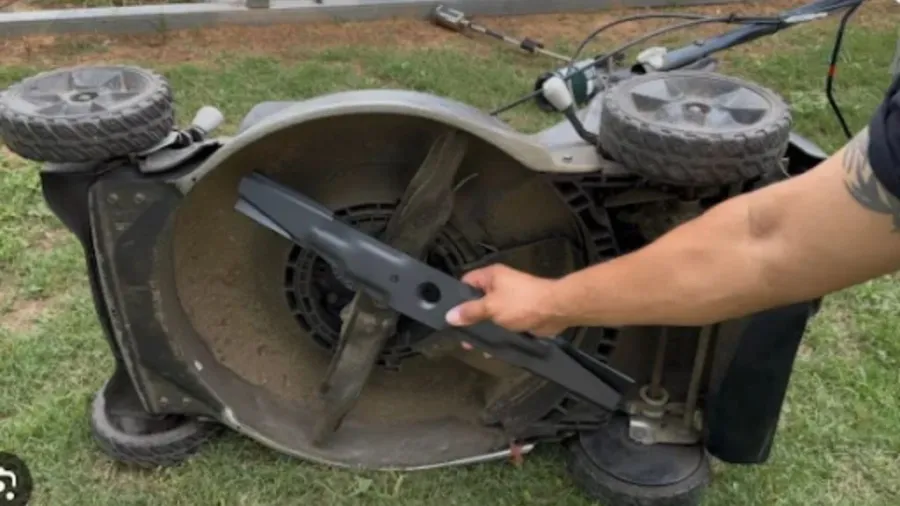
Tu n'as pas besoin de sharpen a lawn mower blade if it is bent, cracked, or worn beyond what a file can repair; at that point, it is time to replace the lawn mower blade steel. With a socket wrench and a new blade, you can complete the 15- to 30-minute driveway task of learning how to replace lame de tondeuse à gazon parts. This guide explains how to replace mower blade hardware safely, how to choose the appropriate part, and when it is beyond repair. A new blade relieves strain on your mower and restores healthy lawn-grass cutting.
Recommandé pour votre projet
When to Replace a Lawn Mower Blade Instead of Sharpening
A damaged mower blade is beyond repair, but not every dull edge requires a new blade. Instead of sharpening a lawnmower blade, the true question is how to replace lawn mower blade parts only when needed, not whenever the edge dulls. That line saves you money and keeps you safe because the answer is damage, not dullness.
Sometimes you have a few deep nicks rather than a crack, and you can grind those out. What are the best heavy-duty grinders for reconditioning worn or nicked mower blades? Instead of buying a new blade, you can recondition the edge with a strong VEVOR meuleuse d'établi or an angle grinder with a flap disk to quickly remove deep nicks.
Signs You Need a New Blade
Identify the damage before learning how to replace Tondeuse à gazon blade parts. Any of the following telltale signs of a damaged mower blade indicate that you should replace lawn mower blade steel rather than grind it:
- A bent body that can break quickly and throw off balance is the first hint you may need to replace lawn mower blade steel.
- The most obvious indication of a damaged mower blade is cracks or a missing piece of steel.
- Deep gouges that thin into dangerous metal when ground are a clear sign to replace the blade.
- If the blade wobbles on the shaft because the center hole is oval and worn, that’s another sign the mower blade needs a replacement.
- An edge that won’t hold after being sharpened three or five times is a sure sign it needs a blade replacement.
Instead of another grind, any of these require a lawn mower blade replacement. When in doubt, replace the lawn mower blade steel rather than risk it, because operating a damaged mower blade can cause metal to come loose. This brief guide on how to replace a mower blade safely sorts the two paths:
| État de la lame | Affûter ou remplacer | Pourquoi |
| Dull edge or small nicks | affiler | A file or grinder restores it in 15–30 minutes |
| Bent body | remplacer | Throws off balance and can crack at speed |
| Cracked or deeply gouged | remplacer | Dangereux à pleine vitesse ; peut projeter du métal |
| trou central ovale ou usé | remplacer | Wobbles on the shaft and won’t seat right |
| Sharpened 3–5 times, too thin | remplacer | Won’t hold an edge any longer |
Tools and Safety Equipment for Lawn Mower Blade Replacement
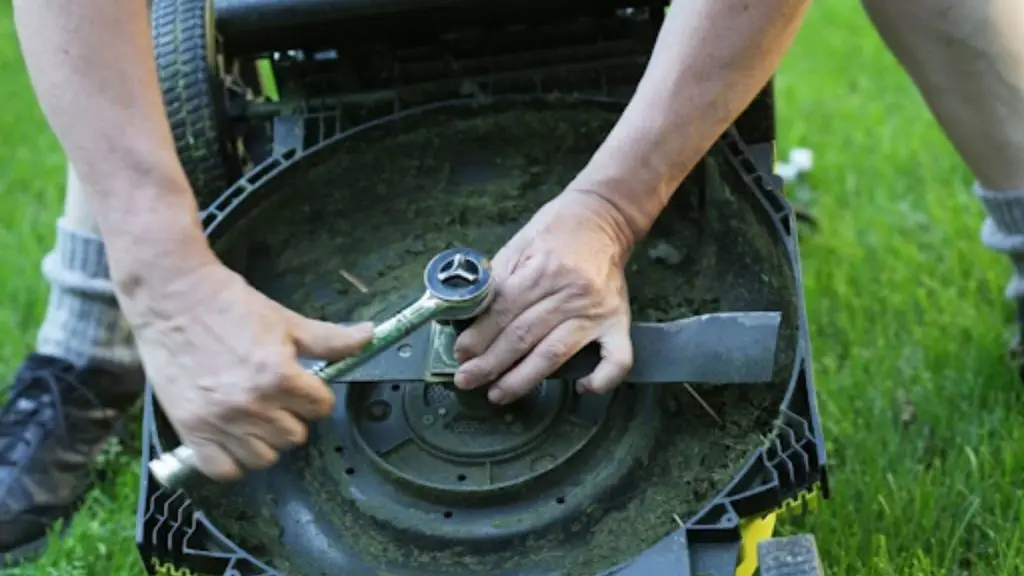
The right equipment is the first step to replacing lawn mower blade parts safely, and a secure setup lowers the risk.
What Tools Do You Need to Replace a Lawn Mower Blade?
- A matching lawn mower blade replacement sized to your deck.
- A clé à douille or breaker bar that grips the center bolt.
- A scrap wood block to keep the blade from spinning.
- Sturdy work gloves paired with safety glasses.
- A torque wrench to tighten the bolt to the correct spec.
Choisir la bonne lame de rechange
Selecting the right replacement blade is as important as knowing how to install it, so confirm the new blade matches your mower’s specifications before you start. Before replacing any blade, verify the blade’s length, center-hole shape, and style.
Before replacing any blade, verify the blade’s length, center-hole shape, and style.
| Type de lame | Idéal pour | Garder en tete |
| Standard (2-in-1) | Side-discharge or bagging | All-purpose, usually the cheapest |
| Mulching (3-in-1) | Recutting clippings into the lawn | Curved edge; buy mulching or clippings clump |
| Haute portance | Tall or wet grass, bagging | More airflow, uses more engine power |
| Faible portance | Sandy soil, short grass | Less suction, kicks up less dust |
Does the blade type, such as stainless steel or high-carbon steel, matter? A little: match the original type and length, since most blades are made of hardened carbon steel.
If you plan to sharpen rather than replace, which blade sharpeners are best for sharpening different blade materials like high-carbon or stainless steel? Almost any grit wheel handles both, so match the sharpening angle, not the metal. A VEVOR bench grinder with an adjustable tool rest makes holding that angle easy on either steel. The table below sorts the common styles:
Depuis un Tondeuse à gazon blade replacement only works when the size and mount match, measure the old blade and note the center hole before buying.
Should your blade replacement come from an aftermarket or OEM manufacturer? As long as the length and center hole match, a high-quality aftermarket blade is often less expensive than an OEM part and still fits.
Purchase a mulching blade instead of a standard one to replace the mower blades on a mulching deck, or the clippings will clump.
Ensure Safety When Replacing Lawn Mower Blade
- Turn off the electricity by removing the safety key and battery from an electric mower, or by pulling the spark plug wire from a gas mower.
- To prevent burns from hot exhaust components, let the engine cool.
- Put on the glasses and gloves because even a dull edge can cut.
- Work in well-lit, level, firm terrain.
How to Replace Lawn Mower Blade: Step by Step
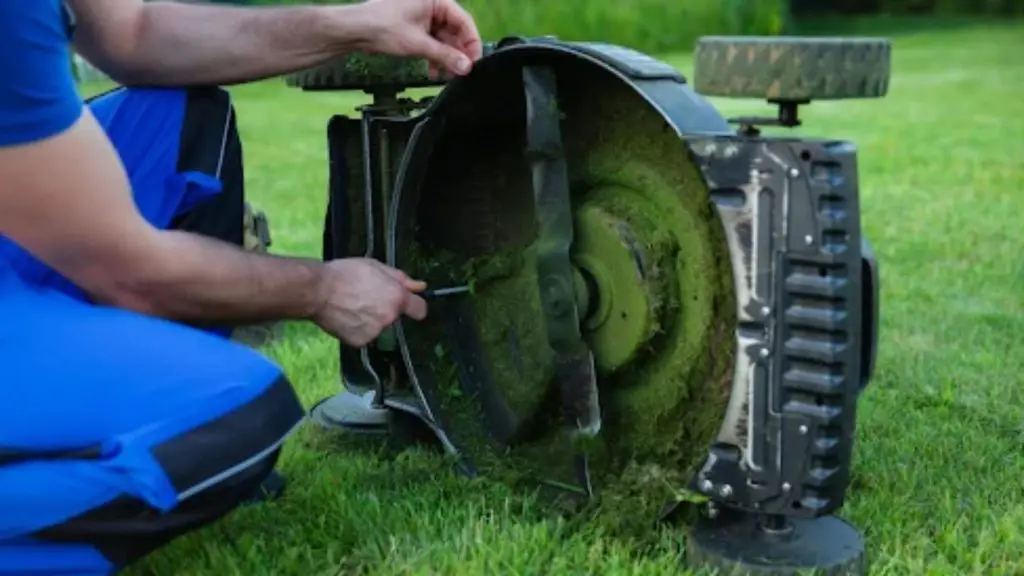
Here are five simple steps on how to replace lawn mower blade parts when the power is off and the outils électroportatifs are ready. Most walk-behind mowers follow the same procedure for replacing mower blades.
Étape 1 : Débranchez l'alimentation
- Gas mowers: remove the spark plug wire to prevent accidental starting.
- Battery mowers: take out the battery pack and safety key.
Step 2: Tilt the Mower
- Turn the mower over on its side.
- To prevent gas and oil leaks into the carburetor and air filter, keep them facing up.
Step 3: Lock and Remove the Blade
- Insert a block of wood between the blade and the mower deck to keep the blade from spinning while you work.
- Turn the socket wrench counterclockwise to loosen the center retaining bolt.
- Keeping the components in order, remove the bolt, washers, and old blade.
Étape 4 : Installer la nouvelle lame
- Attach the new blade to the mounting shaft.
- With the “this side toward grass” stamp facing down, point the cutting edge in the proper direction.
- To avoid crossing the threads, hand-thread the retaining bolt back in.
Step 5: Tighten and Reset
- To lock the blade once more, place the wood block on the other side.
- Use the wrench to torque the bolt to the specifications listed in your handbook.
- Reconnect the battery or spark plug wire, stand the mower upright, and test it.
Replacing lawn mower blade parts at home only requires following this five-step procedure for how to replace mower blade hardware, which eliminates the need for a shop visit.
After the Swap: Balance, Test, and Maintain
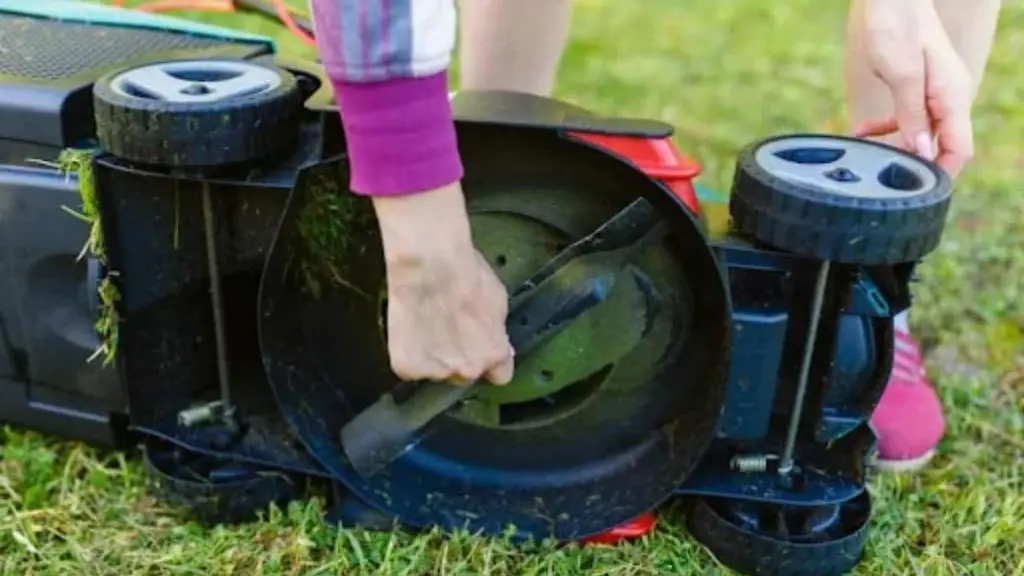
Mower blades last longer when you know how to replace lawn mower blade parts, and replacing the lawn mower blade on schedule keeps the cut clean.
Check the Install and Spin
Does a new lawnmower blade need balancing? Usually not, as most blades are balanced at the factory, but if something seems strange, it’s worth a quick check.
- To make sure the blade rotates freely and doesn’t scrape the deck, spin it by hand.
- Tug the bolt firmly; a loose blade is dangerous because it wobbles.
- Start it on a level surface, listen for vibrations, and check for any wobble.
Make the New Blade Last
- After every mow, remove clippings from the blade to prevent rust from moisture.
- To postpone the next lawn mower blade replacement, use a mower blade grinder to sharpen the new blade every 20 to 25 hours.
- Keep a spare on hand; replacing lawn mower blade parts on time makes the next blade replacement routine, and a planned replacement outperforms a mid-season rush.
Run a high-lift or mulching blade but aren’t sure which aiguiseurs de lames are recommended for sharpening mulching and high-lift mower blades? This straightforward solution maintains the edge’s factory shape by using an adjustable angle that follows the curved bevel. A VEVOR blade sharpener with an adjustable angle maintains the edge’s factory shape by following the curved bevel.
Erreurs courantes à éviter
A damaged mower blade left on the deck is dangerous, and even a straightforward blade replacement has a few pitfalls.
Installing the Blade Upside Down
When replacing mower blades, mounting the blade upside down is the most frequent mistake. The mower barely cuts if the cutting edge and the “toward grass” stamp are not facing the ground. Before tightening, make sure the stamp is correct.
Wrong Size or a Loose Bolt
Measure before replacing mower blades because the wrong length or center hole will prevent the blade from seating. Always use a torque wrench set to specification when replacing lawn mower blade bolts to prevent surprises. An under-tightened bolt allows the blade to shift.
Replacing Mower Blades on Different Mowers
While the steps for how to replace mower blade parts are the same for all machines, the specifics vary by mower type.
Tondeuses à conducteur marchant
The easiest way to replace lawn mower blade steel on a walk-behind is to use one blade and one bolt. Follow the five steps after tilting the mower carburetor up. Most owners finish replacing lawn mower blade parts in 15 minutes with this simple method.
Riding and Zero-Turn Mowers
Replacing mower blades requires repeating the process at each spindle because a riding deck has two or three blades. Is it better to replace all lawn mower blades or just one? Mixing old and new blades shakes the deck and causes uneven cuts, so replace them all at once. After you securely jack up the deck and block it, swap out the blade and finish replacing lawn mower blade parts as a set. This how to replace mower blade routine still takes less than an hour, and the procedure is the same for each blade.
Conclusion
You now understand the entire process of how to replace lawn mower blade parts: identify a damaged mower blade, match the appropriate part, cut the power, tilt the mower, lock and remove the old blade, install the new one facing down, and tighten the bolt. A full lawn mower blade replacement takes less than 30 minutes, and it delivers a clean, even cut. That is the full process for replacing a mower blade. Replace a lawnmower blade as soon as it bends or cracks as part of regular entretien tondeuse à gazon, and always keep a spare on hand.
FAQ
How often should you replace a lawn mower blade?
A blade that is regularly sharpened lasts several seasons, about three to five sharpenings. If you strike a rock or notice a crack, replace the lawn mower blade steel sooner. Replacing lawn mower blade parts and replacing mower blades on time is routine because it keeps your coupe de l'herbe nettoyer.
Can you reuse the old bolt and washers?
If they’re in good condition, you can usually reuse them. Because a secure bolt keeps the blade safe, keep the washers in order when removing them, and replace the bolt if the threads look worn.
Is an aftermarket blade as good as an OEM one?
As long as the length and center hole match, a high-quality aftermarket blade performs well and is frequently less expensive. In any case, it is a reliable replacement, whereas OEM only guarantees fit.
Which affordable blade grinders are worth buying for a one-time lawn mower tune-up?
A simple hand file or drill-attachment sharpener is inexpensive and effective for a single tune-up, and a simple bench grinder or affûteur de lames de tondeuse à gazon can easily sharpen a season’s worth of blades.
Which blade sharpening systems are overrated compared with cheaper alternatives?
Overrated in most cases. A basic file or grinder restores the same edge for significantly less money than expensive multi-jig systems, which seldom outperform a steady hand on a bench grinder. VEVOR bench grinders and outils d'affûtage are reliable for these tasks.