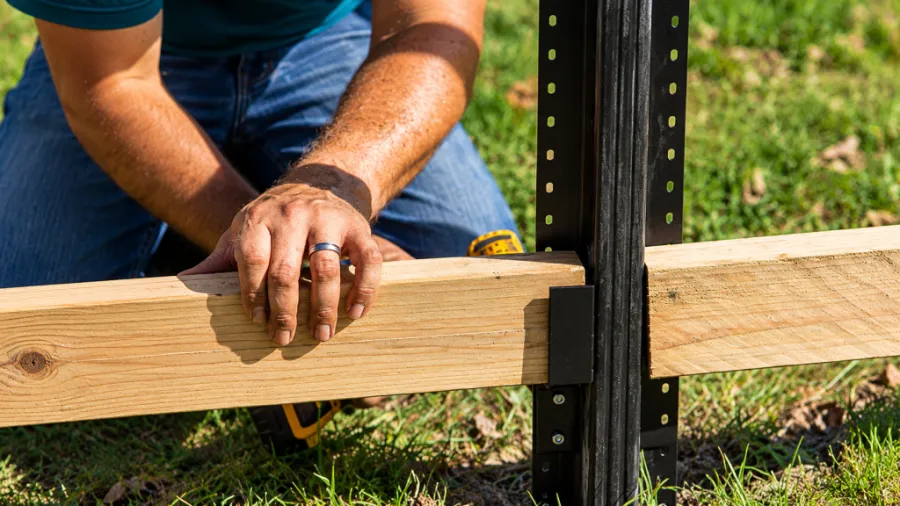
The posts are set and squared. The rails have been cut. You now have a board against a metal post and are wondering how to connect them. Learning how to fixer des rails en bois à des poteaux de clôture métalliques will prevent sagging rails, split boards, and rust marks. In this article, learn the process, the materials needed for each shape of post, and the finer points that ensure your metal post for a wood fence stays sturdy for years to come. Need posts first? Browse suitable metal posts that work with wood rails.
- Step-by-Step Attaching Wooden Rails to Metal Fence Posts
- Choosing Hardware for Metal Fence Posts for Wooden Fence Builds
- How Do You Install Metal Fence Posts Before Attaching Wooden Rails?
- What to Consider Before Connecting Wooden Rails to Metal Posts
- Factors to Check Before Choosing Metal Posts for Wood Fences
- How Do You Secure Wooden Rails So the Fence Remains Stable?
Step-by-Step Attaching Wooden Rails to Metal Fence Posts
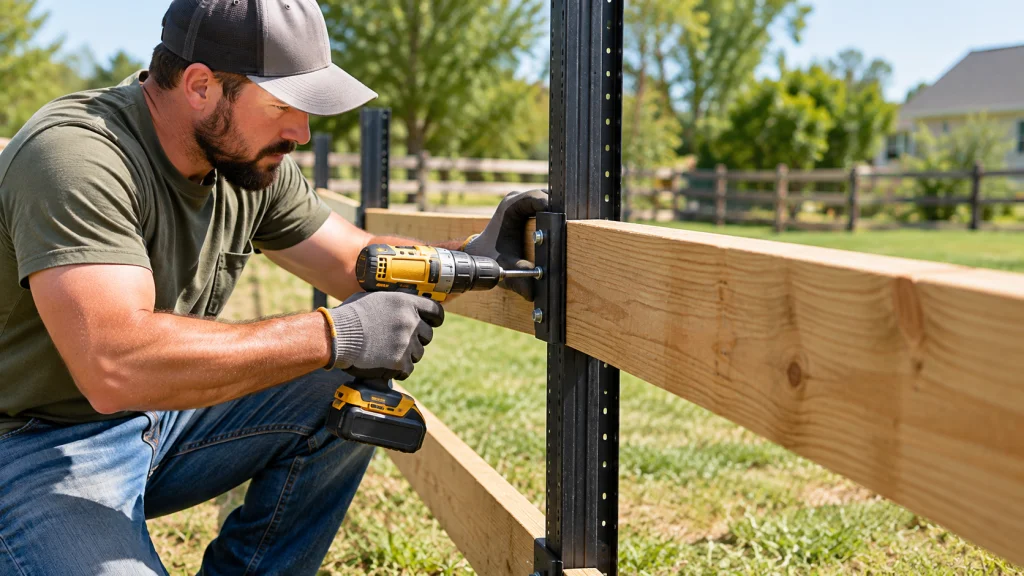
Work in sequence when you attach wooden rails to metal fence posts, since each stage sets up the next. The biggest time savings come from ensuring your equipment works properly before you drill holes, while the biggest boost in quality comes from being patient with alignment. For a complete start-to-finish guide, consider this full fence installation tutoriel.
Dry-Fit Before You Drill
Secure one end of the rail to the chosen hardware on the first post. This simple check will tell you whether your bracket or clamp fits the post and whether the rail lies flat against it when you attach wooden rails to metal fence posts. If there’s a problem, you can easily fix it at this stage, and it will only take a few minutes. Otherwise, once the holes are drilled, you might have to replace your rail or end up with extra holes in your post.
Mark the Heights and Cut Rails to Fit
Run a string between the first and last posts, then use a level to mark the rail height at each post. Using one string ensures your rails remain parallel even if the ground slopes. Avoid letting the lower rail touch the ground, since moisture can harm the wood. Measure each section and cut the rails to the required length. Because post spacing varies, place each rail joint on a post when you attach wooden rails to metal fence posts.
Préparez le bois
Drill pilot holes in the ends of the rails to prevent splitting when you drive screws or bolts in. Trous pilotes are especially important at the ends of the rails because the grain is weakest there. Seal any new end surface before securing it, because unsealed end grain can soak up water.
Fasten Loosely, Then Level
Place the rail in position and start with hardware tight but not too tight when you attach wooden rails to metal fence posts. This will give you some room to adjust the rail so that the level measures true. Once it is level and aligned with the others, tighten all fasteners securely. Add washers under the bolt heads to spread the load across the wood, then tighten the bolts enough to hold the rail firmly without crushing the wood. Tighten the rails from one end to the other.
Vérifiez chaque connexion
Press each rail by hand, then check the full run from both ends. This will help you identify any movement, twist, or rail that is out of line with the others. Fix any such problems before proceeding to the next bay. Fixing these small problems is much easier when the hardware is easy to access.
Choosing Hardware for Metal Fence Posts for Wooden Fence Builds
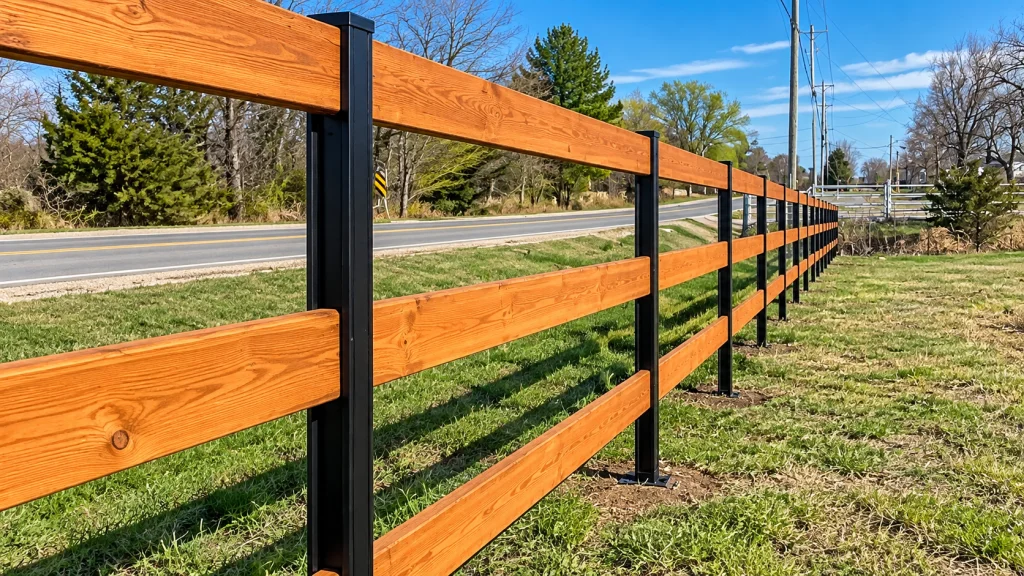
The best connection method depends on the shape of your post. Square and rectangular posts have flat surfaces, which makes bracket alignment easier. Round posts generally require clamps or brackets designed for round surfaces because flat brackets cannot fit. For heavy rails or fences exposed to strong winds, through-bolts can provide a secure connection when the post and rail allow them. This is especially useful when using metal fence posts for wooden fences, allowing you to attach wooden rails to metal posts.
| Méthode | Idéal pour | Rear Access Needed | Avantages | Inconvénients |
| Rail brackets | Square and rectangular posts | Généralement non | Easy to align, simple to replace | Bracket stays visible |
| Boulons traversants | Heavy rails, windy sites | Oui | Connexion très sécurisée | Needs drilling through both parts |
| Clamps or band clamps | Round posts | Non | No drilling in the post | Can slip if under-tightened |
| Vis autoperceuses | Thin-walled posts, light rails | Non | Quick, minimal visible hardware | Less suited to heavy loads |
Whichever technique you choose, ensure you have hardware suitable for wood-to-metal connections. Wood-to-wood hardware isn’t designed to secure rails to steel posts. Also, choose hardware that fits the rail size and provides a secure connection when you attach wooden rails to metal fence posts. Need help choosing the right post style to match your rails? Compare round and square posts avant de prendre votre décision.
How Do You Install Metal Fence Posts Before Attaching Wooden Rails?
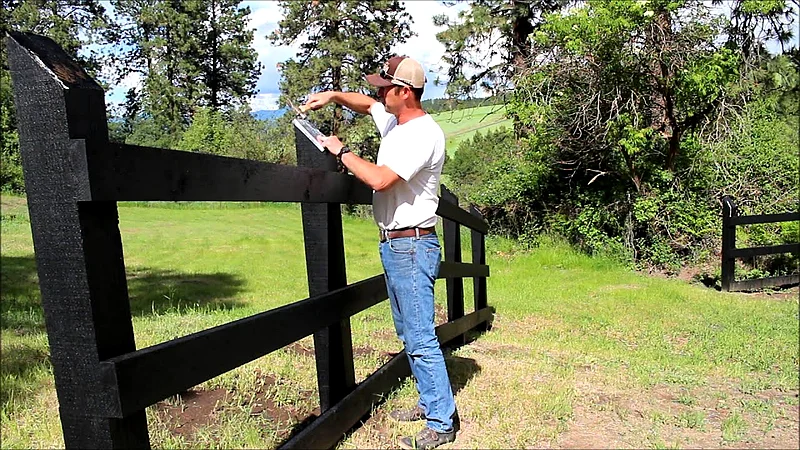
Straight rails depend on properly positioned posts when you attach wooden rails to metal fence posts. Before attaching the rails, make sure each metal fence post is plumb, aligned, and level with the rest of the fence. An angled post makes the entire rail line crooked, and fixing it later often means undoing what you have done. For anyone new to this process, learning how to set metal posts correctly is worth considering.
| Job Stage | Outil | Pourquoi ça aide |
| Mise En Page | String line, stakes, tape measure | Keeps post positions in a straight line |
| Creusement | Tarière ou tarière | Makes clean holes for posts that need them |
| Au volant | Chauffe-poste | Seats compatible posts without bending them |
| Vérification | Niveau | Confirms each post is plumb |
| Attachement | Drill, metal bits, wrench, clamps | Handles pilot holes, bolts, and holding rails |
Compatible posts can sometimes be driven into the ground instead of dug in, which can save time. Match the driver sleeve to the post size. Slim posts use a Tournevis de 2.7 pouces, while larger posts need a Tournevis de 4.11 pouces. Use only a driver that fits the post properly. When power is handy, a Moteur électrique 2200W needs no fuel and includes two sleeves for different post sizes. You can also compare manual, gas, and electric post drivers based on your project. If you are working with hard or rocky soil, see our guide to digging clean post holes.
Recommandé pour votre projet
What to Consider Before Connecting Wooden Rails to Metal Posts
Moisture is a primary consideration when you attach wooden rails to metal fence posts because trapped moisture can affect both materials. Trapped moisture can affect both wood and steel, causing the former to rot and the latter to rust. In addition, these conditions reinforce each other; moisture accelerates degradation. On the positive side, several measures can help prevent the problem.
| Analyse | Causes | Prévention |
| Rot at the joint | Water trapped between wood and metal | Leave a small gap, so air and water can move |
| Rot at cut ends | Raw grain soaks up water | Seal every field-cut end |
| Rouille sur les fixations | Plain or scratched hardware | Use coated or stainless outdoor-rated fasteners |
| Corrosion at contact points | Unlike metals touching | Use brackets, bolts, and washers made to work together |
Drilling or sawing may expose metal, and you’ll need to reapply sealant to scratches before rust sets in. Once the construction is complete, coat the wood with a protective paint or preservative to prevent premature deterioration. Finally, ensure the brackets, bolts, and washers are compatible, as incompatible metals can accelerate rusting at the point of contact. In humid climates, choose galvanized posts for wet climates since they already have a protective layer.
Factors to Check Before Choosing Metal Posts for Wood Fences
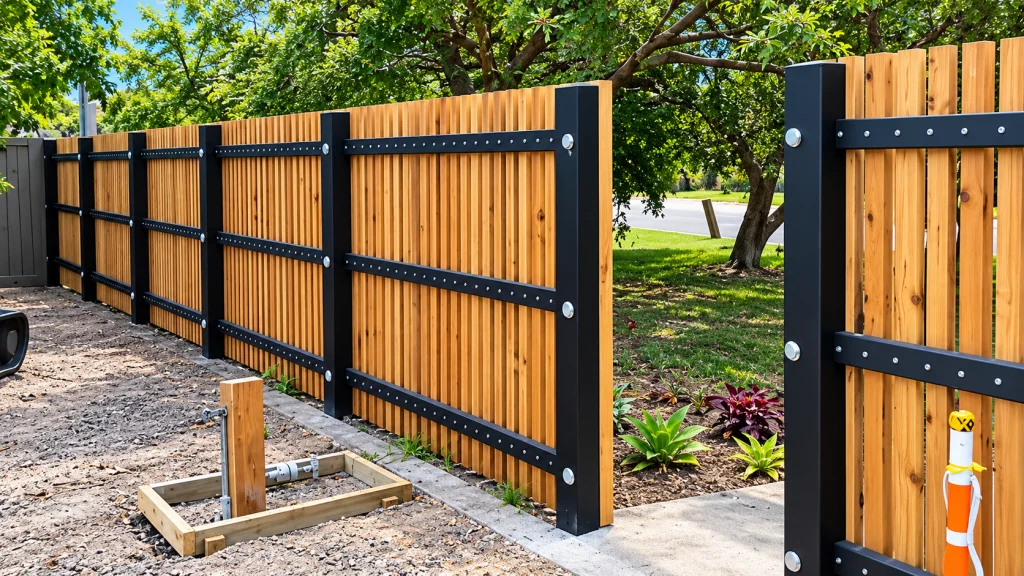
A few simple things to consider before you buy hardware or start cutting rails will save you time and prevent rework. When selecting metal posts for wood fences, consider the post shape and rail size. Different sizes require different brackets or clamps, and the hardware must fit the wood’s full width and depth.
Fence height and weather conditions follow. Taller fences may need extra railings or support, depending on the fence type. Weather conditions such as rain, humidity, and wind will also impact your choice of coating and fasteners. This means a sheltered garden fence and an exposed hillside fence require different approaches. For exposed fences to wind, consider posts with thick walls.
Finally, consider post spacing and the equipment you will need. Longer spans without supports tend to sag, so make sure the spacing matches the rail length. When using posts in various sizes, a 3-head gas driver gives you three sleeves in one piece of equipment. In case a different size is required, consider other post drivers that will match.
How Do You Secure Wooden Rails So the Fence Remains Stable?
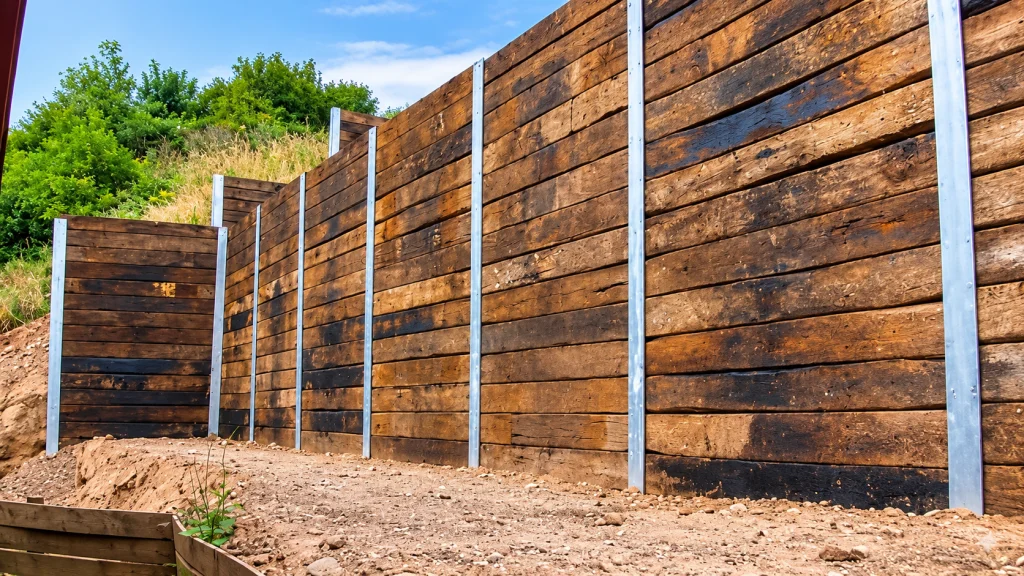
Wood responds to the weather, and a solid fence now may loosen later. Get used to checking for loose connections after any weather change, then tighten them. Use plenty of fasteners at the ends of the rail to ensure a solid connection that won’t move when you attach wooden rails to metal fence posts. Corner and gate posts need special attention, and you will need corner posts and gate posts here. If there is a problem, a symptom will indicate the cause. Here is a table that will help you find it.
| Symptôme | Cause probable | Fixer |
| Rail sags mid-span | Span too long for the rail | Shorten the span or add support |
| Connection feels loose | Wood has moved and loosened fasteners | Retighten after weather changes |
| Split rail ends | No pilot holes | Pre-drill, or replace the rail |
| Rail or bracket twists | Uneven seating or over-tightening | Reseat evenly, then tighten gently |
| Post wobbles | Not seated firmly | Reset it and recheck how deep to bury posts |
Common Mistakes When Attaching Wooden Rails
Another common mistake is using wood-to-wood hardware on steel. This hardware isn’t designed for this kind of joinery, and it can loosen. Another common mistake when you attach wooden rails to metal fence posts is over-tightening before straightening. It will be difficult to adjust the rail after tightening the hardware. So, straighten the rail before tightening all the bolts.
Another common issue is installing rails on an unseated post. Without the post seated, all your rails will lean. Start by seating your post, and then if the soil is hard enough, use a 52cc 2-stroke driver to install compatible posts without warping them. Skipping pilot holes and over-tightening complete the list of mistakes, and both can crack wood. Need a little bit more information before getting started? Read up on Conseils supplémentaires pour les poteaux de clôture, browse more post tools Pour le boulot.
@jeromy_henson_bfss VEVOR SELF SCREWING DRYWALL ANCHORS, 100PCS, 50 ANCHORS AND 50 SCREWS. #drywallanchors #vevor #viral #drywallanchor #vevorttshop #drywall #anchors #fyp #TIC Tac #sheetrockanchor #fypage #fy #sheetrockscrews #fypシ゚viral #hanging #vevorproducts #outilsdumétier #outilsaujourd'hui #toolhack #tooltok #outil de la vie #tooltiktok #astucesoutils #infobulles #des trucs #gadgets #trucs et astuces #outils de quincaillerie #ttslevelup #mademyyear #ttsdelightnow #guidecadeau #spotlightfinds #trésorstrouvailles #tiktokboutique #tiktokshopping #tendances2024 #vidéos virales #envente #venteflash #idées de cadeau #idéecadeau #cadeau #Regardez #tiktokshopfinds #tiktokfinds #tiktokfind #tiktokviral #ttsacl #tiktokviralvideo #regardezça #tiktokm'afaitfaire #obtenezle vôtre #aujourd'hui #tiktokmademebuyit #pour vous #pourvouspage #trending #tiktokshoprestock @Vevor_US @HAIDEE_Vevor @vevor shop
♬ Son original – JEROMY HENSON-BFSS☑️
Conclusion
You can achieve a straight, durable fence by focusing on three factors: proper post settings, quality hardware, and waterproof joints. First, dry-fit, then align before tightening, and check the connections again after major weather changes. By following this procedure to attach wooden rails to metal fence posts and using metal posts for wood fence builds, you have the best of both worlds.
Questions fréquemment posées
Can I attach wooden rails to metal posts without brackets?
Yes. You can drill holes in the post and use bolts with washers, but you will need rear access to tighten the nuts. Brackets usually make it easier to attach wooden rails to metal fence posts, especially when working with square posts
How do I stop wooden rails from rotting where they meet metal?
Leave a small gap to allow air and moisture to move, and seal all ends. Always use rust-resistant or stainless fastenings when you attach wooden rails to metal fence posts, and then treat the wood.
Should I set the posts before attaching the rails?
Yes. Level and set all posts first, as an uneven post will pull the entire rail system out of level. This is especially important when using a metal post for wood fence setup.
Do I need to drill into the metal post?
Not necessarily. Sometimes brackets or clamps can prevent you from drilling holes in the post. However, through bolts and self-drilling screws require holes.