Walls, corners, and doorways are difficult spots in floor prep because the machine can’t reach them; that’s why a concrete grinder edger matters: it finishes the edges where amoladoras eléctricas de hormigón leave an open floor area. Whether you choose a manual or walk-behind electric tool, electric tools are almost always more convenient than gasoline-powered tools for indoor work.
This article explains what concrete grinder edgers are, which sizes suit particular projects, and how to minimize noise, dust, and fatigue. One common mistake is neglecting the edges. These edges are the weakest spots for the coating to fail, especially when comparing baldosas de garaje with epoxy flooring.
What Is a Concrete Grinder Edger and When Do You Need One?
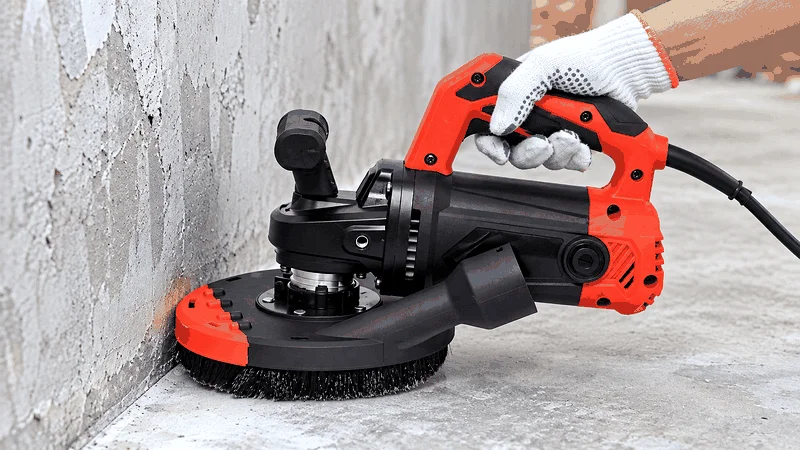
A concrete edger grinder is a small portable grinder used along walls and corners where a floor machine cannot reach. According to trade guides, a standard walk-behind floor grinder stops about 6 to 8 inches short of a wall, so edge work provides smooth floor edges.
| Tamaño típico | Ideal para | |
| Handheld angle grinder with cup wheel | 5–7 in wheel | Corners, columns, doorways, small jobs |
| Dedicated edge grinder | 7–10 in head | Long perimeters on larger floors |
| Walk-behind floor grinder | 7 or 10 in disc in this range | The open floor, leaving walls to a handheld tool |
| Escarificador | 8 in working width | Thick coatings and rough surfaces |
The edge tooling must match the main floor’s diamond pattern so scratches don’t create a noticeable halo effect. In some cases, you can cut off the damaged edge before grinding with a sierra para cortar hormigón.
What Are the Best Handheld Concrete Grinders for Edging and Small Jobs?
A handheld concrete grinder works well for corners and small projects, and a hand grinder with a diamond cup wheel can reach areas larger floor machines cannot. When choosing a tool, consider speed settings, side handles, dust shrouds, vacuum compatibility, and grinding cup size. The table compares common options.
| Tipo | Tamaño tipico | Uso recomendado | Que considerar |
| Angle grinder with diamond cup wheel | 5–7-inch wheel | Corners, columns, doorways, and small jobs | Use a compatible dust shroud and vacuum |
| Cordless concrete surface grinder | About 5-inch wheel | Small touch-ups away from a power outlet | Check battery runtime and dust-extraction compatibility |
| Dedicated edge grinder | 7–10-inch head | Grinding edges along larger floor areas | Check the machine’s weight and maneuverability |
Choose a grinder that you can control comfortably and that suits the work area. For open floors, an electric amoladora de piso de concreto may be more efficient. Use a handheld tool for corners, edges, and other areas that larger machines cannot easily reach.
Recomendado para su proyecto
What Are the Best Compact Concrete Grinders for Stairs and Tight Spaces?
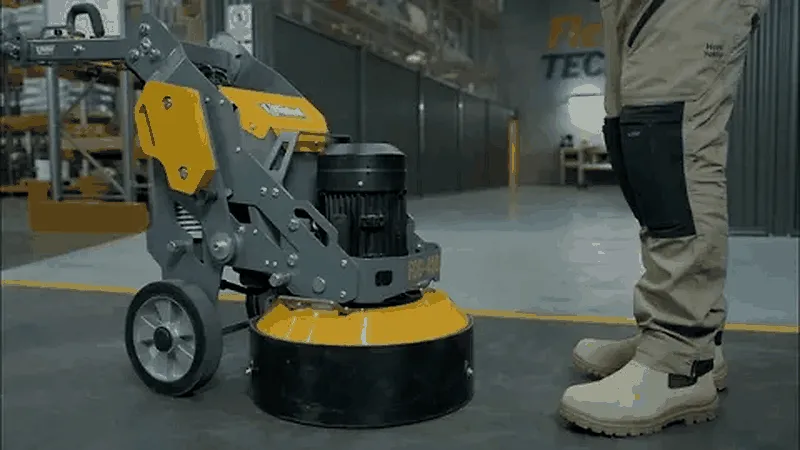
Dos tipos de compact concrete grinders are designed for stairs and small areas. Stairs and landings are best suited to handheld equipment, since you can’t use walk-behind equipment there; however, compact walk-behind equipment can work in small rooms. Searching for a 7-inch electric concrete floor concrete grinder edger often leads people to a Modelo de 7 pulgadas y 1.7 CV, a walk-behind floor grinder. Its handle folds and adjusts from 34 to 46 inches. A bubble level helps keep the plate horizontal.
Which Concrete Grinders Offer Better Handling and Operator Comfort?
Machine operator comfort is determined based on the weight of the machine, its handle, speed control, and vibration. While the Makita 9565CVR machine includes vibration reduction technology, the other machines come with other handling characteristics. Nonetheless, without comparable vibration data, it is impossible to grade the machines for vibration.
| Modelo | Tipo | Potencia | Comfort and Handling Features |
| Hilti DGH 130 | Handheld concrete grinder | 1,300 W | Listed weight of 2.54 kg, six speed settings, ergonomic head grip, and adjustable dust hood |
| Bosch GBR 18V-15 S | Cordless handheld grinder | Batería de 18 V | Listed weight of 2.6 kg without battery, rotatable auxiliary handle, soft start, brake, and KickBack Control |
| Makita 9565CVR | Amoladora angular de velocidad variable | 1,400 W | SJS anti-vibration technology, anti-vibration side handle, soft start, and adjustable speed |
| Husqvarna PG 280 | Single-disc walk-behind grinder | 1.1 kW | Listed weight of 72 kg, foldable frame, and edge-grinding capability |
| VEVOR 1,400 W grinder | Walk-behind grinder | 1,400 W, 3,600 RPM | Listed weight of 62.5 lb, folding handle, and vacuum port |
Since Hilti and Bosch versions are lightweight, handling is an important factor to consider when buying this tool. Makita offers vibration-reduction features, while Husqvarna and maquinas vevor have a walk-behind mechanism for easy floor grinding, so you don’t need to hold the grinder.
When choosing for edges, check whether the floor grinder supports the required diamond cup wheel and includes a dust extraction system. For larger floor grinding, choose a floor grinder with wheels. VEVOR 10-inch floor grinder also comes with rear wheels. Check specifications and vibration in the latest documentation provided by the manufacturer. Follow the operating manual and use the dust extraction system, along with hearing and eye protection.
How Do Concrete Grinder Weight and Portability Compare?
What are the lightest concrete grinders that still deliver professional results? Hand-held machines are easier to carry when used for small jobs. Walk-behind grinders suit large floor surfaces better. The Hilti DGH 130 weighs 2.54 kg in weight. The Bosch GBR 18V-15 S weighs 2.6 kg without its battery. Both are significantly lighter compared to walk-behind machines.
The VEVOR 1400W walk-behind grinder weighs 62.5 lbs (approximately 28.3 kg), while the Husqvarna PG 280 weighs 72 kg. Based on the provided figures above, the VEVOR concrete grinder edger weighs less than the Husqvarna grinder. The specification details did not list the weight of the Makita 9565CVR. However, the scarifier weighs 132.28 lbs. It is meant to prepare concrete surfaces, not grind them.
Lightweight machines are easy to move, but weight alone cannot dictate performance. When picking tools for your projects, you need to consider the working area, diamond tools, motor power, and condition of the concrete.
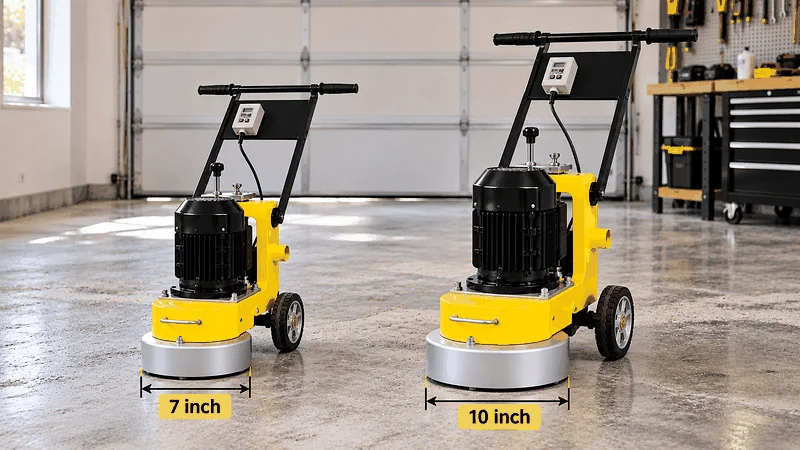
10 Inch Concrete Grinder Edger or 7-Inch: Which Size Fits?
A larger 10 inch concrete grinder edger disc covers more area than a 7-inch disc on a walk-behind floor grinder, though it may be harder to work in tight spaces. If you’re looking for a 10-inch concrete grinder edger, trade manuals note that specialized concrete edgers have 7- to 10-inch heads, so both fit that category.
Neither is a specialized edger, so it is better to finish the edges by hand with a handheld grinder. Still, choose a head with enough reach to reach the wall and avoid the unground strip around it. You can compare disc sizes across the concrete grinder category antes de decidir
Which Concrete Grinder Works for Small Raised Edges and Thresholds?
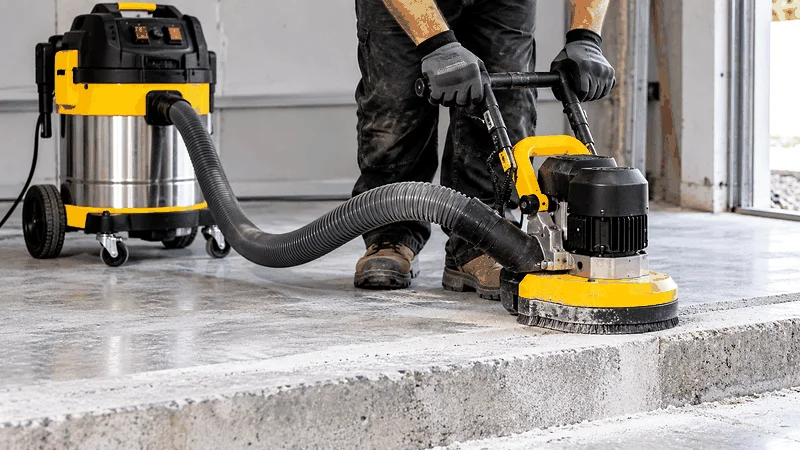
What are the top-rated concrete grinders for removing trip hazards and thresholds? The right tool will depend on the height of the concrete lip and the amount of material that needs to be removed. A hand-operated concrete grinder edger is ideal for small lips and short thresholds; however, a walk-behind machine is better for longer edges. Ratings alone aren’t enough when choosing a tool; you should also consider its grinding capabilities, accessories, and dust management.
If a route is ADA-compliant and therefore accessible to all, changes in level of up to 1/4 inch can be vertical; those between 1/4 and 1/2 inch need to be beveled to a slope of no more than 1:2. Anything higher than 1/2 inch will normally require construction of a ramp. There are different threshold requirements.
| Raised Edge Height | Enfoque habitual | Herramientas a considerar |
| Hasta 1/4 de pulgada | Smooth the edge with suitable diamond tooling | A handheld grinder such as the Hilti DGH 130, Bosch GBR 18V-15 S, or Makita 9565CVR, provided the model supports the required accessory |
| 1/4 a 1/2 de pulgada | Gradually bevel the edge and check the transition as you work | A handheld grinder for short thresholds or a walk-behind machine, such as the VEVOR 7-inch 1.7HP grinder, for suitable longer sections |
| Más de 1/2 pulgada | Assess whether cutting, rebuilding, or installing a compliant ramp is needed | A concrete-cutting tool or professional contractor; a scarifier may help with surface preparation but is not a substitute for a suitable transition |
Remove concrete gradually and check the finished surface frequently. Do not assume that every grinder can safely remove a particular depth in one pass. Actual removal depends on the machine, diamond tooling, and concrete condition.Before choosing a model, check its manual for approved applications, compatible accessories, and dust-extraction requirements. Wear suitable eye, hearing, and respiratory protection throughout the work.
Choosing a Tool for Raised Concrete
When raised concrete requires removing a lot of material, choose a surface preparation tool based on the concrete’s height and condition. Scarifiers remove surface materials; however, always be aware of the maximum depth that the scarifier can cut. The escarificador de hormigón in this range is a 3700 W gasoline-powered scarifier with an 8-inch working width and a maximum depth of 1/8 inch. If a raised section exceeds a machine’s capacity, cortar el hormigón first may be the better route, or a concrete professional can advise.
Dust Control and Safe Grinding
Regardless of the task, good technique for grinding concrete edgers includes controlling the dust. Use a shroud, attach an industrial vacuum, and use grinders with a vacuum port wherever possible. Wear a NIOSH/MSHA-approved respirator because both manuals recommend it, and because workplace regulations may require silica and dust protection.
Always move slowly while making overlapping passes, avoid staying in one place too long, and keep water and flammable materials away from the motor. Use the 7-inch and 1400W grinders only when dry. Consult the relevant manual before applying any water. For a uniform finish, use compatible diamond blades and match the grinding concrete edgers pattern to the floor.
De acuerdo con OSHA’s silica fact sheet, a handheld concrete grinder edger, should use a shroud and a vacuum that has at least 25 cubic feet per minute of airflow per inch of blade diameter. That’s about 175 cubic feet per minute for a 7-inch grinder. But this information applies only to handheld machines.
Conclusión
A concrete grinder edger finishes the concrete strip along walls and corners that floor grinding machines can’t reach. The edger produces optimal results when its tooling matches the floor. Use a walk-behind machine rather than a hand-held one, prepare for dust collection, and wear ear protection. After vacuuming up the dust, limpiar el suelo de hormigón del garaje para terminar el trabajo.
Preguntas frecuentes
How do I avoid gouging the floor with a concrete grinder edger?
Always keep the wheel flat on the surface and apply gentle pressure while moving the tool constantly to avoid stopping in one place. The test area shows how the tool behaves before you start the perimeter.
Can a concrete hand grinder smooth a small raised lip?
For a smaller lip, you can use the hand grinder with a cup wheel in shallow cuts, if the manual permits. For higher lips, you’ll need more grinding; measure the lip height.
How can I reduce fatigue with a handheld concrete grinder?
Grip the handle, let the tool do the cutting, and rest between cuts. Follow the grinding time limit in the manual.
Which cup wheel size suits a concrete edger grinder?
The hand-held tools in the table above use wheels around 5 to 7 inches in diameter. However, each grinder type supports specific wheel sizes. Please refer to the instruction manual for compatible cup wheels.