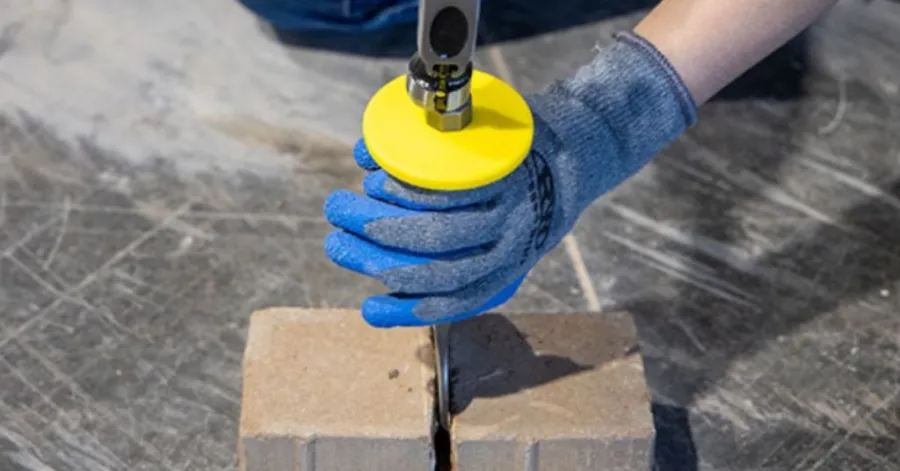
Οχι power concrete breaking tools are needed here; a hammer and a masonry chisel will split concrete blocks just fine. Cutting concrete blocks is straightforward if you are unsure where to start. Start by grabbing your hammer and masonry chisel, then draw a sharp line across the block. Trace your mark by scoring all four faces, then tap along that groove with the hammer until the piece snaps. Dense blocks respond nicely to this technique, which also keeps costs down on smaller jobs. Keep safety glasses on at all times so flying chips and dust stay out of your eyes. The edge might turn out jagged, but that rarely matters if you do not need clean, perfect lines.
Πίνακας περιεχομένων
What Tools Do You Need to Cut Concrete Blocks?
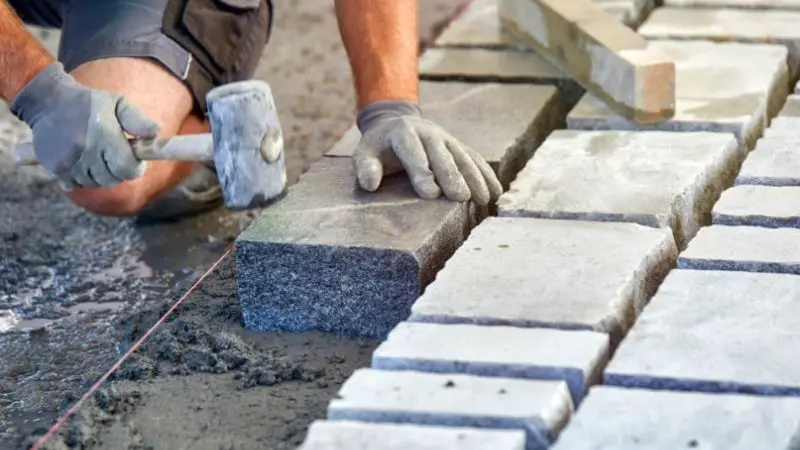
Make sure you have pulled together the specific gear your chosen cutting technique calls for before beginning. With standard gear on hand, you can take measurements, mark lines, brace the block, and finish the cut safely. The scale of your build and the kind of edge you want will determine whether manual or motorized tools fit better. The right setup also makes it easier to cut concrete blocks with better control.
Συνιστάται για το έργο σας
Basic Tools for Cutting Concrete Blocks
Before making any cuts, have a small set of primary tools ready. Use a measuring tape to find the dimensions you want on the block, then draw out a distinct line using a marker or pencil. Put on safety glasses so airborne chips and dust stay out of your eyes, and wear work gloves to shield your hands from rough concrete. Set the block on a solid, level surface so it doesn’t shift while you work. Your core manual setup comes down to two tools: a hammer and a masonry chisel. You run the chisel across the block to score it, then strike with the σφυρί to snap it cleanly along that line. If you are figuring out how to cut concrete blocks at home, this basic kit is plenty for modest jobs. It gives you a simple way to cut concrete blocks without relying on powered equipment.
Tools for Cutting Concrete Blocks
You have a few different tools to pick from for concrete blocks, each suited to particular tasks. Equip a κυκλικό πριόνι with a masonry blade for quick, straight runs, or switch to an angle grinder fitted with a diamond disc when space is tight or cuts are smaller. If you have to make the same cut over and over without power, a block splitter gives you another hand-operated choice. When looking into how to cut concrete blocks with a πριόνι σκυροδέματος, make sure you mount the right masonry blade and stick to the maker’s safety guidelines. On smaller jobs, using an angle grinder gives you a firmer handle on your cuts. What you end up using comes down to the kind of cut, how big the job is, what gear you have on hand, and what you want to spend.
How Do I Cut Concrete Blocks by Hand?
When power tools are unnecessary, taking a hand tool to a concrete block is an easy, straightforward route. All you do is measure out the block, mark your line, score it, and snap the piece off right where you planned. Anyone wondering how to cut concrete blocks without a saw will find this approach requires nothing more than basic measuring tools, a hammer, and a masonry chisel. This method works well when you only need to cut concrete blocks occasionally and do not need a perfectly smooth edge.
Measure and Mark the Block
Begin by taking measurements of the opening where the concrete block is going. Pull a tape measure to get the exact length, leaving a little room for mortar if the job calls for joints. To stop the block from moving under you as you work, lay it on a sturdy, even surface. Mark that measurement directly onto the block using a pencil or marker. Rule a straight line across the top face, then run it right around all four sides. Having one clear, connected line gives you a guide to follow the whole way through. Taking time on this layout makes how to cut concrete blocks far simpler to execute.
Score the Cutting Line
Set your masonry chisel right on one corner of the line, tipping it just slightly off vertical. Hit the chisel with your hammer to chip a shallow notch into the face of the block. Work the chisel down the line step by step, delivering measured hammer blows as you move. Do this on every side until you have worked around all four faces. Try to sink the channel roughly ¼ to ½ inch down, adjusting for how dense and thick the block is. Space your hits evenly and keep them controlled instead of hammering hard in a single spot. An unbroken groove compromises the concrete right along your line, directing the break where you want it to go.
Break the Concrete Block Along the Score
Set your chisel right in the groove on any one face after all four sides are scored. Hit the chisel with your hammer firmly, keeping the blow controlled. Keep working down the scored line with your σφυρί until the block splits in two. When you are still getting used to chiselling concrete blocks, hold the tool straight in the groove and rely on steady hits instead of brute force. Take your time instead of rushing, particularly when the concrete refuses to split right away. Check the break once the halves come apart, chipping away high spots or loose fragments with the chisel. Splitting blocks by hand leaves an edge that is usually rougher than a power saw would make, though it does the job fine whenever seamless surfaces are not required.
How Do I Cut Concrete Blocks With a Circular Saw?
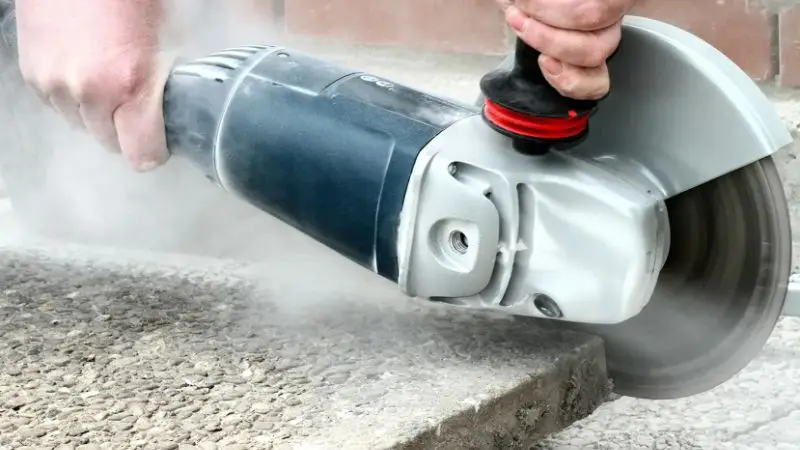
Equipped with the right masonry blade, a πριόνι τοιχοποιίας delivers uniform, straight cuts right through concrete block. Success comes down to picking the right blade, getting your marks exact, and clamping or bracing the block so it cannot move while you cut. These steps will keep the cut cleaner and minimize your risk while working. A properly fitted masonry blade also makes it easier to cut concrete blocks in a straight line when several pieces need the same type of cut.
Choose the Right Masonry Blade
You can slice through concrete blocks quickly and squarely with a circular saw, but only if you have the right blade mounted. When cutting concrete blocks with a εργαλείο κοπής τοιχοποιίας, pick a masonry blade that uses either abrasive material or diamond segments. You will get a longer working life from diamond blades, but abrasive discs do fine for one-off tasks. Make sure the λεπίδα diameter fits your saw, and read the manufacturer’s directions before you put it on. Do not ever use a wood blade, as it isn’t built to handle masonry. Tighten the blade securely and look it over for any cracks or visible wear before turning the tool on. If a blade is damaged or fitted wrong, it can wobble around, snap, or wander off line.
Mark and Secure the Block
Begin by taking measurements on the block for the dimensions you need. Draw a straight guide line across the surface with a pencil or marker, then carry it down all four faces of the block. Having a sharp, visible line makes keeping the ηλεκτρικό πριόνι σκυροδέματος on track much easier. Set the block on a steady workbench and clamp it down properly so it won’t budge during the cut. Adjust how deep the blade sits by following the instructions from your saw’s manufacturer. Turn the ηλεκτρικό πριόνι on and let it spin up to its top speed before you touch concrete. Keep the saw moving smoothly along your line without leaning into it or forcing the cut. If the block is on the thicker side, cut it in several shallow, measured passes until you are clean through.
How Do I Cut Concrete Blocks With an Angle Grinder?
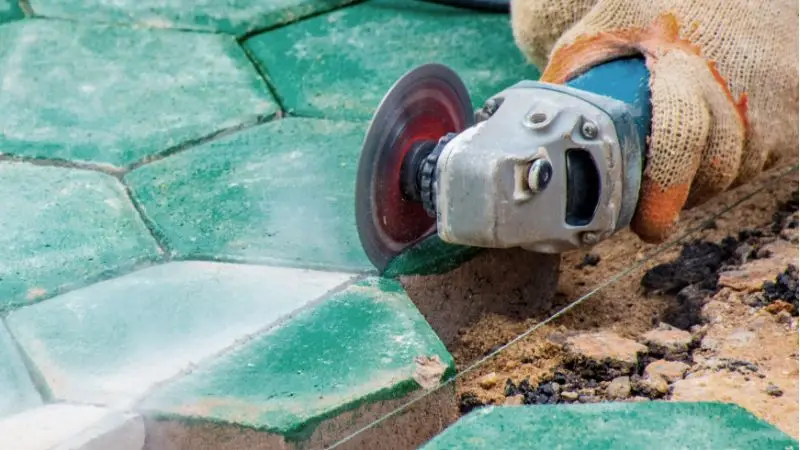
When you need to make modest cuts, trim an edge, or get into cramped spots where big saws get clumsy, an angle grinder is ideal. Using the proper diamond wheel, clamping the workpiece, and keeping your cuts slow and steady will leave you with a much tidier edge. This makes an angle grinder useful when you need to cut concrete blocks in smaller sections or work around tight areas.
Select a Diamond Cutting Disc
Fitted with the right disc, an angle grinder manages smaller cuts in concrete blocks with no trouble. When cutting concrete blocks with an angle grinder, go with a diamond cutting disc meant specifically for masonry. Because diamond discs are built to cut through the tough aggregate inside concrete, they tend to outlast abrasive ones. Make sure the disc size matches your grinder, and read through the tool manual before fitting it. Check the disc over for any chips, fractures, or lost segments prior to running it. Fit it tightly onto the spindle and confirm that it rotates completely true, without any wobble. Leave the grinder’s guard fitted at all times, as it shields you against sparks, dust, and pieces of broken disc.
Mark the Block Before Cutting
Start by taking the concrete block’s measurements and drawing your cut line using a pencil or marker. Draw that line all the way around the four sides to give yourself an obvious visual reference as you cut. Set the block on a sturdy work surface, clamping it down so it cannot shift. Turn the grinder on and let the disc spin up to top speed before it makes contact with the block. Follow the marked line with the disc, keeping your pressure gentle and consistent. Never push the grinder hard into the material. Make several shallow passes instead, taking the groove down little by little. Working this way keeps the tool under control and can leave a neater edge on small jobs.
What Is the Way to Cut Concrete Blocks Without Using a Saw?
Simple hand tools are enough to get through concrete blocks without using a cutting saw. For the odd cut here and there, a hammer and masonry chisel work fine, but you will want a block splitter if you have a batch of matching cuts to make. Neither option requires power, and either one can work well for smaller jobs around the house.
Using a Masonry Chisel
Cutting a concrete block without power is straightforward if you have a hammer and a masonry chisel. Set the block down on a flat, solid surface, then draw your cut line all the way around its four sides. Tilt the chisel just slightly off vertical on the line, tapping it with steady, measured hits. Work your way along the mark until the channel measures roughly ¼ inch deep. Once all sides are scored, set the chisel back in the groove and give it a solid blow with the hammer. The block ought to snap cleanly right where you scored it. This approach is well suited for smaller jobs if you are trying to figure out how to cut concrete blocks without a πριόνι τοιχοποιίας.
Try a Block Splitter
You can also split concrete blocks by hand using a block splitter. A lever drives a sharp blade down onto your marked line to force the block apart. Set the block firmly against the back fence of the splitter, lining up the blade directly over your mark. Bring the lever down with steady pressure until the block cracks apart. If you have a run of standard masonry blocks to chop, this approach yields uniform results. You will pay more for a splitter than for a hammer and chisel, though it cuts down your working hours on bigger jobs.
Τύλιξε
Shaping concrete blocks really boils down to just three actions: marking, scoring, and breaking. The method you choose will determine how easily you can cut concrete blocks and how clean the finished edge will be. While basic cuts are easy enough with just a hammer and chisel, using an angle grinder or κυκλικό πριόνι will make the job quicker and leave cleaner edges. Even if the cut edge comes out a bit coarse, it will still serve perfectly well for things like patios and garden walls. Hone your process on a piece of scrap concrete before moving on to the real pieces. Keep appropriate safety equipment on at all times, and brace the block firmly throughout the cut. As long as you use proper tools and mind your technique, cutting through concrete blocks can be done safely.
Συχνές Ερωτήσεις
What are the top hand-held concrete saws for cutting through brick and block?
Solid picks include the Makita 4100NHX1, Makita 4100KB, and DEWALT DWC860W, alongside the bigger cut-off saws built by Husqvarna or STIHL. Fit your saw with a λεπίδα διαμαντιών specifically rated for masonry when cutting through brick and block.
Which concrete saws work best on patio slabs and paving stones?
A 4½-inch grinder fitted with a diamond wheel is plenty for the occasional paver. If you have a lot of cuts to make, a wet masonry table saw leaves a much cleaner edge. Continuous-rim diamond blades are generally required when working with natural stone.
Ποια είναι τα ασφαλέστερα πριόνια σκυροδέματος για αρχάριους και ποια χαρακτηριστικά πρέπει να συγκρίνω;
Novices should focus on electric models built with guards, secure handles, manageable weight, simple blade replacement, and either a water feed or dust extractor. Look closely at how deep it cuts, along with blade size, overall weight, vibration levels, and how well it handles dust.
Which concrete saws are the simplest for DIY users to service and fix?
Simple corded electric masonry saws, such as Makita 4100-series models, are relatively DIY-friendly because they have straightforward designs. Look for units where the brushes, guards, and blades are easy to reach, and where spare parts are widely sold.
Which compact concrete saws work best when you have to cut indoors or in tight quarters?
When space is tight, compact models like the Makita 4100NHX1 and 4100KB come in handy. Smaller blades give you better control, and having wet-cutting capability or dust extraction matters even more inside.
Which concrete saws work best for small basement jobs and indoor cutting?
Pick a compact electric masonry saw with either good dust extraction or a water feed when working on small basement jobs. Tools built like the Makita 4100KB make sense here, since keeping concrete dust under control indoors matters so much.