Choosing the right wagon garden cart can transform your yard work from tiring to effortless. Whether you’re hauling mulch, tools, or soil, the right cart should match your yard’s size and handle your terrain with ease. Think about what you plan to move—some carts are built for heavy-duty hauling, while others are perfect for light gardening tasks. Look for key features like sturdy wheels, strong materials, easy steering, and a comfortable handle. A dumping function or towable design can also save time. The better the fit, the smoother your work will go.
Assess Your Needs Before Buying a Wagon Garden Cart
Before choosing a wagon garden cart, it’s important to understand what kind of work you do and how your outdoor space is laid out. Different carts are designed for different terrains and tasks, so taking a few minutes to assess your yard can save you time, effort, and frustration later. Your choice should suit both your space and your workload.
Let’s start with two of the most important factors—your yard’s layout and the tasks you do most often.
Yard Size and Terrain
The size and layout of your yard affect which wagon garden cart will work best. Choose based on how much space you have and what kind of ground you’ll be covering.
- Small, flat yards: Opt for a compact, foldable garden wagon cart with wheels. These turn easily in tight spaces and store neatly when not in use.
- Large or uneven yards: Look for carts with all-terrain tires that handle gravel, roots, or thick grass without getting stuck.
- Hilly or sloped yards: Choose a cart with a comfortable handle, and consider one with a braking feature for better control and safety.
A good cart should glide easily over your yard without making the job harder.
Typical Loads and Tasks
Think about what you haul most often. If you’re carrying light materials like flowers, leaves, or garden tools, a basic cart might do the job. But if you regularly transport mulch, soil, or firewood, you’ll want the best garden wagon cart for heavy loads. These are built to carry higher weight capacities and are designed to stay stable under pressure.
A heavy-duty garden wagon cart for gardening also works well if you need a cart that can handle both bulk materials and frequent dumping. For small tools and supplies, a garden cart wagon with a seat and storage adds convenience, helping you stay organized and efficient.
Wagon Garden Cart Features to Consider
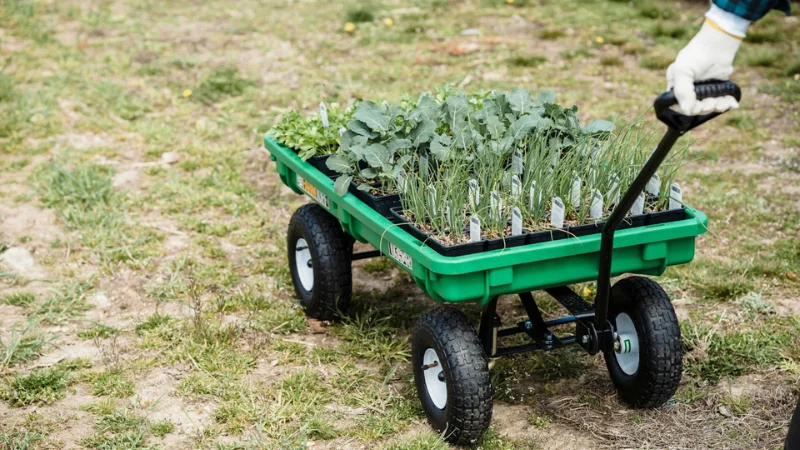
Finding the right wagon garden cart means paying attention to more than just looks. The right features can save your time, protect your back, and make tough tasks much easier. From weight limits to wheel types, every detail matters when it comes to performance and comfort. A well-matched cart can transform how you handle yard work.
Let’s take a closer look at the most important features to check before you choose your cart.
Weight Capacity
Your wagon must be able to carry your usual load without snapping or overturning. The load capacity of most garden carts is 350 to 600 pounds, more than sufficient on an everyday basis. But a higher-capacity heavy-duty garden wagon cart to carry rocks, bricks, or wet soil is necessary when you work daily.
By overloading a light cart, damage can be caused to the structure, and steering becomes more difficult. It is good enough to carry leaves, tools, or small potted plants, but any other hard work requires additional strength and stability.
Weight and Strength
The materials used in the cart will influence the durability of the cart and the weight it will hold. Metal carts are tough and durable and are designed to get hard work done; however, they are likely to rust when left in the open. The plastic carts are lightweight and rust-resistant; however, they might crack under the weight (overload).
Other carts are mixed to balance one with the other. To have your cart perform heavy-duty work year after year, get one with strong construction. It is more vital when you consider investing in the best garden wagon cart that will undergo frequent use and carry heavy loads.
Wheels and Terrain
Wheels play a major role in how smoothly your cart moves across different surfaces. Wide, sturdy wheels handle rough terrain like grass, gravel, or uneven ground with ease. Pneumatic (air-filled) tires offer a cushioned ride on bumpy yards, while solid wheels are better for paved or flat areas.
If your yard includes steep paths or uneven ground, go for large, rugged wheels designed for traction. Many foldable garden carts with wheels now include tire options that match both urban and rural environments for better control.
Size and Maneuverability
Your cart should be as large as both your yard and storage space need. The big cart moves more material per trip and is difficult to move through gates or between garden beds. Lighter carts are simple to turn, store, and move around small spaces.
Suppose you have a small area or you must pass through narrow routes; a small garden cart wagon with a seat and storage could be a wiser decision. Minimize the load capacity of your cart to ensure that it improves and does not interfere with your work.
Handle and Comfort
Since you are going to spend a lot of time holding and pulling your cart, the comfort of the handling should not be ignored. Hand strain can be minimized by using a padded or ergonomic handle when doing long tasks. It is possible to get some carts with adjustable handles, which enable you to adjust the height to improve your posture.
A good grip also provides a better grip when steering or forging rough roads. When you plan to use the cart extensively, you could always test out the feel of the handle before committing yourself to a cart. A comfortable handle is as crucial as the wheels or the size in the long gardening sessions.
Dump Feature
If you often haul loose materials like mulch, gravel, or compost, a dump feature can be a game-changer. Instead of scooping everything out by hand, you simply tip the bed and unload in seconds. A heavy-duty garden wagon cart for gardening with a dumping function adds speed and ease to your yard work. Many carts include levers or release latches to make this process even smoother. For gardeners tackling big projects or heavy messes, a dump cart is not just a convenience—it’s a must-have.
Extra Features and Cart Care Tips

When you have settled on the suitable cart, any care will guarantee that your cart goes through the seasons. Your wagon garden cart can become even more helpful with additional features, such as folding options, weather resistance, and easy maintenance. And whether you don’t have room to spare or use your cart year-round, keeping considerations of these last little details in mind makes your investment worth even more.
Folding and Storage Options
Storage is important, especially when you are lacking space. A wagon-wheeled garden cart is ideal in a small shed, garage, or even a closet. These carts are compact and may be placed at the back of doors or mounted on a wall.
When folding is not possible, consider compact carts with a thinner profile. Storing it properly will leave your cart in good condition and prepared to work on your next job. Do not leave it out in the field, as moisture will rust or wear it out. When not in use, tucking away your cart in a dry state helps prolong its life.
Weather Resistance
Gardening doesn’t always happen in perfect weather. That’s why your cart needs to handle rain, sun, and even cold. A heavy-duty garden wagon cart for gardening should have rust-resistant parts and UV-protected materials. Metal carts need protective coatings to prevent corrosion, while plastic carts resist moisture but may fade if left in direct sunlight.
If you’re using the cart in winter, make sure moving parts like dumping levers don’t freeze or stick. Covering your cart with a tarp or storing it under shelter is a simple way to keep it weather-ready all year long.
Useful Accessories
Accessories turn a basic cart into a highly efficient garden tool. Features like tool holders or cup holders keep your essentials within reach while you work. A garden cart wagon with a seat and storage adds comfort and convenience, especially during long yard sessions.
Removable liners can help keep soil and mulch from spilling out, while reinforced handles offer better grip for heavier tasks. These extras may seem small, but they help you stay organized and reduce strain. Choosing a cart with thoughtful accessories helps speed up your chores and makes your work feel smoother.
Routine Maintenance
Regular maintenance keeps your cart in top shape. Check the tires often—especially if they’re pneumatic—and make sure they’re inflated properly. Oil any moving parts, such as wheel axles or dump hinges, to prevent sticking or squeaking.
Tighten bolts or loose screws when needed, and always rinse off mud or dirt after each use. A clean cart is easier to store and lasts longer. With just a few minutes of care now and then, your wagon garden cart will continue to serve you well through every season and task.
Wrap Up
Choosing the right wagon garden cart makes yard work easier, faster, and less tiring. Whether you’re hauling light tools or heavy loads like soil and mulch, there’s a cart designed to match your needs. Look for strong materials, good weight capacity, and features like dump beds, padded handles, or folding frames. A foldable wagon garden cart with wheels is great for small spaces, while a heavy-duty wagon garden cart for gardening suits tough tasks. With proper storage and regular maintenance, your garden cart wagon with seat and storage will last for years. Pick smart, and enjoy smoother gardening every season.
FAQs
How do I clean my wagon garden cart?
Next time, you should wash your cart with a hose. Brush and apply some gentle soap to get rid of hard dirt. It should be dried thoroughly and kept. This is to make your cart look good and perform without any problems.
May I use my wagon garden cart on gravel or bad soil?
You can, yes! A cart with big and thick wheels should be chosen. These are the type of wheels that can roll on gravel, grass, and bumpy areas without getting stuck. In case your yard is full of rocks, seek pneumatic tires.
What weight can a wagon garden cart take?
The average weight that carts carry is between 350 and 600 pounds. Be sure to look at the label or the manual to find its precise weight capacity. Putting too many items in your cart can make it difficult to maneuver, and they can get damaged too.
Is my wagon garden cart something I have to put together?
Most of the carts require some assembly when one purchases them. The instructions are most often provided in simple terms. You may require a wrench or a screwdriver. Most people take approximately 20 minutes to 40 minutes of assembly work.
In what scenario should I disregard the flat tire on my cart?
Adding air. In case your cart contains pneumatic tires, you may add air with a bike pump. With a flat that will not hold air, look out for a puncture. It is possible to either patch the small holes or change the tire.