House lifting is not in any way comparable to vehicle lifting. A vehicle lifting jack is designed to lift cars or trucks to a certain reinforced position on the vehicle. Your house, on the other hand, is not designed to be lifted in such a manner. If you’re considering using a bottle jack for house lifting projects, then you have to know what you’re getting yourself into.
We’re going to show you how these jacks could be used in house lifting and the risks associated with it.
Why Lifting a House Isn’t Like Lifting a Car
The thing about a vehicle is that it is a predictable thing. It has a predictable lift point, a predictable weight distribution, and is designed with this kind of use in mind. Your house is not so predictable. Your house is made up of complex interlocking parts such as the foundation, the beams, the joists, and the walls, which all work together to create a secure and stable structure. When you apply force to lift one spot on the house, you are applying stress throughout the structure in a way that is not always predictable.
Lifting a house is always a tricky situation because:
- There are no specific lifting points that are marked to ensure the safety of the house.
- The weight of the house keeps changing while lifting, making the whole house a risky situation.
- The key points of the house might crack due to the pressure applied.
- Alignment is another factor that might affect the foundation of the house.
All these are valid issues when we are talking about such a big investment, which is a house. So, we need to be more careful if we are planning to use a vehicle lifting jack.
What Exactly is a Vehicle Lifting Jack?
The vehicle lifting jack is essentially a mechanical or hydraulic device used to lift a vehicle vertically. You’ve likely seen bottle jacks, floor jacks, or scissor jacks. These jacks are intended to lift the vehicle vertically for a short time, and then you’re meant to shift the weight to a solid surface.
When we’re referring to a bottle jack for house lifting projects, we’re not referring to lifting the entire house vertically in the air. That’s the key difference. We’re talking about small, localized, careful adjustments, and that’s a crucial distinction.
Why People Even Consider Bottle Jacks for Houses
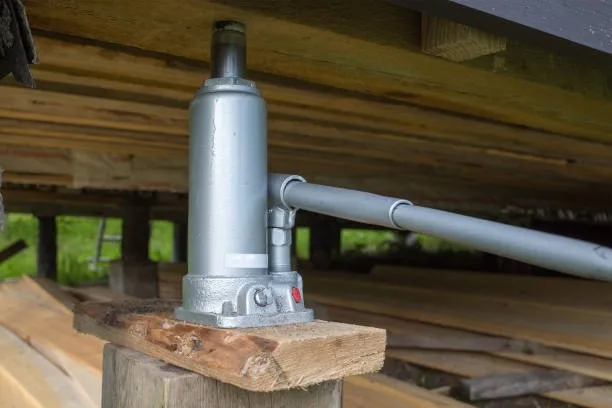
Bottle jacks are a type of vehicle jack that, despite their size, have a great lifting capacity. This is perhaps the main reason why people think to themselves, “Hey, that’s something that might work on my house too.”
- You might see a bottle jack used in situations such as:
- Lifting a beam that is sagging a little too much so that a floor can be leveled.
- Holding up a structural element of a building until repairs can be made.
- Making leveling corrections.
The thing to remember, however, is that a jack is never used for more than a temporary solution, no matter what kind of support it is used for.
The Real Limitations You Need to Know
Despite their great lifting ability, vehicle lifting jacks aren’t designed for structural use. That’s all.
The reasons that vehicle lifting jacks don’t make the grade are simple:
- The point of contact is too small, creating a point load that structures abhor.
- Hydraulic systems aren’t designed to support a structure, just to function for a little while.
- Vehicle lifting jacks don’t offer much height.
- There’s no redundancy in the design to allow multiple vehicle lifting jacks to work in sync.
If you overextend a vehicle lifting jack past its design limits, you invite a world of trouble in the way of structural movement and damage.
Load Distribution and Cribbing
If you’re going to use a bottle jack for house lifting projects, understanding load distribution is not optional.
What Is Cribbing, and Why Does It Matter?
Cribbing consists of stacked hardwoods or other materials that distribute the force over a larger area. It provides you with a form of mechanical support, which does not depend upon the hydraulic pressure of the jack. It’s like having an insurance policy.
Don’t Create Pressure Points
If you press a jack against a wood beam or a masonry block, you’re asking for disaster. It will crush the wood fibers or crack the block. You need load spreaders, steel plates, or blocking materials to distribute the force correctly.
Your Foundation Needs to Be Rock Solid
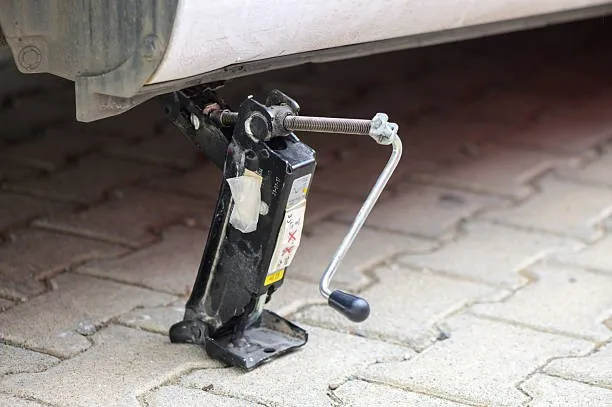
The ground or surface that the lifting jack of your car is resting on must always be stable, and this is without exception.
- The concrete should be in good condition, not cracked or decaying.
- The soil should be compact and reinforced. Steel base plates might be necessary to stop the jack from sinking.
Movement at the bottom always translates to instability at the top. And when we are talking about your house, then that is something that should not be messed around with.
How to Do This Safely (If You’re Going to Do It)
Using a vehicle lifting jack for housework requires discipline and patience, and this is what your process should look like.
- Go Slow, Really Slow
We’re talking fractions of an inch at a time. Lift a tiny bit, then stop and watch how the structure responds. Any creaking, cracking, or resistance means you need to stop and reassess.
- Never Trust the Jack Alone
Hydraulic pressure should never be your only support. Once you’ve lifted, get cribbing, posts, or columns under the structure to carry the load. The jack was the tool you used to lift the structure, but it was not the solution.
- Keep Your Eyes and Ears Open
Listen for cracking sounds. Watch for cracks forming. Feel for unusual resistance. Any of these signs means stop immediately. Your house is telling you something, and it would do you good if you listened.
Mistakes People Make (Don’t Be One of Them)
A lot of folks get into trouble by treating their house like a big car. It doesn’t work that way.
- Thinking the jack’s load rating means you can just go for it.
- Lifting too fast or unevenly across multiple points.
- Ignoring damage that was already there.
- Leaving the weight sitting on just the jack (this is how bad things happen).
- Buy a quality vehicle lifting jack from trusted manufacturers like Vevor.
Learn from other people’s mistakes instead of making your own.
Check Your Jack Before You Even Think About Using It
Before a vehicle lifting jack touches your house, you need to inspect it thoroughly.
- Are the hydraulic seals good? No leaks?
- Does the release valve work smoothly?
- Will it hold pressure without slowly sinking?
If anything seems off or you notice weird noises, fluid leaks, or inconsistent pressure, that jack stays in the garage. Don’t gamble with your house.
Better Tools Are There
It is understandable that your foundation has been troubling you for a really long time. After having watched a number of videos on the internet of people using a bottle jack for house lifting projects, it seems like it is not a bad idea. However, for house lifting projects, better tools are available in the market.
You can actually look into:
- Adjustable steel support columns provide temporary support for your ceilings and walls.
- Screw jacks, which offer you precision and predictability, or
- Professional house lifting systems, if you’re doing something worthwhile.
The right tools aren’t the tools you already have; they’re the tools that are actually appropriate for the job you want done.
Signs Your Structure Isn’t Ready for Any Lifting
Of course, before you even think about positioning a vehicle lifting jack under your house, you need to assess whether or not your house is in good enough shape to be lifted. Not all buildings are in good enough shape to be lifted, and if you try to lift a house that is not in good enough shape, you can end up making a bad situation much, much worse.
If you see the following problems, that is a red flag:
Visible Foundation Cracks
If you have cracks in your foundation greater than a quarter inch in width, and especially if the cracks are enlarging over time, you should have your foundation repaired before any kind of lifting. This is because the lifting action can make the cracks worse.
Rot or Insect Damage
You should check your beams, sills, and joists. If you can easily stick a screwdriver into the wood, and especially if you see evidence of termites and carpenter ants, the wood is not strong enough to handle the concentrated weight of the lift.
Active Water Damage or Moisture Issues
You don’t know what water-damaged wood is going to do. It may look great on the outside but not on the inside. Furthermore, if you have moisture issues, don’t lift the house. This will simply move the problem around.
What to Do If You Spot These Issues
If you notice any of these signs, then using a bottle jack for house lifting is not the solution but rather fixing the problem. Get a structural engineer or a seasoned contractor to assess what you’re dealing with. This way, you’ll be told whether fixing is a priority or if house lifting is a good idea at all.
In some instances, the floors are sagging due to a problem that cannot be solved by house lifting. Perhaps the foundation is failing, or the ground is shifting, or the house was not well constructed to begin with. While a car lifting jack might be effective in lifting objects, if the problem is not fixed, then you’re essentially setting yourself up for the same problem in the future.
FAQs
Can a vehicle lifting jack safely lift an entire house?
No, a vehicle lifting jack is not designed to lift an entire house. These jacks are built for lifting vehicles at specific reinforced points and for short periods of time. In house lifting projects, a bottle jack may only be used for small, localized adjustments and must always be supported with proper cribbing or structural supports.
What size bottle jack is needed for house lifting work?
Many bottle jacks used in construction adjustments range from 6-ton to 20-ton capacities. However, the lifting capacity alone does not make the jack suitable for structural lifting. Proper load distribution, stable ground support, and additional structural supports are far more important than simply choosing a high-capacity jack.
Is it safe to leave a house supported only by a hydraulic jack?
No, it is never safe to leave structural weight resting only on a hydraulic jack. Hydraulic systems can lose pressure over time, causing the jack to slowly lower. After lifting, the weight must always be transferred to cribbing, steel posts, or other permanent structural supports.
When should you avoid using a bottle jack for house lifting?
You should avoid using a bottle jack if your house has major foundation cracks, rotting structural wood, insect damage, or active moisture problems. Lifting a structure with these issues can worsen the damage and compromise the stability of the building. In such cases, it is best to consult a structural engineer or professional contractor first.
The Bottom Line
Can a vehicle lifting jack play a part in some “bottle jack for house lifting projects”? Yes, but a limited part, and definitely not the starring part. Houses need controlled movement, balanced loads, and support systems. Always.
The difference between lifting a car and lifting a house is not just important, but rather imperative, before any hydraulic action is applied to your house. Take your time, plan well, and use the right supporting equipment. And, of course, know when to say when.
Your house is probably your biggest investment. Give it the respect and caution that it deserves. In doubt? Get a professional. Some jobs are worth the cost of a professional, and house lifting is definitely one of them.