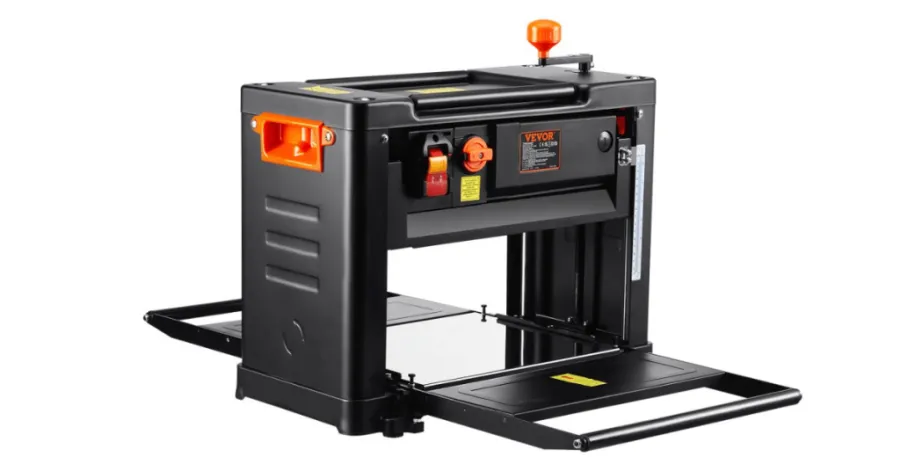
A thickness planer levels wood pieces. It helps convert uneven boards into flat and smooth surfaces. If you are making cabinets, furniture, and other wooden goods, you require this essential tool.
In woodworking, a thickness planer is quite helpful. It saves time by automatically doing the labour-intensive task of wood trimming. It also makes neat, professional-looking wood pieces. Whether you are experienced or fresh to the profession, this instrument is perfect for producing precise and polished work.
What Does a Thickness Planer Do?
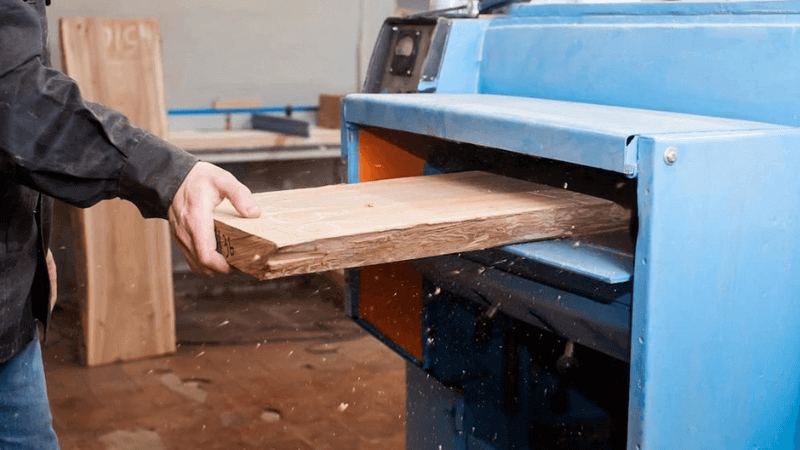
If you want to perform your woodworking tasks smoothly, a thickness planer is a must-have. It quickly turns rough, uneven wood into smooth, even pieces. Let’s dive into its functions:
Even the Thickness of the Wood
Irregular woods are difficult to utilize, and most of the old or raw wood usually has inconsistent thickness. A wood planer solves this by uniformly even out all boards. You put the wood into the machine; it strips off thin layers of wood. This ensures your boards are consistent in thickness. You can get your projects to work better together. For a tidy finish, equal thickness is crucial whether constructing a cabinet or table.
Smoothing Rough Wood
Raw wood can feel rough and have splinters. A surface planer removes the rough top layer. This leaves the wood smooth and safe to touch. Smooth wood looks better and is easier to paint or varnish. This step is essential for a clean, polished look.
Making Both Sides Even
Wood needs even sides for strong joints. A thickness planer ensures both sides are flat and parallel. This helps create tight, strong joints, such as dovetails or edge-to-edge connections. Using a planner improves the quality and strength of your work.
How Does a Thickness Planer Work?
Start with Planning
A thickness planer shaves off thin layers of wood to smooth it. You insert the wood into the machine; the cutterhead trims the top. The wood is processed until it reaches the specified thickness.
Set the cutting depth first to operate a planer effectively. Feed the wood slowly to prevent uneven areas. Before beginning, always verify the grain direction. Pushing wood against the grain could result in tear-outs or rough patches.
Basic Compnents of a wood planer
Understanding a planner’s components enables you to operate it more effectively. The essential components are a cutterhead with wood-cutting blades. The infeed and outfeed rollers move the wood through the planer. A depth adjustment knob lets you choose how much wood to remove.
To keep your space tidy, it also has a dust collection port. This collects wood shavings. Each part of a thickness planer has a job to make your wood look great.
Why is it better than manual tools?
A planer saves time and effort compared to hand tools. It can handle a lot of wood quickly, which is excellent for large projects. Unlike hand tools, which can leave uneven surfaces, a planer also gives consistent results.
Another big plus is accuracy. A planner ensures perfect results every time, from furniture to small DIY items. It provides exact measurements for accurate wood shapes every time.
Types of Thickness Planers
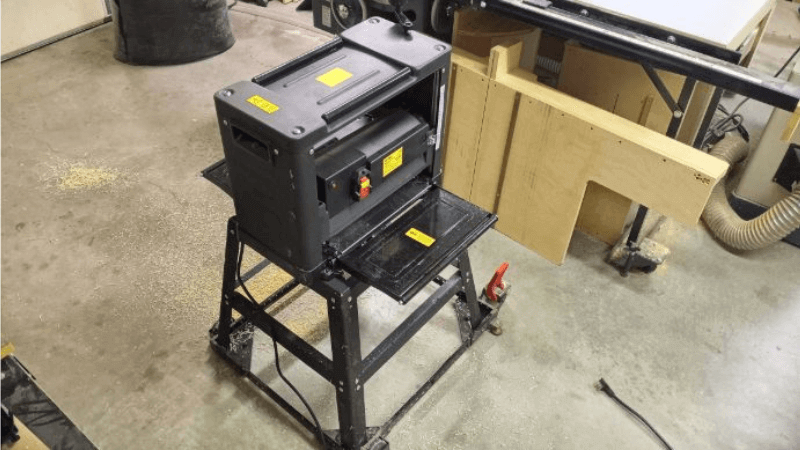
There is a range of thickness planer alternatives available for multiple tasks. Each type has special features to match your woodworking needs. You can choose according to the results you want. Let’s examine the three main types:
Benchtop Thickness Planer
A benchtop thickness planer is small and fits in tight spaces. You can place it on a table or workbench. It’s great for hobbyists or small workshops. This tool is light but strong enough for most DIY jobs. It works well for smaller boards, making them smooth and even.
Some benchtop models are 2-in-1 tools. They can plane and thickness wood, saving time and effort. If you need a planner for home projects, this is a good pick.
Handheld wood planers
A handheld wood planer is easy to carry and use. You can take it to job sites or use it on big, fixed wood pieces. It’s excellent for fixing uneven surfaces, flattening edges, and trimming doors. Handheld planers require more manual control than tabletop ones. You run it across the wood to remove layers. Though not as precise as other planners, it performs well for modest jobs or fast repairs.
Industrial thickness planers
An industrial thicknesser is made for heavy-duty work. It’s bigger, stronger, and perfect for professional workshops. This type handles wide boards and large amounts of wood easily. If you frequently undertake large projects, this is the best choice.
These machines feature advanced capabilities, including automatic feeding and high-speed cutterheads. They give precise results and can cut tough wood. However, they require more space and are more expensive.
Key Features to Think About Before Buying
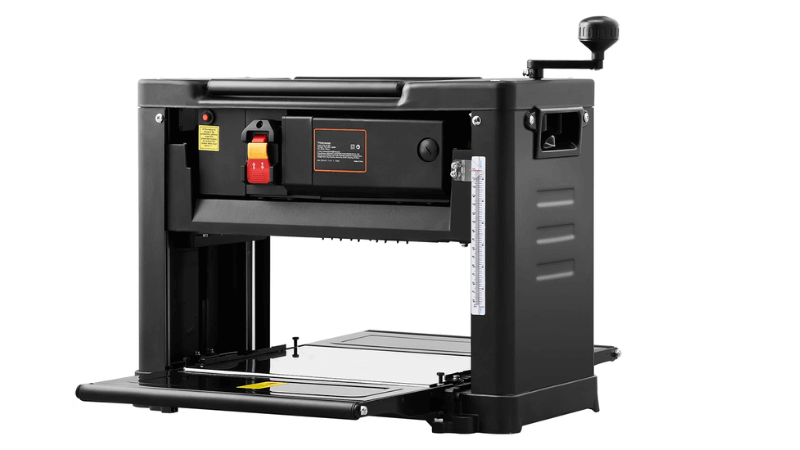
When picking a planer for woodworking, focus on key features. These features determine how well the machine meets your needs. Let’s break down the important points to select the best thickness planer for beginners.
Cutterhead Type & How It Works
The cutter head is the central part of a planer. It holds blades that shave wood layers. There are two main types: straight knives and helical cutter heads. Straight knife cutter heads are found in basic models and use straight blades.
These are cheaper but can leave lines on wood. Helical cutter heads feature small, square blades arranged in a spiral shape. They give smoother results and are quieter. For professional results, choose a helical cutter head. It works better and saves time on sanding.
Planning Size & Limits
Planning size refers to the largest wood width and thickness it can handle. This matters because it determines the size of boards that can be used. Most small planners handle boards up to 12 inches wide, while bigger machines work with much larger pieces.
Also, check the depth of the cut. This is the amount of wood it removes in one pass. A deeper cut is faster but can strain the machine or leave rough spots. Removing thin layers gives smoother results.
Blade Material & Strength
Planer blades are essential for achieving optimal performance and ensuring long-lasting use. Most blades are made of high-speed steel (HSS) or carbide, each with its pros and cons.
- HSS blades: These are sharp and cheap. While they perform well on softwoods, they quickly lose sharpness on hardwoods.
- Carbide blades keep sharper for longer and are more durable. Though more expensive, they are great for hardwoods and heavy usage.
Speed settings and Wood Feed Rate
Choosing a thickness planer depends mostly on speed and feed rate. These features affect the smoothness of your wood and the speed of your finish.
Why speed settings are important
Speed settings control the speed at which the cutterhead spins. Faster speeds remove wood quickly, while slower speeds give more detail. Use high speeds for softwoods. For a thickness planer for hardwood or fine work, slower speeds are better.
What is the feed rate?
Feed rate refers to the speed at which wood moves through the planer. A slow feed rate produces smoother cuts but requires more time. A fast feed rate works quicker but may leave rough spots.
Here’s a simple comparison:
| Feed Rate | Best For | Drawback |
| Slow Feed Rate | Smooth finishes, hardwoods | Takes more time |
| Fast Feed Rate | Quick shaping, softwoods | May leave rough spots |
Reducing Snipe & Managing Dust
Snipe and dust are common problems with planers. Fixing these issues makes your work easier and keeps your area clean.
What is snipe?
Snipe is when extra wood is cut at the start or end of a board. This makes the wood uneven and wastes material. To avoid snipe, support the wood well and use planers with anti-snipe features.
Picking planners with snipe and dust fixes
Modern planners often solve snipe and dust problems. Look for models with pressure rollers and good dust ports. These features save time and improve your woodworking results.
Top Thickness Planer Brands in 2025
Selecting the right thickness planer can be challenging due to the numerous options available. Below are some top brands in 2025 that provide you with top-notch tools:
VEVOR
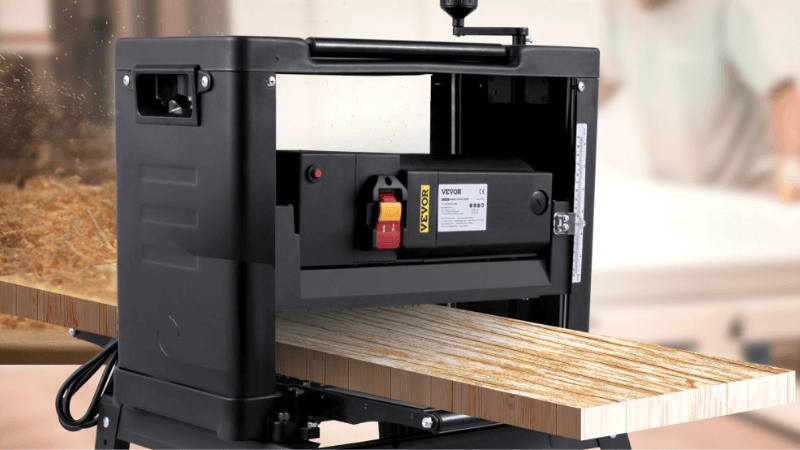
If you want professional yet affordable tools, VEVOR is a popular brand. They provide a range of effective tools. Their planners are great for beginners or hobbyists who want good results. VEVOR models are strong and user-friendly, with a simple-to-operate system. They are ideal for small to medium projects.
They are also portable. Many VEVOR planners are compact and lightweight, so they can be used in tight spaces and stored easily when not in use. If you need a planner for professional use, VEVOR is a smart pick.
Features of VEVOR Planers
WEN planners have helpful features for better woodworking. Here’s what they offer:
- Two-Blade Cutterhead: This feature enables smooth cuts on small and medium-sized boards.
- Depth Settings: You can adjust the amount of wood removed each time.
- Dust Port: VEVOR planers keep your workspace clean by collecting dust.
Is VEVOR Right for You?
VEVOR planners are best for hobbyists and DIY fans. They’re suitable for small projects or occasional use. While not as strong as big industrial planners, they are simple and affordable.
DEWALT Thickness Planer
DEWALT is a trusted brand for durable and precise tools. Their planners suit professionals and serious DIYers. Features such as three-knife cutterheads and adjustable speed settings ensure smooth finishes.
DEWALT planers also reduce snipe, a common wood issue. For heavy-duty tasks, DEWALT offers some of the best options available.
Makita
Makita planers are innovative and top-quality. They run quietly and also collect dust effectively. You can use them easily for indoor setups. They have ergonomic handles to provide comfort while long processes. You can opt for Makita planers, if you want a planer that’s easy to use and performs well.
WEN
If you want an affordable thickness planer, WEN is also a trusted brand for woodworking tools. WEN provides interesting choices for users. Great for small actions, these planers provide constant results.
Why Choose WEN?
WEN planers simplify carpentry. Here is a reason for their suitability:
- They are reasonably priced but powerful alternatives.
- Their tiny, light construction makes them simple to store..
- Simple Controls: Easy to control with its simple system.
Conclusion
A thickness planer is a must-have for woodworking. It makes wood smooth and even, saving time and effort. This tool improves your projects by giving precise results. Consider your needs, space, and budget before purchasing one. Whether you’re new or experienced, a good planner helps you work better. It boosts your skills and makes woodworking more fun.
FAQ
What is a thickness planer good for?
A thickness planer guarantees uniform thickness throughout all wood components. It flattens, evens sides and smooths coarse wood. This tool works great for making cabinets, furniture, and other wood-based tasks.
Is every kind of wood suitable for use with a thickness planer?
Indeed, it functions on both hardwoods and softwoods. Use strong, sharp blades for tougher woods. For optimal outcomes, always feed the wood with the grain.
When using a thickness planer, how do you prevent snipe?
Support the wood at both ends to prevent snipe. Use the infeed and outfeed tables to maintain stability. Certain planers have unique qualities to lessen snipe.
Can novices use a thickness planer?
Absolutely, novices can quickly use a thickness planer. It is helpful for jobs like board resizing and wood smoothing. For basic jobs, begin with a tiny benchtop model. Always use waste wood on your project after practising and following safety guidelines.
How do you keep a thickness planer running?
Clean the dust system regularly and inspect the blades for sharpness. Act fast to replace or sharpen dull blades. Lubricate the moving components to maintain the machine’s smooth operation.