Your car sits parked, the charge point is three meters away, and the Type 2 charging cable in the trunk stops just short. That gap annoys more new EV drivers in Europe than any real fault, and it traces back to the wrong cable. Power rating, length, and build determine what a Type 2 cable can do, and the same applies to the EV charger extension cables people add when reach falls short. Get it wrong and charging slows. This guide covers each part, plus how charging levels differ, so you’ll know which Type 2 EV cable fits your car.
Recommended For Your Project
What Is a Type 2 Charging Cable?
A Type 2 charging cable is the standard AC lead for electric cars across Europe, built around the IEC 62196-2 Type 2 connector that almost every carmaker now fits. It carries power from a wallbox or public post and swaps safety signals throughout. Two things limit these outdoor EV charging stations: current and whether they’re wired for one-phase or three-phase power.
The 7-Pin Type 2 Connector Explained
A Type 2 connector has seven pins: three live phases, a neutral, an earth, and two thin signal pins. One tells the car how much current the circuit can supply; the other confirms the Type 2 plug is seated before power flows. The flat edge across the socket lets the car latch the plug so that nobody can pull your electric car cable out mid-session.
Mode 2 Vs Mode 3 Type 2 Charging Cords
Mode 3 is the plain Type 2 charging cord with a connector at each end, used with a wallbox or public post. Mode 2 is the portable kit: a control box sits partway along the car charging cable, with a household or CEE plug at the wall end. Portable EV charger units include that box, so they weigh more than a bare Type 2 EV cable of the same length.
Mode 2 trades speed for flexibility: a household socket caps what the electric car cable delivers. This portable charger guide shows where that trade-off works.
4 Power Ratings Of Type 2 Charging Cables
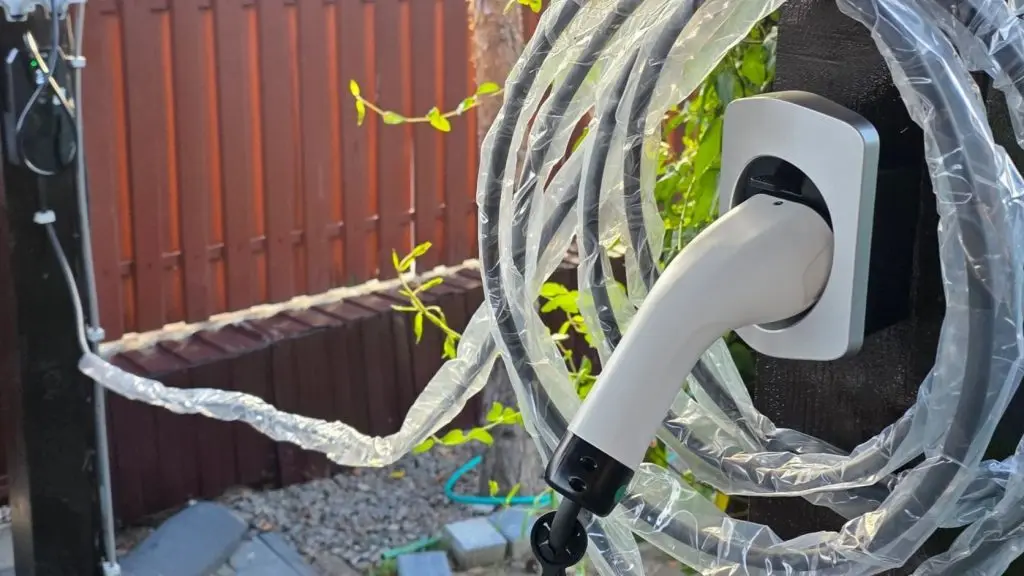
Power is where most buying mistakes happen. Every Type 2 charging cable is rated by current and phase count, and those numbers cap how fast the car pulls AC power. Headroom your onboard charger can’t use adds weight.
3.6 kW and 7.4 kW Single-Phase Type 2 Cables
Single-phase ratings cover 3.6 kW at 16 A and roughly 7.4 kW at 32 A. A 3.6 kW Type 2 charging cable suits plug-in hybrids and small batteries, where an overnight top-up is enough.
Step up to 32 A and the picture changes. A 7 kW Type 2 charger pairs with the single-phase wallbox most European homes end up with, and a 7 kW EV charging cable refills a 60 kWh pack in about eight hours. Size the conductors for it: 6 mm² copper at 32 A, not 16 A wire.
11 kW and 22 kW Three-Phase Type 2 Charging
Three-phase Type 2 charging delivers 11 kW at 16 A and 22 kW at 32 A across all three live pins; only cars with a three-phase onboard charger can use it. An 11 kW Type 2 EV cable covers most three-phase homes and plenty of street posts.
A 22 kW car charging cable is the fastest AC option sold as a loose lead, and a 22 kW Type 2 charger still works on single-phase power; it just charges at single-phase speed. Buy it only if your car takes three phases.
Unsure about your home supply? This level 1 and level 2 comparison explains it.
| Power | Current and phase | Approx. type 2 charging time, 60 kWh pack | Suits |
| 3.6 kW | 16 A single-phase | About 17 hours | Plug-in hybrids |
| 7.4 kW | 32 A single-phase | About 8 hours | Single-phase wallboxes |
| 11 kW | 16 A three-phase | About 5.5 hours | Three-phase homes |
| 22 kW | 32 A three-phase | About 3 hours | Three-phase onboard chargers |
| Example, 22 kW class | 32 A three-phase, 5 m | About 3 hours | VEVOR Type 2 to Type 2 EV Charging Cable with a TPU jacket |
Type 2 Cable Length, Weight, and Daily Handling
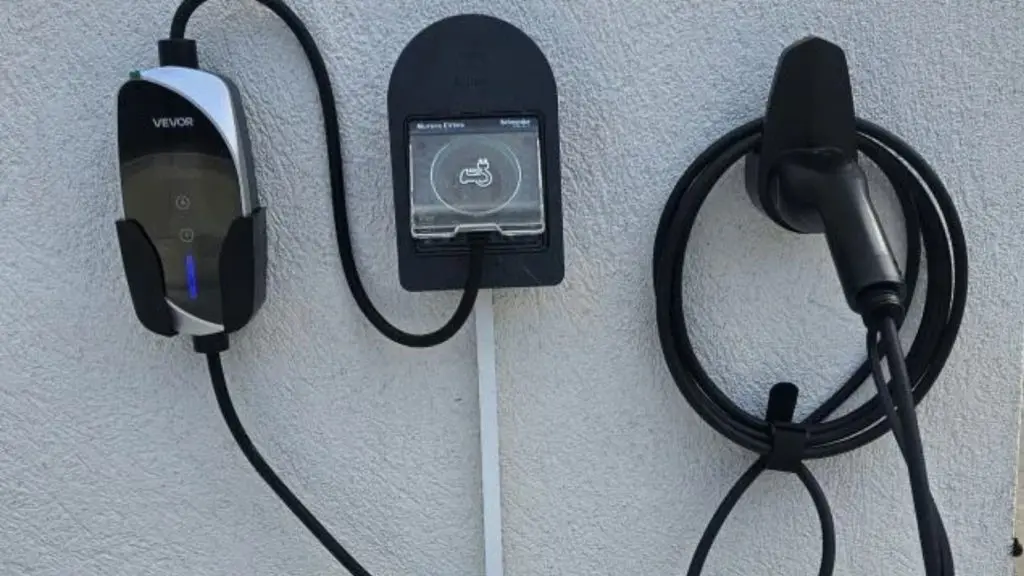
Length looks easy until you coil a wet 10 m lead in the dark. Most drivers buy longer than they need. Weight counts as much as reach, especially with a Mode 2 unit from the portable EV charger range.
How To Choose Between 5 m, 7 m And 10 m
Five meters covers a car parked nose-in beside a home wallbox, seven meters reaches a charge port on the far side, and ten meters suits shared parking or a set-back post. Measure the path the Type 2 charging cable takes: around the bumper, up to the port, slack at both ends. A 7 m three-phase cable is the sweet spot for most driveways.
| Parking situation | Suitable Type 2 charging cable length | Trade-off |
| Wallbox beside the charge port | 5 m | No slack if you reverse in |
| Charge port on the opposite side | 7 m | Noticeably heavier coil |
| Shared bay or set-back post | 10 m | Bulky storage |
| Example, 7 m class | 7 m, 32 A three-phase | VEVOR Type 2 to Type 2 EV Charging Cable with a 22 kW TPU jacket and carry bag |
What are the most common drawbacks of long EV charger extension cables according to buyers?
Weight, voltage drop, and storage come up again and again:
Heft. Ten meters of 6 mm² three-phase copper is a two-handed coil.
- Voltage drop. Every extra meter of EV charging cable adds resistance, so a long run at 32 A warms up and can shave Type 2 charging speed.
- One more joint. An extension adds two contact faces, and heat builds first at the Type 2 plug.
- Storage. A long car charging cable rarely fits its own bag, and loose loops trip people.
- Standards. IEC guidance says a cord extension set should not be added to the vehicle cable assembly, which complicates a warranty claim.
EV Charger Extension Cables And What Buyers Report
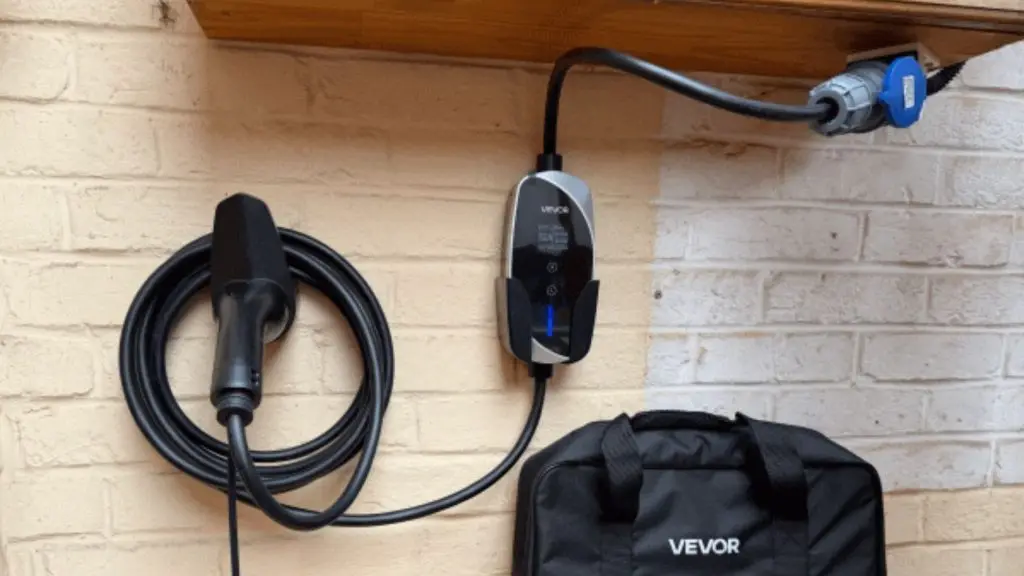
Owner feedback on extension leads is blunt: praise lands on build details rather than brands, complaints on the same few shortcuts. With the spec sheet open, any EV charging cable in the EV charger extension cable range is easy to judge.
What are the highest-rated portable EV charger extension cables according to user reviews?
Top-rated ones share four traits rather than a badge: conductors sized for the full rated current, a TPU jacket that stays flexible in the cold, IP65 or better at both ends, and a thick molded collar where the EV charging cable meets the connector. Missing any one of those draws complaints fast.
| Use case | What top-rated leads get right | Spec to match |
| Single-phase home wallbox | No warming at 32 A | 3 x 6 mm² copper, TPU jacket |
| Three-phase home or street post | Full 22 kW, no derating | 5 x 6 mm² copper, locking latch |
| Portable mode 2 type 2 charger | Holds the control box weight | Molded strain relief, IP65 or higher |
| Cold or exposed parking | No stiffening or cracked jacket | TPU rated to -25 °C |
| Example, 10 m class | Weather resistance over a long run | VEVOR EV Charger Extension Cable, 32 A, IP65 rated, up to 22 kW |
Build quality splits opinion. A question that surfaces constantly in French owner groups is this: Which EV charger extension cables do French buyers criticize most for build quality? Criticism clusters on stiff PVC leads that crack in frost and connector bodies with no molded strain relief, not on any one seller.
Returns tell a similar story. If you’re shopping on price alone, keep this one in mind: Which EV charger extension cables are most often returned or complained about in reviews? The repeat offenders are cords sold at 32 A but built on 16 A conductors, which overheat at the Type 2 plug and trip the charge point. A 10 m extension cable on 6 mm² copper avoids that.
Which EV charger extension cables have the best track record for longevity according to user reports?
The ones still working after several winters share a build, not a price. Owners point to pure copper conductors, a TPU jacket instead of PVC, and fully molded bodies when a Type 2 charging cord reaches its fifth year. The checks in this portable charger buying guide apply here too.
| Build detail | Why it drives lifespan | What to look for |
| Conductor | Undersized copper runs hot | 6 mm² car charging cable core at 32 A |
| Outer jacket | PVC stiffens and splits in frost | TPU rated to -25 °C |
| Connector body | Loose shells let water in | Molded, IP66, working latch |
| Strain relief | The lead-to-type 2 plug joint fails first | Thick molded collar |
| Example build | Copper core and TPU jacket resist frost and wear | VEVOR Type 2 to Type 2 EV Charging Cable, 7 m, 22 kW, CE and TUV certified |
Storage habits matter too. Loose figure-eight coils and a dry bag add years, while an electric car cable flattened under a wheel will not last. The same care applies to anything left outdoors in the EV charger range.
Safety Marks And Installer Advice In France
France treats the circuit behind the charge point as seriously as the hardware. Marks on the Type 2 connector tell half the story; the wiring behind the wall tells the other half. Both matter before you extend a Type 2 charging cable, so read the specs across the EV charger extension cable lineup.
What are the best EV charger extension cables that meet French electrical safety certifications?
The strongest picks carry CE marking plus independent TÜV testing, meet IEC 62196-2, and run on a circuit wired to NF C 15-100, the French domestic installation standard. This meets French electrical safety standards. If any one is missing, it’s not worth the risk on a 32 A line.
| Mark or standard | What it proves | Where to check |
| CE marking | Declared conformity with EU safety rules | Molded into the connector body |
| TUV | Independent lab testing | Certificate in the listing |
| IEC 62196-2 | Correct type 2 connector shape and pins | Product specification |
| NF C 15-100 | French wiring rules for the circuit | Confirmed by your installer |
| IP65 or IP66 | Sealing against dust and water | Given for both ends |
Which EV charger extension cables do installers and electricians in France recommend most?
Most IRVE-qualified installers recommend none. Their standard advice is a longer tethered Type 2 charging cable or a relocated charge point, because IEC guidance says not to add an extension set to the vehicle cable assembly. If a driver insists, point to a Type 2 charging cord rated at or above the breaker, with a locking latch and IP66 ends, and ask them to check the charging station too.
For trips away from home, many suggest a portable Type 2 charger instead; this guide covers portable chargers in detail.
Conclusion
Match the Type 2 charging cable to your onboard charger first, then your parking layout, then the weather. A 7 kW Type 2 charger covers most homes, while three-phase cars gain from 11 kW or 22 kW. Keep the length honest, insist on copper sized for the current, and check for CE and TÜV marks. An extension fixes reach but adds a joint, a last resort. Choose the type 2 cable carefully once, and a well-built electric car cable should outlast the car.
FAQs
Which EV charger extension cables have the fewest common complaints from French users?
Leads with 6 mm² copper, TPU jackets, and IP66 ends draw the fewest complaints. Buyers report trouble with thin PVC and loose connector shells, so match conductor size to the circuit rating.
Can I use a 22 kW type 2 cable on a single-phase supply?
Yes. A three-phase lead works on single-phase power; it just charges at single-phase speed. You gain weight and cost, not speed, unless the car takes three phases.
Does a longer cable charge my car more slowly?
Slightly. Extra length adds resistance and a small voltage drop, which shows most at 32 A over ten meters. Correctly sized copper keeps the loss small enough to ignore.
Is a type 2 plug the same as a type 1 plug?
No. Type 1 is a five-pin single-phase connector used mainly on older Asian and American models; type 2 has seven pins and carries three phases. Adapter leads exist, but they don’t add phases.
How should I store an EV charging cable between sessions?
Coil it loosely in wide loops, never tight around a fist, and store it in a dry bag. Tight coils stress a Type 2 EV cable near the plug, where most Type 2 charging faults start.