Rain blows in off the coast, the tiled doorstep turns greasy by November, and a front caster stalls against a 6 cm lip it cannot climb. That single step is where most home access trouble starts. Solid rubber threshold ramps fix it with no drilling, no builder, and no door changes. This guide covers rise sizing, tread grip, salt resistance, and anti-shift fixing, so you’ll know which door threshold ramp suits your entrance. This portable ramp guide lays out ramp types and uses.
Recommended For Your Project
What Sets Rubber Threshold Ramps Apart
A rubber threshold ramp is one solid molded block, not a frame with a deck bolted on. That changes how it grips and how much weight it can take. The range sits under shop equipment with other access gear.
Solid Recycled Rubber and 1000 kg Load Ratings
A molded rubber ramp carries far more than a metal one because the load spreads through continuous mass instead of a hollow profile. Solid units in the threshold ramp range are rated to 1000 kg, against roughly 363 kg for an extruded aluminum section of similar length. That gap matters if a car crosses the same lip. Recycled rubber also shrugs off what kills metal outdoors: no rust, no dents, and scratches stay cosmetic. The trade is weight. A 61 x 106 cm rubber wheelchair ramp weighs 19 to 29.5 kg depending on rise, so you place it once and leave it. A lighter rubber ramp exists, but it creeps.
3 Cord Channels Under The Slope
Three molded channels run under the slope so cables and hoses pass through instead of over the top. Channel sizes run roughly 2 x 3 cm, 2.5 x 3 cm and 3 x 3 cm, enough for an extension lead, a hose or a scooter charger. In a garage, the same rubber access ramp doubles as a cable protector, a job usually left to a separate rubber curb ramp. One caution: a new rubber doorway ramp smells strongly for a few days, so air it outside first.
Sizing Rubber Threshold Ramps By Rise And Width
Measure the rise first, then the space in front of it. Those two numbers cut most of the catalog before tread or fixings matter. The range sits under automotive access rather than medical supply because the same slope serves a rubber wheelchair ramp, a hand truck, and a car tire, which is why a rubber curb ramp looks so similar.
4 Rise Ranges And The Thresholds They Suit
Match the rise to the lip height, never to the door width. A rubber threshold wedge sitting 10 mm proud of the sill creates a fresh trip hazard, and one sitting low leaves a step the wheels still have to climb. Measure from the ground to the highest point of the rubber sill ramp, since old stone thresholds settle unevenly. Most French sills land between 4 and 8 cm, which is why the 6.5 cm rubber sill ramp sells fastest.
| Rise range | Typical threshold | Ramp build that fits | Example to consider |
| Up to 2.5 cm | Interior sill, shower lip, patio track | Thin aluminum plate or cuttable rubber sill ramp | Cuttable rubber sill strip, or an aluminum section at 2.6 cm rise |
| 5 to 6.5 cm | Standard front door sill | Solid rubber threshold ramp, 1000 kg rating | VEVOR rubber threshold ramp, 6.5 cm rise, rated 1000 kg |
| 7 to 10 cm | Raised stone doorstep, low kerb | Heavier rubber entry ramp, same footprint | Solid rubber at 7.6 cm or 10.2 cm rise, same 61 cm depth |
| 11 to 15 cm | Single step, garage lip | Modular aluminum, screw-linked sections | Modular aluminum at 11.5 cm or 13.8 cm rise, linked sections |
Above roughly 15 cm, rubber threshold ramps stop being the answer and a modular build takes over. A platform aluminum ramp handles those taller entries, because no rubber sill ramp stretches that far.
Width, Depth And Door Swing Clearance
Check the door still opens first. A solid rubber entry ramp runs about 61 cm deep, so an outward-opening door needs that much clear sweep. Width is easier. Most solid units measure about 106 cm across, wide enough for a 70 cm chair plus wobble room on a wet morning. A narrower doorway is fine; the extra width lets the chair approach at an angle. You can’t cut a molded rubber doorway ramp down, and the same goes for a rubber threshold wedge, so measure the approach before ordering from the door threshold ramp range.
Choosing Rubber Threshold Ramps For Outdoor And Coastal Entrances
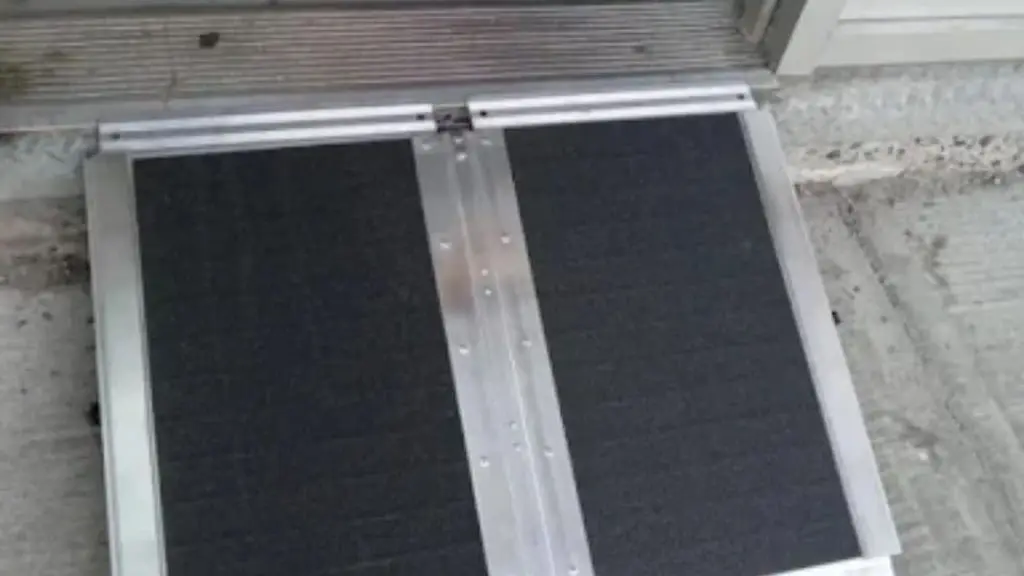
Outdoor entrances punish a lifting ramp in ways a hallway never does. Standing water, salt air, and frost each attack a different part of the build. An exposed rubber entry ramp ages differently from one under a porch roof, so the right rubber door ramp depends on your doorway.
What are the best rubber door threshold ramps for outdoor entrances?
For an exposed entrance, a solid recycled unit with grooved tread and a gridded base is the strongest pick: mass keeps it seated, and the grooves shed water. A covered porch takes a lighter build. The table sets the entrance types side by side.
| Entrance situation | What matters most | Build that suits | Example to consider |
| Exposed front door | Mass that will not shift, water-shedding tread | Grooved solid rubber door ramp, gridded base | VEVOR rubber threshold ramp, 7.6 cm rise, grooved tread, 3 cord channels |
| Covered porch or veranda | Light handling, easy repositioning | Aluminum plate or thinner rubber entry ramp | Aluminum section at 2.6 to 5.9 cm rise, light enough to lift one-handed |
| Garage or workshop door | Vehicle loads plus cable crossings | Solid rubber doorway ramp with cord channels | Solid rubber with three cord channels, rated 1000 kg |
| Rented or shared entrance | No drilling, reversible | Free-standing rubber door ramp, no fixings | Free-standing solid rubber, held by mass alone, lifts out whole |
VEVOR lists solid rubber in three rises and aluminum in five, so most entrances can match the rubber door ramp line without a special order.
A fixed rubber door ramp beats a mat and a plank for daily use. When a folding unit suits the entrance better, this portable ramp guide explains why.
Which threshold ramp materials resist salt and moisture best for coastal regions of France?
Recycled rubber resists salt and moisture best, since it has no metal to corrode and absorbs almost no water. Anodized aluminum comes a close second and stays the better pick when you need something light and adjustable. Avoid bare or painted steel within a few kilometers of the sea.
| Material | Behavior in salt air | Water absorption | Best suited to | Example to consider |
| Recycled rubber | No metal to corrode | Near zero | Coastal rubber access ramp duty | Solid recycled rubber, 1000 kg rated, no fixings to seize |
| Anodized aluminum 6063-T5 | Anodized layer resists corrosion | None | Light, adjustable fitting | VEVOR aluminum threshold ramp, 5.9 cm rise, aluminum alloy, 363 kg rated |
| Bare or painted steel | Rust starts at any chip or cut edge | None, but flakes | Indoor use only | Not advisable within a few kilometers of the sea |
| Timber | Swells, splits, grows algae | High | Short-term indoor use | Temporary indoor use only, kept dry and sheltered |
Rinse any rubber access ramp with fresh water every few weeks on the coast. Salt left in the tread acts like tiny ball bearings, so grip drops long before the material suffers. A rubber curb ramp on the same drive needs that rinse too, as does the wider car ramps range.
Grip And Anti-Slip Performance On Wet Or Tiled Floors
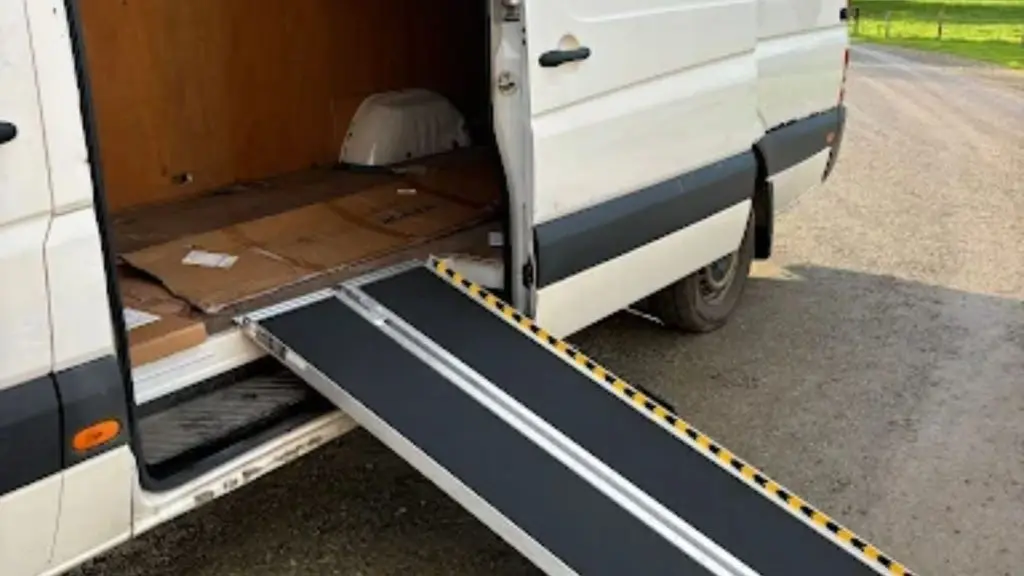
Grip is not one property. It depends on the tread pattern, the base, and what the ramp stands on. Wet tile and wet rubber behave nothing alike underfoot, so judge a rubber doorway ramp by its tread before anything else. Surface types are split out across the door threshold ramp listings.
Which threshold ramps have the best anti-slip surfaces for wet French climates?
Horizontal grooved rubber gives the most reliable wet grip, because each groove breaks the water film and gives the tire an edge. Deep extruded aluminum tread comes second, though it glazes over in freezing fog. Skip smooth coated surfaces.
| Surface type | Wet grip | Cold and frost | Best use | Example to consider |
| Horizontal grooved rubber | Strongest; grooves break the film | Stays grippy, stiffens slightly | Exposed rubber wheelchair ramp duty | Solid rubber with grooved tread and a gridded underside |
| Extruded aluminum tread | Good, depends on groove depth | Can glaze in freezing fog | Covered or indoor entries | VEVOR aluminum threshold ramp, 2.6 cm rise, low-profile extruded tread |
| Diamond-plate metal | Moderate, raised pattern only | Slippery once iced | Low-traffic steps | Raised-pattern plate, kept to sheltered low-traffic steps |
| Smooth coated or painted | Poor once wet | Poor | Not suited to entrances | Avoid for any entrance a wheel or walker crosses |
A question that comes up constantly in older French houses is this: What are the best threshold ramps for tiled thresholds that are prone to slipping? Pick a heavy grooved rubber wheelchair ramp with a gridded underside, since the grid holds polished tile far better than a flat base. On glazed terracotta, a thin low-rise aluminum ramp with mechanical fixing is safer than any rubber wheelchair ramp.
Keeping The Tread Clean So It Keeps Working
Grooved tread only works while the grooves stay open. Leaf mulch, grit, and algae fill them in a season on a shaded step, and a clogged rubber ramp behaves like a smooth one. A stiff brush and plain water once a month is enough; alkaline cleaners dull the surface. The same routine suits any rubber curb ramp sharing the drive, and the aluminum sections in this threshold ramp manual.
Fixing, Anti-Shift Stability And Value
A ramp that creeps forward under load is worse than none: the gap it opens catches a caster. Rubber threshold ramps hold by weight; aluminum holds by bolts. Fitting steps for the bolted sections are set out in this aluminum ramp fitting manual.
Which threshold ramps offer the most secure locking or anti-shift features?
Modular aluminum sections with screw-in connectors lock most securely, because the pieces bolt together and cannot separate under load. Heavy solid rubber comes next, holding by mass and a gridded base with no fixings. Unanchored lightweight plastic is the least stable.
| Fixing method | How it resists movement | Rated load | Suits | Example to consider |
| Screw-in modular connectors | Sections bolt together; cannot separate | Up to 363 kg | Taller rises, multi-section runs | VEVOR modular aluminum threshold ramp, 11.5 cm rise, screws and gloves included |
| Mass plus gridded base | 19 to 29.5 kg held by friction | Up to 1000 kg | Tile, concrete, exposed rubber sill ramp duty | Solid rubber from 19 kg upward, no fixings needed |
| Expansion bolts into concrete | Permanent mechanical anchor | Varies by fixing | Commercial entrances | Concrete anchors to the fixing maker’s stated spec |
| Double-sided tape | Light hold, lifts once wet | Light wheels only | Indoor smooth floors | Indoor smooth floors only, never an exposed entrance |
One question most buyers ask last: What are the most affordable heavy-duty threshold ramps that still get good reviews? Solid recycled rubber at the 1000 kg rating is the value answer, and owner feedback on those rubber threshold ramps runs around 4.8 out of 5 across dozens of verified reviews. Reviewers mention the weight holding it still and the smell fading fast. A taller modular aluminum set costs more per centimeter of rise but reaches heights no rubber threshold wedge can.
Per kilogram of capacity, rubber is cheaper. The heaviest 4-inch rubber unit tops the solid range at 29.5 kg, and a matching rubber curb ramp covers the driveway lip outside.
Conclusion
Measure the lip, then let the number choose for you. Under 10 cm, solid rubber threshold ramps give the best mix of grip, capacity, and no installation. Above that, modular aluminum is the sensible route. On the coast, rubber wins on corrosion; on polished tile, go heavy and gridded underneath. One measurement and one tread check, and the right rubber entry ramp stops being a gamble. A rubber sill ramp kept clear of grit outlasts the door it serves.
FAQs
How do I measure the rise for a rubber threshold ramp?
Measure from the finished ground to the highest point of the rubber sill ramp, not the average. Old stone and tiled thresholds settle unevenly, so take three readings across the width and work from the largest.
Can a car drive over a solid rubber ramp?
Yes. Units rated to 1000 kg take a household car axle. Check the rating on the model you buy, since a lightweight hollow rubber ramp is built for wheels and walkers only.
Does a rubber access ramp need to be bolted down?
Not usually. A solid rubber access ramp weighing 19 kg or more stays put through mass and its gridded base. Modular aluminum sections do need their screw-in connectors fitted.
Will the strong smell from a new rubber doorway ramp go away?
Yes, within a few days to two weeks. Recycled rubber off-gasses when new, so leave it outdoors before moving it to an indoor doorway.
Can I cut a rubber threshold wedge to fit a narrow opening?
You can’t cut a solid rubber threshold wedge without damaging the structure. If width is tight, choose a narrower aluminum section, or set the rubber wheelchair ramp slightly off center so the approach line stays clear.