Let’s say you want to improve your backyard area, and you’re debating on a pergola vs gazebo scenario. You wouldn’t be the only one. In North America, millions of homeowners have debated the options of pergola or patio (which accounts for over 60% of the market), or some will simply opt for a gazebo, citing its style and versatility.
Both options provide a way to functionally utilize outdoor space, along with their unique benefits. This article will allow you to compare pergola vs gazebo in order to decide which style is acceptable for your space and lifestyle. Comparisons of the pergola vs gazebo pros and cons, and more!
What is a gazebo?
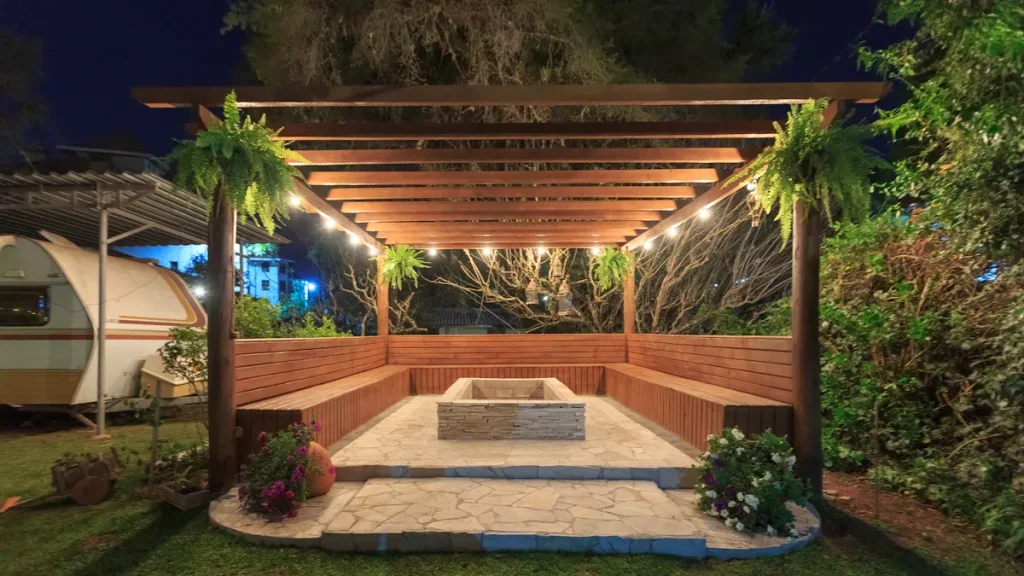
A gazebo is durable and has a permanent roof. A roof provides shade and safeguards against rain. Gazebos often have a floor, so sitting in one feels like sitting in a room outside. You can build the frame of a gazebo out of wood, metal, vinyl, or brick.
The roof can be made from shingles, metal, or cedar shakes, but most importantly, gazebos are special because they have roofs and floors. Pergolas have no roof and no floor. The solid roof of a gazebo gives you a place to escape inclement weather. You can read, relax, dine, or entertain without worrying if you’re going to melt under the sun, celebrate with building tension or fear of getting wet.
A gazebo also provides more privacy than a pergola would. The roof and at least three walls or screens that block wind, sun, and rob you of visibility from curious onlookers. With the addition of curtains, screens, or glass panels, you get a cozy, private space where you can lounge in a hot tub, prepare an outdoor meal, or read a book.
The structure provides security, peace of mind, comfort, and privacy. If you’re looking for an expanded area of your backyard where you have solid structure protection, then a gazebo is clearly the way to go.
What is a pergola?
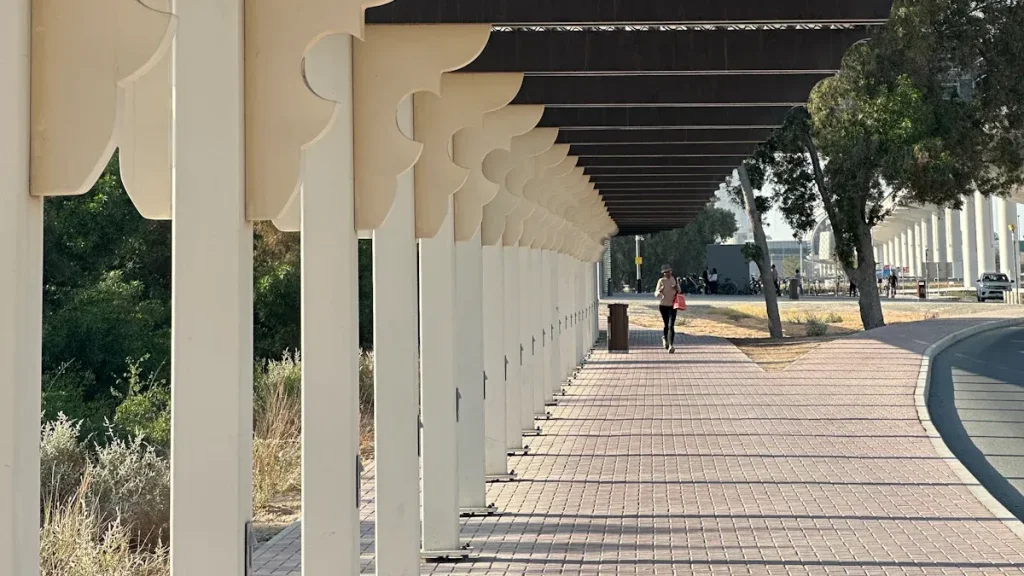
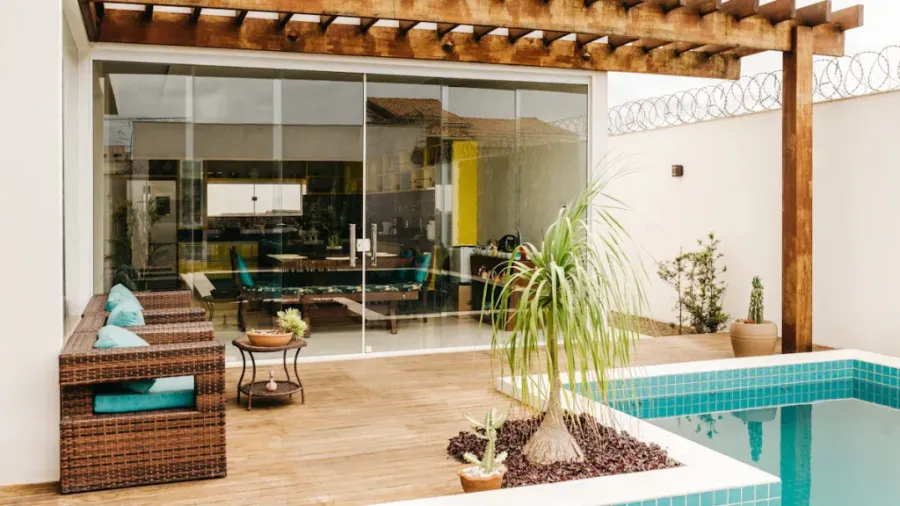
A pergola can be recognized easily because of its open and airy look. The columns hold beams and a roof with vertical slats or lattice. The roof structure leaves a gap and allows sun and air into the space to make it bright and breezy. Most pergolas on the market today are made of wood, aluminum or vinyl.
Aluminum will not rust and is easy to maintain. Wood looks attractive but requires more upkeep to maintain its appearance. Some pergolas have roofs that are movable or tilting and are designed to open and close to let in sun. Many new pergolas have built-in lights or the option of having solar panels on top of them to do their part in helping the planet.
Pergolas come in many shapes and styles. A lot of people seem to refer to simple shapes like squares and rectangles. Some have flat roofs but others have arch or gabled roofs for drama. You can see pergolas with wood rafters and metal frames, which is a nice blending of materials.
Older, more traditional pergolas have ornate posts and decorative ends on the rafters. Newer more modern designs use thin posts with simple flat colors. Pergolas will coordinate with older styles of homes with informal gardens to new houses that feature contemporary patios.
- Traditional: Fancy posts, classic wood, special rafter ends.
- Modern: Simple, square posts, metal or composite parts.
- Roof shapes: Flat, arched, or gabled.
- Style choices: Wood colors, black, white, or custom colors.
You can choose square, rectangle, or custom shapes for your yard. Many people put climbing plants or string lights on their pergola to make it cozy.You can also pick posts in different shapes or add trim for more style.
Pros
- Take up less space, perfect for smaller yards
- Open roof gives partial sunlight and airflow
- Great for casual use, dining, or lounging
- Lower cost and easier maintenance with some materials
- Add beauty and value to your home
Cons
- Open roof gives less protection from rain or strong sun
- Wood pergolas need staining or sealing to last
- Not as private as a gazebo
- Limited shelter in harsh weather
Pergola vs Gazebo Similarities
Outdoor Living Benefits
Pergolas and gazebos both help you enjoy your backyard. They make nice spots for relaxing or hanging out with family. A pergola gives you shade, and you can add curtains or canopies. This helps block the sun or light rain.
Gazebos give full shelter, so you can use them in almost any weather. Both make your home look better and add value. Many people pick these to have more space outside. They are great for parties, quiet time, or spending time with friends.
Tip: Both pergolas and gazebos can raise your home’s value and make your yard a fun place for everyone.
Material Choices
You can pick from many materials for pergolas and gazebos. Some common ones are wood, vinyl, aluminum, and fiberglass. Wood like cedar looks classic but needs care to stop rot or bugs. Vinyl is easy to clean and lasts a long time.
Aluminum is light and does not rust, so it works in many places. Fiberglass is strong and needs no care, but it costs more. Gazebos use shingles, cedar shakes, or metal for roofs. Pergolas might use panels or fabric for more shade. Good care and setup help your structure last a long time.
Pergola vs Gazebo: Main Differences
Roof and Shade
Pergolas and gazebos have very different roofs. Pergolas have open or slatted roofs. These let sunlight and air come in. You get some shade, but not full shade. Some pergolas have louvers or canopies you can move. This lets you pick how much sun or shade you want. Pergolas are nice if you like a little sun and fresh air.
Gazebos have solid roofs that do not move. They give you full shade all day long. You do not need to change anything. The roof blocks the sun and keeps you cool. If you want shade all the time, a gazebo is best.
Weather Protection
Weather protection is one more major difference. A pergola only keeps out some rain and wind. The roof is open, so the weather comes through! You can add covers for a pergola but they don’t do much to help. Pergolas work best where the weather is not too harsh.
Gazebos reliably keep you safe from the weather. They protect you with a solid roof from rain, snow, and intense sun. You can even sit in a gazebo when it is raining outside. The walls or screens keep you out of the wind even better than a pergola. If you have a very rainy climate, you will find a gazebo much more comfortable than a pergola.
- While pergolas offer wind resistance, they do let wind blow through, so they do well in a storm.
- Gazebos need good anchoring because they can move if the wind gets strong enough.
- Snow and ice do not pile up too much on pergolas that have an open roof.
Privacy Levels
Gazebos give you more privacy. The solid roof and walls or screens block views from above and around. You can add curtains or glass for even more privacy. If you want to read or nap without people watching, a gazebo is better.
Design and Aesthetics
Your outdoor space’s overall appearance really matters. Most modern outdoor spaces look nice with pergolas. They are very modern and clean looking, which works with modern homes and landscaping. You can attach a pergola to your home or put it anywhere in your yard. Pergolas are nice for plants, string lights, and other personalized touches. You can really customize a pergola to your style.
Gazebos are traditional, and fancier. Generally, gazebos are freestanding structures and look best in large yards. They carry more character with their solid roofs and shapes, typically come in an octagon or square, and provide visual buoyancy to a plot of land. Gazebos are often the center focal point in landscaping.
Here is a quick comparison:
| Aspect | Pergola | Gazebo |
| Design Style | Modern, minimalist | Classic, traditional |
| Placement | Attached or freestanding | Freestanding only |
| Customization | High (plants, lights, covers) | Moderate (curtains, screens) |
If you want a modern look with lots of choices, pick a pergola. If you want a classic and fancy structure, a gazebo is a good pick.
Now you know the main differences between pergolas and gazebos. Each one has special benefits for your outdoor space.
Cost and Maintenance
Pergola vs Gazebo Cost
In comparing pergola vs gazebo, the cost is quite different. Pergolas tend to be less expensive than gazebos. A basic 10-foot pergola costs between $2,500 and $6,000. The cost does depend on how it is made and how it looks.
Gazebo prices are typically much higher, especially hardtop gazebos. The total price for a hardtop gazebo is between $7,500 and $10,000. Soft tops are less expensive, you can get a simple soft top gazebo starting at around $500. However, soft tops do not last as long either. Also, a gazebo requires more stuff to be built and more work to put in, raising the cost.
| Structure Type | Materials Only | Installed Cost | Maintenance Notes |
| Soft Top Gazebo | $500 – $2,000 | N/A | Needs little care, but does not last long |
| Hardtop Gazebo | $3,000 – $15,000 | $7,500 – $10,000 | Needs cleaning and sealant often |
| Pergola (10-foot) | Varies | $2,500 – $6,000 | Easier to care for, repairs cost $30-$60/sq ft |
Tip: Pergolas cost less and are easier to change for your yard.
Installation
Putting up a pergola or gazebo takes some planning and tools. You have to measure your yard and check the rules in your area. Both might need permits, which can cost $50 to $500. For pergolas, labor is about 20% of the total price. The rest is for materials.
You may need to make your yard flat or pour concrete, which costs more. Gazebos are heavier and harder to build, so you should hire someone who knows how. If you make mistakes, it can be unsafe or cost more to fix.
- Make the ground flat and clear before you start.
- Get tools like post diggers, cement mixers, and levels.
- Turn in your plans if you need a permit.
- Hire pros to get the best results.
Upkeep and Durability
Pergolas are easier to care for than gazebos. You should check for loose bolts and clean them a few times each year. Fixing a pergola costs $30 to $60 for each square foot, plus labor. Gazebos need more work. You have to clean them every few months and put on sealant every two years.
You also need to watch for bugs. Taking away a wasp nest can cost $200 to $750. Hardtop gazebos last longer but need more care. Pergolas made from aluminum or vinyl do not get damaged by weather and need less work.
Taking care of both helps them last, but pergolas are easier to fix and keep nice.
How to find the best fit for your space
Compare Between Small vs Large Yards
When considering your yard, size counts. If your yard is small a pergola usually works better. You can attach it to your house or put it in a corner. Either approach saves space and gives you an intimate cozy nook to relax. Pergolas come in many sizes so you can choose one that compliments your yard.
In a large yard, a gazebo is hard to ignore. It becomes the focus of your yard, and can give you a private area away from your house. Gazebos require more space because of their shape and roof. They usually only work in larger areas where you may want a special space for entertaining.
Choose Something Entertaining and Relaxing
Both pergolas and gazebos provide opportunities for enjoyment outside. If you like to socialize by hosting parties or family dinners, a pergola is an open, breezy area with fresh air. You can add lights, curtains, or plants to create a special feel. A gazebo provides more privacy, as it provides a wall on all sides, protecting you and your guests from rain and bugs, and allowing for relaxation or reading a book in peace.
Tip: Consider how you want to use your outdoor space. Pergolas lend themselves to open, social areas, while gazebos are intended for quiet
Pick Between Covered Pergola vs Gazebo
Opting between a patio pergola or gazebo is completely dependent upon your needs. A patio pergola gives you partial shade, but allows airflow to move through it. You have the option to add a retractable canopy or metal roof for additional protection. This makes it easier to adapt to the elements.
Patio pergolas also provide a structure for climbing plants that will add beauty and a bit more shade. With fully enclosed solid roofs, (and optional netting) a gazebo will allow you full shelter in the rain, sun, and from insects to create a warm, cozy space.
When comparing patio pergola vs gazebo, consider aspects of your yard, how you entertain, and how much shelter you need.
Pergola vs Gazebo: Which Is Better?
You need to think about your own needs before you choose. Ask yourself these questions:
- How much shade do you want?
- Do you need protection from rain or wind?
- How much privacy do you want?
A pergola gives you an open-air feeling. You can bask in the sun and enjoy the fresh air. You can add climbing plants or string up some lights for a more cozy feel. Pergolas can fit easily in small yards and work well for informal get-togethers. You can have it attached to your home or place it anywhere you have yard space. The flexibility makes it adaptable for all kinds of spaces.
A gazebo provides total shelter. You can be protected from the rain, sun, and wind. Gazebos provide a secluded place to escape to or a lovely place to host a party. You can use a gazebo no matter the weather. Because of the solid roof and enclosure, it has a true outdoor room feeling. Gazebos become the main attraction in a large yard.
Tip: If you want a space for sun and plants, go with a pergola. If you want for privacy and shelter, then a gazebo is for you.
FAQ
What gives better shade, a pergola or a gazebo?
A gazebo gives you full shade all day because of its solid roof. A pergola offers partial shade. You can add a canopy to a pergola for more coverage, but it will not block as much sun as a gazebo.
Which is easier to install, a pergola or a gazebo?
You will find pergolas easier to install. They have a simpler design and fewer parts. Gazebos need more time and skill because of their solid roof and enclosed structure.
Can I use both structures year-round?
You can use a gazebo year-round because it protects you from rain and snow. A pergola works best in mild weather. You may need to add covers or curtains to use a pergola in winter.
Which adds more value to my home, a pergola or a gazebo?
Both can increase your home’s value. Gazebos often add more value because they look like a permanent feature. Pergolas also boost value, especially if you choose a stylish design and quality materials.
Conclusion
When you pick a pergola vs gazebo, think about your yard size, what you like, and how much you want to spend.
Experts and people who use them agree that pergolas look modern, are simple to set up, and you can change them with plants or covers in many ways. On the other hand, gazebos have a classic style, protect you from bad weather, and stand out in big yards.
Both make your outdoor space nicer and more comfortable. If you want lots of strong and good-looking choices, check out VEVOR’s options to find what works best for your backyard.