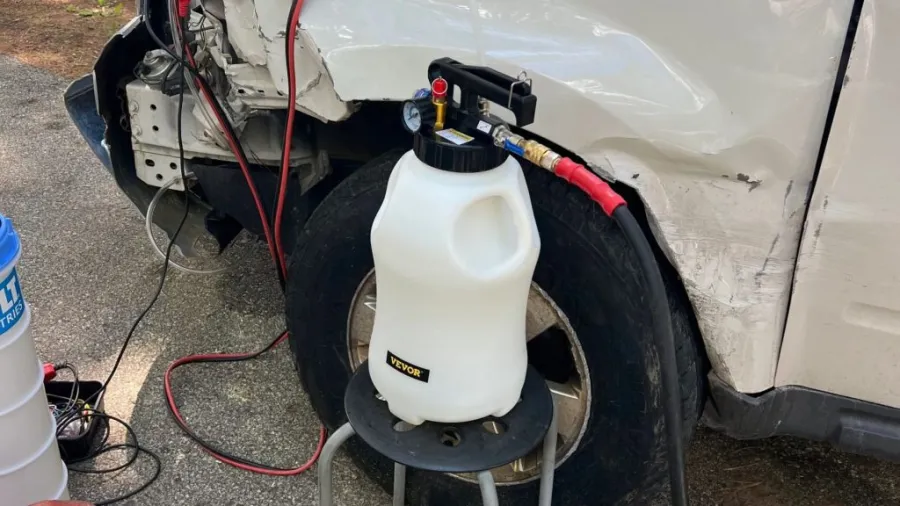
Ramps, a creeper, a pan that never quite lines up, and a drain plug that drips down your wrist anyway. Half an hour later, the garage floor has a fresh stain. An oil extraction tool change pump skips all of it by pulling the old oil extraction tool up through the dipstick tube instead, and the oil extractor range covers the sizes that do it. A detailed guide to using a fluid evacuator walks through the method. Here you’ll learn which capacity, pump type, and hose set suits your vehicle.
What An Oil Change Pump Actually Does
An oil change pump is a sealed tank with a vacuum pump on top: no ramps, no plug, no pan. The oil extraction tool does the work gravity normally does, but from above the engine rather than below.
How Vacuum Extraction Works
Pumping the handle, or feeding shop air into the port, pulls air out of a sealed tank and creates negative pressure inside it. That pressure difference draws oil up a thin tube pushed down the dipstick hole, which is all an oil change pump really does.
An engine oil pump needs the oil warm but not hot, because cold oil is too thick to climb the tube and hot oil burns. VEVOR notes that this type of engine oil pump removes most of the sump contents, not every last drop, which matters if you’re chasing a full flush rather than a routine service. A full oil extractor oil change still takes about fifteen minutes, with no ramps involved.
5 Specs That Decide Which Pump Fits
Five figures settle the purchase on any oil pumping system:
- Tank capacity in liters on the oil change extractor, against your largest sump.
- Pump type: hand lever, shop air, or both.
- Hose length on the oil extraction tool, and the thin tube’s diameter.
- Extension tubes included, for deep or awkward dipstick runs.
- Discharge method: whether the oil transfer pump pushes the waste back out itself.
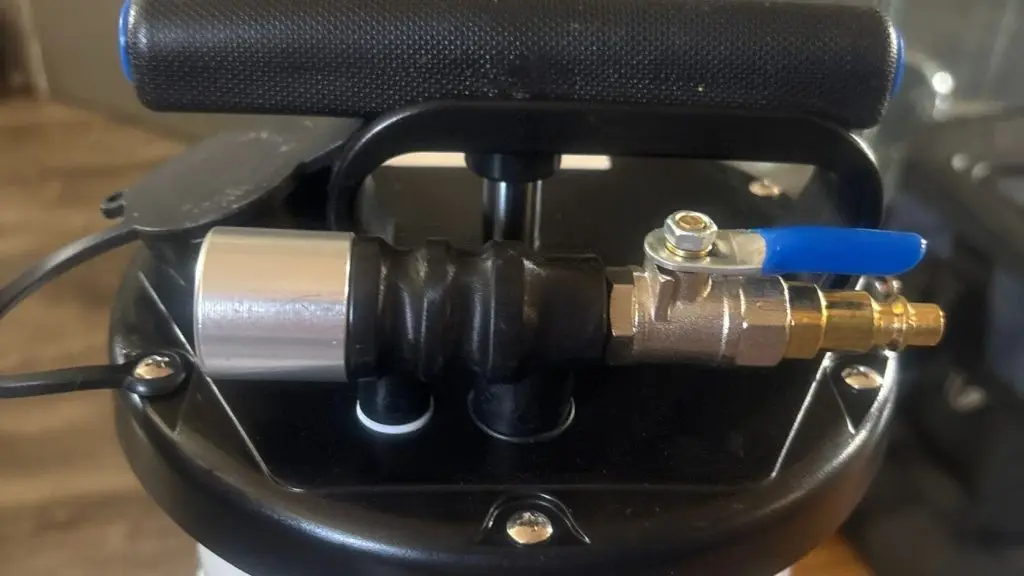
A 6.5 liter manual oil change extractor covers all five for most cars, and its tube carries an internal steel wire so the hose feeds down a bent dipstick run instead of kinking.
Manual, Pneumatic And Capacity Choices
Two things separate one oil change machine from another: what drives the vacuum, and how much the tank holds. Neither is about power. Both come down to how many vehicles you service, and how fast you want an oil change pump to get through them.
How to use an oil extractor in 5 Steps
Warm the engine for a few minutes, shut it off, then work through these steps:
- Pull the dipstick and feed the thin hose down until it reaches the sump floor.
- Pump the handle, or connect shop air, until the oil suction pump holds a vacuum.
- Let the oil climb into the oil pumping system; stop when the flow thins.
- Withdraw the tube, replace the oil filter, then refill with fresh oil.
- Run the engine for one minute, wait five, and check the level on the dipstick.
Top up to the full mark and dispose of the waste at a recycling point, as the fluid evacuator guide advises. An oil removal pump that discharges under pressure saves you from decanting the tank by hand, which is the main reason to pick an oil evacuation pump with a two-way valve.
Manual Versus Pneumatic Oil Change Machine
Hand pumping is slower but needs nothing else in the garage. A pneumatic oil change machine taps a compressor and holds vacuum without the arm work, which pays off from the third car onward. Several models run on either kind of oil-pumping system.
| Drive type | What it needs | Speed | Best suited to | Example to consider |
| Manual hand lever | Nothing | Slowest, 30–60 pumps | One or two vehicles a year | VEVOR 9.5 L manual extractor, 59 in hose, three extension tubes |
| Pneumatic engine oil pump | Compressor and airline | Fastest, hands-free | Busy home garage | Air-driven extractor, 9.5 L tank, compressor coupling |
| Pneumatic or manual | Compressor optional | Either, as available | Mixed use, no air at some sites | Dual-mode extractor with a manual and pneumatic switch |
| Two-way oil transfer pump | Compressor connected | Extracts and refills | Transmission and ATF work | Two-way ATF pump, 10 L tank, 14 filler adapters |
A 9.5-liter pneumatic or manual oil changing pump ships with a 59-inch hose and three 47-inch extension tubes, a combination that reaches a deep sump on a truck.
Matching Tank Capacity To Your Vehicle
Buy the tank to your largest sump, not your smallest, and the oil extractor listings print every capacity. An oil drain pump that fills halfway through the job means stopping to empty it with a hose still in the engine, and an undersized oil change extractor causes more mess than the drain plug ever did.
| Tank capacity | Covers | Typical use | Note | Example to consider |
| 1.5 L syringe | Part-fills, top-ups | Mowers, motorcycles, golf carts | Too small for a car sump | 1500cc manual syringe extractor with extension tubes |
| 3–8 L | Most passenger cars in one pull | Cars, small SUVs | The usual oil change extractor size | VEVOR 6.5 L extractor, hand pump or shop air |
| 9.5 L | Larger sumps with margin | Trucks, SUVs, boats | Fits two small changes | 9.5 L extractor, 59 in hose, three 47 in extension tubes |
| 15 L | Big diesels, back-to-back jobs | Workshops, fleets | Heavy when full | 4-gallon pneumatic or manual extractor, PE tank |
For a mower or a motorcycle, a 1500cc manual oil suction pump is the sensible size, and a 4-gallon (15-liter) pneumatic oil evacuation pump sits at the other end for back-to-back work.
Extraction Versus Draining The Sump
The old argument is whether an oil removal pump gets as much out as the plug does. In practice, it depends on the engine and on one sump feature you can check in five minutes.
When Extraction Beats The Drain Plug
An oil pump oil change wins on any engine with the filter mounted on top and a clear dipstick run to the sump floor, which covers a great many modern cars. That is where an oil change pump saves the most time. It also wins outright where there is no drain plug at all, which is common on boat engines and some generators. It loses where a sump has a windage tray or baffle that blocks the tube, and an oil drain pump cannot reach the oil. Check the dipstick route before buying.
| Situation | Extraction | Draining | Why |
| Filter on top, clear dipstick | Best choice | Works, messier | No ramps, no spills |
| No drain plug fitted | Only option | Impossible | Boats, generators, some mowers |
| Windage tray or baffle | Tube may not reach | Best for an oil drain pump | Obstruction blocks the hose |
| Full flush wanted | Leaves a little behind | Gets more out | Gravity clears the last of it |
| Partial fluid swap | Ideal for an oil suction pump | Wasteful | Pull a litre and top up |
Between services, an oil pump for oil change work also handles partial swaps: draw a liter of gearbox fluid, replace it with fresh, repeat next time. A 7.5 liter manual oil transfer pump with eight ATF adapters suits that routine.
Fluids An Oil Evacuation Pump Can Handle
Engine oil is the common job, but the same oil evacuation pump takes most non-flammable, non-corrosive automotive fluids. Gear oil, power steering fluid, brake fluid, and coolant all extract the same way, so an engine oil pump rarely stays a single-purpose tool.
| Fluid | Extracts well | Watch out for | Access point |
| Engine oil | Yes, warm | Thick for an engine oil pump when cold | Dipstick tube |
| Gear and transmission fluid | Yes, on a two-way oil pumping system | Different access on many cars | Fill tube |
| Power steering fluid | Yes | Small reservoir, go slowly | Reservoir |
| Brake fluid | Yes | Corrosive to paint; flush the tank after | Master cylinder |
| Coolant | Yes | Never mix with oil in the same tank | Radiator or expansion tank |
Flush the tank between different fluids. Mixing brake fluid residue into fresh engine oil is an expensive mistake, and an oil extraction tool kept for one job is easier to trust. Some owners run a second oil suction pump purely for brake work. The fluid evacuator walkthrough lists the fluids in more detail.
Recommended For Your Project
Transmission Fluid, Refilling And Upkeep
Transmission work asks more of an oil change extractor than an engine service does. Viscosity is higher, access points differ by model, and the fluid usually has to go back in as well as come out.
ATF Adapters And Two-Way Pumps
A two-way oil pumping system extracts and then dispenses, which is what transmission refilling actually needs from an oil transfer pump. Adapter sets matter here: a 10-liter two-way ATF oil transfer pump carries 14 filler adapters and keeps the compressor connected for both directions, with a lockable squeeze handle at the top.
Confirm your car’s servicing method first, though. Many gearboxes are filled from underneath or need a level check at temperature, so the right technique matters more than the pump. The transmission fluid pump guide covers the pump side. For the procedure itself, a step-by-step fluid-change walkthrough lays out the order of work.
5 Checks Before And After The Change
Run these every time, whichever oil removal pump you own:
- Warm the engine briefly; warm oil flows, hot oil scalds.
- Feed the tube until it stops, then withdraw an inch so it isn’t sealed to the floor.
- Watch the flow and stop pumping when it thins out.
- Refill, run the engine a minute, then recheck the level after five.
- Empty and rinse the oil removal pump tank before storing it.
Oil left in a tank for months turns to sludge and clogs the seals on any oil change machine. Keep the thin tube straight in storage too, since a permanent kink ruins the suction on the next job. A clean oil change pump stored properly lasts years.
Other kits in the fluid transfer equipment listings follow the same cleaning logic. Related pumps sit under fluid evacuators too. The wider shop equipment section carries the drain pans and waste tanks that pair with them. Everything else for the job sits under automotive.
Conclusion
An oil change pump earns its place on any car with the filter up top and a clear dipstick run, and it is the only method at all where no drain plug exists. Size the tank to your biggest sump, pick a pneumatic oil removal pump if you already have a compressor in the garage, and check for a windage tray before you commit. An oil drain pump beats suction only where a baffle blocks the tube. Compare the real capacities in the oil extractor listings against the vehicles on your drive.
FAQs
Does extraction remove as much oil as the drain plug?
Almost. An oil evacuation pump leaves a small amount behind rather than every drop, which is fine for routine servicing. For a full flush after a contamination problem, the drain plug clears the sump more completely.
Can I use one pump for engine oil and brake fluid?
Yes, but flush the tank thoroughly between fluids. Brake fluid residue in fresh engine oil causes real damage, so many owners keep a second oil extraction tool for brake and clutch work.
Do I need an air compressor?
Not for a manual oil change machine, which pumps by hand. Pneumatic versions need shop air, and several models accept either, so a compressor speeds the job up but isn’t required.
What size tank suits a normal car?
Three to eight liters on an oil change pump handles most passenger cars in a single pull. Trucks, SUVs and boats are safer with 9.5 liters or more, since a half-full tank mid-job is awkward.
Why will the tube not reach my sump?
Some engines have a windage tray or baffle below the dipstick that blocks the hose. On those, draining from the plug is the practical route for an oil drain pump; check the dipstick path before buying an oil suction pump.