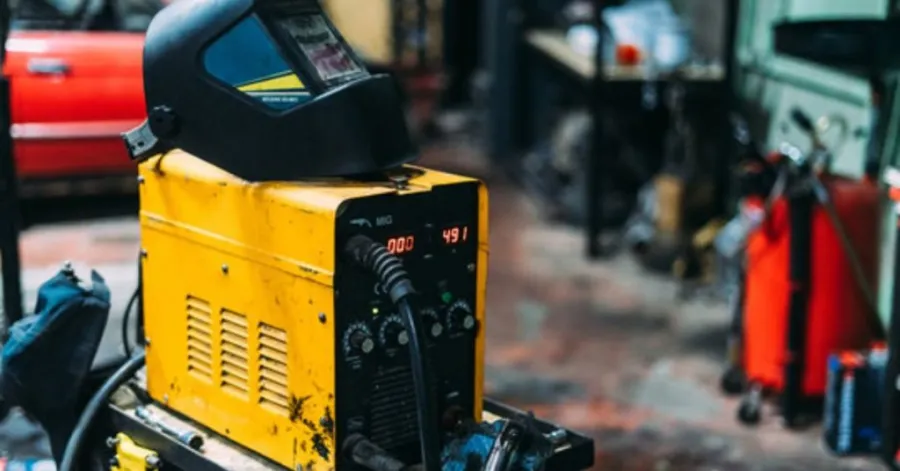
Choosing the right size of mig welding wire for your welder is important. There are 3 main things to consider: the metal’s thickness, the welder’s compatibility, and how you plan to use the MIG welding wire. When using your MIG welding wire, the wire diameter should match the metal thickness. This will help you to make welds that are strong and tidy. Always check your welder’s specifications to ensure the MIG welding wire is compatible. Also, consider the type of wire and shielding gas you will use for your MIG welding.
In this article, we will discuss how to select the right MIG welding wire for different welding projects and metal thicknesses. You will also learn about welder suitability, wire types, shielding gas alternatives, and recommendations for making strong, clean, and reliable welds.
What Is MIG Welding Wire Size and Why Does It Matter?
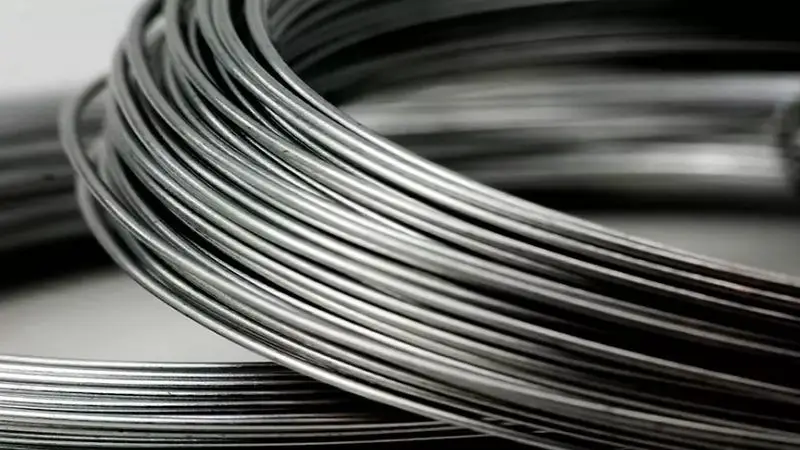
@dwscustoms 250 amp mig and stick flux and gas 110 and 220 vevor #supperbrandday #vevor #migwelding #stickwelder @Vevor_US #dwscustoms
♬ original sound – King Scoot
Understanding MIG welding wire diameter
How to choose mig welding wire size? You must ascertain the diameter of the MIG welding wire before beginning welding, as it is very important. When referring to MIG welding wire, the wire diameter indicates its thickness. Inches and millimeters are the units of measurement used in this context. The use of a small-diameter wire enables thin metal to operate exceptionally efficiently. A wire with a large diameter indicates that the metal is dense. Ensure the welds you produce are not only strong but also aesthetically pleasing by selecting the appropriate MIG welding wire. This will ensure that the welds you create are strong.
How wire size affects weld quality and penetration
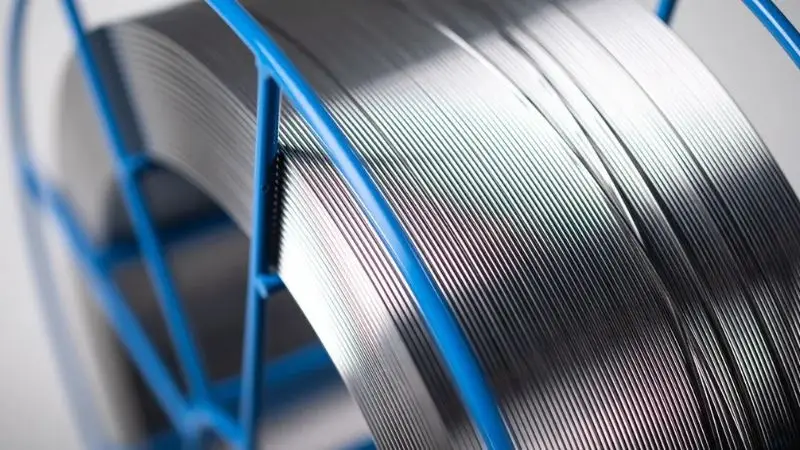
There is a correlation between the size of the stainless steel mig welding wire guide that you use and the appearance of the weld that you create. A smaller size results in less heat and less penetration than a larger one. Using this material for applications such as thin sheet metal or automobile body panels is an excellent choice. It is possible to achieve higher temperatures and deeper welds by using larger equipment. When welding thick steel plates, this is advantageous because it simplifies the process. To complete the task at hand, you need to choose an acceptable welding wire size. As a result, your welds will remain clean and free of risk.
Tip: Always test your MIG welding wire on scrap metal first. You can check if the size gives you the right results.
Common wire sizes used in MIG welding
The types of mig welding wire for steel will help you choose the proper wire diameter based on the job type and metal weight. For repairs on thin metal sheets and automobile bodies, 0.6 mm MIG welding wire is excellent. For general repairs and routine welding jobs, 0.8 mm wire is a good choice. When welding thicker materials or producing light welds, 0.9 mm wire is superior for penetration and weld quality. In heavier manufacturing and larger metal operations that require stronger welding and deeper penetration, a 1.0 mm MIG welding wire is most commonly used. Using the correct-size MIG welding wire will enhance weld quality, eliminate spatter, and make welds stronger and cleaner.
You should always check your welder’s manual to see which MIG wire sizes are compatible with your machine. Picking the right size helps you avoid problems and makes your work easier.
Factors That Determine the Correct MIG Wire Size
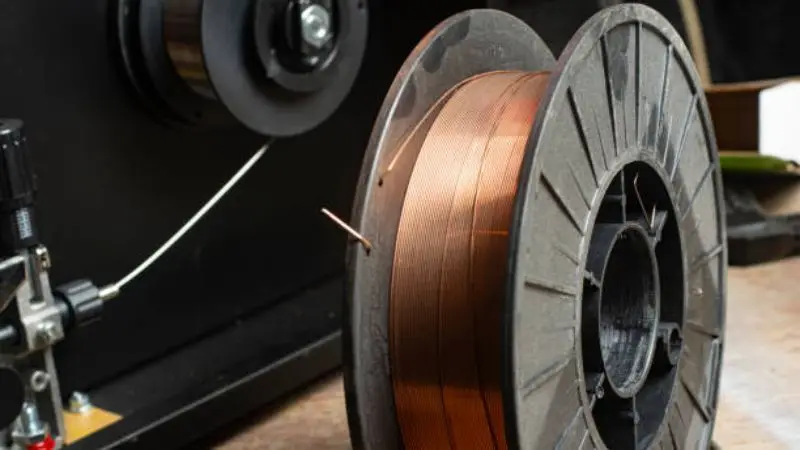
Type and thickness of the base metal
It is necessary to determine the kind of metal that you intend to weld. Certain metals need further care and attention. In addition to its widespread use for welding steel, MIG welding is also commonly used for aluminum mig welding wire settings and stainless steel, and across a variety of applications. Never forget to verify the thickness of your base metal. When working with thin metal, a smaller welding wire is required. When welding thicker metal, a larger welding wire will be required. Using the wrong size will either burn thin metal or fail to penetrate thick parts sufficiently. To achieve the best possible results, choose the welding wire based on the material thickness.
Power output and capability of your MIG welder
The mig welder in question has some restrictions. Being aware of the power your computer can deliver is essential. Utilizing a small stainless steel mig welding wire guide efficiently involves using thin welding wire and thin metal. The ability to simultaneously handle thicker materials and welding wire is a capability of large MIG welders. Within the manual that came with your MIG welder, you will find a listing of the appropriate wire diameters. If you use a wire that is too large for your torch, you can have trouble feeding the wire into your MIG welder or establishing a stable arc. Both of these issues could be problematic.
Shielding gas compatibility
how to choose mig welding wire size? The shielding gas you choose for your welding wire must be the appropriate one. When exposed to pure carbon dioxide, certain wires perform at their best. The use of carbon dioxide and argon together is necessary for other processes. There is a correlation between the gas you use and the appearance of the weld and the strength of the seal. It is imperative that you carefully check the label on your welding wire and the instructions included with your MIG welder. If you use the wrong gas, you risk producing weak welds or excessive spatter.
Tip: Always test your setup on scrap metal before you start your main project.
Welding position and application type
You should consider how you intend to use it before buying a MIG welder. When you are working on vehicles or finishing do-it-yourself projects, you will often be working with thin metal and will need a small amount of welding wire. For welding thick steel, a thicker wire is required, which is a demand of the industry. Another important consideration is the position of your weld. Vertical or overhead welding may require a smaller-diameter wire to achieve better control. The aluminum mig welding wire settings should be selected based on the project and situation to achieve the best results.
How to Match MIG Wire Size with Your Welder Specifications
Checking your welder’s user manual or specification sheet
For a start, it’s usually a good idea to read the user handbook that came with your welder. The manual contains a lot of information about the capabilities of your equipment. You should look for a part on your stainless steel mig welding wire guide that lists the wire sizes it supports. You may also include a chart showing the optimal settings for each wire size. If you do not have the manual, you can look for a specification sheet on the manufacturer’s website. This is a strategy you need to follow to prevent you from using the wrong wire and keep your welder safe.
Tip: Keep your manual in your workshop. You can quickly check it when you need to change the wires.
Understanding amperage range and wire feed compatibility
You must be aware of the amperage range your welder can handle. A machine’s amperage is the amount of electric current it can use. It is recommended that each wire size be used within a specific amperage range. For example, small cables require lower amperage, while large wires require higher amperage. The wire must also be fed smoothly into the welder. Your machine may become jammed or inoperable if you use a wire that is too thick. Before beginning the welding process, test the wire feed with a short piece of wire.
This gives you an idea of how to choose mig welding wire size for the best amperage range for the best welding results. 0.6 mm wire is rated for 30 to 90 amps for light, thin-metal welding. 50 to 150 amps. 0.8 mm wire is appropriate for general repairs and for metals of similar thickness. 70-180 amps, 0.9 mm wire. To weld thicker materials and make the connections stronger. For heavy fabrication or work on thicker metals, a 1.0 mm MIG welding wire requires 100-250 A. The appropriate wire size and amperage will provide better, stronger, and more stable welds.
Recommended wire sizes based on machine capacity
You must select the types of mig welding wire for steel that are appropriate for the power of your welder. 0.6 mm or 0.8 mm wires are the most suitable for use with small welders. Large welders can use wires with diameters of 0.9 mm or 1.0 mm. Welding wires of varying sizes offer versatility, making them suitable for a wide range of applications. If you want better results and fewer problems, you should always choose a high-quality wire. Stronger welds and less spatter will result. Check the capacity of your equipment before you purchase new wire.
Note: Using the right wire size helps your welder last longer and makes your work easier.
Conclusion
By following these simple techniques, you can make every mig welding wire project safer and more durable. Before you start welding, check the base metal. Then, select the appropriate welding wire size based on the thickness of the metal you are working on. Make sure the welding machine you are using is compatible with the wire you wish to use. Make sure your shielding gas and welding wire are compatible. Consult your welding instructions and a wire size chart when you need help fast. A good welding setup will produce better welds and reduce the risk of damage. If you do the right things, you will find welding easier.
Tip: Careful preparation for welding helps you avoid mistakes and keeps your welding projects on track.
FAQ
What happens if you use the wrong MIG wire size?
You may get weak welds or too much spatter. A thin wire can burn through metal. Thick wire may not melt well. Always match the wire size to your project.
Can you use the same wire size for all metals?
No, you cannot. Different metals and thicknesses need different wire sizes. For example, thin aluminum needs a small wire. Thick steel needs a larger wire.
How do you know which wire size your welder supports?
- Check your welder’s manual.
- Look for a chart or table that lists wire sizes.
- You can also visit the manufacturer’s website for details.
Is it safe to switch wire sizes often?
Yes, you can switch wire sizes if your welder supports them. Always adjust your settings and use the right drive roller for each wire size.
Do you need to adjust settings when changing wire size?
| Wire Size | Voltage | Wire Feed Speed |
| Small | Lower | Faster |
| Large | Higher | Slower |
You must adjust the voltage and wire-feed speed when changing wire size. This helps you achieve strong, clean welds.