Ever tried to break up concrete and felt stuck? Picking the wrong jackhammer bit sizes can slow you down or even damage your tool. The right size means better results, safer work, and less stress. Wondering which size fits your job best? You’re not alone!
So in this blog, let’s talk about the different bit sizes. But first…
What does a jackhammer do?
A jackhammer is a powerful tool used to break hard surfaces like concrete, asphalt, or rock. It works by delivering rapid hammering blows through different jackhammer bit sizes.
Choosing the right jackhammer bit sizes ensures efficient performance; smaller bits for precision work and larger ones for breaking thicker, tougher materials quickly and safely.
Different types of jackhammer bit sizes
1. Pointed Chisel
If you want to break up tough concrete, the pointed chisel is your go-to bit. You’ll see this bit on almost every job site. It has a sharp tip that focuses all the force into a small area.
That means you can crack hard surfaces with less effort. You don’t need to be an expert to use it. Just attach it to your jackhammer and start breaking things apart.
Here’s what you should know about its size:
- Overall length: about 17 5/16 inches
- Width: 5 5/16 inches
- Height: 1 9/16 inches
- Fitting shank diameter: 1 1/8 inches (2.9 cm)
- Blade length: 7 7/8 inches
- Blade width: 5 5/16 inches
You’ll find pointed chisels in many jackhammer bit sizes, so make sure your tool matches the shank diameter. This helps you work safely and keeps your jackhammer running smoothly.
Wondering what you can break with a pointed chisel? Here are some common uses:
- Breaking up concrete
- Chiseling away mortar and grout
- Removing tiles and plaster
- Creating openings in walls
2. Flat Chisel
You want to make clean cuts or chip away at concrete? The flat chisel is your best friend. This bit has a wide, flat blade that helps you slice through material instead of just smashing it. You can use it to remove tiles, break up slabs, or even shape stone. Many beginners like the flat chisel because it gives you more control over your work.
Flat chisels come in different lengths and widths. Most common sizes range from 12 to 18 inches long. The blade width usually sits between 1 and 3 inches. You should always check that your jackhammer matches the shank size of the bit. This keeps your tool working right and helps you stay safe.
Flat chisels make your job easier and cleaner. If you want to get the most out of your jackhammer bit types, don’t skip this one.
3. Spade
You want to dig or remove soil fast? The spade bit is your best friend for these jobs. This bit looks like a flat, wide shovel. You can use it to cut through dirt, clay, or even roots. Many people pick the spade bit when they need to make trenches for pipes or cables. It saves you time and effort.
When you look at spade jackhammer bit sizes, you should know the right size for your job. Here are some common sizes for spade bits:
- The best diameter for soil removal is between 1 inch and 1 1/8 inches.
- If you need to break thick concrete, you should look for a bit size from 1 1/4 inches to 7/8 inches.
4. Asphalt Cutter
You want to tackle tough asphalt? The asphalt cutter bit makes your job much easier. This bit slices through blacktop, concrete, and even packed soil.
You’ll see it used for road repairs, driveway work, and cutting trenches for pipes or cables. If you need to break up pavement, this is the bit you want in your set of jackhammer bit sizes.
Here’s what you should know about its dimensions:
- Bit diameter usually measures about 4-1/4 inches.
- Bit length sits around 16 inches.
- Shank style is often a 1-1/8 inch hex, which fits most standard jackhammers.
- You can use it on clay, soil, and concrete.
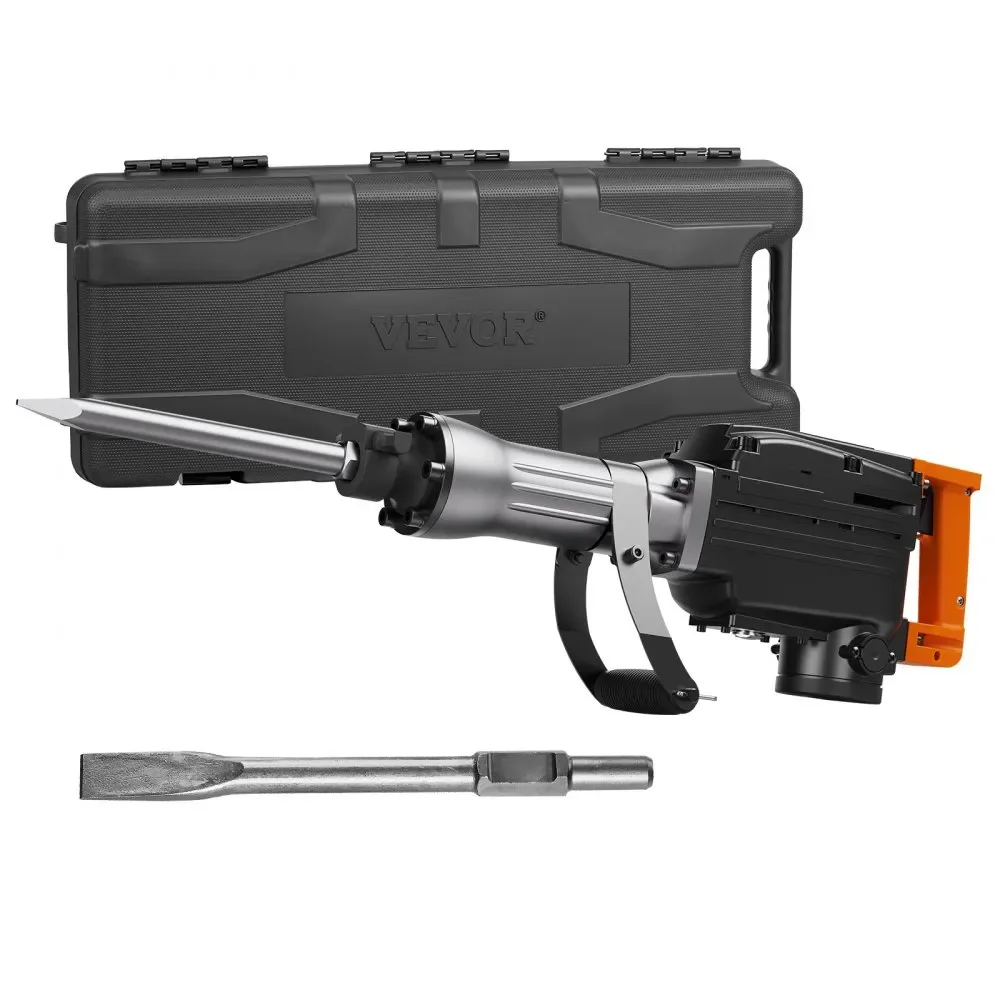
5. Clay Spade
You want to dig through tough ground without breaking a sweat? The clay spade is the bit you need. This bit looks like a wide, flat blade, almost like a shovel. You’ll find it super handy when you need to dig trenches or remove packed earth. Many beginners love the clay spade because it makes digging much easier than using a regular shovel.
When you look at jackhammer bit sizes, the clay spade stands out for its shape and size. Most clay spade bits measure about 17.9 inches long and 5.5 inches wide. That gives you plenty of surface area to cut through soil fast.
Wondering what kind of ground you can tackle with a clay spade? Here’s a quick list:
- Dense clay soils
- Packed earth
- Loose gravel
- Adobe soil
- Sandstone
- Frozen dirt
6. Moil Point
Ever tried to break up a huge rock or tough concrete and felt stuck? You need a moil point bit in your set of jackhammer bit sizes. This bit looks like a thick, round spike. It’s built for heavy-duty jobs where you need to punch through hard material. You’ll see moil point bits on demolition sites and rocky terrain.
Here’s what you can do with a moil point bit:
- Smash large rocks and boulders into smaller pieces.
- Tear down concrete walls and slabs.
- Dig through tough, rocky ground.
You don’t have to worry about slipping or losing power. The moil point’s design keeps it steady and focused. You get more control and less vibration, which means safer work and less fatigue.
Most moil point bits come in sizes from 12 to 18 inches long. The shank diameter usually matches standard jackhammer bit sizes like 1-1/8 inches. Always check your jackhammer’s specs before you buy a new bit. That way, you avoid damage and keep your tool running strong.
7. Bushing Tool
The bushing tool may not make as widespread an appearance as other heavy duty jackhammer bit sizes, but it makes a case forto itself as a surface preparation game-changer.
This bit does not look the same. It is provided with a flat end, with little, swollen spikes on it. You can polish surfaces quickly when you use it. That is very useful when you have to have concrete or asphalt to be suitable for a new layer.
The bushing tool will come in very handy when it comes to a variety of tasks:
- Shattering of concrete roads, sidewalks.
- Removing asphalt
- Some sawing of expansion in concrete.
You need this bit in case you want to make a smooth surface rough. The bushing tool assists in bondingnewer quick existing concrete or coating to bond.
You simply screw it onto the jackhammer, look at the size of the shank and then you are all set to go. The majority of the bushing tools possess standard shank sizes such as 1-1/8 inches, though it is always advisable to check before you begin.
8. Tile Chisel
You must have a tile chisel in your jackhammer bit size assortment to quickly rip off tiles. The bit allows easy and clean tile removal. With a hatchet and scraper you need not wrestle. The tile chisel makes your hard work.
The blade is made broad and flat. It slips under tiles and stretches them upwards without damaging the surface below. You may apply it to floor tiles and wall tiles just to mention but not least old adhesive. The chisel of tile will save you time and leave your workspace clean.
The reason you should choose the appropriate jackhammer bit sizes on tile chisels is the following:
- The majority of the tile chisels have a width of 3 to 4 inches.
- Its length is normally between 10 and 18 inches long.
- Standard jackhammers including 1-1/8 inches would work as the shank most of the time.
- You are doing better when the bit fits your tool.
You may ask yourself what is a place to use tile chisel. Check out these common jobs:
- Eliminating tiles made of ceramics on the floor and walls.
- Pulling up the sheets of vinyl or linoleum.
- Peeling off ancient grout and adhesive.
- Surfaces to be covered with new tile need to be prepared.
9. Scaling Chisel
You want to clean up surfaces fast? The scaling chisel is your best friend when you need to remove stubborn stuff from concrete or metal. This bit stands out in your set of jackhammer bit sizes because it has a wide, flat blade. You can use it to scrape, chip, and smooth surfaces that other bits just can’t handle.
Most scaling chisels come in lengths from 12 to 18 inches. The blade width usually ranges from 2 to 4 inches. You should always check that the shank matches your jackhammer. This keeps your tool safe and helps you work better.
You’ll find scaling chisels super useful for jobs like these:
- Removing old paint or tile adhesive from floors and walls
- Scraping off concrete splatter or buildup
- Cleaning up after demolition work
10. Ground Rod Driver
You want to drive metal rods deep into the ground? The ground rod driver is the bit you need in your set of jackhammer bit sizes. This tool makes a tough job much easier. You don’t have to swing a heavy sledgehammer or worry about missing the mark. Just let your jackhammer do the work.
You’ll find ground rod drivers in a few common sizes. Each one fits different jobs:
- 1-1/8″ Hex Hammer Steel Ground Rod Driver: This bit is about 15 1/2 inches long. The chisel edge measures 1.125 inches. It has a hexagon shank. You can use it to drive earth rods for lightning conductors or tent anchors. It works well with rods and rings up to 1 inch in diameter.
- SDS MAX Ground Rod Driver: This one is shorter, with a length of 10 inches. It fits 5/8″ and 3/4″ ground rods. You’ll use this bit for electrical circuits. It works best in hammer-only mode.
- 1″ x 2‑1/4″ x 16″ Ground Rod Driver: This bit is 16 inches long. It fits rods up to 1 inch in diameter. You can use it to drive rods into the ground without a heavy sledgehammer. It works with 1-1/8″ hex demolition and breaker hammers.
Choosing the right bit size
Here is a step by step guide to determine which jackhammer bit size will work for your project:
- Know your project requirements: Take into consideration the extent of your project which may be splitting concrete or pulling out tiles.
- Assess material type: Select the type of both harder materials such as concrete and clay as well as soft materials such as concrete, spade with layer.
- Identify job purpose: Determine whether you need to break, chip, or dig or scrape to fit the appropriate shape of bit.
- Compatibility of the check with your jackhammer: Keeping the bit size and type in shape to the jackhammer type is also necessary otherwise this will cause damage.
- Choose the right diameter and length: Shorter bits offer better control whereas longer reach deeper.
- Select clean cuts bit shape: Select pointed bits to cut tough surfaces and a flat bit to cut a cleaner cut.
- Select a bit design: There are a variety of bit designs to choose fromdepending on the task to which the selected bit design fits.
- Safety and washerness: The appropriate selection of a bit size is a guarantee of safety, as well as the classifier of the washerness of your tool.
FAQ
What are the Jackhammer bit sizes for concrete breaking?
You desire a sharp point of a chisel or moil. Search by jackhammer bits size of about 1″ -1-1/8″ diameter.
Is the size of the bit you use in your jackhammer not limited?
No, it has to have the shank type and diameter checked. The jackhammer can only work with jackhammer bits of specific sizes. Also, the first thing before using a tool is to read the manual.
What makes you know when to use a big bit size or small?
Wide bits are to be used when digging or scraping. Take fine chips to cut or hack. You’reYour right jackhammer bit sizes can rightly earn you a job without much ado.
Conclusion
Knowledge of jackhammer bit sizes saves you time, energy and intelligence. Since there are pointed chisels used to concrete and spade bits used to dig, every kind has a different use.
Selection of the appropriate bit will imply easier work or a prolonged life of the tool. Need strong, long-lasting jackhammer bits and other accessories?
Check out VEVOR, the home of a new business partner who uses the best professional equipment for power, accuracy, and affordability on all own housebuilding or building jobs.