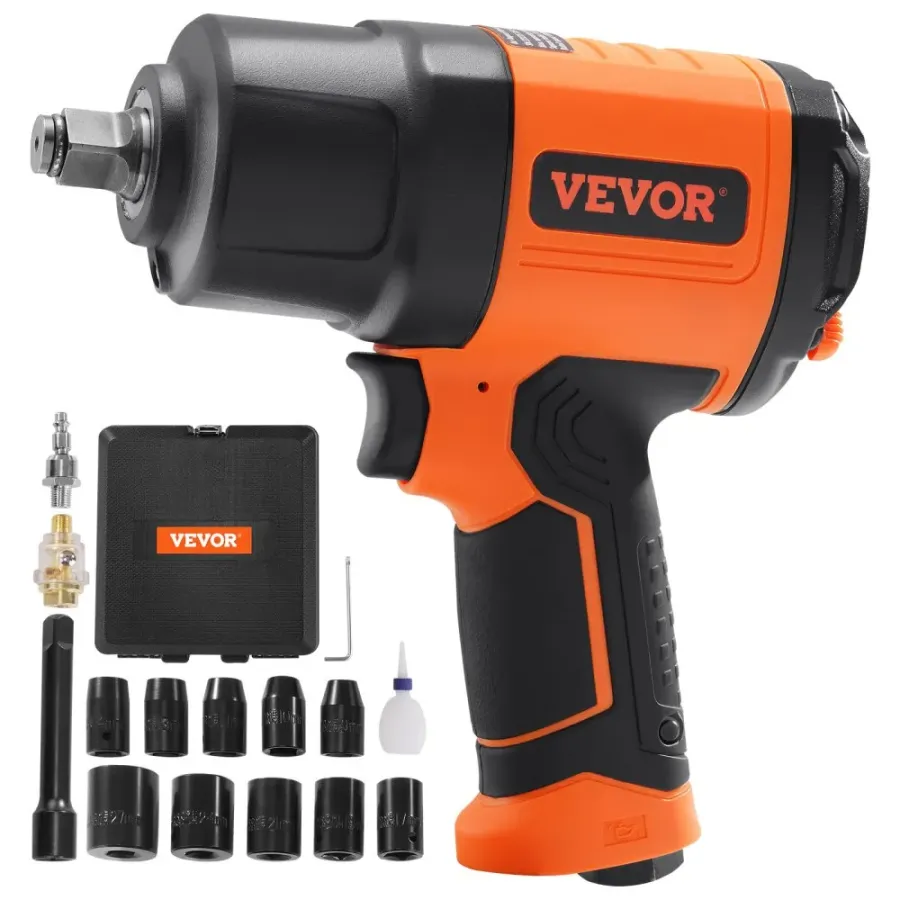
If you’ve ever spent time in a garage or on a job site, you know that the ratchet and socket are the bread and butter of mechanical work. But when you reach for a socket to use with an impact wrench, you might hear a warning bell in your head. Is it safe? Is there even a difference?
The core of the impact socket vs. regular socket debate lies in knowing which tool is better for the job and yourself. For those looking to tackle heavy-duty projects, a dedicated comprehensive set can be the smart and safe way to go too. But first, let’s talk about the main distinctions between impact sockets vs regular sockets.
Differences between impact socket vs regular socket
While they might look identical, they’re both quite different in their materials and the construction designed to handle two very different types of torque.
Use
Impact sockets are used for the purpose of shock-absorption in heavy-duty, high-impact machinery and tools that generate a high torque, like impact wrenches and driver while regular sockets are suitable for precision work using small, hand-held tools like ratchets and breaker bars.
Material
Impact sockets use the chrome-molybdenum (Cr-Mo) variety of steel that is soft and flexible. Regular sockets on the other hand use chrome-vanadium (Cr-V), which is hard and brittle.
Construction
The build and material quality play a big role in the distinction between impact sockets vs. regular sockets.
Impact sockets have a thick and heavy-duty wall thickness with a matte black oxide coating on top to prevent corrosion and chipping. Regular sockets have thin and slim walls and are painted with a shiny chrome plating to allow access into tiger spaces.
Locking Pin Design
The locking pin design in regular sockets employs ball-shaped ridges that are not immune to vibrations at high speeds. This risks them coming undone when used in the wrong tools. Impact sockets, on the other hand, have grooves for locking rings that do not come unattached easily and can withstand high vibrations.
Features
Impact sockets work best for lug nuts, suspension work, heavy rust, and high torque applications. Regular sockets, on the other hand, are better suited for general assembly work, engine work, and precision torquing.
Maneuverability
Due to their small size, regular sockets can easily work for angled or tight-fit spaces. This is not a feature available to impact sockets which are bulky and heavy.
Consequences of wrong socket types
Knowing the difference is all good, but understanding how this difference could affect our work and well-being negatively really drives the point home.
Here are a few critical mistakes to avoid making at all costs. These mistakes are why we stress the impact socket vs. regular socket difference:
Catastrophic failure
The hard, brittle steel of a regular socket can not handle the hammering blows from an impact wrench. Attempting to use a regular socket in place of an impact socket will result in it shattering within seconds, sending shards flying everywhere.
This is the single biggest reason to fully understand the impact socket vs. regular socket difference.
Damage to the fastener and tool
When the socket shatters, the energy that should have been absorbed will find a place elsewhere. It can mar the fastener head, rounding it off and making it hard to remove. It can also place such stress on the anvil of your impact tools that it damages them permanently and renders them useless.
Personal injury
The flying metal shards from the shattered chrome socket are a serious risk to your eyes and skin. It only takes a split second to cause irreversible damage. This is a risk not worth taking.
What is an impact socket?
An impact socket can be considered the heavy-duty champion of the socket world. It’s specifically engineered to fit well with power tools like impact wrenches and impact drivers. The “impact” in their name comes from the sudden, high-torque rotational forces that these tools are designed to deliver.
It is with a very specific philosophy that impact sockets have been built – to survive this brutal environment, and this is what drives the main difference between impact sockets vs. regular sockets.
The key quality that sets impact sockets apart and gives them their name is that they are made of flexible steel. Upon impact, this steel flexes into itself and absorbs the shockwaves, instead of shattering.
Impact sockets are also coated with a matte black coating of black oxide or phosphate. This helps prevent corrosion and is thicker than the chrome plating on regular sockets.
Finally, and most notably, impact sockets are visibly thicker and heavier, with reinforced walls. This extra mass is crucial in absorbing massive forces and preventing explosions.
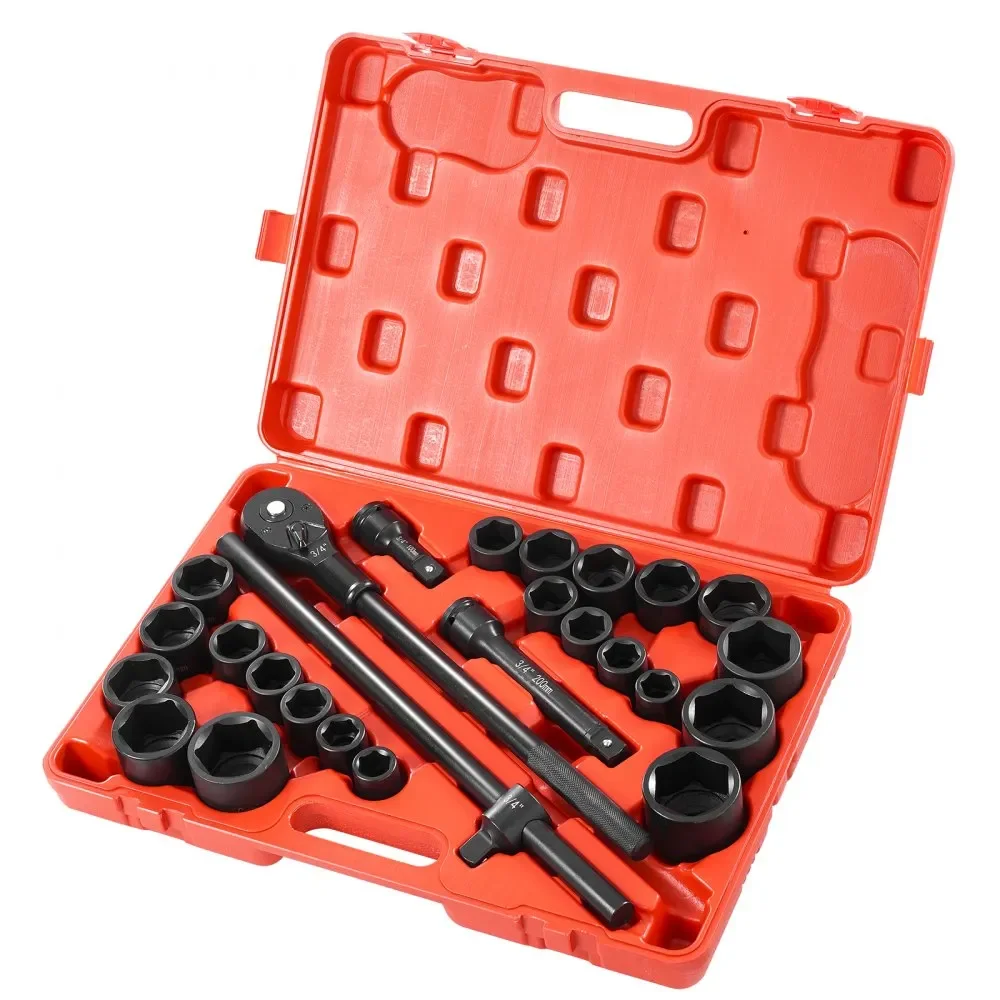
What is a regular socket?
Your standard chrome socket is the precision workhorse. It’s designed specifically for use with hand-safe tools like ratchets, breaker bars, and torque wrenches. The force applied in these is human-powered and is safe to handle.
Unlike impact sockets, regular sockets are made from a brittle, inflexible material. The reason for that is that the hardness allows them to withstand a steadier level of man-induced pressure.
Since regular chrome sockets are designed for precision, they are also made much thinner and lighter, allowing access to tighter spaces where the bulky impact socket might not fit.
In a nutshell, when deciding which to pick from an impact socket vs. regular socket, you may think of them like a shock absorber.
An impact socket is built to absorb violent blows, while a regular socket is built to remain rigid under pressure. Trying to use a regular socket with impact for socket tools is a surefire recipe for disaster.
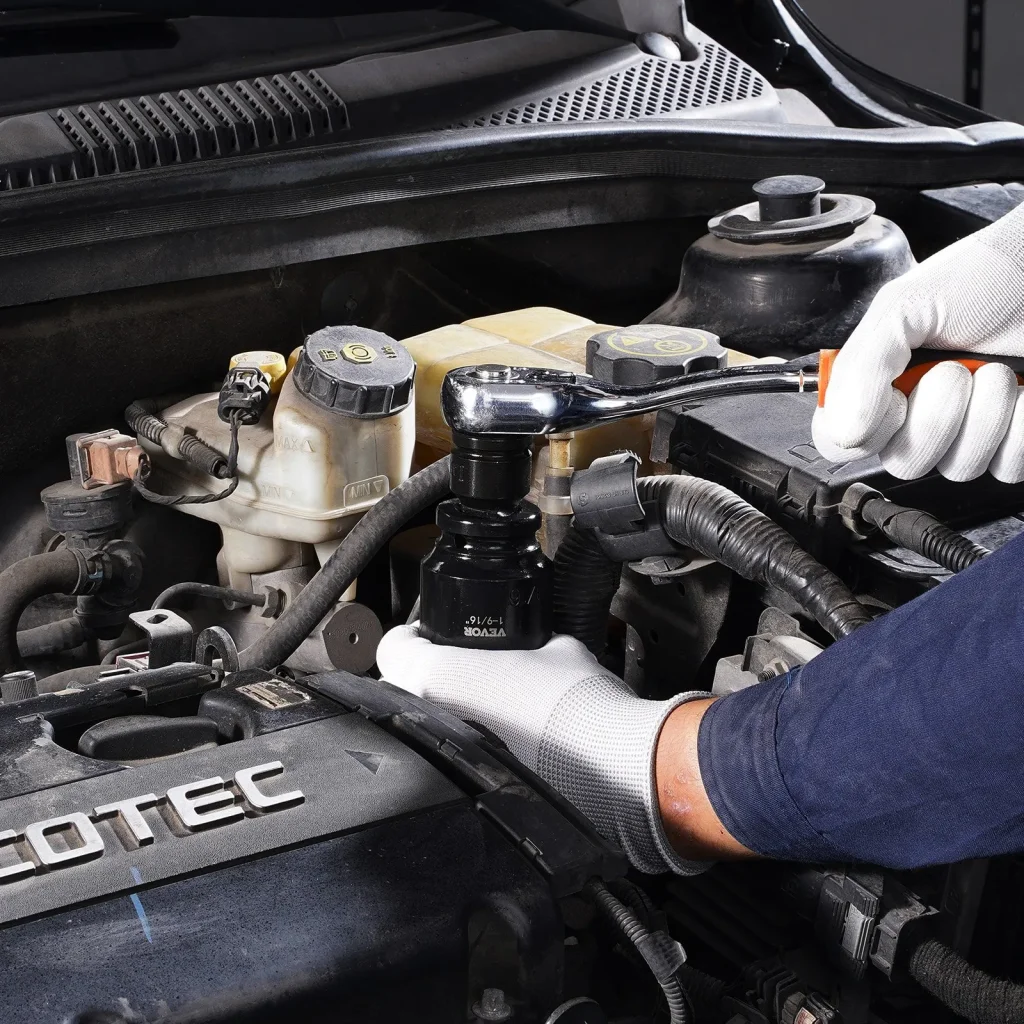
When to use each type
Deciding on a sure answer for impact socket vs. regular socket is about the specific needs of the job you’re working and the machinery you’re using.
Use a regular socket when…
- Working by hand
- Using hand-held, low-impact tools
- Working in confined, tight-fit spaces
- Working on assembly projects
Use an impact socket when…
- Handling high-power tools
- Dismantling rusty exhaust systems
- Working in a professional factory environment
For these big jobs, a well-organized ½ impact socket set that covers both SAE and Metric sizes could be a real time-saver in the shop.
FAQs
Can I use a regular socket on an impact wrench in a pinch?
We would strongly advise against this. The main difference between an impact socket vs. regular socket is the shock absorption ability. You are essentially taking the risk of shattering the socket within a few seconds, sending metal shards flying in every direction. It’s not a risk worth taking.
Can I use an impact socket with a regular hand ratchet?
This, on the other hand, is totally safe to do. While the impact socket might not fit everywhere, there is no safety concern with using it with a hand tool. It might not feel the same due to its heavier body, though.
Why are impact sockets always black?
The black color comes from the black oxide or phosphate coating. This is a thicker finish and is more durable than chrome plating, so it’s vastly better at resisting corrosion and providing a slight surface grip.
Conclusion
The impact socket vs. regular socket discussion is a safety and knowledge discussion, explaining the unique use and need for either tool. By respecting their differences and having both in your arsenal, you are allowing yourself to work more efficiently and safely.
Investing in quality sets for both purposes, whether you’re building your first toolkit or expanding an existing collection, is an investment in getting the job done right.
For more information on tool safety and best practices, make sure you are always exploring the full range of durable options available to find the perfect impact socket set for your needs.