I hate raking leaves. What’s a better option? Luckily, there are also many easier ways of handling fall leaves than spending hours and hours with the rake. You can pick them up with a leaf blower, chop them into tiny pieces with a mulching mower, or fast cleanup with a lawn sweeper. A leaf vacuum is good for larger piles, while dragging the leaves around on a tarp or scooping them up makes the job easy. You can also make compost piles, or you can let leaves compost naturally to nourish your lawn and garden.
Why Raking Leaves Can Be So Frustrating
Raking leaves may sound like an easy chore, but it quickly becomes a tiring task that is time-consuming. Many homeowners begin with good intentions and then simply become overwhelmed and think there should be a better way. Often, the process is harder than it appears.
The Physical Effort and Back Strain
You grab your rake and start, but you soon start to ache in your back. Raking leaves requires endless bending, twisting, and pulling. Your arms become tired, and your shoulders can become sore after a while. If you have a large yard, you may need breaks just to get through it. The next day, stiffness or soreness can make you regret the effort. It’s no wonder that so many people ask themselves, ‘I hate raking leaves, what can I do instead?’
Why Raking Takes Longer Than It Should
You may think it would be a slam dunk to clear your yard, but seemingly, the leaves come faster than you can handle. The wind tends to blow them back into areas you just cleaned. Wet leaves stick to the ground and slow you down, while one section to which you finish often leads to a different one to be taken care of. Hours can go by outside, and the task is not finished while you contemplate alternatives to traditional leaf raking.
Common Issues Homeowners Experience During Fall
Every fall, homeowners face similar issues with leaf cleanup:
- Leaves are falling faster than they can be raked away.
- Rain makes leaves heavy and slippery
- Rakes get bent, broken, or lose their effectiveness.
- Bags get full too fast and become difficult to carry.
- Energy runs out before the job is finished.
There are many others suffering from a frustration that you’re not alone in feeling. Many people find leaf removal exhausting and time-consuming. Luckily, there are plenty of ideas for removing leaves without the hard work for lazy homeowners.
What Happens If You Don’t Rake Leaves at All
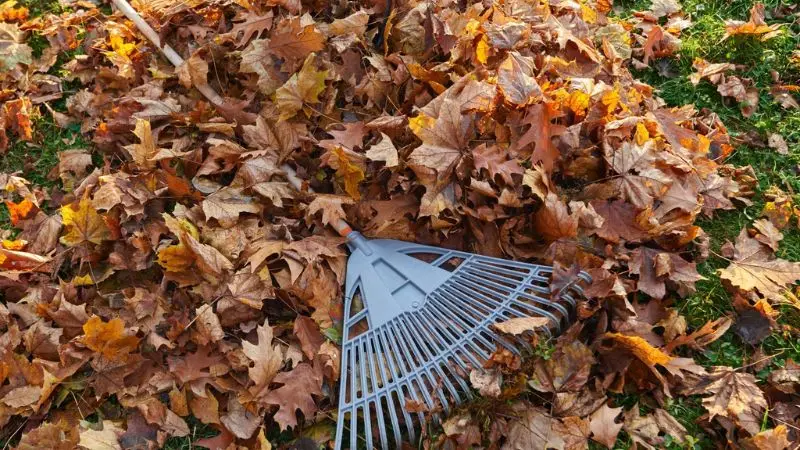
Many homeowners have questions as to whether they would be harming their lawn if they didn’t clean up their leaves. The answer to how much depends on how many leaves you leave and what you do with them. Understanding the impacts of the fallen leaves can help you determine whether you need a rake or other simpler ways to solve the problem.
Can Leaves Damage Your Lawn?
Thick layers of leaves can block out the sunlight and trap moisture, which your grass needs to stay healthy. A heavy mat of wet leaves can cause yellowing, weaken your lawn, or even kill patches of grass. Mold and fungus also love moist piles and cause problems that become evident come spring. If your leaves are piling up more than an inch thick, then it’s a sign that something needs to be done. For those asking, “how to get rid of leaves without raking”, there are smarter ways to get rid of leaves than bending over all day.
When Leaving Leaves Is Actually Okay
Not all leaves are harmful. A thin layer of leaves can have a natural feeding effect for your soil as they decay. Garden beds or areas beneath trees can take advantage of a light cover (it acts like mulch). This layer helps to keep roots cool, holds soil moisture, and suppresses weeds. It can also sustain pollinators and beneficial insects. You may want to leave leaves if:
- You have only a thin layer.
- Leaves are dry and spread out.
- You want to encourage pollinators or bugs that will help in your garden.
The Impact on Grass, Pests, and Soil Health
Leaves can either help or hurt your yard, depending on how you deal with them. A pile that is too thick and wet can smother the grass and attract pests, such as slugs or mice. On the flip side of the coin, a light cover of will enrich your soil when leaves decompose. earthworms & other helpful insects. This is a natural process that improves the health of the soil and helps the plants to grow stronger. Using alternatives to traditional leaf raking can provide you with these advantages without the other back-breaking work.
Better Choices Than Raking Leaves
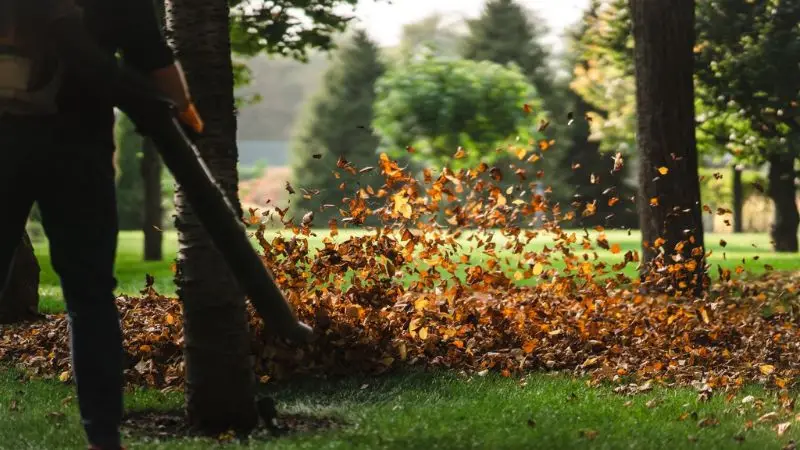
Raking the leaves is tiring, but there are plenty of options to make the process of cleaning up easier and faster. Whether it’s to save time, prevent back strain, or simply enjoy your yard more, the following options have solutions that work for any homeowner. Many people say, “I hate raking leaves.” What’s a better option?” The answer may be simpler than you think.
Use a Leaf Blower for Easier Cleanup
A leaf blower can cut the time spent on leaf clean-up drastically. You only walk around your yard and force the leaves into piles. Dry leaves move fast, but wet leaves may require some extra effort. Using a leaf blower helps your arms and back from repetitive strain. For homeowners looking for alternatives to the traditional leaf-raking method, this is one of the best tools for leaf cleanup. It is a great help to use on large yards or windy days and makes the job of clearing up leaves quick and easy without breaking a sweat.
Mulch Leaves with a Lawn Mower
Keep your lawn mower as a leaf mulcher. By mowing over fallen leaves, the machine chops them into small pieces, which fall back onto your grass. These tiny bits break down over time, and they feed your soil naturally, leaving your lawn healthy. Mulching is time and effort-saving, and makes an annoying chore into a way to enhance your yard. Many homeowners ask themselves the question, “I hate raking leaves.” What can I do instead?” and mulching can so easily come out as the easiest and most eco-friendly.
@tada.greenhouse VEVOR tow behind lawn sweeper. Easiest was to keep your yard clean and looking great. Easy to use and pulls great. #tiktoksummerturnup #vevorsummerlife #vevor_us #lawnsweeper #yardcleanup
♬ original sound – TaDa Greenhouse
Vacuum Leaves with a Yard Vacuum System
A yard vacuum is a giant outdoor vacuum cleaner. You push or carry it over your yard, and the machine sucks up leaves into a collection bag. Once the bag is full, you empty it. This tool is ideal for outdoor yards that are large or when leaves accumulate rapidly. For those searching for easy leaf removal tips for lazy homeowners, taking a yard vacuum can save hours of manual labour while keeping your yard tidy and manageable.
Compost Your Leaves for an Eco-Friendly Disposal
Instead of throwing away leaves, try composting. Gather leaves in a corner of your yard, and pile on grass clippings or kitchen scraps. Over time, the pile degrades into nutrient-rich compost, which enriches the quality of the soil and promotes plant growth. This method not only takes leaves out of landfills, but also turns a chore into a sustainable solution. For those homeowners who are asking “How to get rid of leaves without raking,” the answer is composting because it is an environmentally friendly alternative that will help the yard and the world.
Hire a Leaf Removal Service
If you’d prefer not to do yard work at all, there are professional leaf removal services. These services take their tools with them and do all the hard work so that your yard is left looking neat and free of leaves. For busy homeowners or anyone who really hates to rake leaves, this is the ultimate leaf removal idea for lazy homeowners. It is a little more expensive, but it takes the whole work out of it, allowing you more time to enjoy your yard without stressing.
Mulching Leaves: The Simplest No-Rake Solution
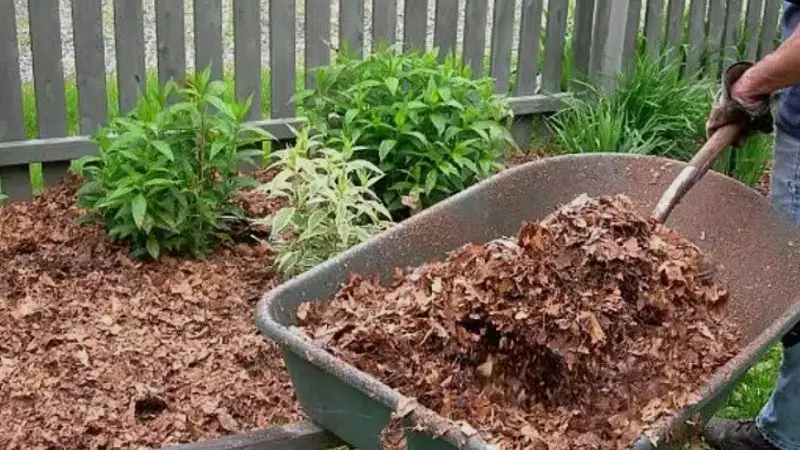
Mulching is among the easiest methods of controlling leaves without raking. It lets you maintain the cleanliness of your yard while doing good to your lawn at the same time. That’s for homeowners who ask, “I hate taking the leaves.” What’s a better option? is often mulching the easiest option.
How Mulching Works
Mulching is simply chopping leaves into small pieces and spreading them on your lawn. You can use an ordinary lawn mower or a special mulching mower. The leaves are cut into small pieces that fall between the grass. These pieces begin to decompose naturally, adding nutrients back into your soil. You do not need to rake, bag, or carry anything-the mower does all of the work.
Benefits to Your Lawn and Soil
Mulched leaves offer several benefits to your yard:
- Adds nutrients: As the leaves break down, they will naturally fertilize your grass.
- Retains moisture: Mulched leaves help the soil to remain moist, thereby minimizing the need for additional watering.
- Suppresses weeds: Small pieces of leaves cover the bare area, preventing weeds.
This simple process helps to increase the health of grass, as well as help the soil’s living organisms, and save time on maintenance. Your lawn is a greener, healthier, and easier-to-care-for lawn.
How to Mulch Leaves Properly
Follow these steps for effective mulching of leaves:
- Set your mower on the highest setting.
- Slowly walk over leaves with a mower, twice as needed over thicker areas.
- Check to be sure that leaf pieces are small and do not cover the grass completely.
- Leave the leaves that were mulched in place on the lawn to decompose naturally.
Mulching leaves is a perfect solution for everyone else in search of alternative methods to general leaf raking. It saves time, eliminates back strain, and improves your yard without extra effort.
Leaf Blowers vs Raking: Which is Better?
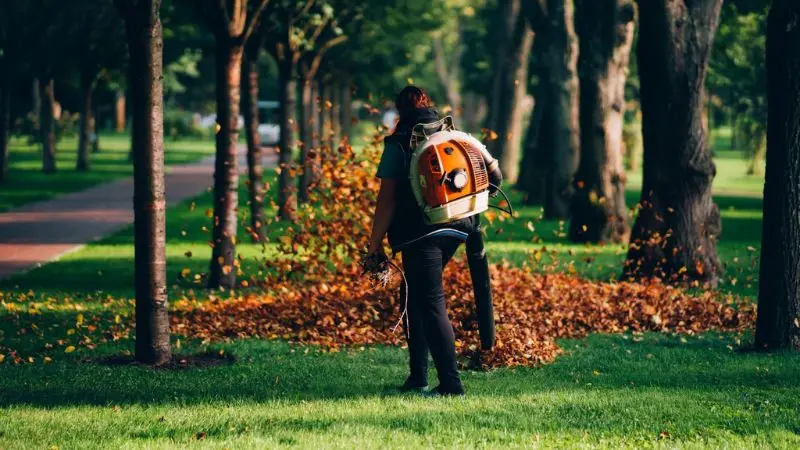
Deciding whether to get a leaf blower or a traditional rake depends on your priorities. Many homeowners ask, “I hate raking leaves, what can I do instead?” Understanding the differences can help you make the best choice for your yard.
Time and Effort Comparison
If finishing yard work quickly is your goal, a leaf blower is difficult to beat. You just walk and guide the nozzle, and you’ve got leaves in piles in a matter of minutes. Your arms don’t get as tired, and large areas can be picked up much faster than with a rake. Raking, on the other hand, requires the constant bending, twisting, and pulling. In a large yard, you could spend hours gathering the leaves by hand. For those who seek an alternative to traditional leaf raking, a blower has a definite advantage when it comes to speed and efficiency.
Cost and Maintenance
A rake is very cheap and can be easily kept up. You can buy one for just a few dollars, and once used, you just have to hang it up. Leaf blowers, however, have higher initial costs. Gas-powered models need fuel, and electric versions need to be battery-charged. In addition to this, leaf blowers require frequent maintenance such as filter cleaning, part inspections, and occasional repairs. While a blower will more than save time, rakes are the most affordable and low-maintenance option for homeowners.
Noise and Environmental Issues
Leaf blowers may be noisy, and some neighborhoods have restrictions on when and how they may be operated. Gas-powered blowers also emit fumes, which may impact the air quality. Electric blowers are quieter and cleaner, but are still noisier than raking. Raking is quiet, environmentally friendly, and it does not annoy neighbours. If you prize a yard without leaves or care about the environmental cost, maybe raking, or even light mulching, plus minimum use of a blower, would be the answer.
Eco-Friendly Ways to Deal With Leaves Without Raking
You don’t necessarily have to rake or blow leaves to keep your yard neat. There are eco-friendly alternatives that contribute to your garden and save you both time and can even contribute to your local wildlife. Many homeowners ask the question, “How to get rid of leaves without raking?” These methods are easy to use and effective.
Make a Compost Pile Out of Leaves
Turning leaves into compost is an easy and sustainable solution. Choose a corner in your yard and rake up the leaves. If they are dry, they need a sprinkle of water to help them break down. Mixing in grass clippings or kitchen scraps will accelerate decomposition. Every few weeks, turn the pile with a shovel or pitchfork. Over time, the leaves decompose into dark, nutrient-rich compost, which can be added to flower beds, vegetable gardens, or around shrubs. Composting is a natural alternative to the leaf-raking method for improving the health of your soil and minimizing waste.
Use Leaves as Natural Mulch in Garden Beds
Leaves can be used as a mulch for plants and shrubs. Spread a layer of dry leaves around your garden to help keep the soil cool and moist. As the leaves decompose, they add nutrients to the soil and help prevent weed growth. A thin layer of two to three inches is usually sufficient. For everybody thinking, “I hate raking leaves.” What’s a better option?” Using leaves as mulch is a no-rake solution that gives you a benefit for both your plants and your yard.
Leave Leaf Litter for Wildlife
Some leaves can remain on the ground to form natural habitats. Insects such as butterflies and beetles use leaf litter as shelter. Birds search for food in the leaves. Frogs or toads hide under the leaf litter. Keeping a few quiet piles of leaves in your yard is helpful for these creatures. Using alternatives to traditional leaf raking, like using leaf litter, not only saves effort but will encourage a thriving local ecosystem.
Wrap up
Raking leaves doesn’t have to be a back-breaking chore. For many homeowners thinking, “I hate raking leaves. What’s a better option?” there are plenty of easier solutions. You can mulch leaves with your lawn mower, use a leaf blower, or turn them into compost to save time and effort. Leaving some leaves as natural mulch or habitat also helps keep the soil healthy and supports wildlife. Whether you are a busy homeowner or someone who simply detests yard work, these are all options that will make a leaf clean-up easier and more eco-friendly. By selecting intelligent tools and techniques, you can keep your lawn healthy, eliminate waste, and enjoy your yard without the constant frustration of endless raking.
FAQ
If I leave all my leaves on the lawn, can I?
You can leave a thin layer. Thick piles block out sunshine and damage your grass. Try mulching or composting to get healthier soil.
What’s the fastest way to rake leaves?
A leaf blower is traditionally used to clear leaves quickly. You just walk and aim. For smaller yards, a lawn sweeper or mulching mower does the job.
Are leaf blowers bad for the environment?
Noise and fumes are issues with gas blowers. Electric blowers are less noisy and cleaner. Always check the local rules before you use one.