Properly putting your hose away is the first step to keeping your landscape clean. People who don’t know how to roll up a hose on a reel properly end up with a basement full of twists, kinks, and a mess. You can keep your outside environment nice and your hose in good shape for longer if you learn to properly roll it up on a reel. When you put your hose away properly, it’s easier to use when you need it again. You won’t have to deal with knots or slow water flow from twists, which will save you time. If you take care of your hose, it will last longer and cost less in the long term.
This guide will show you simple procedures and helpful ideas for quickly, easily, and stress-free rolling a line on a reel.
Types of Hose Reels
Before beginning the process, it is essential to understand the available types of best way to roll up a garden hose on a reel. There is a significant difference in how easily you can store and handle your hose, and selecting the appropriate one is one of the most critical factors in making it easier.
@beasleysfamily Replying to @Ricky Bobby #vevorpressurewasherhose #vevorpressurewasher #vevor #vevortools #vevorttshop #pressurewashing #pressurewasherhose #pressurewashinghose #powerwashing #powerwash #hose #pressurewash #powerwash #vevorpressurewashing #pressurewashingbusiness
♬ original sound – Beasley
Manual Hose Reels
Mechanical hose reels are straightforward and dependable. To coil the hose onto the reel, you must crank the handle. This gives you complete control over hose positioning, enabling you to produce clean, even loops.
Compared with automatic reels, these how to prevent kinks when rolling hose are typically more cost-effective and require less maintenance over their lifetimes. For homeowners and gardeners looking for a solution that is both long-lasting and economical, these are a popular option.
Retractable Hose Reels
The device is made more user-friendly and convenient by the presence of retractable hose reels. If required, you need only pull the hose out, and once it has been used, it will automatically retract to its original position. Those looking for an experience free of fuss will find this type is what they want. The hose can wind uniformly and without tangling due to the built-in guidance mechanisms, available in a variety of types.
Wall-Mounted Hose Reels
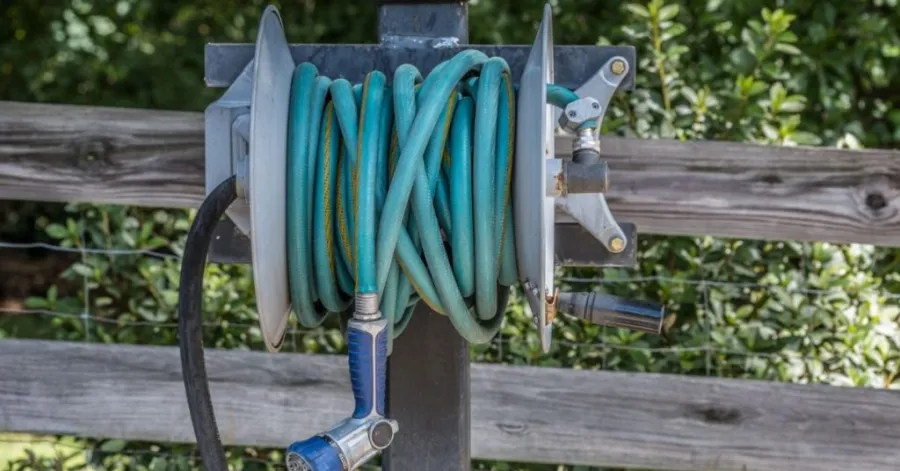
Reels mounted on the wall are fastened to a wall, fence, or garage to complete the installation. This allows you to save space in your yard by preventing your hose from falling to the ground, where it would otherwise be lost. For smaller gardens or for locations you want to look neat and orderly, they are an excellent choice. Additionally, how to store a hose on a reel properly help direct the hose evenly, reducing the likelihood of kinks and tangles.
Hose Reel Carts (Portable Options)
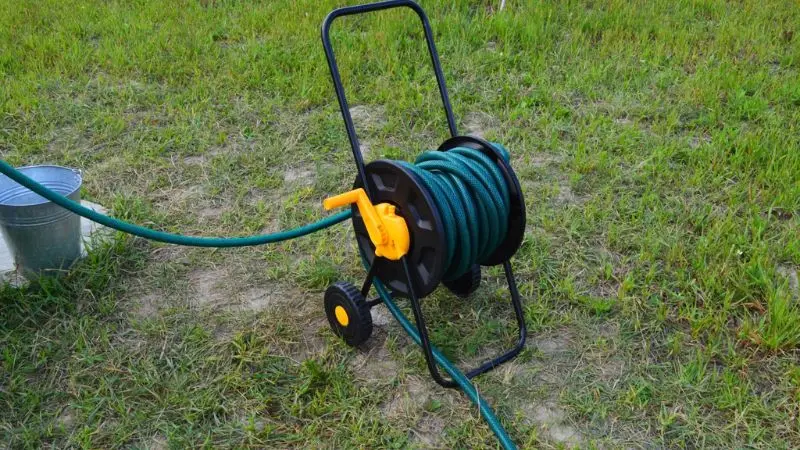
Carts with wheels are used to store hose reels. These carts are designed to be portable and easy to move from one location to another. Since they are fitted with wheels, you can effortlessly transport the hose across large yards without dragging it across the ground. This will be possible because of the wheels. When you follow a step-by-step guide to hose reel winding, you can continue with your business without encountering any difficulties. For larger gardens, where adaptability and convenience are of the utmost importance, this style is ideal. It is wonderful for those gardens.
Essential Preparation Before Rolling a Hose
Before commencing manual vs automatic hose reel winding, ensure you have completed all necessary preparations. This is significant since it marks the beginning of the procedure. If you dedicate a few extra minutes to preparation, you can protect yourself from potential injuries during the trip. The process will proceed more simply, reducing the number of problems caused by the operation.
Turn Off the Water and Drain the Hose
First things first, check that the water supply has been fully and completely switched off. If there is still water in the hose, rolling it will be more difficult because it will be heavier. This is because the water will be in the hose. You can let all the water evaporate by lifting the hose just a tiny bit and walking down its length. How to store a hose on a reel properly with a dry hose during the winter months not only makes it more convenient but also protects against mold and freezing damage. This is because dry hoses are completely free of moisture. This is of utmost significance because.
Remove Attachments
Before beginning to roll the hose, ensure that any nozzles, sprinklers, or other watering devices have been removed from the hose. Sprinklers are another type of watering equipment. Should you persist in maintaining their attachment, the process of winding will likely get more challenging. On top of that, if you continue to keep them attached, you run the danger of causing damage to both the reel and the hose. If you decide to keep these items in a separate location, it will be somewhat easier to find them if you need them.
Straighten the Hose
Any twists, loops, or knots in the hose should be removed before moving forward with the process. How to prevent kinks when rolling hose: Lay it out flat on the ground before moving forward. Winding a straight hose is significantly easier than winding a kinked hose, and it also helps prevent kinks from forming in the conduit. Completing this step is necessary to ensure your hose continues to function correctly for an extended period and maintains appropriate water flow.
Inspect for Damage
You should schedule some time to investigate the area of concern and look for any signs of wear and tear, such as cracks, leaks, or areas that have gotten worn. When less serious problems are addressed earlier, it is possible to avoid more serious problems in the future. This is because it is feasible to avoid more serious problems. Routine inspections of your hose can help extend its lifespan and ensure it functions effectively when required. How to store a hose on a reel properly can be accomplished by ensuring that it is in good condition.
Step-by-Step Guide to Rolling Up a Hose
Following these straightforward procedures will allow you to knowthe best way to roll up a garden hose on a reel in an orderly fashion once it is ready.
Step 1: Position the Hose Reel
By positioning the hose reel in this manner, you can ensure it is not only level but also stable on the surface it is placed on. If you choose to hang it on the wall, ensure it is securely attached and stable. Not only does the use of a constant reel eliminate the need to move while the winding technique is carried out, but it also simplifies the process, making it safer.
Step 2: Align the Hose
Therefore, it is of the utmost importance to ensure that the hose is fully extended to guarantee it moves in a straight line toward the reel. As a result, it is now feasible to wind the rope smoothly, eliminating the risk of tangling. Checking the step-by-step guide to hose reel winding, its design does not include any loops or twists, is an essential step before proceeding. Because of this, you will be able to move on with 100 percent confidence.
Step 3: Start Winding Slowly
To get started, you can either turn the manual vs automatic hose reel winding. Both of these options are available for selection. It is vital to maintain a modest, continuous pace throughout the entire operation to produce even winding. This is the only way to achieve consistent winding. If you rush through these processes, you run the danger of forming loops and tangles that are not symmetrical according to the rules. This is because the rules require that you follow them in a specific order.
Step 4: Guide the Hose
It is recommended that one hand turn the reel while the other moves the hose back and forth. This makes the process more efficient. As a result, the reel has greater flexibility. By doing so, you will ensure the reel is turned to its maximum capacity. As a result of this, the hose is distributed across the reel in a manner that is more precise and consistent than it would have been in any other circumstance. How to store a hose on a reel properly to keep the hose organized after it has been positioned in the appropriate direction. This eliminates the potential for bunching, which would otherwise have been a problem.
Step 5: Maintain Light Tension
It is essential to establish a tension that is not only sensitive but also consistent before commencing the winding process. This is because step-by-step guide to hose reel winding is a lengthy operation. Establishing this tension in advance is advisable. To prevent the hose from becoming either extremely loose or excessively tight, it is vital to take the necessary precautions. It is necessary to take these safety measures first. Using this method not only safeguards the coils and prevents them from becoming entangled, but also prevents future entanglement.
Step 6: Secure the Hose End
Using the hook or clip attached to the reel, you can secure the hose in place once it has been fully twisted. This is provided that you make use of the hook or clip. As a result, the best way to roll up a garden hose on a reel will not become dislodged, and everything will remain in its appropriate spot until the next time you use it. Until the next time you use it, this will continue to have an effect.
Common Mistakes to Avoid
Even little mistakes can cause damage or make manual vs automatic hose reel winding messy. Here are some frequent problems to look out for:
- In the absence of any guidance, the hose is being rolled at an excessively rapid pace.
- In a single position, allowing the pipes to overlap with one another
- In the process of putting away a hose that is either dirty or wet
- The failure to remedy tiny cracks or leaks in the structure
- When the end of the hose is not properly secured during use
Avoiding these mistakes will keep your hose in excellent condition and make it easier to use.
Helpful Tips for Better Hose Storage
- To prevent dragging, use hose guides in large yards.
- Pick hoses that are light and won’t kink.
- Mark lines on reels to help them wind evenly.
- For ease of use, use reels with two hoses.
- Consider getting a cart with wheels so you can move it easily.
These simple tips can make a big difference in how to prevent kinks when rolling hose.
Conclusion
It will make a big difference if you know how to roll up a hose on a reel. Getting your hose ready, doing things the proper way, and not making frequent mistakes will help you keep your yard clean and your tools in good repair. If you take care of your hoses, wind them up correctly, and store them properly, they will last longer and perform better every time. Don’t waste too much time getting things straight. Use these easy ideas to make your farming more fun instead.
FAQ
1. How often should you roll up your hose?
You should roll up your hose after every use to prevent kinks and keep it in good condition.
2. Can you leave your hose on the reel all year?
You can leave it outside during warm months, but it’s best to store it indoors during winter to prevent freezing damage.
3. What should you do if your hose keeps kinking?
Straighten the hose before winding, and guide it carefully as you roll. Winding slowly helps prevent kinks.
4. Is a hose reel better than manual coiling?
Yes, a hose reel keeps your hose organized, reduces tangling, and makes storage much easier compared to manual coiling.