Plastic has become an everyday material, but the convenience comes with serious consequences to the planet. Around the world, plastic waste is contaminating our oceans, harming our wildlife, and entering our food chain as microplastics. The good news is that there are simple steps everyone can take to reduce plastic waste.
This guide provides information on how to reduce plastic waste at home, in daily life, and through long-term behavior change. Small changes like growing your own plants in a greenhouse will help you lead a more sustainable lifestyle and help create a cleaner future.
Why reducing plastic waste matters
Plastic waste is a growing global issue that impacts ecosystems, wildlife, and human health. Millions of tons of plastic are deposited into rivers, lakes, oceans, and landfills each year, as they cannot be broken down, even after thousands of years.
Such pollution destroys habitats, chokes animals, and decreases biodiversity. Possibly due to the degradation, these particles are distributed in soil and water, enter food chains, and reach people via seafood, drinking water, and crops.
Fossil fuels are also used in plastic manufacturing and emit greenhouse gases, exacerbating global climate change. Plastic waste reduction will safeguard life in the ocean and on land. It will:
- Save resources
- Cut down on pollution
- Lessen the health dangers associated with microplastics and toxic additives
By understanding how to reduce plastic waste, we can protect the environment, reduce pollution, and live in a healthier, more sustainable world.
How to reduce plastic waste in your everyday life
The number of options we make day by day can significantly reduce the level of plastic we consume. Let’s go through the steps on how to reduce plastic waste through everyday activities:
Refusing single-use plastics and choosing reusable alternatives
Begin by reducing single-use plastic items. These single-use plastics include:
- Water bottles
- Straws
- Shopping bags
- Takeout utensils
- Coffee lids and cups
These items are usually used for minutes but have been lying around for centuries. To replace them:
- Always have a reusable bottle and make a few refills throughout the day.
- Take canvas shopping bags while you shop
- Likewise, “no” to plastic straws if not required for any medical reason.
- To go out to cafes, choose a reusable coffee cup.
Reducing packaging at home contributes to your overall strategy of how to reduce plastic waste. For those who go away a lot, you should also carry a handy pair of cutlery, or at least keep a set in the car. These little habits help avoid large amounts of waste.
Reducing plastic packaging: buy bulk, choose minimal packaging
Plastics are the most common household waste from food packaging and bathroom items. Some smart swaps include:
- Buy loose fruits and vegetables rather than the plastic-wrapped ones
- Order bulk or family-size instead of individual-size
- Buy pantry stock in refill/zero-waste stores, if possible
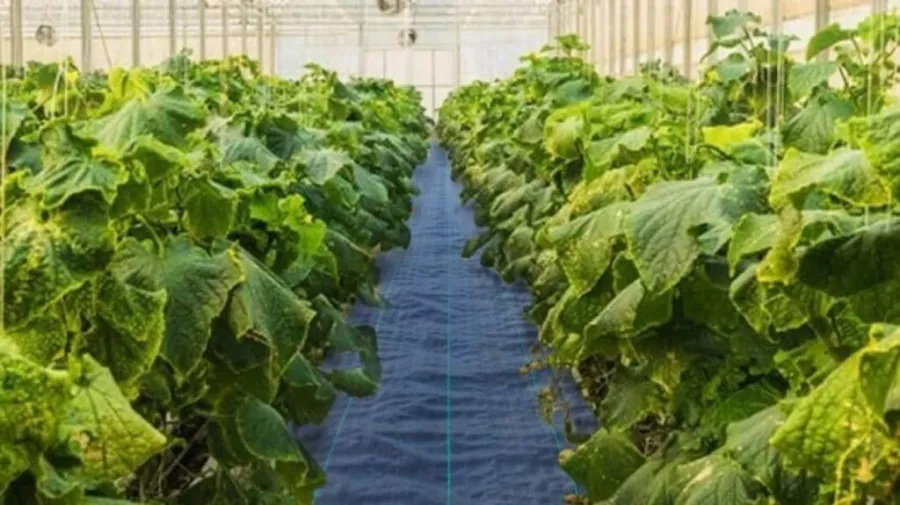
- Grow your own plants in a walk-in tunnel greenhouse
- Buy brands of the same to make sure they use glass, paper, and metal packaging, not plastic
The fewer packaging layers you take home, the less waste you create.
Reusing items instead of discarding
Before disposing of plastic, consider if it can be reused and find other ways to use it before disposing of it:
- Jars are useful for food storage or for storing small household objects.
- Internet – reuse them for takeout containers for leftovers, drawers.
- Plant pots made from previously used plastic pillars.
- Donate items such as toys or storage bins rather than sending them to a landfill.
Reusing plastic extends the life of plastic and reduces the need for new products, a key approach in how to reduce plastic waste.
Recycling rights and limits
Recycling is useful but not tricky since:
- Not all plastics are recycling materials.
- Contamination Recycling can be prevented by contamination
- Certain plastics can only be recycled a few times
To recycle correctly:
- Wash containers prior to disposing of them in the bin
- Find out what type of plastic your city takes.
- Don’t put non-recyclable materials with recyclable materials.
- Avoid using plastic bags in recycling bins; they often jam the machines
Remember the golden rule: refuse, reduce, reuse – recycle (in that order).
Swapping to sustainable materials and habits
Eco-friendly living substitutes are long-lasting, reusable, and safer for the environment:
| Instead of | Try this |
| Plastic bags | Cloth bags or canvas bags |
| Cling wrap | Beeswax wrap, Silicone lids |
| Plastic cutlery | Stainless steel or bamboo cutlery |
| Plastic toothbrushes | Bamboo toothbrushes |
| Synthetic sponge | Natural loofah or cotton cloth |
These swaps help you gradually get rid of plastic in your home.
How to reduce plastic waste in key areas of your home
Breaking things down by room makes it easier to develop plastic-free habits.
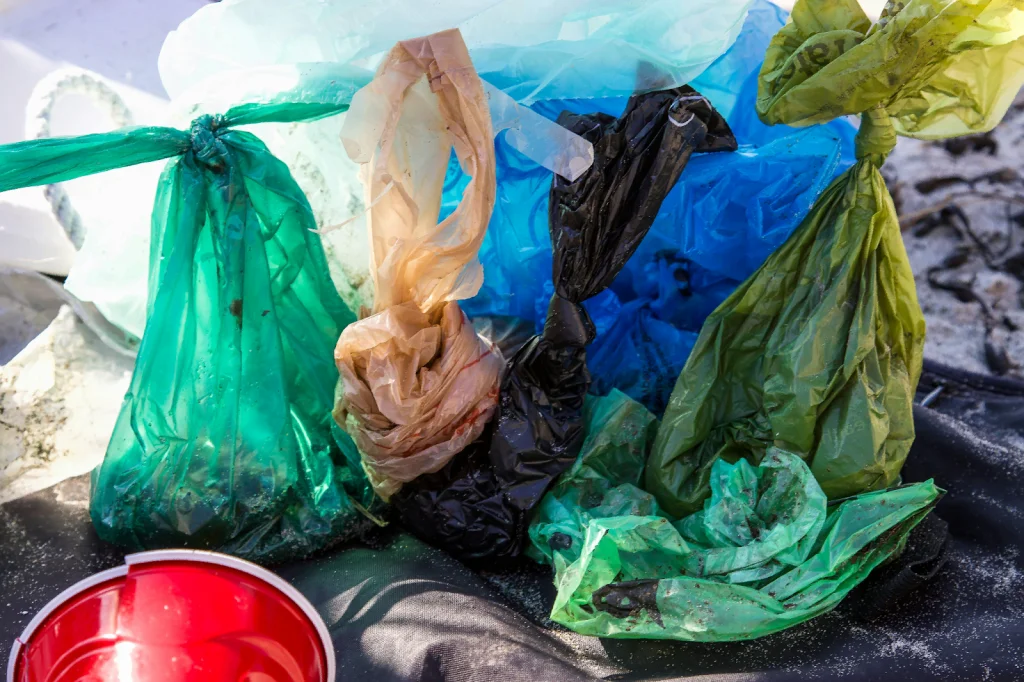
Kitchen
The kitchen is the biggest source of waste due to grocery packaging and disposables. Try:
- Buying fresh and unwrapped fruits and vegetables
- Freezing leftovers of food in glass storage containers
- Using cloth napkins and not paper towels
- Eliminating disposable dishes and cups at parties;
- Selecting metal or wooden utensils, cooking utensils
- Food waste: Composting for less trash.
- Meal planning will also discourage packaged convenience food.
Bathroom and personal care
Many bathroom products can be found in plastic bottles, tubes, and wrappers. You can cut waste by:
- Switching to bar soap, bars of shampoo, and conditioner
- Purchasing deodorants, lotions, and toothpaste in reusable or recyclable containers.
- Switching from new disposable cotton pads to reusable cotton pads
- Changing disposable razors to long-lasting ones
- Buying bulk refills for items such as shampoo and body wash
Fewer bottles thrown away every month means each swap.
Shopping and errands
Plastic can be reduced by a great deal by adopting smart shopping habits:
- Bring reusable bags, tote baskets, and bottles.
- Ask brands to avoid unnecessarily packaging products where possible
- Do not buy cheap items that will easily break
- Opt for second-hand, particularly with regard to clothing and accessories
- Refuse receipts if digital options are available
To be mindful when shopping, so that no unnecessary waste is produced.
Travel and on-the-go
Travel often increases the use of plastics because of convenience products. To stay eco-friendly:
- Be sure to take a refillable water bottle
- Pack snacks in structures that are reusable
- Bring your own bottles of toiletries instead of using hotel minis
- Avoid buying products housed in multiple layers of plastic while travelling
Preparation makes plastic-free travel easy.
How to reduce plastic waste through behaviour
Changing your mindset is the key to long-term sustainability. When your mindset changes, your habits change.
Buying less, choosing quality over quantity
One of the major causes of plastic waste is overconsumption. Quality helps to reduce the need to replace things frequently. For example:
- Bring something other than fast fashion, which involves wearing a durable show and bag.
- Fixing home appliances rather than dumping them
- Borrow or rent things that you use sporadically
The less we buy, the less plastic waste we create.
Supporting brands and products with sustainable packaging
Your money sends a message. When you select brands that incorporate the use of:
- Recycled materials
- Minimal packaging
- Establishing regulatory take-back initiatives
- Transparency of sustainability policies
You promote businesses that develop greener products. To be in line, look for 3rd-party eco-certifications to ensure they are reliable.
Repairing, borrowing, and second-hand as reduction strategies
Not everything has to be new. Consider:
(Make sure there are repair cafes or tailors for broken things for this model to work.)
- Tool libraries from friends;
- Thrift stores, resale stores, and online social stores
- Using products to do new things with old products.
These solutions, in turn, reduce waste and contribute to circularity.
Influencing others: sharing the mindset, community action
Sustainability is an increasing force. You can help by:
- Teaching children to go waste-free
- Sharing information among family and friends
- Attending cleanup drives and using greenhouses
- Supporting Environmental Organizations
- Calling for plastic-free conditions in school or the workplace
When a community works together, results are seen faster.
FAQs
What are the easiest ways to reduce plastic waste at home?
Start with simple changes: re-use bags and bottles, have people use bar soap instead of liquid soap, purchase products with minimal packaging, and re-use containers before putting them in a recycling bin.
Does recycling alone reduce plastic waste?
Recycling helps, but it is not the solution. Many Plastics cannot be recycled or are only recycled once or twice. Reduce and reuse has a huge greater impact.
How can I reduce plastic waste when I don’t control packaging?
You can still choose brands that use sustainable materials, purchase things in bulk, and provide feedback to companies that request less packaging. Try to patronize stores that have refill refills.
Are biodegradable plastics a good way to reduce plastic waste?
Though they are beneficial, they are normally complicated to decompose and would require specific industrial conditions. Many still pollute the oceans. Reusable items are always more preferable.
Can using reusable bags really help reduce plastic waste?
Absolutely! A single reusable bag can last hundreds of years, replacing hundreds of plastic bags. If everybody used them, plastic bag waste would be reduced dramatically.
Conclusion
Plastic waste is a serious issue, and it is not impossible to solve. Knowing how to reduce plastic waste is not only in the spirit of environmental responsibility. It is about building a healthier and safer world for future generations.
.