
Many automobiles have a basic procedure for adding refrigerant to their systems. It is of the utmost importance that you consistently put safety at the forefront of your mind and ensure you are fully stocked with the appropriate equipment. Because the weather can affect the outcome of the activity, it is vital to check the weather before beginning the task. When working on your vehicle’s cooling system, ensure you use the necessary materials. The process of adding coolant to your vehicle will be straightforward if you pay careful attention to these guidelines and follow them.
This article discusses the safe and proper way of how to put refrigerant in car. To keep your car’s air conditioning running perfectly, you will need to know which tools to use, how to check the outside temperature, how to choose the right refrigerant, and how to follow each step carefully.
Tools and Materials Needed to Add Refrigerant
@thrivingcountry Imagine no ice required! Yes, it’s a game changer! #tiktokshopcreatorpicks #tiktokshopsummerturnup #thrivingcountry #vevorsummerlife #vevor @Vevor_US #electriccooler #summerhack #fishing #boating
♬ original sound – Thriving Country
Essential Equipment Checklist
How to put refrigerant in car at home? Before turning on the air conditioning in your vehicle, ensure you have all the essential tools to complete the task safely and effectively. Check to see that you are using the appropriate coolant for your vehicle. You will need either an air conditioning recharge kit or a pressure tester to accurately verify the pressure and fill the system. When working with refrigerant, it is important to protect oneself by wearing gloves and eye protection.
Choosing the Right Refrigerant for Your Car
How to add Freon to car AC without gauge? Coolants for different vehicles & trucks. You have to consult the guidebook or the hood of your car. Most cars produced after 1994 use R-134a as their refrigerant. Some newer models employ R-1234yf. If you use the improper refrigerant, your AC system will not function properly. Not sure? Ask a store worker or look online for your car’s manufacturer and model. Never combine refrigerants. This might cause leakage or insufficient cooling.
Safety Precautions When Charging Refrigerant

Important Safety Tips
You want to work safely on your car’s air conditioning system. Step-by-step car AC refrigerant recharge: Always wear safety glasses and gloves. These shield your hands and eyes against refrigerant leaks. Make sure you’re in a well-ventilated area. Breathing in refrigerant can make you dizzy or nauseated.
Activate your vehicle’s engine, and then turn it off again. Allow the vehicle to cool down. You will get burned by the hot portions. The work area should be kept away from both children and animals. One of your goals is to avoid hurting anyone. Immediately clean up any spilled refrigerant. Take a rag and dispose of it carefully.
Common Mistakes to Avoid
A lot of folks speed through it. Please be patient. Adding too much refrigerant can cause your air conditioning system to fail. Follow the directions in the recharge kit. How to know if car AC needs refrigerant? Some people use the wrong kind of refrigerant. Be sure to consult your owner’s manual. Mixing refrigerants can damage your air conditioning system. Always check the pressure. If you don’t check, you could overcharge or undercharge the system.
There are a few blunders people can make when recharging the AC in a car, including failing to wear safety gear, inserting refrigerant into the wrong port, and ignoring leak indicators. Put on glasses and gloves. LIMITED PROTECTION FROM REFRIGERANT: Using the wrong port can damage the AC system or cause serious pressure difficulties. And leaks. The refrigerant will continue to leak, and the cooling performance will worsen. And be careful and be aware all the time. If you are unsure, it is advisable to seek professional guidance, as your safety comes first.
How to Put Refrigerant in Car: Step-by-Step Process
Step 1 – Locate the Low-Pressure Service Port
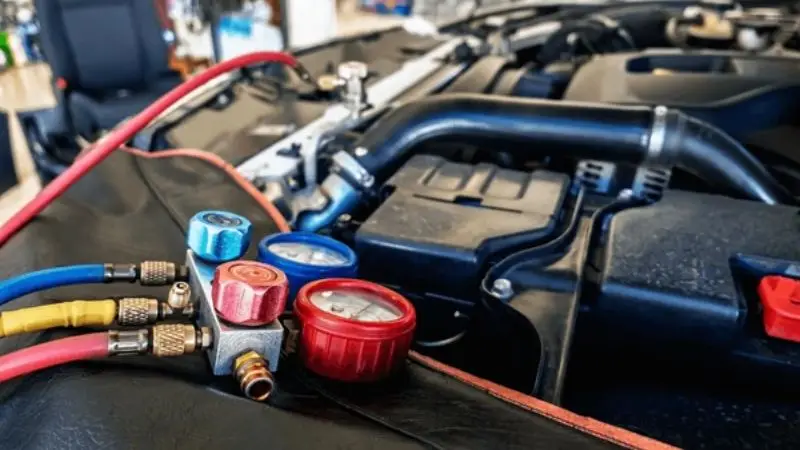
How to put refrigerant in car at home? Locate the low-pressure service port on your car’s A/C system. This port has a black or blue cap and sits on a larger metal tube. Look under the hood by the firewall or on the passenger side. Check your owner’s manual if you’re not certain. The first thing you need to do to learn how to add refrigerant to a car is to find the right place.
Step 2 – Check Current Refrigerant Pressure
How to know if car AC needs refrigerant? You should check the pressure first before adding refrigerant. Connect your pressure gauge to the low-pressure service port. Start your automobile and set the AC to the coldest setting. Look at the gauge. If you have low pressure, you know it’s time for a car AC refrigerant recharge. Don’t skip this step. It avoids overfilling.
Tip: Always check the pressure before you charge the a/c system. This keeps your system safe.
Step 3 – Attach the Refrigerant Can
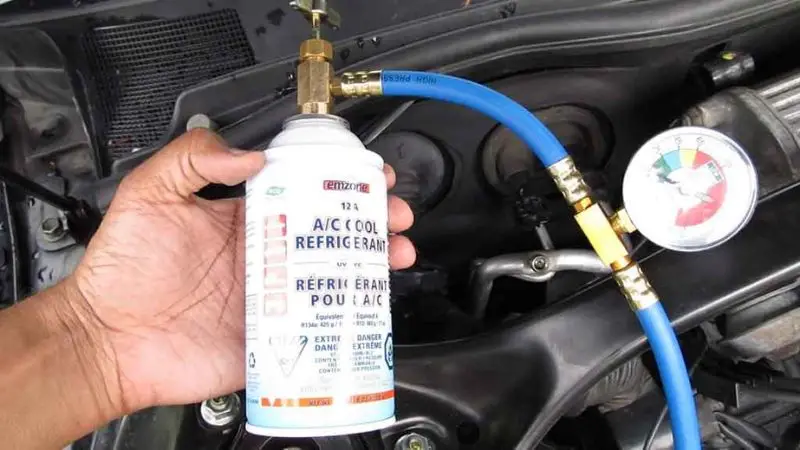
The step-by-step car AC refrigerant recharge starts with getting your refrigerant can. Establish a connection between it, the gauge, and the hose. Check to see that the connection is secure. Leaks are something you want to avoid. This is an essential stage in the process of putting refrigerant in a car. Make sure that you have the appropriate refrigerant for the air conditioning service that you are providing for your vehicle.
Step 4 – Add Refrigerant Slowly
How to add Freon to car AC without gauge? Once you have the trigger depressed on the can, you may start charging the refrigerant. Just relax. While you charge the air conditioning system, watch the gauge. Check the pressure periodically, every few seconds. You will want to avoid sky-high charges. The systematic process is crucial to installing refrigerant in an automobile.
Step 5 – Test the Car AC System
When finished, reattach the cap and remove the hose. Start the car for a few minutes. Feel the air pouring out of the vents. If it feels cold, you did a wonderful job on your AC charge. Or get professional aid. Or try checking the pressure again. Now you know how to add refrigerant to an automobile and can handle it properly.
How Much Refrigerant Does Your Car Need?

Reading Manufacturer Specifications
How much refrigerant does a car AC need? Make sure you add the correct amount of refrigerant for your car. Each car has its own needs. The best approach is to consult your owner’s manual. You can also check for a sticker under the hood. This sign usually specifies exactly how much refrigerant your automobile needs. If you can’t find it, you can search online for your car’s make, model, and year.
Here’s a quick table to help you remember where to look:
| Where to Find Info | What to Look For |
| Owner’s Manual | Refrigerant amount |
| Under-Hood Sticker | Type and amount |
| Online (car details) | Manufacturer specs |
Tip: Always follow the manufacturer’s numbers. Using too much refrigerant can cause problems for your AC system.
Signs of Overcharging or Undercharging
You might be wondering how to know whether you overcharged or undercharged. Step by step car AC refrigerant recharge: If you overfill your AC with refrigerant, it may blow warm air or create unusual noises. Sometimes the system can even freeze up. If you add too little, the air won’t cool, and the compressor may run continuously.
Some signs that your car’s AC refrigerant level might be too low or too high. One telltale sign is when the air conditioner blows warm or barely cool air instead of cold air. You may also hear strange hissing or popping sounds from the AC unit, which could indicate a refrigerant leak. Another warning indicator is the compressor’s too-frequent on-and-off cycles. This is called short cycling. Sometimes the AC lines freeze. This is generally caused by overcharging the room with refrigerant. If you recognize these signs, you can avoid your AC problems from escalating.
How much refrigerant does a car AC need? If you think you have too much refrigerant, turn off the AC and get help from an expert. Better safe than sorry.
Troubleshooting Car AC Problems After Recharging
AC Still Not Blowing Cold Air
You just added refrigerant, but your AC still isn’t blowing chilly air. This can be frustrating. How to put refrigerant in car at home? First, make sure your AC system is turned on. Listen for the compressor to click. If you don’t hear it, your air conditioner may have an electrical problem. Sometimes the AC clutch won’t engage. You can also check the front of your AC compressor to see if it spins when you turn the AC on.
Check your aircon pressure gauge again. Low pressure could indicate a leak in your AC. High pressure could also suggest you put in too much refrigerant. If you observe frost on the AC lines, you may have overloaded the system. Too much or too little refrigerant can cause your AC to stop cooling. You can also check your AC cabin filter. A dirty filter blocks airflow, preventing your AC from blowing cool air. Replace the filter if it looks dirty.
When to Seek Professional Help
Sometimes your AC requires more than a simple recharge. If you discover oil marks under your car, your AC system may be leaking. If you smell something weird when you turn on the air conditioner, it could be mildew or something worse. Electrical issues may cause your AC to stop operating.
How to add Freon to car AC without gauge? If you have recharged the refrigerant but your car’s AC still doesn’t blow cool air, contact a professional mechanic. Loud noises from the AC compressor may indicate a major issue that requires professional attention. If you see refrigerant leaks, damaged hoses, or broken AC parts, it’s better to have them repaired by professionals. Sometimes the AC continues to blow warm air even after adding refrigerant, which indicates a more serious problem within the system. A professional can quickly diagnose the problem, repair any leaks, replace any defective components, and ensure your AC system works correctly to keep you comfortable during hot weather.
Conclusion
Be sure to follow each step carefully and have the necessary tools to stay safe while charging your car’s AC. Always wear safety equipment, including gloves and eye protection, when handling refrigerant. How to put refrigerant in car: Read the regulations a couple of times before you start. Also, to make sure all the links are tight so there are no leaks. Also, check for any leaks in the system before adding refrigerant. It’s no use trying to charge a machine that is leaking. If you are still unsure what to do, or if your AC is still not cooling properly after being charged, the best option is to call a professional.
FAQ
How often should you recharge your car’s a/c?
You should recharge your a/c when you notice the air no longer feels cold. Most drivers recharge the AC every few years. Always check the air temperature.
Can you use any refrigerant for your car’s a/c?
You cannot use any refrigerant. Your a/c needs the right type. Check your manual. Using the wrong refrigerant can make the air warm and damage the a/c.
What happens if you overcharge your a/c?
If you overcharge your a/c, the air may feel warm. The a/c can make strange noises. You might see frost on the a/c lines. Always check the air flow.
Tip: If your a/c blows warm air after recharging, check the air pressure and refrigerant level. You want your a/c to keep the air cool.
- Always test the a/c after adding refrigerant.
- Make sure the air coming from the vents feels cold.
- If the a/c isn’t cooling the air, ask a pro for help.