Take a picture of a small shop outside of Lyon. A rebuilt engine sits on the floor, and no one can agree on the right gear to lift it safely. It takes hours and hurts backs to be so hesitant. Most French workshops get confused about the hoist vs crane debate because the two tools are similar but do different jobs. Electric crane hoists move things up and down, while a crane moves things across a bay. It also helps to read a book on choosing an engine hoist. Discover what each tool is, how they’re different, and which one works best for your place.
Recommended For Your Project
What Is A Hoist And How Does It Work
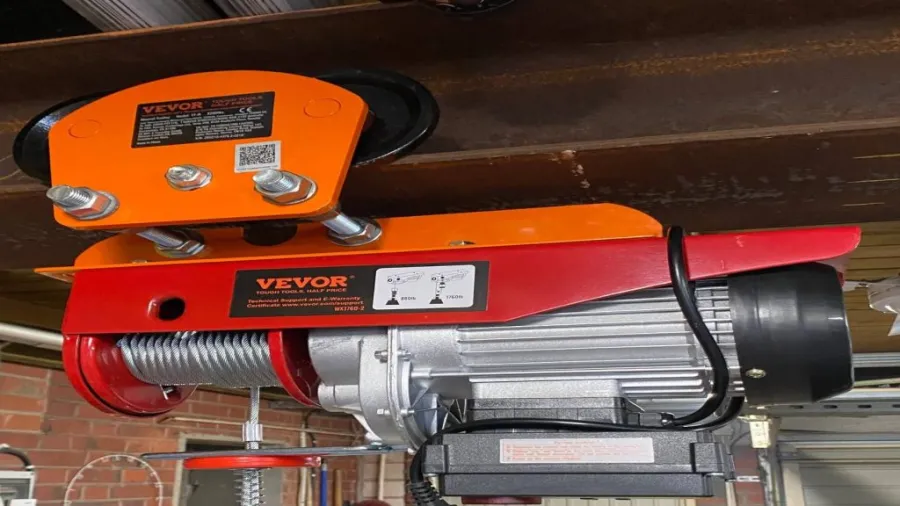
The lifting unit itself is called a hoist. It has a motor, a drum or chain, and a hook that moves a load straight up and down. The load isn’t moved to the side by itself. When you compare a hoist vs crane, the hoist is the part you’ll touch every day and the part that does the lifting.
The 3 Main Hoist Types
There are three builds that most shops offer. The best one for you will depend on how often you lift. Electric crane hoists that use a steel cable on a drum can lift loads quickly and repeatedly. Electric chain hoists use a graded chain and a gearbox to move heavy objects, hold them in place, and perform precise work. The range of electric chain hoists shows how the capacity increases. Because they don’t need any power, many people keep a hand chain block on the wall for times when they need it. All three heavy duty hoists have rated hooks, protected motors, and overload brakes.
What A Hoist Can’t Do
A hoist can move things from one side of the shop to the other, but it can’t do it by itself. This is where most first-timers get lost. Can an electric cable hoist replace a small crane in France? If all you have to do is lift stuff from one bench or bay, a rope hoist bolted to a solid beam will be fine. For added safety, electric hoists with remote controls are also available. But
What Is A Crane And How Does It Work
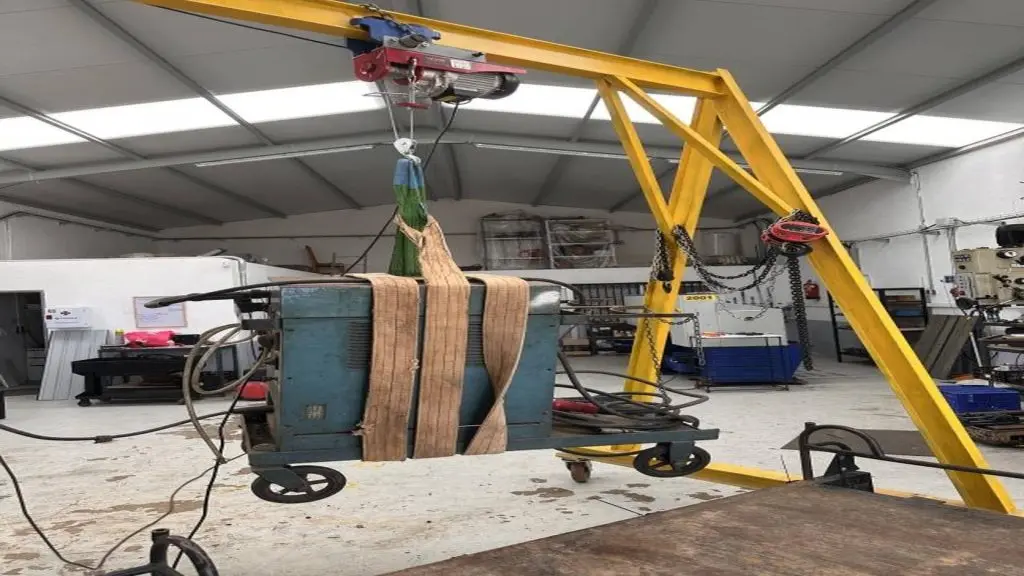
A crane is a structure that moves and places a load across a work area. It usually has a hoist attached. The crane provides reach, and the best electric hoist provides lift. That pair is at the heart of most crane lifting equipment, and knowing how the crane side works is half the hoist vs crane picture.
3 Common Crane Setups In A Workshop
Most of the time, three forms show up. A gantry crane moves on wheels or rails and doesn’t need building support. This makes it ideal for rental units and uneven floors. A jib crane is bolted to a wall or post and swings in an arc over one spot. Permanent overhead hoist systems and overhead lifting systems are based on overhead bridges. These consist of beams along the ceiling that cover the entire room. This is why overhead lifting equipment is carefully rated for duty.
Why A Crane Needs A Hoist To Lift
It’s just a rail and a tram waiting for a lifting unit. An electric crane hoist frame by itself doesn’t help lift anything. Electric lifting cranes get their name from the hoist that is attached to the trolley. When people shop for crane hoist equipment, they usually choose a hoist to mount on the frame, not just the frame.
What is the Difference Between a Hoist and a Crane in France?
Both lift, but they move, cost, install, and take up different amounts of space. These four gaps are much more important than name or price when deciding hoist vs crane. Take a look at this short version before the details.
The main difference between an electric hoist and crane is how they move and mount. A heavy duty hoist can only lift and lower a load, but a crane can move that load across a space and usually has an attached hoist for lifting. Whether you run a garage or a plant in France, you get the same split. The table shows how the two compare in important ways.
| Feature | Hoist | Crane |
| Main job | Only a vertical lift | Moves horizontally and lifts |
| Moves load sideways | No | Yes |
| Help is needed | Hook point or one beam | Own frame or ceiling rails |
| Best for | Fixed place to lift | Coverage for the whole bay or room |
| Example to consider | VEVOR 880-pound electric hoist, 230 V | VEVOR 2200-pound adjustable gantry crane |
Honestly, the frame and the hoist are both part of the crane lifting equipment. An 880-pound 230-volt electric hoist that works on its own can be used on the vertical side of overhead lifting systems without the cost of a frame.
Cost, Space, and Install Compared
Price and set-up are just as big a difference between the two as function. Assembling a stand-alone heavy duty hoist is easier and cheaper, and with bolts, it takes only an afternoon. A crane, especially a bridge or gantry, costs more, takes up more floor or ceiling space, and often needs proper anchoring. In a small workshop, that footprint gap can be enough to decide hoist vs crane. Many shops start with industrial crane hoists on a single beam and then add a gantry later. As production grows, a 1320-lb electric hoist can handle heavier work, as a construction hoist guide explains.
Choosing The Right Lifting Setup For Your Workshop
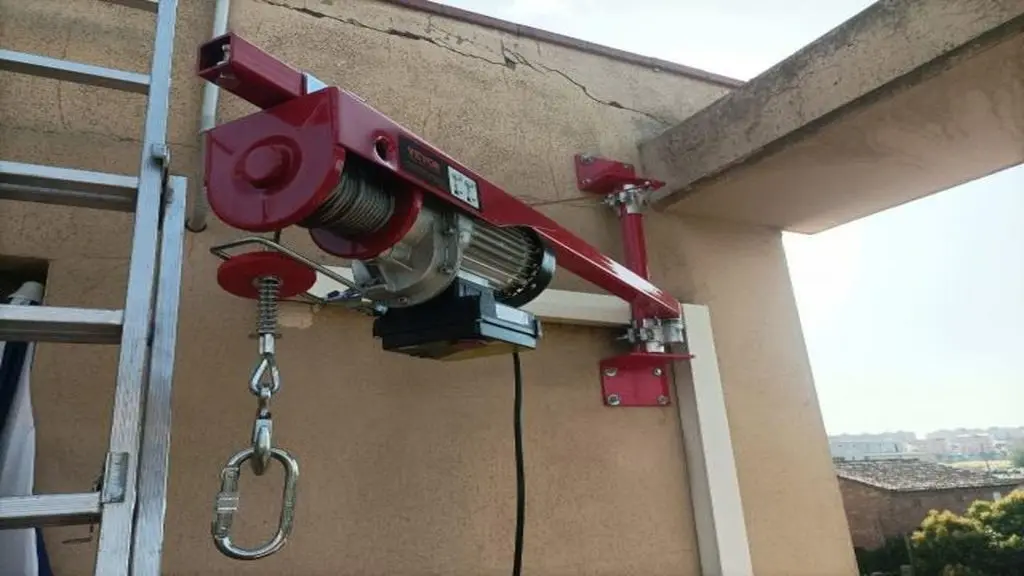
It saves money and keeps lifts safe by using the right tool for the job. Here’s where the hoist vs crane decision becomes useful. When is an overhead hoist better than a crane in France? This is a question that comes up a lot. An overhead heavy duty hoist saves money and space when loads don’t need to move across the room during lifts. A crane only pays for itself when loads need to move across the room every day. VEVOR’s engine hoists give you a quick idea of the capacity range when you look at matched units.
Do I need a hoist or a crane for lifting in a French workshop?
Most small French shops need only a hoist; you need a crane only when heavy items have to cross the bay. The heavy duty hoist often wins the hoist vs crane debate not because of weight, but because of horizontal movement. Fit your main task to the way things are set up below.
| Your main task | Best fit | Why it fits |
| Putting engines on one bench to lift | Overhead electric hoist | Best price, fixed point |
| Moving things around the shop | Gantry or bridge crane | Adds horizontal movement |
| Occasional lifts with no power | Manual chain hoist | Easy to carry around |
| Heavy production every day | Industrial crane hoists on a bridge | Made for heavy use |
A 500 kg electric hoist can handle most jobs in a single-bench setup. Having a wider range of hoist lifts is helpful if you want to move up to industrial lifting systems later on.
Which electric hoists work best with a crane or gantry setup in France?
Choose an electric hoist with a recommended load and mounting that fits your frame. For light gantries, choose a small wire rope or chain hoist, and for bridge rails, choose a larger chain hoist. Size the hoist to the crane, never the other way around. Frame-rated electric hoists work well with most overhead lifting equipment.
| Setup | Suited hoist class | Capacity guide | Example to consider |
| Light, easy-to-move gantry | Electric wire rope hoist | 440–550 lb | 440-pound cable hoist |
| Movable middle gantry | Electric chain hoist | 1100 lb | 1100-pound chain hoist |
| Fixed overhead bridge | Higher-capacity chain hoist | 2200 lb and up | VEVOR 1197.5 kg electric hoist |
You can move a light gantry around with a 440-pound wire rope hoist, but a mid-sized gantry will stay in place better with a 1100-pound electric chain hoist. For steady output, electric lifting cranes rely on industrial bridge crane hoists. Using a wireless remote keeps the user away from the load.
Conclusion
The hoist vs crane decision comes down to one question: do your loads only move up and down, or do they also need to move around? A heavy duty hoist is the most cost-effective way to lift from a fixed point, while a crane earns its place when horizontal movement becomes routine. Make sure the lift is the right size for your heaviest load, leave some extra room for error, and anchor everything to a solid point. The most important thing is to choose the right electric engine hoist. Get those basics right, and either setup will work for years in a French workshop.
FAQs
Which costs less to run: a gantry crane or a single hoist?
A single heavy duty hoist costs less to buy and run. It has only one motor and no frame, while crane hoist equipment requires a frame, anchors, and more floor space, all of which add cost.
How big of a hoist do I need for an engine?
Choose a hoist that can handle more weight than your biggest load. A typical car engine needs 450 to 700 pounds of capacity, so choose a unit with much more capacity.
Is it possible for a hoist to move between a gantry and a fixed beam?
Yes, as long as the mount and trolley are the same. Many electric lifting cranes use a standard trolley. This means the same heavy duty hoist can work on a gantry one week and a fixed beam the next.
Hand or power hoists? Which is better for a home workshop?
If you have to lift heavy things often, electric is better than manual. Heavy duty hoists designed for manual use are cheaper and don’t need to be plugged in.
Do overhead lifting systems need to be set up by a professional?
Most of the time, yes. Fixed overhead hoist systems and bridge rails put weight on the building itself, so only an experienced installer should check the strength of the anchors and beams before they are used.