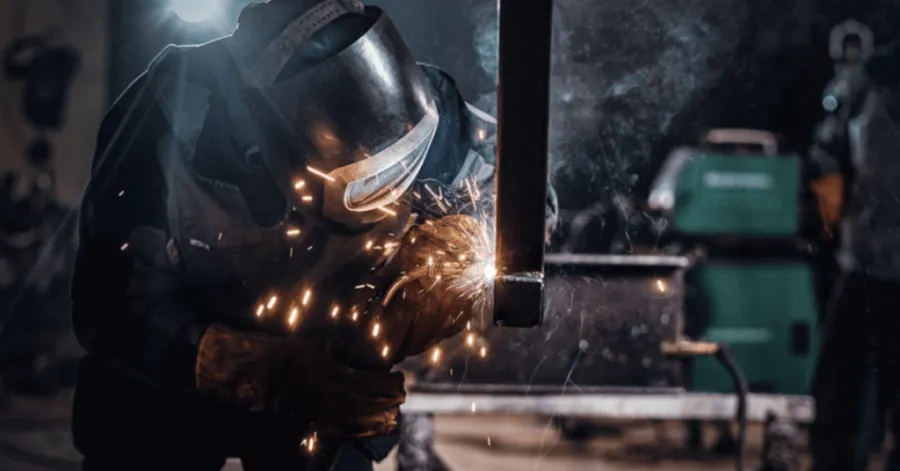
MIG welding isn’t just about melting metal—it’s about making clean, strong, and reliable welds that last. Whether you’re just starting out or have some experience, sharpening your skills can make a big difference. The right technique can boost weld strength by 24% and cut down on warping by almost 69%—a game-changer for anyone aiming for pro-level results.
Sure, MIG welding is fast and cost-effective—but it’s not foolproof. New welders often struggle with setup, while seasoned pros might skip key prep steps like joint cleaning. That’s where smart, practical MIG welding tips come in. In this guide, you’ll learn how to avoid common mistakes, boost your weld quality, and make every project look and perform like professional work.
Equipment Setup for MIG Welding
Setting up your equipment properly is the foundation of successful MIG welding. The right machine, gas, wire, and settings make all the difference in producing clean, strong welds. Here’s what you need to focus on:
Choosing the Right MIG Welder
Start by selecting a welder that fits your project needs. For thinner metals, a lower-output machine works fine, but thicker materials require higher power. Look for models with adjustable settings so you can adapt to different jobs. A smooth wire feed system is also key—machines with quality drive rollers reduce jamming and help keep your welds consistent. For beginner MIG welding tips, it’s crucial to choose a welder that’s easy to operate and maintain.
The duty cycle is another factor to watch. It tells you how long the welder can run before needing a break. Higher-duty-cycle machines let you weld longer without overheating, which is especially useful for big projects.
Selecting the Correct Shielding Gas
Shielding gas keeps the weld clean by blocking contaminants in the air. Different gases affect the arc and penetration:
- Argon provides a stable arc and smooth welds.
- Carbon dioxide gives deeper penetration but may cause more spatter.
- Helium increases heat for deeper welds but can make the arc less stable.
- Gas blends (like argon with CO₂) often give the best balance of penetration and arc control.
For the best MIG welding tips for beginners, start with argon as it provides the most stable arc, making it easier to learn and achieve quality results. Choosing the right gas improves weld strength and finish, especially in challenging materials.
Picking the Proper Wire Type and Size
Wire choice depends on your metal type and the weld you’re doing. For clean surfaces and multi-pass welds, a wire like E70S-6 provides smoother results than more aggressive wires. Thinner wire is better for light work and detail, while thicker wire works better for structural jobs and thicker materials. To improve your MIG welding skills, experiment with different wire types and sizes.
Choosing the right wire depends on several factors, such as the type and thickness of the metal, your welding position, and the joint design. You should also consider process variables like the type and diameter of the electrode, wire feed speed, and shielding gas flow. Lastly, your technique—such as travel speed, electrode stickout, and angle—can also influence how the wire behaves during the weld.
Adjusting Voltage, Amperage, and Wire Speed
Setting your MIG welder correctly is very important. Voltage, amperage, and wire speed all affect weld quality. If one setting is wrong, the weld can fail. Here’s a quick breakdown:
- Voltage changes the arc length and weld width. High voltage makes wider welds but less penetration. Low voltage gives deeper welds but makes them narrower. A long arc can become unstable and cause uneven welds.
- Amperage is the heat applied to the metal. More amperage increases penetration but can cause burn-through or spatter. Too little amperage makes weak and incomplete welds.
- Wire speed controls how fast filler material enters the weld. Faster speeds make shallow welds, while slower speeds make deeper ones. Adjusting speed helps avoid gaps or uneven welds.
For advanced MIG welding tips, practice adjusting these settings to suit different metals, thicknesses, and joint designs. Start with manufacturer recommendations, then fine-tune based on your specific material and technique.
Ensuring Clean and Well-Maintained Equipment
Proper equipment maintenance is key to good welds. Always clean the metal surface before welding to remove dirt, grease, or rust. Use a wire brush or grinder for steel, and chemical cleaners for sensitive materials like aluminum. Keep your welder in top shape by checking rollers for wire buildup and cleaning spatter from the contact tip or nozzle.
Replace worn parts regularly to ensure smooth operation. Also, check the shielding gas system for leaks and ensure the gas flow is correct. Unstable gas flow can weaken the weld and lead to defects. Clean and maintain for better results.
Safety Tips for MIG Welding
Setting up your equipment properly is the foundation of successful MIG welding techniques. The right machine, gas, wire, and settings make all the difference in producing clean, strong welds. Here’s what you need to focus on:
Wearing Protective Gear
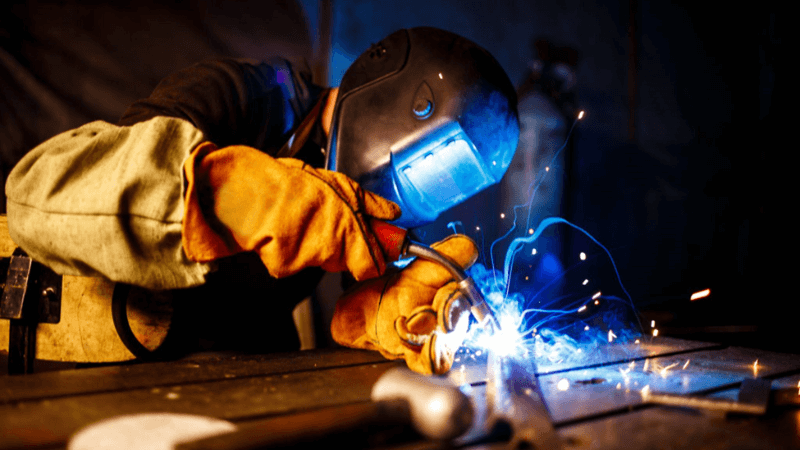
Wearing proper safety gear is essential during MIG welding. The arc produces bright light, flying sparks, and high heat, which can seriously injure your eyes, hands, and body. Always use a welding helmet or safety goggles to protect your eyes and face from debris and UV light.
Heavy-duty leather gloves keep your hands safe from burns, while a flame-resistant jacket or leather apron shields your body from hot metal and sparks. Don’t take shortcuts—gear that fits well and offers full coverage can prevent most common injuries and help you weld with confidence and comfort every time. Proper protective gear is vital to ensure safety while practising beginner MIG welding tips.
Ensuring Proper Ventilation
MIG welding generates harmful fumes and gases that can build up in poorly ventilated areas. Breathing these fumes regularly can lead to headaches, dizziness, and long-term health issues like respiratory problems or memory loss.
Always weld in a space with good airflow. In small or enclosed areas, use fume extractors or exhaust fans to remove toxic air from your workspace. Staying aware of air quality is just as important as wearing safety gear.
Checking for Fire Hazards
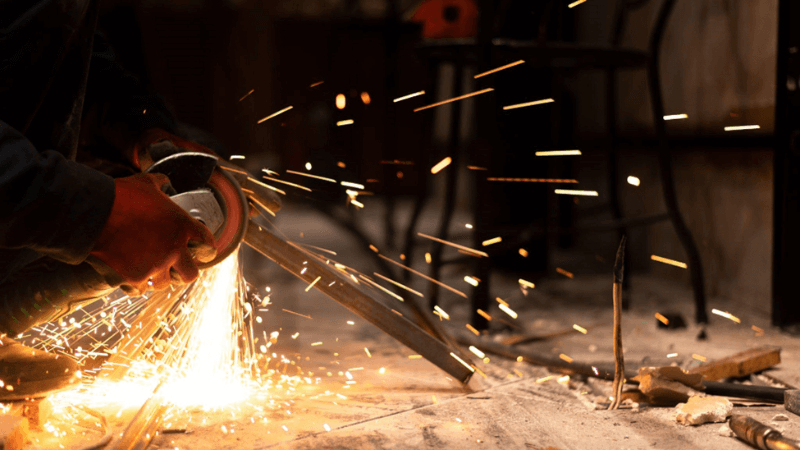
Fires are a real risk in MIG welding because sparks and heat can easily ignite nearby flammable items. Before starting, check your surroundings and clear the area of anything that might catch fire, like paper, rags, or fuel containers. Keep a fire extinguisher within reach and be ready to act quickly if needed.
Using welding blankets or flame-resistant covers adds another layer of protection. Even a small overlooked hazard can turn into a dangerous situation. Staying alert and removing fire risks before welding helps protect your space, your tools, and most importantly, your safety.
MIG Welding Techniques
MIG Welding techniques are key to making strong and clean welds. Getting the right angles, speeds, and heat will help you improve your results. In the next sections, we’ll go over simple tips to help you weld better, every time.
Keeping the Right Welding Angle
The angle of your torch plays a huge role in how well your weld turns out. If the angle is too steep or shallow, you risk weak, uneven joints. For most flat welds, hold the torch at about 90 degrees to the surface. When doing fillet welds, a 45-degree angle between the torch and the joint usually gives the best results.
To help maintain accuracy:
- Use welding jigs or fixtures to hold pieces in place.
- Keep your arms steady and your eyes on the weld pool.
- Practice holding the torch at the right angle before starting a real project.
Good positioning helps control the arc and results in smoother, stronger welds. For beginner MIG welding tips, getting your angle right is the first step toward success.
Moving at the Right Speed
Your travel speed—the pace at which you move the torch—has a direct impact on weld quality. Move too quickly, and your welds may lack penetration or look uneven. Move too slowly, and you risk overheating the metal, which can cause warping or excessive buildup.
Human welders typically work best at a moderate speed of around 35 cm per minute, while robotic welders can go much faster. Don’t rush. Watch the weld pool as you go. A smooth, even bead usually means your speed is right. If the bead is too thin, slow down. If it piles up or burns through, speed up slightly. For advanced MIG welding tips, controlling speed is crucial to achieving professional-grade results.
Keeping Stick-Out Distance Steady
Stick-out distance is the length of wire between the contact tip and the workpiece. Keeping this distance consistent helps create a stable arc and a more controlled weld pool. In general, stick-out should be between 3/8 to 1/2 inch for most MIG jobs.
What happens when it’s off?
- Too short: Can cause spatter and make the arc unstable.
- Too long: Reduces penetration and weakens the weld.
By learning these three skills—right angle, steady speed, and proper stick-out—you’ll make stronger and cleaner welds. Small changes can make a big difference in your welding results. Improving MIG welding skills often starts with mastering these basics.
Controlling Heat Input
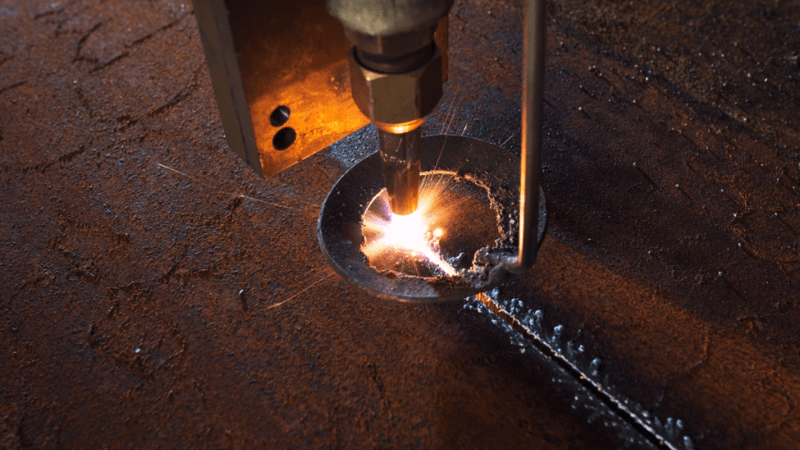
Too much heat during MIG welding can distort or weaken your work, while too little can lead to incomplete joints. Finding the right heat balance is essential for clean, strong welds.
Control your heat input by:
- Adjusting voltage and amperage: Higher settings for thicker metals, lower for thin ones.
- Maintaining steady travel speed: Moving too slowly adds more heat; going too fast reduces penetration.
- Tuning wire feed speed: Faster feed helps prevent burn-through by absorbing heat.
If you’re working with delicate materials, consider pulsed MIG welding. It alternates between high and low current, reducing overall heat while maintaining weld quality.
Avoiding Common Welding Mistakes
Even experienced welders run into issues that affect weld strength or appearance. Here are a few common problems:
- Cracks: Often caused by too much stress or heat.
- Porosity: Tiny holes from trapped gas, usually due to dirty surfaces or poor shielding gas.
- Cold laps: This happens when the weld doesn’t fuse properly with the base metal.
- Incomplete penetration: The Weld doesn’t go deep enough, making the joint weak.
How to avoid them:
- Always clean the metal before welding.
- Double-check your settings before each job.
- Keep your travel speed steady and use the right torch angle and stick-out.
- Inspect your welds and fix any flaws before moving on.
Best MIG welding tips for beginners include paying attention to these common errors and adjusting your approach accordingly.
Troubleshooting MIG Welding Issues
Troubleshooting MIG welding issues is a key step in improving your welds. Here’s how to identify and correct common problems like poor penetration, spatter, and wire feeding issues.
Fixing Poor Penetration
Poor weld penetration can make your work weak and prone to failure. It usually means the weld isn’t fusing deep enough into the base metal. To fix this, start by increasing your amperage. More amperage adds the heat needed for deeper fusion, especially on thicker materials. Also, slow down your travel speed. Moving too quickly doesn’t give the arc enough time to properly melt the metal.
Make sure your torch angle is correct. Hold it at 90 degrees for flat welds, and tilt slightly—around 10 to 15 degrees—for fillet welds. Dirty or rusty metal can also block the arc, so always clean your workpiece thoroughly before starting.
Addressing Excessive Spatter
Excess spatter not only looks messy but also wastes material and time. One of the biggest causes is incorrect settings. If your voltage is too high or your wire speed is too fast, the arc can become unstable. This leads to more splatter than necessary.
To reduce spatter:
- Adjust your voltage and wire feed speed to a more balanced range.
- Maintain a proper torch angle of around 10 to 15 degrees.
- Move steadily and avoid jerky hand movements.
Your work environment also plays a role. A stable electrical supply, appropriate material thickness, and correct welding position all affect how much spatter you get. Keeping your equipment clean and using anti-spatter products can help keep things under control.
Resolving Wire Feeding Problems
Wire feeding problems are frustrating and can ruin a good weld. Issues like burn-back, snags, or uneven feeding are often due to incorrect machine setup or worn parts. Make sure your contact tip matches the wire size and leaves just enough clearance—too tight and it may snag, too loose and it’ll feed inconsistently.
For smoother wire feeding:
- Set your wire speed correctly; around 500 inches per minute works well for 0.035-inch wire on carbon steel.
- Adjust the tension on the rollers to prevent slipping or jamming.
- Regularly inspect your wire and replace any damaged rolls.
Also, ensure your contact tips are clean and not overly worn. Keeping these small components in good shape helps your machine run smoothly and your welds stay consistent.
Preventing Cracks in Welds
Weld cracks can weaken your project and appear immediately or later due to stress. To prevent them, start by preheating the material, especially thick or high-strength metals, as it reduces internal stress. Ensure your voltage, amperage, and wire feed speed are set according to the material type and thickness.
Move steadily, and avoid pausing too long in one spot to prevent uneven heat that can cause cracking. Design also matters—minimise sudden changes in material thickness and improve joint fit-up to reduce stress. Always inspect your welds and repair any cracks you find to keep your welds strong.
Final Thoughts
MIG welding is about practice, proper setup, and mastering techniques. By fine-tuning your equipment and addressing common issues, you’ll create strong, clean welds every time. MIG welding tips, such as choosing the right settings, maintaining the proper torch angle, and ensuring consistent wire feed, can make a big difference in your results.
Whether you’re new to welding or a seasoned pro, there’s always room for improvement. Each weld helps build your confidence and skill, leading to smoother, more successful projects. So, keep practising, adjust your settings as needed, and focus on safety. With time, your welding skills will grow, and your results will improve significantly.
FAQ
What’s the best way to practice MIG welding?
Start with scrap metal. Experiment with different settings and techniques. Focus on keeping a steady hand and consistent angles. Watch the weld pool closely to learn how heat and speed affect your results. Practice regularly to build muscle memory and confidence.
Why does my weld have holes or bubbles?
This happens because of trapped gas. Check your shielding gas flow and clean the metal surface before welding. Dirt, grease, or rust can cause porosity. Use the right gas mix for your project to avoid weak welds.
How do I know if my settings are correct?
Test your settings on scrap metal first. Look for smooth, even welds with good penetration. Adjust voltage, amperage, and wire speed until the weld pool behaves consistently. Keep a welding journal to track successful settings for future projects.
Can I use MIG welding for aluminum?
Yes, but you’ll need special tools. Use a spool gun or push-pull system for smooth wire feeding. Choose 100% argon gas and clean the aluminum surface thoroughly. Aluminum requires higher heat input, so adjust your settings accordingly.
How do I prevent spatter from ruining my welds?
Keep your torch angle steady and use anti-spatter spray. Check your voltage and wire speed settings. Clean the nozzle regularly to ensure smooth gas flow. A slight tilt (10–15 degrees) helps control spatter and keeps your weld clean.