Engine hanging half out of the bay, your arms trembling, nobody free to take the other end. That’s when most French garage owners start looking around. Then the spec sheets fight back: two capacity numbers, two remote styles, and 230 V wiring that is nothing like the 110 V kit in American videos. A rack of electric cable hoists looks the same from the outside. No, it isn’t.
Once you understand how a remote-controlled electric hoist works, most of it becomes clear. By the end, you’ll know the rating, Control, and mount for your space.
Recommended For Your Project
How an Electric Cable Hoist Actually Lifts
A motor spins a drum, the drum coils galvanized steel rope, and the hook ascends. Everything else on the carton is there to make that one action repeatable and safe. But two specs will tell you whether cable lifting equipment is right for your job: capacity rating and duty rating.
Single-line and double-line capacity ratings explained.
Almost every carton has 2 numbers, and the difference can confuse first-time buyers. The lower number is the drum’s straight-line rating. You only use the higher one after you install the included pulley block, which doubles the electric cable hoist’s lifting capacity while halving lift speed and usable rope.
So a 598.7 kg rating is really a 299 kg straight-line machine with a pulley doing half the work. Size to the max weight you’ll actually lift and then add a fifth to that. Before the engine ever gets to it, that hook has slings, shackles, and a lifting plate hanging on it.
Electric lifting systems that work at their printed ceiling every cycle wear out a brake early. Here, the principle of a winch turning motor power into pulling force through a drum and gear train works in reverse.
Rope length, lift height and duty cycle
This class of fixed cable hoist equipment typically carries 40 feet (approximately 12 m) of single-line rope, which is reduced to about 20 feet (approximately 6 m) when the pulley block is used.
First, measure your headroom. The housing plus hook travel takes up more ceiling space than people imagine. You must also consider the duty rating: these electric lifting devices are rated for intermittent work, i.e., a few minutes under load followed by a cooling pause. The windings are cooked by an afternoon of back-to-back cycles.
The Main Types of Electric Cable Hoists Sold in France
Three builds of the best electric cable lifts cover pretty much every job on the French market. They differ by where the hoist lives, not by badge. First choose the build, then the capacity. That is how mixing that order ends up with people with powered cable lifts that can not reach the load.
Fixed ceiling and beam-mounted cable hoists
Fixed cable hoist equipment is the simple overhead type: a steel housing bolted to a beam, a hook on 12m of rope, a pendant or remote hanging below. In the French 230 V range, capacities start at about 199.6 kg and go up to more than 997.9 kg on a double line.
These cable lifting systems go straight up and nowhere else, which is perfect for an attic hatch, a storage platform, or a fixed engine bay. Always use at least 2 joists, never one. The shock load on a start or stop is much greater than the static weight on the hook. Electric wire hoists such as this take up as much floor space as a telephone pole, unlike the wheeled engine hoists many shops already have.
Cable hoists with a trolley for sideways travel
Add a trolley, and the body runs on an I-beam so a load can move across the bay, not just up. A 1000 kg electric wire rope hoist with a trolley will cover most small workshops, and 800 kg versions run a 1300 W motor with 12 m of double-line rope.
The trouble is the beam. Cable lifting gear on a trolley needs a proper rail with end stops and a clear run, which rules out many older French garages with low purlins. Industrial cable hoists are almost always of this form because a pallet is rarely required to be lifted from where it was placed.
Portable 2-in-1 and 3-in-1 electric cable lifts
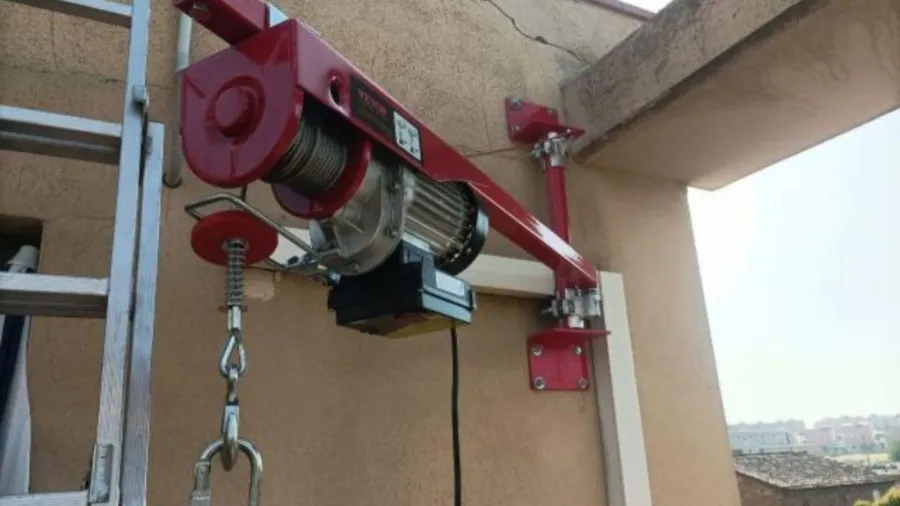
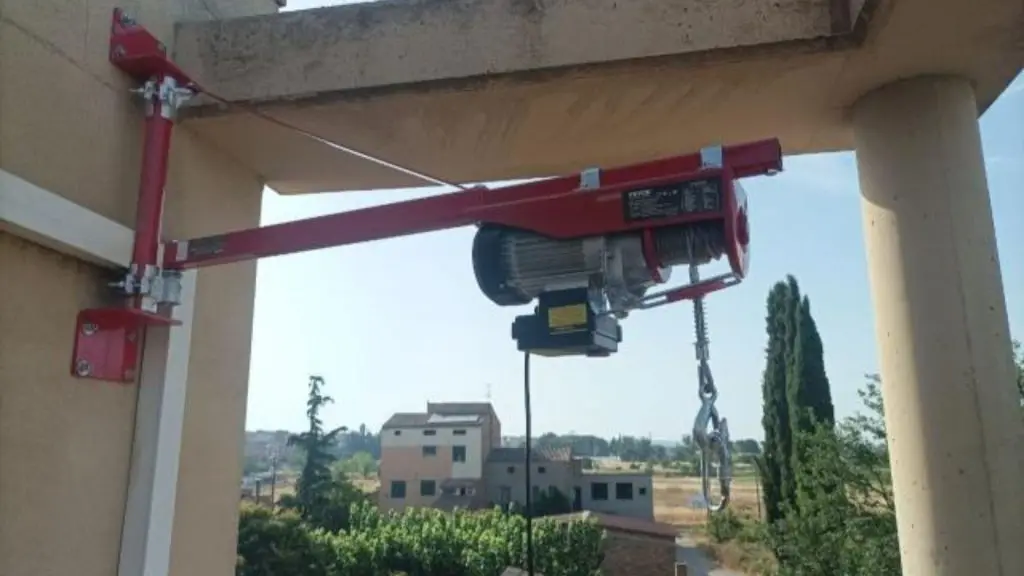
Powered portable cable lifts are clamped to a support arm or scaffold frame and follow the work. A 1500 W motor drives a 700 kg rated, 3-in-1 portable hoist that lifts 7.6 m at 5 m per minute, and can be manually, wired, or wirelessly controlled.
Electric cable lifts like these are fantastic value for builders doing room-by-room renovations. The drawback is speed and rope length, both less than a fixed drum model, and the minutes spent remounting the bracket at every new position.
What are the best electric cable hoists to buy in France right now (top picks)?
If you’re doing engine and gearbox work in a home garage, the sensible choice is the 598.7 kg class with a wireless remote. For Example, a 199.6 kg to 399.2 kg wired electric cable hoist suits attic and storage work; the 798 kg class is better for building materials; and a 997.9 kg model or a trolley setup is better for daily workshop lifting. Here’s how those jobs stack up.
| What you’re lifting | Typical load | Capacity class to buy | Control that suits it | Example |
| Storage bins, roof box, seasonal gear | Under 150 kg | 199.6 kg, single line | Wired pendant | 510 W electric wire hoists |
| Engine, gearbox, motorcycle | 250–400 kg | 598.7 kg, double line | Wireless remote | VEVOR 598.7 kg Electric Hoist Crane Winch wireless and wired |
| Plasterboard, timber, tiles to a first floor | 400–600 kg | 798 kg, double line | Long-range wireless | 1450 W cable lifting systems |
| Pallets, steel stock, machinery | 600–1000 kg | 997.9 kg or trolley model | Pendant plus trolley | Industrial cable hoists on an I-beam |
What are the most durable electric cable hoists for heavy use in France?
The 1450 W and 1600 W cable lifts last longer under repeated work because the larger motor and drum stay well within their margin on each lift, not at the edge. Look for pure copper windings, which dissipate heat better than aluminum over repeated cycles, and galvanized rope with 19-strand construction.
The secret to long life for a 998 kg electric cable hoist is to run it on double line at 500 kg loads: half the rated pull, half the strain, same job done. Heavy users should also weigh up the one-tonne hoist class, where industrial cable hoists carry thicker rope and a stronger brake.
Which electric cable hoists offer the best load capacity-to-price ratio in France?
The 598.7 kg class on a 1150 W motor gives the most lifting per euro spent. These electric wire hoists handle four-cylinder engines, small machinery, and most building loads without stepping up to heavier housing and thicker rope, which sharply increase the cost.
| Capacity class | Motor | What the step up buys | Best value for |
| 249.5 kg | 510 W | Lightest cable hoist equipment to mount alone | Attic hatches, storage lifts |
| 399.2 kg | 850 W | Wireless control, longer rope | Home garage, general work |
| 598.7 kg | 1150 W | Best balance of capacity and body weight | Engines, gearboxes, mixed loads |
| 798 kg | 1450 W | Heavier drum and brake on this cable lifting equipment | Building materials, frequent use |
| 998 kg | 1600 W | Full duty margin for electric lifting systems | Industrial cable hoists, daily pro lifting |
Safety and control features worth checking before you buy
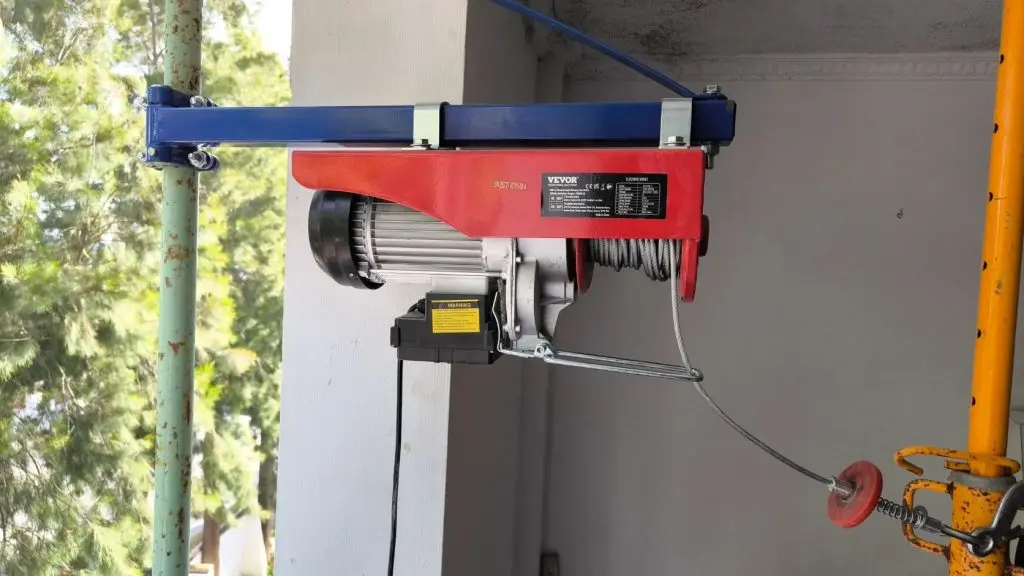
French workshops run on 230 V single-phase, and every electric cable hoist sold for that supply should carry the same core protections. The features below are not upsells. They are the parts that act when a lift goes wrong.
Which electric cable hoists have the best safety features for use in France?
Shortlisted electric lifting devices should carry four things: upper and lower limit switches, an electromagnetic brake, a thermal cut-out, and an emergency stop within reach. Electric lifting systems that bundle all four at 230 V are the ones worth comparing further.
| Safety feature | What it does | Check this before buying |
| Upper and lower limit switch | Stops the drum at both ends of travel | Test both unloaded at install |
| Electromagnetic brake | Holds the load the instant you release the button | No visible drift after release |
| Thermal cut-out | Shuts the motor down before the windings overheat | Duty cycle printed on the label |
| Emergency stop | Kills power in one strike | Sits where you stand, not overhead |
| Galvanized 19-strand rope | Resists kinking and corrosion on cable lifting systems | Rope diameter and strand count |
Braking is where buyers get nervous, and fairly so, because a slipping load gives almost no warning. A question that comes up constantly in French forums is this: Which electric cable hoists offer the best overload protection and braking in France?
Models that pair an electromagnetic brake with a thermal cut-out and a working limit switch perform best, since the brake holds position while the cut-out prevents the motor from being asked to deliver more than it can. Test that brake with a light load before trusting any electric lifting devices with an engine.
Which electric cable hoists offer the best remote control and manual backup in France?
The 3-in-1 portable electric cable lifts win here, because they carry wireless, a wired pendant, and a manual crank in one body. If you only lift indoors in a single bay, a wired pendant alone is fine and costs less. Ten minutes spent on operating a powered drum safely pays for itself before the first load leaves the floor.
| Control setup | Working range | Suits | If it fails |
| Wired pendant | About 4.3 m of cord | Single-bay garages, fixed mounts | No batteries involved, just a cord |
| Wireless remote | Up to roughly 100 m | Attic hatches, awkward sight lines | A dead battery stops the lift |
| Wireless plus wired | Both, switchable | Mixed work on shared electric lifting devices | The pendant takes over instantly |
| Manual, wired and wireless | All three on portable powered cable lifts | VEVOR 3-in-1 portable hoist, 700 kg | The hand crank finishes the lift |
Power Supply, Efficiency and Mounting in a French Garage
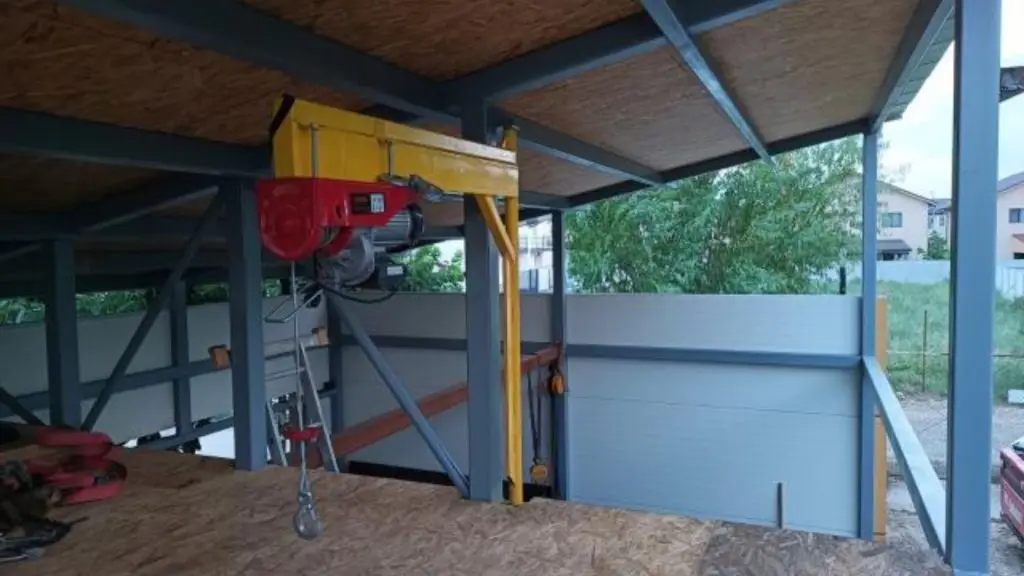
Voltage is rarely the problem in France; current draw and circuit sharing are. Work out the amperage before you buy an electric cable hoist, then plan the mount. Both take ten minutes and save hours of frustration later.
What are the most energy-efficient electric cable hoists available in France?
The most efficient choice is the smallest electric cable hoist that comfortably covers your heaviest load, run on double line where the rope allows. A 510 W motor draws about 2.2 A at 230 V. A 1600 W motor draws about 7A. Either will work on a normal 16 A French circuit, as long as there isn’t a compressor on it too.
| Capacity class | Motor power | Rough draw at 230 V | Where it earns its keep |
| 249.5 kg | 510 W | About 2.2 A | Light storage lifts, attic hatches |
| 399.2 kg | 850 W | About 3.7 A | Home garage electric wire hoists |
| 598.7 kg | 1150 W | About 5 A | Engine and gearbox electric lifting systems |
| 798 kg | 1450 W | About 6.3 A | Building-site cable lifting systems |
| 998 kg | 1600 W | About 7 A | Industrial cable hoists in daily use |
Electric lifting devices with copper windings stay cooler through repeated cycles, which keeps the current steady rather than climbing as the body heats up. Extension leads undo that work. Long, thin leads drop voltage. The motor pulls harder. Heat builds fast. Use at least 2.5 mm² and keep the run short.
Which electric cable hoists are easiest to install in a French home garage?
Lighter-wired powered cable lifts go up fastest. A 249.5 kg hoist with a 510 W motor is light enough for one person to lift to a beam, and it has no receiver to pair. Heavier cable-lifting equipment needs a steel channel and a second pair of hands.
1. Find two sound joists or a steel beam, then span them with angle iron or channel.
2. Bolt through the steel; don’t screw into the edge of a timber.
3. Plug into a dedicated 16 A socket rather than a shared extension block.
4. Run the hook to both limit switches unloaded, then test with a light load.
Overhead placement ideas carry across from mounting a powered drum in a workshop.
The brackets and swing arms that cable hoist equipment bolts to sit in the wider shop equipment range.
Conclusion
Three decisions settle this: the real load you lift, the build that reaches it, and the Control you’ll actually hold. Match an electric cable hoist to your heaviest realistic weight plus a fifth, choose fixed, trolley, or portable cable lifting systems based on where the load travels, and insist on a brake, limit switches, and a thermal cut-out at 230 V. Do that. A two-person struggle becomes a one-button lift. Browse the full cable hoist range and size yours properly.
FAQs
Can I plug a hoist into a normal French wall socket?
Yes. These electric lifting systems run on 230 V single-phase and draw between roughly 2 A and 7 A. A standard 16 A circuit copes, but starting current runs higher than running current, so avoid sharing the line with a compressor or a welder.
How often should the wire rope be inspected?
Before every session, inspect cable-lifting equipment for flattened sections, kinks, corrosion, and broken strands. Replace damaged rope rather than repair it, and never wrap it around a load as a substitute for a proper sling.
Does the pulley block come with the hoist?
On most fixed electric wire hoists, yes, along with the extra hook that double-line mode needs. Check the parts list before buying if you plan to lift at the higher rating, because that figure only applies with the block fitted.
Can one be mounted on a wooden garage ceiling?
Only with the load properly spread. Bolt a steel channel or angle iron across at least two joists and fix the cable hoist equipment through it. Single-joist mounting fails because dynamic forces during starting and stopping exceed the static load.
What happens if the motor overheats mid-lift?
The thermal cut-out stops the motor, and the brake holds the load. Let it cool fully, then treat it as a sign the duty cycle or the weight is too much for that class. Compact electric cable lifts overheat sooner under heavy repeat work.