Do you need a durable woodworking bench for your projects? Why spend money on buying one when you can make one at home? After all, that’s what you are good at, handling wood!
You may think that making a diy woodworking bench must be laborious. It is actually not. A few tools, a step-by-step guide, some patience, and you are good to go.
This way, you not only save money but you can also reuse wood in your own style, and also pair it with a high-quality woodworking bench vise. Ready to get started? Keep reading!
What is a woodworking bench?
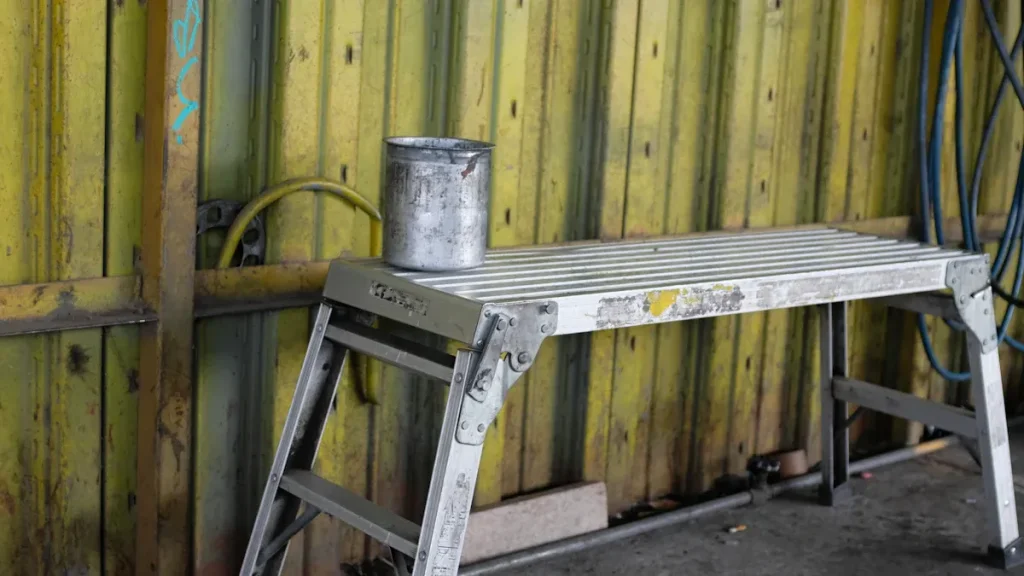
A workbench is not just a flat surface. It is the primary place to construct, repair, and make projects. A workbench is going to be the center of your workshop in woodworking. It assists you in keeping wood in place, measuring, cutting, and constructing easily.
A woodworking workbench has some things you need to know about it:
- You may make your workbench as big as you have room. This provides you with additional space to work on either large or small projects.
- Your working bench should be so raised to fit your body. This will make you feel more relaxed and prevent back pain.
- A traditional woodworking bench is not just a table. It holds wood under special tools, such as vises, bench dogs, and planing stops.
- Your workbench must be brawny and tough. In this manner, it is not moved or shaken when you saw, saw, or sanded.
Why should you make a DIY woodworking bench?
Benefits
On the workbench you build yourself, you receive much more than a workplace. You make a room to suit yourself. A lot of woodworkers prefer to make their own benches due to the following reasons:
- You can configure your workbench to suit your projects and taste.
- You have the option of adding features you desire, such as a solid top or shelves.
- You acquire new lessons when creating your DIY woodworking bench.
- You need not have a lot of features initially, but can expand later.
- A self-built workbench will enable you to make your workshop a place of your own. You choose what is most favorable to yourself.
Constructing your own workbench also makes you know what you require as you evolve. In the future, you may require extra storage space or a firmer base. Whenever you make it yourself, you are capable of making amendments at any time.
Cost and customization
Buying a commercial workbench can cost a lot. Some store-bought benches cost over $3500. When you build a DIY woodworking bench, you can spend as little as $63 or up to $400 if you want something fancy. Most people find they save a lot of money by building their own.
You also get to pick the size, height, and features. Many people use reclaimed wood or leftover materials. You can add drawers, shelves, or a solid top for extra strength. This way, your workbench fits your space and your projects.
A DIY woodworking bench with drawers gives you flexibility. You can use hand tools or power tools to build it. You can start with a basic design and add more features as you go. Your workbench grows with your skills and needs.
How to build a workbench for beginners in 7 steps
Ready to build your own workbench? Let’s break it down into seven easy steps. You don’t need fancy tools or expensive wood. Just follow along and you’ll have a sturdy spot for all your projects.
Gather materials & tools
Start by collecting everything you need. You want boards without knots for the top. Softwoods like pine or beech are affordable and work well. You’ll need 2x4s for the frame and legs, plus a sheet of plywood or particleboard for the top and shelf. Here’s a simple list:
- 7 pieces of 2×4 lumber, each 8 feet long
- 1 sheet of 3/4″ plywood or particleboard for the top
- Screws (2 ½” and 1 ¼”)
- Clamps for holding pieces together
- Miter saw or circular saw
- Drill
- Tape measure
- Level
- Pocket hole jig
- Speed square
- Pencil
- Safety glasses and ear protection
You can find affordable wood at local hardware stores. Softwoods cost less than hardwoods. Beech and southern yellow pine are good choices if available in your area.
1. Make the workbench top
The top is where you’ll do most of your work. Cut your plywood or particleboard to about 3 feet wide and 6 feet long. This size gives you plenty of space but still fits in most garages or sheds. If you want extra strength, use hard maple, birch, or oak for the top layer.
Lay the boards flat and check for gaps. Glue them together if needed. Clamp them tight and let the glue dry. Use screws to secure the boards to the plywood base. Make sure the surface is flat and smooth. A flat top helps you measure and cut wood accurately.
2. Build the base frame
The frame supports your workbench and keeps it steady. Cut four 2x4s for the legs, each about 36 inches long. Cut four more for the sides and four for the front and back. Use your drill and screws to attach the pieces in a rectangle.
Check that the frame is square using your speed square. Attach the legs at each corner. Use clamps to hold everything in place while you screw it together. Make sure the height matches your waist so you can work comfortably.
Common mistakes include using plywood for the top, picking the wrong height, or waiting for perfect conditions. Start with what you have and ask for help if you need it.
3. Attach the top to the base
Now it’s time to join the top to the frame. Place the top on the frame and line up the edges. Use lag bolts and washers for a strong hold. Drill pilot holes through the top and into the frame. Tighten the bolts so the top sits flat and secure.
You can also use glue blocks or dowels if you prefer. Lag bolts make it easy to remove the top later if you want to upgrade or repair it.
4. Add bracing
Bracing keeps your workbench from wobbling. Add diagonal braces between the legs and frame. Use mortise and tenon joints if you know how, but screws work fine for beginners. Bracing helps your bench handle heavy loads and stops it from twisting.
Bracing increases the load capacity and stability of your workbench. It prevents bending and keeps everything solid when you’re sawing or hammering.
5. Install vise or clamps
A woodworking bench vise or clamps make your workbench much more useful. The most popular types for beginners are face vises, tail vises, and Moxon vises. Face vises help with edge work, while tail vises hold boards flat. Deep-reach clamps are great for gluing panels.
Mount your vise on the front left corner if you’re right-handed. Drill through the vise and into the skirt board for perfect alignment. Secure clamps tightly so they don’t move. Use an edge guide to keep everything parallel.
Adding a vise or clamps lets you hold wood steady for cutting, sanding, or gluing. It’s a must-have for any DIY woodworking bench.
6. Sand & finish
Blot the surface with sandpaper. Begin with 80-grit to clear some ruggedness. When you have reached 120 grit, add 220 grit to feel silky. Clean the surface, and applications can be made with any finish.
Select a wear- and moisture-resistant finish. Whether it is oil-based, such as varnish or polyurethane, is alright. Oils like Danish oil that are used in drying leave a thin coating that prevents glue adhesion. Polyurethane is coated with an easy-to-clean and not soak in.
A quality finish contributes to a clean workbench and the endurance thereof. You have now constructed a good DIY woodworking bench.
As you gain experience, you can customize it with shelves, drawers, or additional clamps. Your workbench will be expanded as you acquire new skills.
FAQ
What is the maximum weight that my DIY woodworking bench can hold?
Most projects can be supported using your DIY woodworking bench. With heavy lumber and decent bracing, it will be able to undertake heavy workbench tasks.
What materials should I use to construct a DIY woodworking bench?
You will require a drill, circular saw, tape measure, clamps, and screws. These rudimentary tools assist you in creating a strong DIY woodworking bench in your home.
Is it possible to add shelves or drawers to my DIY woodworking bench?
Yes, you may put shelves or drawers. Several individuals make their DIY woodworking bench custom to add storage and ease to it.
Conclusion
That’s it! Now you can construct a stable work environment using basic equipment and time, which can suit your individual requirements.
So here was the guide to making your own DIY woodworking bench. Now you only need a few inexpensive tools to put everything together. VEVOR is where you will find all your woodworking tools and accessories that you can count on to complete your DIY projects at affordable prices.