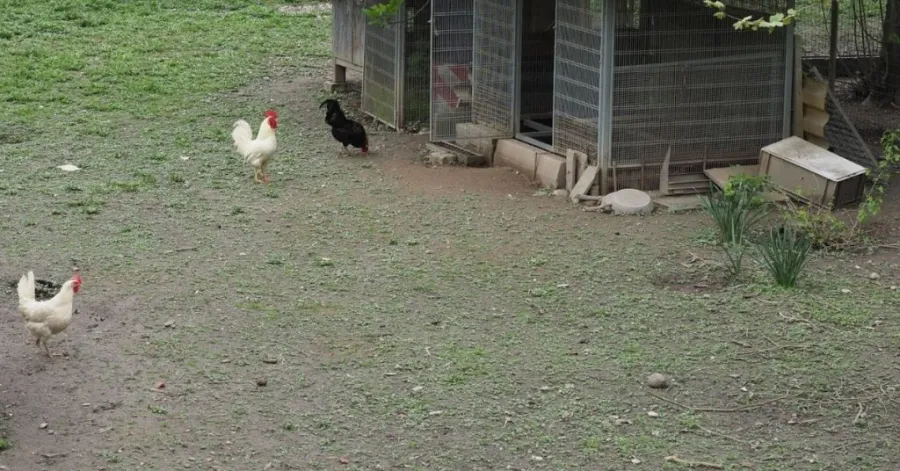
You would like your chickens to be safe, more so at night when most predators are active. It is natural to be afraid of something creeping into your nest when you are asleep. Chicken coop security does not necessarily need to be a complex and costly undertaking. Minor but clever adjustments can go a long way to securing your flock. You can upgrade your setup, no matter whether you are new to raising chickens or already experienced or not. Knowing how to prevent the raccoons in the chicken coop and other predators will make you feel a little less nervous. Keeping your chickens safe may be a stress-free day, and with the right approach, it can be easy, too.
Why Chicken Coop Security Is Essential
Protecting your chickens is not only an option, but it is also a way of life. Your coop can be an easy target, and you should know that many predators are always on the hunt to find an easy meal as long as your coop is not well secured.
An organized strategy for the security of chicken coops will ensure that you do not make any losses and your chickens are safe to live. Once you are aware of the dangers, you can make the appropriate moves to protect yourself.
Common Threats to Your Chickens
You want to keep your chickens safe, yet you might be at risk at any moment. They are smart and wait and watch predators who like to see the coop before striking. There are those who dig underneath fences and those who climb, jump, and even open weak latches. That is why it is so necessary to learn how to keep the raccoons out of the chicken coop and other predators. Birds such as hawks can strike in haste even in broad daylight.
The following are the most frequent predators:
- Raccoons – intelligent creatures that may break easy locks and squeeze in through holes.
- Foxes – they are quick diggers, silent in their attacks, mostly during the night.
- Coyotes- good climbers that exploit poor fencing.
- Hawks and owls – strike downwards and snatch away chickens.
All these threats must be addressed, and plans must be put in place to minimize the risks.
Consequences of Poor Security
Coop protection is also not to be ignored, as it can cause severe issues to you and your flock. The predators usually recur when they discover a ready source of food, thus worsening the situation in the long run. Even a single night without the security of a chicken coop will lead to significant loss. The chickens can get stressed, become unable to lay eggs, or get injured after an attack.
Weak security may result in some of the following:
- The death of chickens and eggs.
- Scared or wounded birds.
- Coop structural damage.
- Repeated predator visits
These risks could be significantly minimized with the help of such robust approaches as the best fencing of chicken coop predators and easy DIY chicken coop security concepts. A couple of chicken coop safety measures you can add to your routine could also help keep your flock safe when predators are most active, at nighttime.
How to Choose the Best Place for Your Chicken Coop
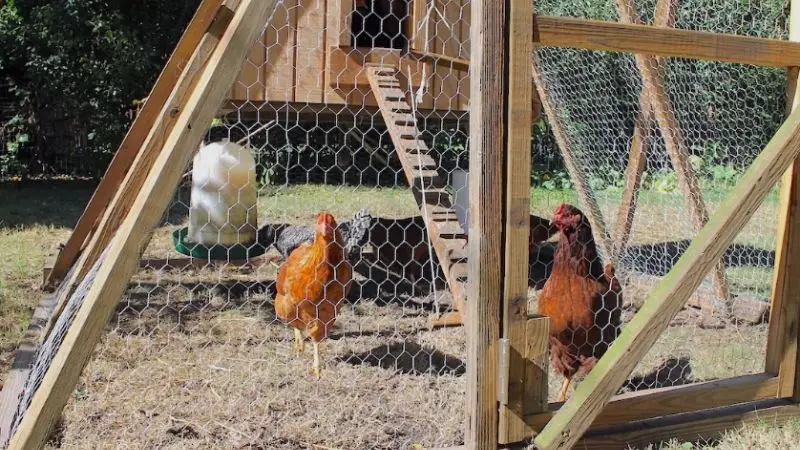
The location of your coop is a significant factor in keeping your chickens safe and comfortable. An excellent location might decrease the risks of predators and simplify daily care.
By making the right choice, you enhance the security of the chicken coop and avoid the need for excessive subsequent modifications.
Pick a Safe and Visible Spot for Your Coop
You would like your chickens to feel safe on a daily basis, and the right location would help a lot. Select a location where you can observe the coop from your yard or house. This enables you to be aware of any threats quickly. Place the coop on an elevated surface to ensure rainwater flows off, and predators find it difficult to dig in. Ensure that there is morning sunshine and afternoon shade in the area. Do not use thick bushes or tall grass, which provide predators with hiding and attack places.
- Just like you can see at home.
- Constructed on dry elevated land.
- Receives early morning light.
- In the shaded woods.
Use Natural Barriers for Extra Protection
Your chickens can be safeguarded by natural features in your yard. Hedges, rocks, or fences can be used to slow down predators and make your coop safe. These barriers are more effective when used together with DIY chicken coop security ideas.
Thorny bushes, such as roses, should be planted to keep the animals away. Meanwhile, do not locate the coop too close to trees whose lower branches are low, as raccoons will be able to climb and get in. The natural barriers combined with appropriate fencing can help to plan the most appropriate fencing to use in the case of chicken coop predators and provide an additional layer of security.
Strong Physical Protection for Your Chicken Coop
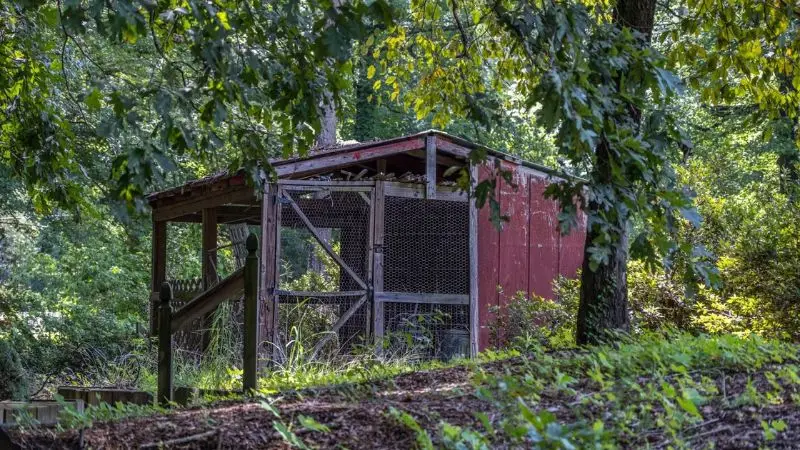
Good and strong physical barriers are the beginning of protecting your chickens. Any weak coop is prone to attack by predators regardless of the location it has been placed.
You are creating the foundation for chicken coop security by focusing on the sturdiness of construction and the use of intelligent materials, thereby reducing the threat of unexpected attacks.
Build a Strong and Durable Chicken Coop
You must have a coop that is not easily broken into by predators. The walls should be made of thick wood or metal, and there should not be any loopholes or weak spots. Even minor cracks may enable the animals to squeeze in. A firm floor is equally significant, and thus, concrete or hardware cloth covered underneath can prevent digging.
Doors must be tight and with good locks. This is especially noteworthy when training to keep raccoons out of a chicken coop, because they can break even simple latches. Checks and fast repair will ensure that your coop is robust and durable.
Install Proper Fencing to Stop Predators
Fencing is significant in ensuring the safety of your chickens. Use hardware cloth rather than the usual chicken wire, much better and has smaller holes. The fence should be buried at least 12 inches into the ground to prevent the digging of animals such as foxes.
To enhance security, you may install electric fencing around the coop. It produces a shock, and it scares away predators. The best fencing against chicken coop predators is a significant issue, and it suffices to avoid recurrent attacks.
Secure Windows and Air Openings
Your chickens like fresh air; however, open spaces may be an opening to predators. Windows and vents should always be covered by using strong mesh or hardware cloth. Ensure that these points are well sealed and do not have loose ends.
Close windows at night because most of the predators are active at night. Additional locks can also be added to provide more security. One of the most feasible DIY ideas of chicken coop security to ensure that your flock remains safe without compromising on comfort is combining airflow and safety.
Advanced Ways to Keep Your Chickens Safe
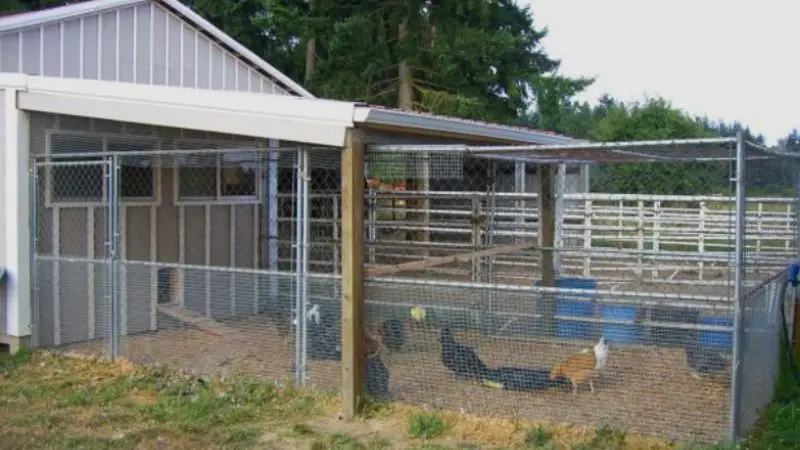
After securing your basic setup, you can add more layers of security. These techniques will assist you in noticing danger early enough and preventing predators before they access your coop.
The combination of the newest tools with the natural protection methods will build a more powerful and trustworthy safety system.
Use Motion Lights and Alarms for Protection
A simple way to scare away predators is to use motion-activated lighting. Whenever an animal approaches, the light is activated abruptly, and the animal is scared away. These lights can be utilized at night when visibility is low.
Also available are alarms that can make noise when movement is detected. It warns you and frightens animals simultaneously. These additions enhance the safety tips of a nighttime chicken coop and assist in the security of your flock when you are asleep.
Install Cameras to Watch Your Coop
Even when you are not outside, cameras assist you in keeping an eye on your coop. Most of the current cameras can display live video on your phone and will also send you an alert in case it detects movement. This will enable you to act fast in case something appears wrong.
It is also possible to learn about predator behavior by watching recorded footage. You can identify the vulnerable areas in your setup and enhance your chicken coop security by repairing these areas before a real attack occurs.
Use Guard Animals for Extra Safety
Guard animals may provide extra security to your flock. Predators can be scared away by making noise or keeping dogs, geese, or even donkeys around your chickens. Many animals will not approach them because of their presence alone.
Nonetheless, they cannot substitute other safety precautions. Add fencing, locks, and lighting to them to achieve greater results. Guard animals will protect your general DIY chicken coop security concepts and make your coop significantly safer when used correctly.
Simple Ways to Keep Chickens Safe at Night

Most predators are active at night, and thus, your coop requires extra attention during the night. Some clever tricks and practices can be of great help in defending your flock.
By concentrating on the security of the chicken coop at night, you are able to relax knowing that your chickens are safe as you sleep.
Use Automatic Doors for Night Protection
The coop doors can be easily automated to ensure that your chickens are safe at night. These are doors that automatically close when it becomes dark, and therefore you can not forget. When your flock is shut in a door that is well closed, your predators are locked out, and your flock is safe until morning.
Most of the doors have timers or light sensors, which are user-friendly. This is among the most useful tips in ensuring the safety of a chicken coop at night since it saves time and provides powerful protection.
- Conserves time and effort.
- Protects the chicken at night.
- Labor, even though you lose the memory.
Add Night Deterrents to Scare Predators
Predators are more active during the night, and as such, deterrents can be used to keep them away. Motion lights are quite efficient as they illuminate the space abruptly and frighten wildlife. There are also alarms that make loud sounds when they detect any movement.
A few tricks, such as hanging reflective materials or safe scent repellents, can disorient predators. These strategies are even more efficient when used together with DIY ideas of chicken coop security, which provide your coop with a greater defense during the night.
How to Keep Your Coop Safe with Regular Checks
The toughest coop must be taken care of. Little issues may easily grow to become enormous threats when neglected.
It is possible to keep your chicken coop secure and avoid sudden predator attacks by making sure that you check your setup regularly.
Check Fencing and Coop for Damage
Frequent checking helps you detect weak points before predators. Inspect your coop, inspect holes, loose boards, and broken locks. Note the bottom of the fence because animals usually attempt to dig at it.
Fix any problems as soon as you see them. Good fencing is essential, particularly when fencing with the most suitable fencing to use as a predator of chicken coops, because a small hole will result in severe losses.
- Search holes or gaps.
- Test doors and locks.
- Look at the evidence of digging.
- Close vents and windows.
Watch Your Chickens for Warning Signs
Your chickens usually give indications of malaise. They may appear scared, appear more camouflaged than normal, or no longer lay eggs, and this may indicate that they are in the presence of a predator. Listening to their demeanor makes you move fast.
Ominous sounds or the abrupt lack of sound can also be causing factors. Daily observation of your flock can help you make better choices and enhance the method of keeping raccoons out of the chicken coop by helping you respond to an attack before it occurs.
Wrap Up
It takes planning, effort, and frequent care to keep your chickens safe. Selecting an appropriate site for the fence and using clever fencing both contribute to better chicken coop security. Basic measures such as automatic door use, damage inspection, and lighting can prevent severe losses. Knowing how to deter predators, such as raccoons, in a chicken coop will only enhance your setup. Your flock is safe, calm, and productive when you combine good habits and practical solutions. A safe coop not only protects your chickens, but it also provides you with peace of mind on a daily basis.
FAQ
What should be the frequency of your checks on your chicken coop on security matters?
You ought to visit your coop once every week. Search holes, loose boards, or dig evidence. Quick checks assist you spot problems before predators.
Which is the most appropriate predator-proof fencing material?
Hardware cloth is the best one. Chicken wire can hold chicken in, but it cannot hold predators out. Strong protection can be provided using hardware cloth with small holes.
Will motion sensor lights keep the predators away?
No, you must not depend upon lights. Some animals are scared of lights, and some are not. Motion lights should be combined with high-quality fencing and shut doors.
How do you deal with a predator around your coop?
- Stay calm.
- Take your chickens in.
- Test your fencing and locks.
- Include additional deterrents such as lights or an alarm.
- Hint: Carry a flashlight in case of night inspections.