When seeking the best dehumidifier for your basement in 2026, what are you looking for? A damp basement can result in mold, bad smells, and damage to your furniture and walls. That is why it is so important to choose the right dehumidifier. Experts and consumer reports have tested many models to determine the most reliable and effective ones. Some units have powerful moisture removal while others emphasize silent operation or intelligent remote access. Whether you need flood protection, extensive area protection, or flexible tank design, this guide highlights the top-rated models to help you find the perfect solution for your basement.
Why You Need The Best Dehumidifier for your Basement in 2026
Keeping your basement dry is more important than ever. Excess moisture can cause serious problems for your home and health. Using the best dehumidifier for the basement ensures that air is kept clean and your possessions are safe. In this guide, we’ll examine some of the reasons why dehumidifiers are essential and some ways they can protect your space and your family.
How a Dehumidifier Improves the Health of Your Basement & Keeps Your Family Safe
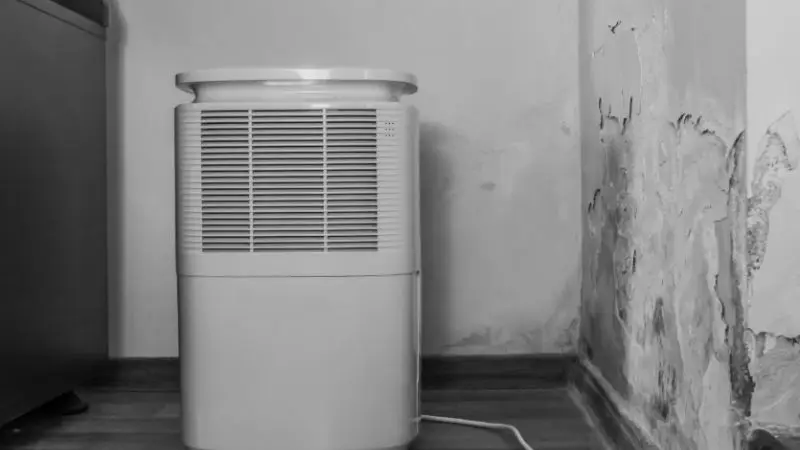
Basements tend to become moody and musty. If the moisture level becomes too high, mold and mildew start to grow, resulting in sneezing, coughing, and breathing problems. A good dehumidifier will remove excess water from the air so that your basement is healthier to live in.
The use of a commercial dehumidifier or an industrial dehumidifier with a pump can be particularly beneficial in basements that tend to flood or remain humid. These devices keep humidity levels safe and give you peace of mind. Regular monitoring helps in catching the problem early before it starts affecting your health.
How a Dehumidifier Protects Your Home and Precious Belongings
Basements are frequently used to store such things as books, clothing, and sports equipment. Moisture can cause damage to these items, resulting in warped wood, rusted metal, and deteriorated paper. Installing the best dehumidifier for the basement ensures that your space is not too humid, and it will protect your valuables from damage.
Dehumidifiers protect furniture, electronics, photos, and walls. They also help hold your home’s foundation in place to prevent it from cracking from excess moisture. By keeping the damp away, you will prolong the life of your possessions and will also preserve your home investment.
How Modern Dehumidifiers Save Energy and Provide Smart Features
The new dehumidifiers are designed in a way that they do not use much electricity, thus they are less expensive than the older ones. Most units even have intelligent features as well, and, therefore, you can manage functions with your phone or pre-program the operations.
Detailed models, such as commercial dehumidifiers, have an alarm that activates when the water tank is full, and they also have an automatic slip to prevent spillage. This is its idea of energy saving and smart controllers; your basement will not be compromised by adding another score to your energy payment.
A proper dehumidifier is not only healthy for the residential and the items but will also help you live, improving your comfort. And the best dehumidifier in the basement allows you to live in a healthy, safe, and stress-free environment.
Best Dehumidifiers for Basements – Expert Reviews
Choosing the right dehumidifier is essential to have a dry and safe basement. From small spaces to large, flooded basements, the right unit can prevent mold, protect your stuff, and make your house more comfortable. Here are the best dehumidifiers you need to check.
VEVOR Dehumidifier for Basement – Best Overall
The VEVOR Dehumidifier is perfect for the basement that is prone to high humidity and flooding. It removes up to 50 pints of water a day and includes an inbuilt pump for easy draining. With lots of air movement and a large tank, you won’t have to empty the tank very frequently. This industrial dehumidifier with a pump is ideal for large storage rooms or finished basements that require quick dehumidification.
Pros:
- Works well in large basements
- Simple to set up and use
- Deals effectively with difficult moisture issues
Cons:
- Loud on high settings
- Heavy to carry
Midea Cube 50-Pint (MAD50PS1Q) – Best for Small Spaces
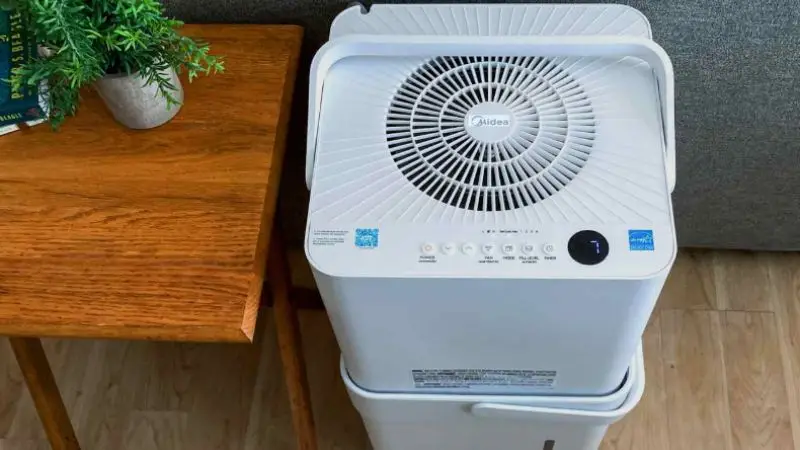
The Midea Cube 50-Pint dehumidifier is made for small basements and apartments. Its modular cube design is flexible since it allows for flexible placement, and it removes up to 50 pints of water per day. Smart Wi-Fi controls give you the ability to make adjustments from away, and an adjustable water tank makes it easy to use even in a small space.
Pros:
- Fits in small basements
- Easy to clean
- Remote control with app
Cons:
- Tank assembly can be tricky
- App setup takes time
Frigidaire FGAC5044W1 – Best for Remote Access
If you want to control your basement dehumidifier from anywhere, then the Frigidaire FGAC5044W1 is a great choice. It draws up to 50 pints of water a day, comes with customizable fan speeds, and has a Wi-Fi remote accessibility solution. This unit makes an excellent gift for busy families or for those who travel often and would like to be able to monitor humidity levels remotely.
Pros:
- Easy to monitor using your phone
- Reliable moisture removal
- Great for tech enthusiasts
Cons:
- Wi-Fi setup can be difficult
- Higher cost
Shinco Dehumidifier – Best for Large Basement
For large basements, the Shinco Dehumidifier is a powerful dehumidification solution. Covering up to 4,500 square feet, it pumps out up to 70 pints of water per day. With auto defrost and continuous drain options, it’s ideal for homes where there’s a lot of moisture or a workshop. This commercial dehumidifier is efficient in handling tough conditions.
Pros:
- Excellent for large basements
- Easy to maintain
- Handles extreme moisture
Cons:
- Bulky design
- Can be noisy
Midea 20 Smart Dehumidifier – Best for Flooded Basements
Midea 20 Smart Dehumidifier is a suitable appliance that would suit flood basements or constant water-related problems. It attracts up to 20 pints of water on a daily basis and offers smart Wi-Fi alerts of rising moisture levels. It is small in size, and therefore it is easy to move without difficulty, thus being able to dry your basement within a short time in case of any basement flooding due to a storm or leakages.
Pros:
- Rapid response to flooded areas
- Easy to move
- Smart notifications
Cons:
- Smaller tank
- Not ideal for very large basements
Danby Dehumidifier – Best for Long – Term Reliability
The Danby Dehumidifier is designed to have prolonged performance. It consumes up to 50 pints of water per day, comes with Energy Star-qualified, and is fitted with a washable filter. It has simple controls and can be used in basements where the yearly need is always to have moisture suppressed.
Pros:
- Reliable operation
- Easy to use
- Low maintenance
Cons:
- Basic design
- No smart features
Honeywell Dehumidifier – Best for Quiet Operation
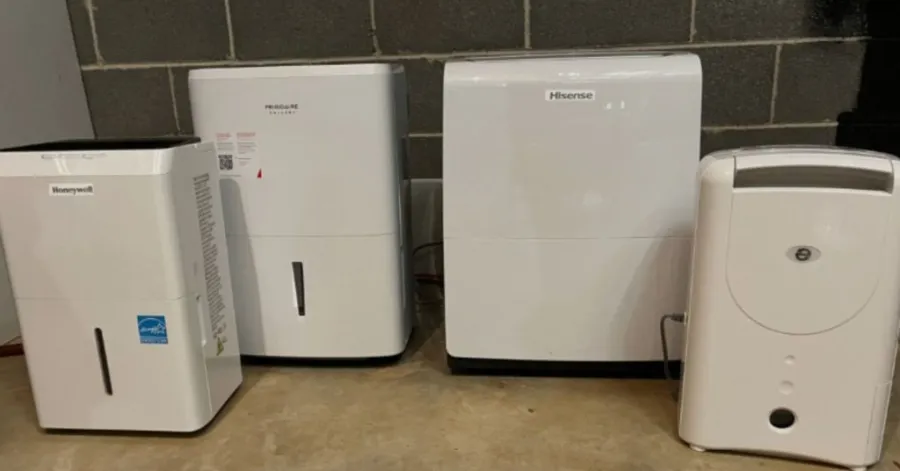
The Honeywell Dehumidifier can be used in completed basements or family rooms, and it is very quiet when taking off up to 30 pints of moisture per day. It is efficient at saving energy, and it is convenient to use, and it ensures your house is dry, and it does not disturb the household. This unit is good in basements, which are used as a living room and guest room.
Pros:
- Low noise
- Good for finished basements
- Saves energy
Cons:
- Smaller tank
- Not suitable for very large basements
Complete Guide to the Best Dehumidifiers for your Basement
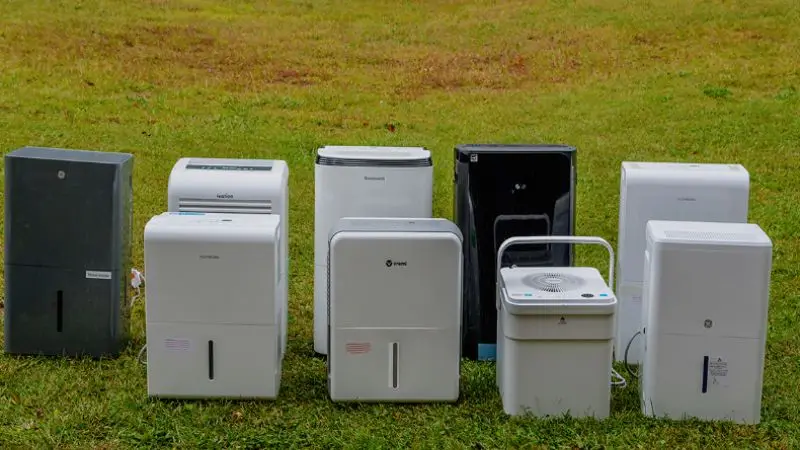
To make your basement dry, safe, and mold-free, it is highly important to choose the appropriate dehumidifier. How each of the models looks and works, as well as its price, will allow you to choose the most effective dehumidifier that fits your specific needs.
Important Features Of Best Basement Dehumidifiers And What They Are Useful For
Different dehumidifiers have different unique features to accommodate different basement conditions:
- VEVOR Dehumidifier – Reliable, Energy Star rated, auto shut off. It has no smart controls and no quiet operation, but it is perfect for large basements with strong water removal needs.
- Midea Cube 50-Pint – With smart controls, Energy Star certified, quiet operation, and remote access, this is perfect for small to medium-sized basements.
- Frigidaire FGAC5044W1 – Remote monitoring, smart controls, and customizable fan speeds make this model ideal for busy households or those who travel frequently.
- Shinco Dehumidifier – high capacity for very large basements, Energy Star certified, auto shut off, but no smart features.
- Midea 20 Smart Dehumidifier – Compact with smart alerts, Wi-Fi controls, and quiet operation. Ideal for flooded basements or small spaces.
- Danby Dehumidifier – Long-term reliability, Energy Star certified, auto shut off, and low maintenance. Simply controlled without smart features
- Honeywell Dehumidifier – Quiet operation, energy efficient, and ideal for completed basements or family spaces. No smart features.
Smart controls allow you to control the humidity in your basement using your phone: this is especially useful if you want peace of mind.
How Each Basement Dehumidifier Works And Deals With Various Spaces
When choosing the best dehumidifier for a basement, the following parameters are important: coverage area, water removal capacity, and noise level.
- VEVOR Dehumidifier – Covers up to 4,500 sq. ft., removes 50 pints/day, noise around 55dB. Best for large basements.
- Midea Cube 50-Pint – 3,500 sq. ft. Coverage, 50 pints/day, noise 47dB. Ideal for small to medium-sized basements.
- Frigidaire FGAC5044W1 – 3,500 Sq. Ft., 50 Pints/day, 48 db noise. Great if you want remote monitoring
- Shinco Dehumidifier – 4,500 sq. ft., 70 pints/day, noise 56dB. Perfect for those really large basements or workshops.
- Midea 20 Smart Dehumidifier – Covers 1,500 sq. ft., 20 pints/day, 45dB noise level. Compact and fast when working on small or flooded basements.
- Danby Dehumidifier – 3,000 sq. ft., 50 pints/day, noise 46dB Dependable for uniform operations.
- Honeywell Dehumidifier – 1,500 sq. ft. Removal 30 Pints/Day Noise 44dB Quiet and suitable for completed areas
For large basements, Shinco and VEVOR are the best choices. Midea 20 Smart with Honeywell makes the best sense for smaller spaces.
Price, Warranty, and General Value of the Best Basement Dehumidifiers
Budget and warranty when selecting a dehumidifier:
- VEVOR Dehumidifier– $320, 2-Year Warranty
- Midea Cube 50-Pint – $350, 1-year warranty
- Frigidaire FGAC5044W1 – $370, 1-year warranty
- Shinco Dehumidifier – $330, 2 year warrenty
- Midea 20 Smart Dehumidifier – $210, 1-year warranty
- Danby Dehumidifier – $300, 2-year warranty,
- Honeywell Dehumidifier – $250 – 5-year warranty
Longer warranties and performance are more valuable. Pick a model suited to your basement’s size and moisture level and its daily needs. Investing in the best dehumidifier for the basement helps in the protection of the home and its belongings while saving money in the long run.
How do you pick the right Dehumidifier for your Basement?
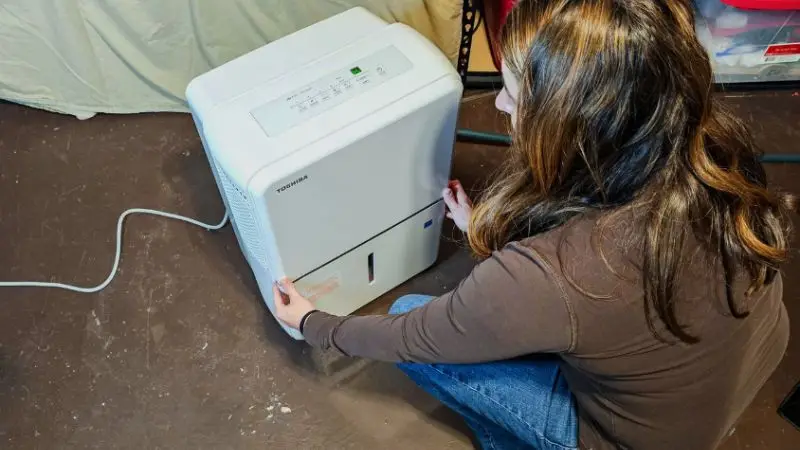
Choosing the right dehumidifier for your basement doesn’t need to be complicated. By honing in on a few main factors, you can get a model that prevents your space from getting wet, your possessions from being ruined, and your home from becoming unhealthier. From size and capacity to smart features and noise levels, the best dehumidifier for basement use is a combination of performance, convenience, and cost. Let’s learn about what to look for so you can choose the right unit for your needs.
How to Match Basement Size to Dehumidifier Capacity
The size of your basement and the rate of moisture removal of the dehumidifier will be the first things to have in mind. A smaller basin or storage room would have a lower capacity unit, and the large basins or frequently damp ones would need a high capacity type. Test the moisture-removal capacity of the product, which will usually be measured in the number of pints per day, to ensure it can manage your space. Floods or very humid basements may require the use of industrial dehumidifiers that have a pump, as they have the ability to extract water rapidly and continuously without having to empty the tank very often. It is always good to do a prior measurement of your basement in order to choose the appropriate size to dry effectively.
Why Energy Efficiency is Important for Basement Dehumidifiers
One important factor when selecting a dehumidifier is energy efficiency. Models with the Energy Star label use less electricity while being effective at removing moisture. This saves money on your power bill without sacrificing performance. Even in large basements, energy-efficient units can ensure a constant level of humidity and thus keep the air dry while your home is protected from mold and mildew. With the selection of an energy-efficient dehumidifier, you’ll be getting reliable moisture control without paying for the use of electricity that is just being used up, which is especially important if you intend to keep your unit running continuously during the humid seasons.
Choosing a Basement Dehumidifier with Quiet Operation
Noise can be an issue if your basement doubles as a playroom, TV room, or office. Check the noise level, which is usually expressed in decibels, and get a quieter model if you want peace and comfort. Some high-capacity models are noisy, and smaller or smart dehumidifiers are quiet. Choosing the right balance between noise and performance helps you to use the basement without disruption. A quiet best dehumidifier for the basement helps you to keep the air healthy without having to interrupt daily activities or family time.
How Smart Features Make Moisture Control Easier
Modern dehumidifiers can include smart gadgets, such as control of the dehumidifier via an app, setting changes for humidity, and a full tank alert. These features provide you with the ability to monitor and control the humidity in your basement even when you are away. Smart alerts will prevent overflow and allow for easy management of a consistent moisture removal rate. Whether you decide to have a high-capacity commercial system or a smaller, more discreet smart system, these features allow for greater convenience, efficiency, and peace of mind, particularly for homes where there is frequent dampness or even occasional flooding.
Balancing Price, Warranty, and Long-Term Value
You should decide on a budget before you go shopping. The highest-priced unit is not the optimal choice. Contrast between prices, features, and warranties to ensure the most competent deal. An increased warranty against defects or breakdown, which is applicable in case of constant use of basements. Through price, performance, durability, and ease of use, you will be able to select the best dehumidifier that fits a basement according to your needs and your budget. The right model will save money and pay off down the line.
Maintenance and Ease of Use of Basement Dehumidifiers
A practical basement dehumidifier must be easy to keep up with. Look for washable filters, easy-to-access tanks, and easy controls. High moisture removal rates require a high frequency of emptying the tank, which means less complexity is the key. Efficient design and simple maintenance ensure easy maintenance without keeping your basement wet. Whether you opt for a small smart model or a larger industrial-capacity dehumidifier with a pump, ease of use will guarantee that your dehumidifier will continue to work over time, protecting your home and your belongings with the least amount of effort.
Wrap Up
Choosing the best dehumidifier for basement use helps you to protect your home, improve air quality, and prevent costly moisture damage to your home. The right model keeps their humidity in check, prevents mold, and makes your basement a comfortable space for storage or living. Whether you need a quiet unit, commercial dehumidifier, or industrial dehumidifier with a pump, the key factor is finding a device that is appropriate for your basement size and level of moisture. By taking steps to shift your focus to capacity, efficiency, and smart features, you can make a smart investment in the long run that will help your basement to stay dry, safe, and easy to maintain all year round.
FAQ
How often do you need to empty the dehumidifier tank?
If your basement is wet, you should check the tank daily. Some dehumidifiers have alerts or turn off themselves. If you used a continuous drain, you do not need to empty the tank.
Can you run a Dehumidifier all day?
You may run your dehumidifier all day long. Most models turn themselves off and conserve energy. This helps to keep your basement dry and safe.
What Size Dehumidifier Do You Need For Your Basement?
Find out how large your basement is. If you have a large basement, choose a model with more pint capacity. Less power is required for small basements. Check the product details for covering.
Do dehumidifiers help with basement odors?
Dehumidifiers remove moisture that contributes to the development of bad smells. You will see that the air is fresher after a couple of days. If the smells persist, clean the filter and check for mold.
Are smart dehumidifiers worth it?
There are settings that you can change from your phone on smart dehumidifiers. You have alerts, and it is easy to check the humidity. If you’re a fan of things simple, you will love the smart feature