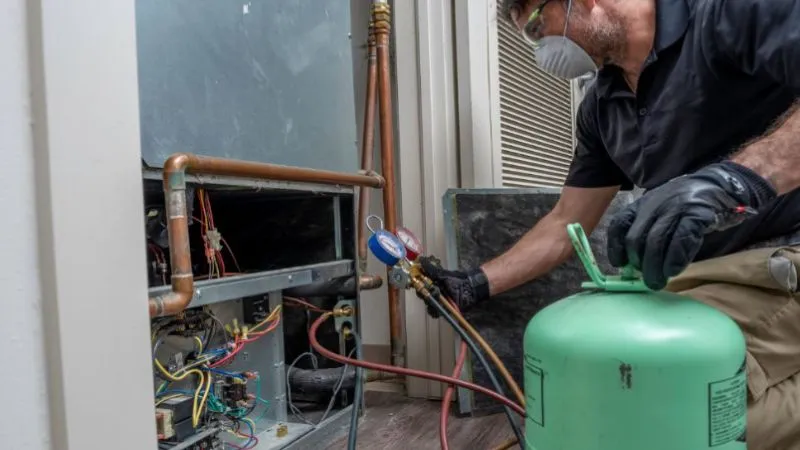
A fridge is what air conditioning systems use to provide effective cooling, and any small leak will greatly reduce the system’s performance. Once refrigerant levels are low, the AC starts to cool with difficulty, runs longer, and uses more power. In the long run, this problem can damage the system if it is not addressed early. It is valuable that you learn how to repair refrigerant leaks in air conditioners in order to have comfort and efficiency at home.
Home users initially experience the effects of an AC refrigerant leak as poor cooling or ice formation. During professional servicing, an AC recovery machine is used to safely recover the remaining refrigerant before any repair or refill process begins. Learning to repair a refrigerant leak in an air conditioner will help you react quickly and prevent costly failures and ineffective cooling performance.
Tools Required For Air Conditioner Refrigerant Leak Repair
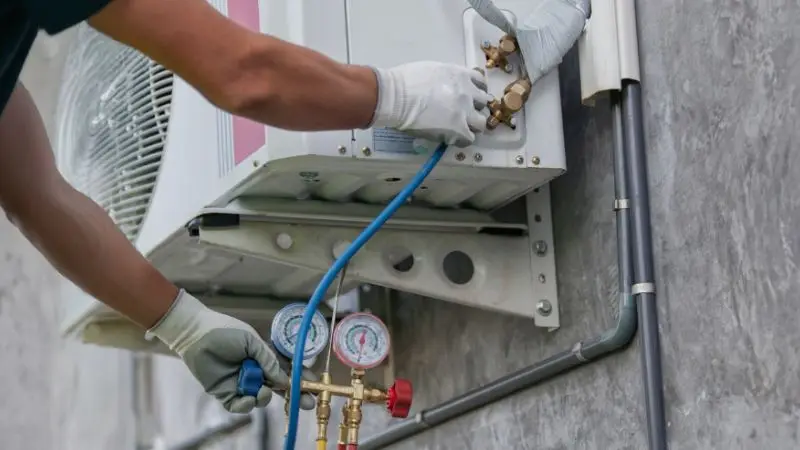
An AC refrigerant leak is not an easy job to repair, and it also needs the appropriate diagnostic and repair equipment. In the absence of appropriate tools, the precise location of the leakage can be hard to identify, and verifying the system pressure can be difficult. To ensure the repair process is free of errors and accidents, professionals use specialized tools. Such tools are also used to determine the possibility of repairing the leak of the AC refrigerant or a more complicated intervention. Knowledge of such tools also provides guidance on how to repair a refrigerant leak in an air conditioner in a technical manner.
Leak Detector And Electronic Sniffers
Electronic sniffers and leak detectors are important devices utilized to detect leakage of refrigerant out of the system. These sensors are very sensitive and can detect even minute leaks that cannot be seen by the naked eye. Technicians will relocate the detector through pipelines, joints, and coils in search of the specific place of leakage. This is a critical process in the repair of a refrigerant leak in an air conditioner since proper identification minimizes the unnecessary disassembly of the system. Electronic sniffers are critical in this regard, as in most instances, homeowners who may see some signs of AC refrigerant leak in the home may not notice any visible damage, hence a sense of confirmation. These are tools that enhance the accuracy of repair and also save time in the diagnosis process.
Manifold Gauge Set For Pressure Testing
The pressure in the AC system is measured using a manifold gauge set. It helps technicians determine whether the refrigerant quantity is too low or the system is out of balance. With the help of connecting the gauges to the service ports, professionals will be able to observe both high and low pressure indicators. This data can be valuable in assessing why my air conditioner is losing refrigerant and in evaluating system health. It also plays a key role in determining the cost to repair an AC refrigerant leak, as pressure results indicate the severity of the issue. Proper pressure testing is to be done to make sure that the system is working safely after the repair and to prevent future failures.
UV Dye And Inspection Tools
Another helpful technique for locating slow or concealed leaks of refrigerants is the use of UV dye. The dye is added to the AC system, and it circulates with the refrigerant. With leakage, the dye will leak away and will appear under UV light. UV lamps and inspection glasses are then used by technicians to determine the precise location of the leakage. This technique can be particularly useful in the old systems where leaks cannot be easily observed. It helps in the process of fixing a refrigerant leak in an air conditioner by making the points of leakage easily visible. This method, in most service instances, identifies small cracks or old joints as the cause of the AC not cooling because of a gas leak.
Basic HVAC Repair And Sealing Tools
The simplest HVAC tools consist of wrenches, sealing tools, soldering tools, and pipe cutters. The tools come into play once the leak has been detected and will be needed to fix or replace the damaged components. They are tightened by technicians to fit the fittings, seal tiny cracks, or replace damaged parts of piping. These are significant measures in air conditioner refrigerant leak repair, which will make the system airtight again.
Before any repair work begins, an AC recovery machine is used to safely remove and store the refrigerant from the system. Repair time can be different, depending on the damage, and this also influences the time refrigerant leak repair takes. These tools can be used effectively to ensure the AC system is once again efficient and that future refrigerant loss is avoided.
Step-By-Step Air Conditioner Refrigerant Leak Repair Process
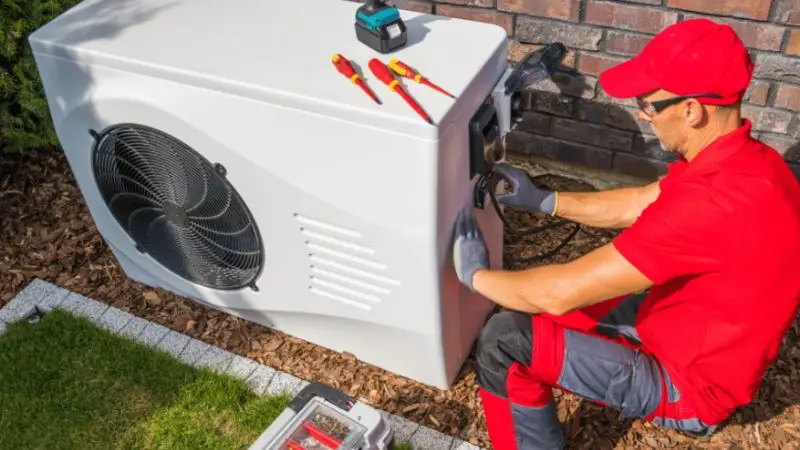
When an AC refrigerant leak is to be repaired, it is necessary to take a carefully planned and systematic process to make sure that the system becomes safe and efficient once again. All the steps are significant in the detection of the problem, repairing the damage, and returning the cooling performance to normal. Any step may be omitted, resulting in ineffective results or re-leaking. The entire process also helps explain the professional way to fix a refrigerant leak in an air conditioner. It also provides answers to questions such as: can an AC refrigerant leak be fixed based on the condition of the system and the level of damage?
Step 1 – System Inspection And Leak Identification
The initial procedure is a thorough check of the AC system. The technicians examine visible pipes, coils, joints, and connections to identify any type of damage or oil stains. They also attentively hear abnormal sounds that could signal gases. This is done to detect the initial signs of AC refrigerant leak at home, including ineffective cooling or air-flow imbalances. It is also essential to have a proper inspection as it reduces the number of potential leaks. The repair process will be inefficient without proper identification, and it may not resolve the underlying problem, particularly why my air conditioner is losing refrigerant.
Step 2 – Confirm Leak Using Pressure Or Dye Test
Technicians verify the leak after initial inspection by carrying out pressure testing or UV dye tests. A pressure test will determine whether the refrigerant is properly retained in the system, and a dye test will indicate any hidden leaks when UV light is present. Such techniques make sure that even minute leaks are verified accurately. This is important in the repair of a refrigerant leak in the air conditioner, as it establishes the area of the problem that is to be repaired. It also assists in deciding on the severity of the problem, which can determine the cost to repair the AC refrigerant leak and the general repair plan.
Step 3 – Repair Or Replace Damaged Components
After the leak has been detected, a damaged component is replaced or repaired. This could involve repairing minor cracks, loosening joints, and exchanging defective coils and pipes. It is highly necessary to seal it properly to avoid eventual leakage. Complete replacement of the components might be needed in extreme cases. This step directly deals with the AC not cooling because of the leakage of gas, since the damaged part can be fixed to allow refrigerant to pass through. Proficient technicians make sure that the fixation is safe and long-lasting, which is essential to the long-term functionality of the system and its energy efficiency.
Step 4 – Perform Vacuuming To Remove Moisture And Air
Once the leak has been repaired, the system should be vacuumed to clear off air and moisture. This is necessary as air or moisture caught between surfaces may destroy the compressor and decrease the cooling capacity. The vacuum pump is utilized to make the inside of the AC lines clean and dry. This is to ensure that the system is well ready to be recharged with refrigerant. It also assists in the correct repair of refrigerant leakage of the air conditioner because it does not contaminate it. Failure to do this could lead to failure of a repaired system or poor cooling performance.
Step 5 – Recharge Refrigerant Using the Correct Method
As soon as vacuuming is done, the proper type and quantity of refrigerant is recharged to the system. Measurement is quite critical since overcharging and undercharging may influence performance. Technicians work in accordance with the manufacturer’s requirements to restore the appropriate pressure to the specified levels.
Before recharging, an AC recovery machine is used to safely recover any remaining refrigerant and ensure the system is properly prepared for service. This action directly enhances cooling efficiency and addresses issues related to my air conditioner losing refrigerant. Proper charging of the refrigerant would provide stability in the operating process and help maintain energy efficiency following repair.
Step 6 – Test System Performance After Repair
Testing the AC system is the last step to make sure that everything is going well. Technicians monitor cooling output, airflow, pressure level,s and performance. They also check the system to see if there is a recurrent leakage. This measure will ensure that the air conditioner refrigerant leak repair has been effective. It also assists in estimating the time of refrigerant leak repair, based on system response and stability. After all system tests are successfully completed, the system is said to be back to its normal use.
Proper Refrigerant Handling And Safety Measures
Handling refrigerant in the process of AC repair is not only a technical activity but also a safety-sensitive activity. Refrigerants are pressurized and may be dangerous in case of release. This is the reason why technicians have strict safety regulations to adhere to in all steps of repairing refrigerant leakage in the air conditioner. Adequate maintenance also means that the system is efficient following repair and minimizes the chances of the occurrence of similar problems, such as the AC failing to cool down because of a gas leak. Special care is necessary when learning to repair the leakage of refrigerant in an air conditioner in a professional and controlled manner.
Use Of PPE During Leak Repair
It is important to use personal protective equipment (PPE) whenever carrying out any refrigerant repair. Avoid direct contact with refrigerant and the system components. The technicians put on gloves, safety goggles, and protective clothing. Fridge coolant may lead to skin irritation or frostbite in case it accidentally spills, which means one has to be protected at all times. PPE is also useful in minimizing inhalation of hazardous vapors during inspection and repair. This is a typical measure of safe air conditioner refrigerant leak repair procedures. It also helps to make diagnosis safer in case of signs of AC refrigerant leak, checking at home, so that technicians can work without health hazards while working with pressurized systems.
Safe Refrigerant Recovery And Handling Practices
Refrigerant should be recovered in special recovery machines before replacing or repairing any component. This prevents the release of harmful gases into the environment and maintains safety levels. The regained refrigerant is kept in approved cylinders to be reused or disposed of properly. These are dangerous to handle since improper practices may aggravate the damage to the system and complicate repair. This is an imperative step when it comes to controlling why my air conditioner is losing refrigerant, because when the leakage is not controlled, the system may experience a significant failure. Safe recovery also helps control the cost of repairing an AC refrigerant leak by minimizing waste and preventing unnecessary refrigerant loss during service.
Preventing Future Leakage Issues
One of the aspects of long-term AC maintenance is to prevent future leaks. Once the air conditioner refrigerant leak repair is done, technicians would check all the joints, valves, and coils to make sure they are all closed. Servicing would also help detect early wear and tear before it becomes a big problem. The changes in performance that are recommended to be monitored by the house owners include poor cooling performance or increased run time, which could be the beginning of problems. These safety measures minimize the likelihood of the AC not cooling again because of gas leakage, as well as enhance system life. Effective maintenance also reduces the necessity to constantly think about the time that it takes to fix a refrigerant leak because when the problem is prevented in the very beginning, there will be no serious failures.
Wrap Up
Refrigerant leaks in air conditioning systems are a frequent yet serious problem that can lead to reduced cooling efficiency, increased energy consumption, and reduced system longevity. Symptoms such as weak cooling, hissing, or ice formation are early warnings that can be used to avoid severe destruction. Repair of refrigerant leaks in air conditioners by professionals is important to maintain the system by checking it properly, sealing, vacuuming, and refilling it to operate safely. The neglect of the problem may contribute to higher expenses of fixing the AC refrigerant decline in performance in the long run. By keeping the system properly maintained and cared for, recurring problems could be avoided, and the system’s reliability could be enhanced. Learning the reason my air conditioner is losing refrigerant can help you keep your cooling system efficient in the long term.
FAQs
What are typical symptoms of a refrigerant leak in an AC?
The typical symptoms are poor cooling, coils covered with ice, hissing noises, and excessive electricity bills. These symptoms suggest low refrigerant concentrations with implications for the performance and cooling effectiveness of the system.
Is it possible to repair an AC refrigerant leak?
Yes, the majority of leakages are fixable through the sealing or changing of damaged sections. In extreme cases, replacement of the components may be necessary, which can typically be restored to normal cooling performance by professional repair.
What to do to seal a leak in the refrigerant in an air conditioner?
Technicians identify the leak, fix or substitute damaged components, vacuum the system, and charge refrigerant. Safe and effective repair is achieved by proper tools and testing.
What is the average time to repair a refrigerant leak?
The duration taken to repair is dependent on the severity of the leak and the state of the system. Small leaks can be repaired within a few hours, but complicated matters can be fixed and tested in a day.
How come my air conditioner is evaporating refrigerant?
The loss of refrigerant is normally due to old coils, loose fittings, or minute cracks in the system. Such issues can be detected and prevented early by means of regular maintenance.