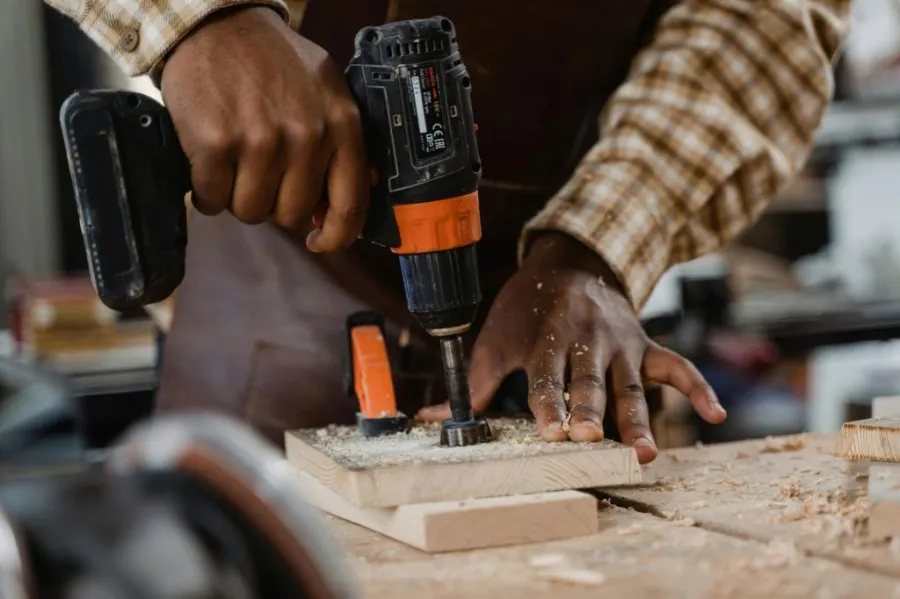
Every toolbox, whether it belongs to a DIY enthusiast or a professional mechanic, has one thing in common: the trusty socket set. But if you’re new to the hardware world and have trouble understanding your options, we’re here to help.
Understanding the different types of socket sets is crucial for confidently handling any fixer-upper. In this guide, we will explore which socket, drive size, and point configuration works best for your projects. Let’s talk about the differences in each of them so you know which type of socket set works best for you.
What are socket sets?
A socket set is a collection of special tools you can use to tighten or loosen up nuts and bolts around the house. Socket sets include a ratchet handle along with various sizes of sockets. These sets also have extension bars and other accessories to make your DIY efforts easier, whether it’s:
- Car repairing at home,
- Assembling furniture, especially if it’s your own DIY woodworking,
- General house maintenance projects,
- Appliance repair,
- And many more.
Now that you know what a socket set is, let’s talk about the different types of socket sets.
What are the different types of socket sets?
When it comes to different types of socket sets, there are many types. Here are the 9 types of socket sets:
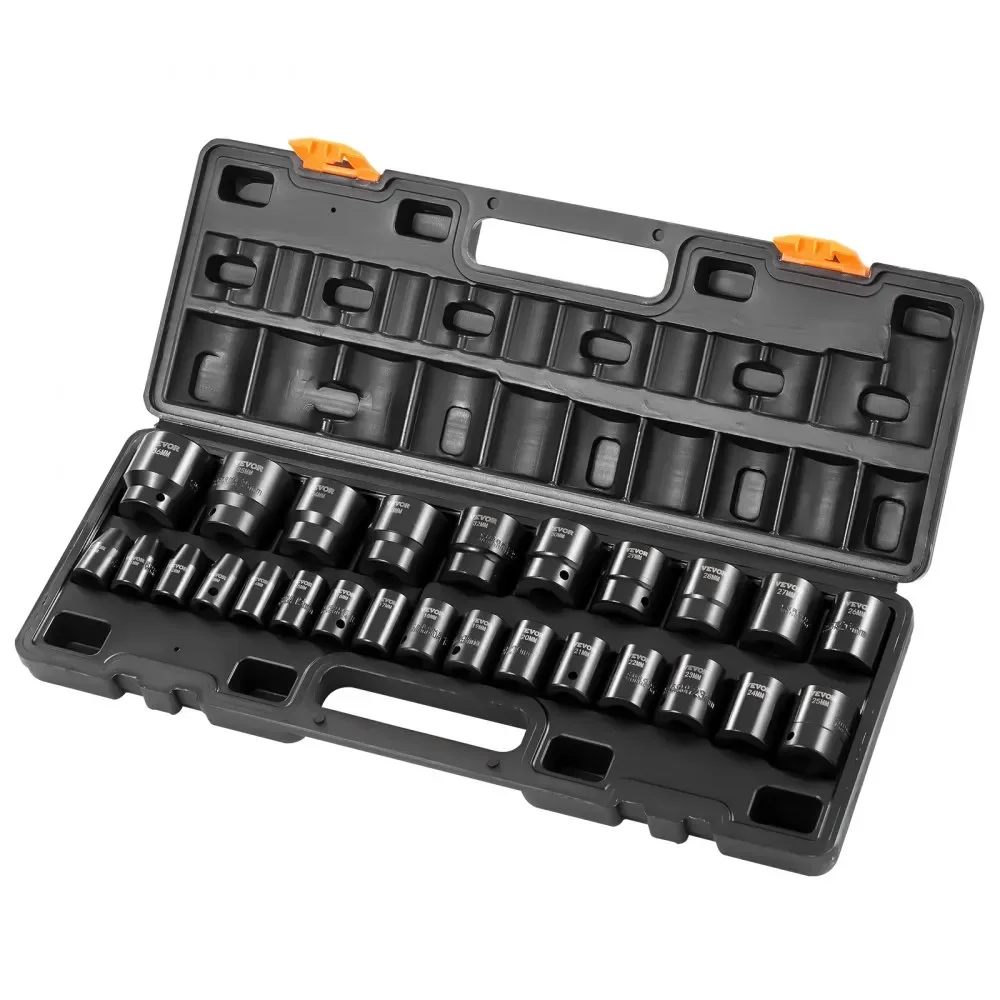
1. Impact socket sets
Impact socket sets are like the factory machine for the types of sockets. They’re specifically designed to be used with powerful and high-torque impact tools like impact wrenches.
Made from strong, shock-absorbing materials like chrome-molybdenum, they can withstand incredible amounts of pressure. This safety and reliability make them an ideal option for automotive and industrial use.
There are 2 types of impact sockets used most commonly.
- Standard impact sockets: Shorter in size and perfect for small spaces.
- Deep impact sockets: Longer in size and an ideal fit for lug nuts.
2. Hex socket sets
Hex sockets are made to fit around 6-sided nuts and bolts. They have a square drive on one end and the hex itself on the other end. The drive is used to attach the ratchet or wrench, and the hex is used to turn the bolts.
There are 2 types of hex sockets.
- 6-point hex socket: These have 6 contact points and are less likely to lose their grip on a bolt.
- 12-point bi-hex socket: These have 12 contact points and might be a little loose, but are useful for reaching tight spaces.
3. Spark plug socket sets
Spark plugs are used for removing and installing spark plugs in engines. They are made longer than regular sockets to reach spark plugs fitted deep inside the engine. You can recognize spark plug sockets by the rubber or magnet insert that attaches firmly to the spark plugs.
They come in various lengths to match the spark plugs in engines.
- Deep length sockets: Made to reach deep inside the engine body.
- Flexible sockets: Better suited to reach particularly angled plugs.
4. Insulated socket sets
These are created with non-conductive rubber material. Common uses include securing nuts and bolts near live electrical systems or in general electric maintenance work. They comply strictly with the international standard of withstanding voltages up to 1000V.
They also come in a hybrid impact-insulated model, which gives you the best of both worlds. An insulated socket that also withstands high-torque forces and momentum.
5. Oil filter socket sets
These are made for the sole purpose of removing and installing spin-on oil filters on vehicle engines. They typically have a cup shape that fits snugly over the end of the oil filter and turns the cap easily.
They come in various types, so you can find ones that fit over the cap, ones that can wrap around the entire filter body, and even ones with claw wrenches.
6. Adjustable socket sets
These are special multi-taskers that feature internal jaws that can be adjusted to fit fasteners of different sizes.
Their jaws allow them to clamp around any shape of nuts, bolts and fastener heads of various shapes and sizes. They have a wide range of applications, including household DIYs, automotive repair and heavy construction tasks.
These are a great tool to have in a pinch if you forget a socket for a specific purpose!
7. Universal socket sets
These are the most versatile, cookie-cutter tools of the bunch. They come with spring-loaded pins inside that retract when the socket hits a fastener.
This makes them go well with bolts of all shapes, like hex nuts, square bolts, wing nuts, and in some cases, even damaged fasteners. They can be attached to drills, ratchets, wrenches and often come with an adapter to allow usage with impact drivers as well.
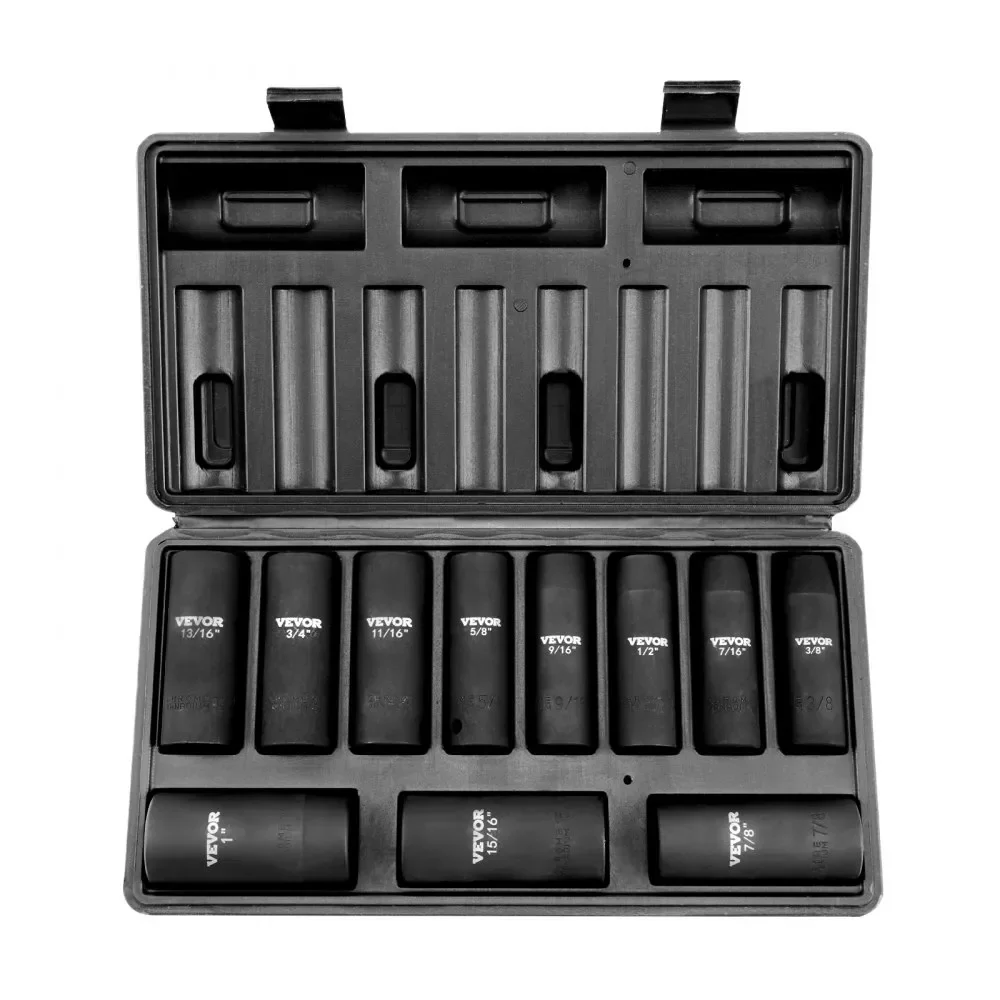
8. Deep socket sets
Deep socket sets are a collection of sockets that are longer than regular sockets. They are often twice the length and are used in engine compartments or any compartments hidden away at the back.
Deep sockets come in impact and standard versions and can adapt to both power tools and hand-held tools. Their increased length does cause them to lose points in the manoeuvrability department though and may increase risk of over-tightening.
9. Pass through socket sets
Pass through sockets are a more uniquely designed variation of all the types of sockets.
They can allow a bolt to pass right through the socket. This mechanism works by using special ratchets that grip the head of the fastener.
These sockets are usually small and compact, and suitable for smaller spaces. They’re available in all the common drive sizes and can also be used in automotive tasks with factory machines.
Core components of a socket set
Now that we’ve explored the different types of socket sets, let’s dive into the basic parts of the socket set. Knowing this jargon will help you understand what you’re looking at.
The socket
This is the main component of the socket. It’s the cylindrical tool that fits over a nut or bolt. Its internal shape can be 6-point or 12-point gram.
The drive
This part of the socket set is the square hole in the socket that connects to the handle.
The drive size directly affects torque application. When selecting a drive size, you may find it useful to match the tool to the fastener’s size and tightness.
- ¼” drive: Ideal for small, precision work on electronics, bicycles, and small engines – basically all low-torque applications.
- ⅜” drive: A more versatile and commonly used size. Suited for a wide range of automotive and general repair tasks. Most comprehensive kits on the market provide an excellent balance of size and capability for most users.
- ½” drive: The first of the high-torque sizes. Suitable for car lug nuts, suspension components, and other large fasteners.
- ¾” drive: These come in ready-made socket sets and are solely for industrial and heavy machinery, and require significant force, such as for trucks, tractors, construction equipment, and the like.
The ratchet
Also known as the handle, the ratchet is the tool you attach the socket to. The ratchet allows you to turn the fastener without having to reposition the tool at every turn. Some handles may include breaker bars for extra leverage or speeders for faster spinning.
Extensions and adapters
These are your main problem-solving components. Extensions help you reach fasteners in deep or awkward spaces, while adapters allow you to use a socket with a different drive size than what your ratchet allows.
FAQs
How many socket types are there?
There exist over 15 socket types and the most commonly known ones are; impact sockets, hex sockets, spark plug sockets, insulated sockets, adjustable multisocket, and universal sockets.
What are the 3 basic socket lengths?
The most widely known socket lengths are shallow, intermediate, and deep. They are used interchangeably according to space and fastener angle.
What are the different drive sizes?
The most common drive sizes include: ¼ inch, ⅜ inch. ½ inch and ¾ inch. All 4 of these serve different purposes like force, torque and precision.
What is the difference between impact sockets and regular sockets?
Impact sockets are designed to withstand large amounts of force and torque as compared to regular sockets. Regular sockets are only built to be used with simple, hand-held tools and are bound to shatter under the pressure of more powerful machines.
Conclusion
Knowing the types of socket sets available is the first step to building a functional toolkit that is both capable and safe. By understanding these fundamental differences in sizes, design, and components, you can make an informed buying decision and confidently select the right set for any project that comes your way.