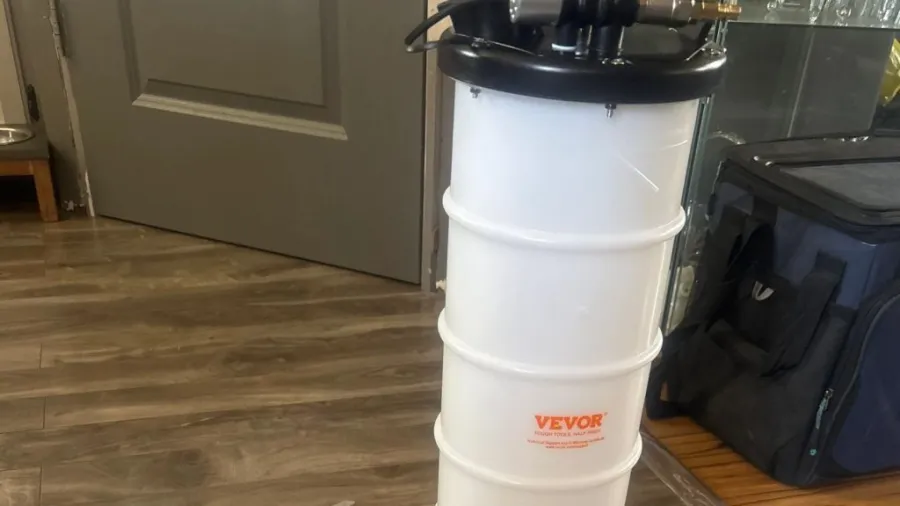
Changing your own oil used to mean jacking the car up, crawling under it, and catching a gush of hot oil in a pan you then lugged across the garage. A car oil extractor pump takes the car off the jack entirely. This kind of vehicle oil extractor pulls spent oil up through the dipstick tube by suction, so you stand, pump, and pour- no ramps, no mess. This guide covers the types of vehicle oil extractors, how to size it, how to use it, and the picks that make sense for a home garage.
- Understanding the Types Of Car Oil Extractors
- Best Car Oil Extractor By How Often You Change Oil
- What are the best oil extractors for frequent home oil changes?
- What are the best oil extractors for people who change oil infrequently?
- What are the best oil extractors for DIY car owners in the US?
- Which oil extractors are top picks for first-time DIYers wanting simple operation?
- Which oil extractors offer the best value for home use?
- How To Size and Choose A Car Oil Extractor
Understanding the Types Of Car Oil Extractors
Car oil extractors come in three basic builds, depending on how they pull a vacuum: hand-pumped, air-powered, and syringe-style. That build sets your speed, effort, and price. Each car oil pump here reaches the pan the same way, through the dipstick, but the muscle behind it differs. The table sorts them, then each gets a closer look in the fluid transfer equipment range.
| Type | Powered By | Best For | Effort |
| Manual vacuum | Hand pump | Occasional changes | Moderate |
| Pneumatic | Shop air compressor | Fast, frequent changes | Low |
| Dual-mode | Air or hand | Flexible home garages | Low–moderate |
| Syringe | Hand plunger | Small sumps and top-ups | Low |
| VEVOR 6.5 L dual-mode fluid extractor | Air or hand | Most home cars | Low–moderate |
Manual Vacuum Extractors
A manual vacuum extractor is a sealed canister you pressurize with a built-in hand pump in 20 to 30 strokes, and the vacuum draws the oil up on its own. This car oil pump needs no air line and no electricity, which keeps it cheap and simple. A 6.5-liter tank empties most four-cylinder cars in one go. For a driver who wants nothing fancy, a 6.5-liter hand-operated fluid extractor is the honest starting point, and the car oil suction it builds is plenty for warm oil. As a once-a-season vehicle oil pump, it asks almost nothing of you between jobs.
Pneumatic And Dual-Mode Extractors
A pneumatic extractor taps a shop air compressor to pull a strong vacuum in seconds, with zero hand pumping. A dual-mode unit carries both an air fitting and a hand pump, so you use air when the compressor is on and your arm when it isn’t. For a busy garage, the air version drains fastest, and the car oil suction holds longer than a hand pump can manage. Larger 15-liter air-operated extractors suit back-to-back jobs. For one or two home cars, a 6.5-liter dual-mode automotive oil pump gives both options without the bulk.
Syringe Extractors For Small Engines
A syringe extractor is a large plunger with a hose; you pull it to create suction and lock it. Holding 1 to 1.5 liters, this vehicle oil extractor is made for motorcycles, mowers, boats, and quick top-ups, not a full car drain. It’s the cheapest way to try suction-style work and a tidy automotive fluid pump for tight spaces. A compact 1500cc syringe extractor handles small sumps, but it’s too small to be a car’s main oil extractor.
Best Car Oil Extractor By How Often You Change Oil
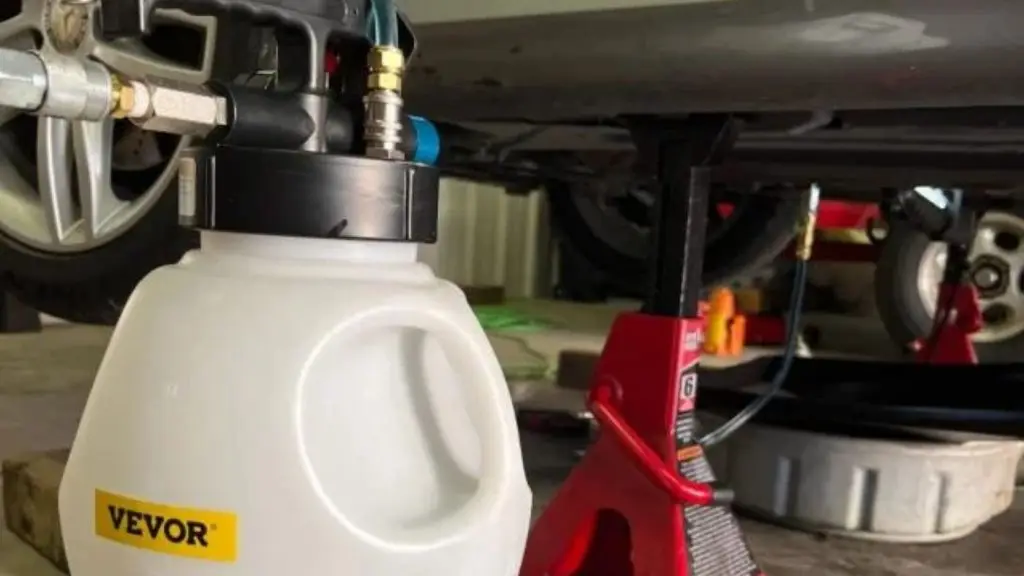
If you change oil often, air power pays off; if you change it twice a year, a manual unit is plenty. Frequency is the first filter, well before tank size or brand. How much automotive oil removal you do in a year tells you more than any spec sheet. The table in the oil pumps lineup pairs each habit with a pick.
| How Often | Pick | Why |
| Weekly or several cars | Pneumatic or dual-mode | Fast, repeatable |
| A few times a year | Manual vacuum | Cheap and simple |
| Occasional top-ups | Syringe | Small and precise |
| Mixed schedule | Dual-mode | Air when you have it |
What are the best oil extractors for frequent home oil changes?
For frequent changes, a pneumatic or dual-mode extractor wins because it pulls a vacuum in seconds with no hand pumping. A 9.5- to 15-liter tank also means fewer stops to empty it mid-job. A faster automotive fluid pump saves real time when every car oil change is one of many across a weekend. A 9.5-liter dual-mode extractor steps up for the family fleet, and heavier use belongs in proper shop equipment.
What are the best oil extractors for people who change oil infrequently?
If you change oil twice a year, a manual vacuum car oil extractor is the smart buy, low cost, no compressor, nothing to maintain. A 6.5-liter tank covers most cars in a single pull. Paying extra for air power you’ll rarely touch makes little sense, and a simple vehicle oil pump sits happily on a shelf for months. One easy car oil change each spring and fall is all this tool needs to justify itself.
What are the best oil extractors for DIY car owners in the US?
New to DIY oil changes? Simplicity and value matter more than a big tank. Look for a sealed canister, clear tube markings, and a hose long enough to reach the bottom of the pan. The picks below, drawn from the automotive tools range, suit first-timers and budget buyers.
| Buyer | Pick | Why |
| First-timer, simple | Manual 6.5 L vacuum | Few parts, hard to misuse |
| Best value | Dual-mode 6.5 L | Air and hand, one price |
| All-round DIY | Pneumatic/manual 9.5 L | Room to grow into |
| Tight budget | Syringe 1.5 L | Lowest-cost entry |
For US DIY car owners, a 6.5-liter dual-mode extractor hits the sweet spot, big enough for most cars, hand- or air-operated, and priced for a home garage. It finishes a full car oil change without a second emptying. A 6.5-liter pneumatic and manual fluid extractor is the model most home mechanics land on, since it doubles as a general vehicle oil pump for gear oil and coolant too.
Recommended For Your Project
Which oil extractors are top picks for first-time DIYers wanting simple operation?
First-timers do best with a manual vacuum extractor: pull the dipstick, drop the tube, pump, done. Fewer parts mean fewer ways to go wrong, and there’s no compressor to set up. A clearly marked 6.5-liter tank keeps a first car oil change clean, and the car oil suction builds with each stroke so you feel it working. A straightforward car oil pump like this teaches the method before you spend on air power.
Which oil extractors offer the best value for home use?
The best value is a dual-mode extractor, because you get both air and manual operation for close to the price of a manual-only unit. For home use, that flexibility beats buying a second tool later. A mid-size automotive oil pump also covers most automotive oil removal jobs on cars, bikes, and mowers alike. Compare tank sizes across the oil transfer pump category before you decide, since a slightly larger automotive fluid pump often costs little more.
How To Size and Choose A Car Oil Extractor
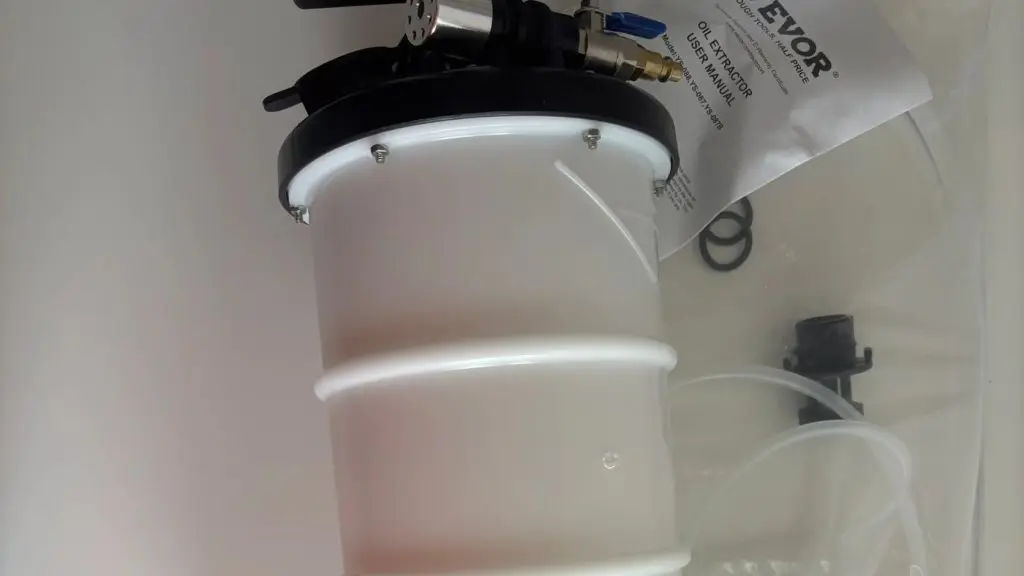
Two specs decide the rest: tank capacity and tube fit. Get a tank bigger than your car’s oil fill and a tube thin enough to reach the pan, and almost any extractor will do the job. The oil extractor selection spans every size below.
Match Tank Capacity To Your Car’s Oil Volume
Pick a tank a liter or two larger than your car’s oil capacity so you empty it once, not twice. Most cars hold 4 to 6 liters, so 6.5 liters is the common choice, while trucks and vans want more. Once the tank is full, a quick transfer into a sealed jug keeps disposal clean, and you won’t need a second transfer if the tank is sized right. Owners of bigger engines often choose a 9.5-liter manual extractor, so one car oil pump covers every vehicle they own.
| Vehicle | Oil Capacity | Suggested Tank |
| Motorcycle or mower | 0.5–2 L | 1.5 L syringe |
| Compact car | 3–4.5 L | 6.5 L |
| Sedan or SUV | 5–6 L | 6.5–9.5 L |
| Truck or van | 6–8 L | 9.5–15 L |
Check The Hose, Seal, And Tube Reach
Beyond size, three things separate a good car fluid extractor from a frustrating one: a tight tank seal, tube diameters that fit your dipstick, and a hose that reaches the pan floor. A weak seal turns any vehicle oil pump into slow, sputtering work and weakens the car oil suction you need. Match the thinnest tube to your dipstick channel for a near-dry pull, which also speeds the car oil transfer pump out afterward.
A good car fluid extractor primes fast too: strong car oil suction on the first strokes, steady automotive fluid pump action after, and a clean car oil transfer into your waste jug; the next car oil transfer just as quick. One well-sealed vehicle oil pump outlasts a cheap automotive oil pump every time. Some kits double as a filler, like an ATF refill and extractor kit, adding value for a car fluid extractor you’ll use on more than oil.
Conclusion
A car oil extractor turns the messiest home maintenance job into a clean, stand-up task you finish in minutes. Match the tank to your car’s oil volume, pick manual for the odd oil change or dual-mode for frequent ones, and check the seal and tube reach before you buy. For most home garages, a 6.5-liter car fluid extractor handles routine automotive oil removal with no jack and no crawling, and the same vehicle oil extractor doubles for other fluids when you need it.
FAQs
What are the most popular oil extractors sold in the US for home garages?
Mid-size vacuum extractors around 6.5 liters, in manual or dual-mode form. They fit the widest range of cars, cost less than shop units, and are easy for first-timers to use for routine oil changes.
Do I need a compressor for a car oil extractor?
Not for manual or dual-mode models. Hand pumping builds the vacuum on its own, so a manual car oil pump works anywhere. Only pure pneumatic units require a compressor, usually at 0.4 to 0.8 MPa.
How much oil does an extractor leave behind?
Usually a few ounces at most. Warm the engine first and push the tube to the bottom of the pan so the automotive fluid pump gets a near-complete drain. Older, sludgy engines may hold slightly more.
Can one extractor handle different car fluids?
Yes. Most work as an all-round automotive oil pump for gear oil, power steering fluid, coolant, and engine oil. Flush the hose between fluids so they don’t mix and taint the next job.
Is suction extraction safe for my engine?
Yes. The tube only draws fluid from the pan through the dipstick tube and touches no moving parts, so this automotive oil removal method is gentle. Many modern engines are even designed for top-side service.