Waking up after a large storm to discover your yard in ruins is a heartbreaking experience. Whether it was a strong wind or a lightning strike, storm damage cleanup is difficult work for any man. The goal is to restore your property to its original condition without causing any harm.
When dealing with a large mess, efficiency and the correct tools are your best friends. In the following article, you will discover that having high-quality equipment on hand is a complete game-changer for clearing blocked driveways rapidly.
Safety precautions before starting cleanup
Safety is the only way to guarantee that you complete the task undamaged; it’s not merely a recommendation. Never begin a tree storm damage cleanup without the appropriate safety equipment. Put on steel-toed boots, eye protection, and heavy-duty gloves as protective gear.
Here are some elements to look out for:
- Power Lines: Stop right away if you notice a downed wire. Assume that every wire is hazardous and lives.
- Buddy System: Never handle a major cleanup by yourself. If something goes wrong, have someone close by who can contact you for assistance.
- Hydration: It takes a lot of energy to clear trash. Drink lots of water and take regular rests.
The National Safety Council claims that hurry and exhaustion are major causes of post-storm injuries. Take your time and put your health before a tidy yard.
Assess property damage after a storm
You must take a step back and consider the wider picture before grabbing a single tool. Entering a debris field carelessly is a surefire way to go wrong. Remain composed and perceptive.
Before you approach, look for structural damage to your house, shed, or fences. Keep your distance until an expert can examine any sagging roofs or broken supports.
Before looking down, look up. Known as “widow-makers,” hanging branches can fall at any time. Early detection of these risks will help you avoid walking directly beneath them during storm cleanup.
Common types of storm damage
Every storm has a different impact on your property. Knowing what you are working with makes it easy to choose the right tools for the next storm cleanup jobs.
- Wind Damage: Usually, wind causes branches to fall, fences to fall, and shingles to break off. This is mostly a manual, labour-intensive “pick up and haul” type of activity that calls for a strong wheelbarrow and a rake.
- Water Damage: Soil erosion and weakened tree roots are caused by heavy rains. If the ground is saturated and unstable later in the day, even seemingly healthy trees may be more prone to fall.
- Debris Accumulation: Inorganic and organic waste are frequently left behind by storms. Effectively clearing them typically calls for a heavy-duty chainsaw for larger fallen limbs and a high-velocity leaf blower for smaller items.
Storm damage cleanup steps for homeowners
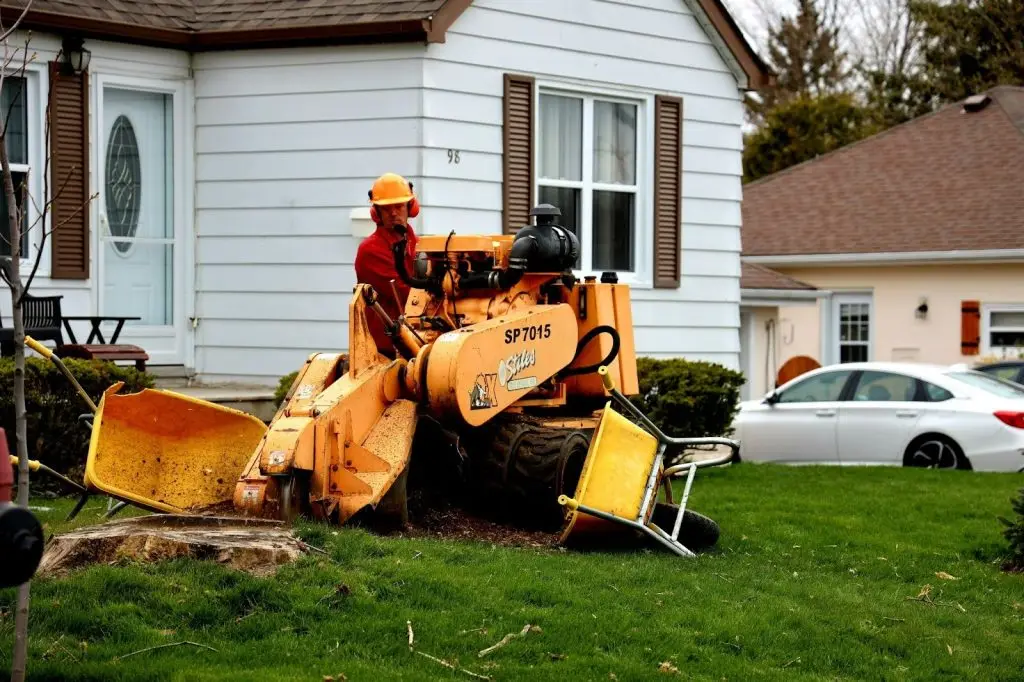
Establish a defined course of action first. Clearing the driveway and the main paths leading to your home should be your top concern. This guarantees that you can be reached by emergency vehicles or assistance. Use these strategic actions to recover your property once access is unobstructed.
1. Remove any structural obstacles and large debris.
Keep an eye out for any debris blocking windows or coming into contact with your house. This protects the building from further damage brought on by rubbing branches or trapped dampness. Work from the outside in at all times; don’t try the middle of the yard until you have a clear perimeter.
- Tools: Contractor garbage bags, a wheelbarrow, a sturdy rake, and a shovel.
- Take action: Gather fence panels, branches, and roofing sections.
- Sorting: To keep work areas free, stack debris into designated piles (wood, metal, and household trash) and move them right away to the curb or dumpster.
2. Handle heavy limbs and fallen trees
Dealing with huge trees is the most challenging part of any storm damage cleanup since they are heavy, unpredictable, and under stress. You need to have a clear plan before you start chopping. To view the main trunk and the distribution of the weight, remove all the fluff first, including the leaves and little branches.
- When a chainsaw is required: Any trunk that is thicker than a few inches cannot be cut with a hand saw. You need the brute power of a motor for large fallen oaks.
- Pro tip: You may cut fast and neatly without the motor being bogged down when you use a professional-grade chainsaw.
- Safe handling: Cutting should never be done higher than shoulder height for safety. “Spring-poles” are tight branches that could snap back and hit you, so be careful. Never stand directly behind your cut; instead, always stand to the side of it.
3. Vacuum and pump standing water
Weakened tree roots and structural erosion are two consequences of water damage. You must act quickly to save the earth from turning into a swamp if water has gotten into your basement, shed, or garage.
- Tools: Heavy-duty squeegee, a wet/dry shop vacuum, and a utility pump.
- Action: First, remove the majority of standing water with a submersible utility pump.
- Detail: Use a squeegee to push the residual puddles in the direction of floor drains or exits, and the shop vacuum for any leftover puddles.
4. Destroy damaged materials
You have to get rid of “thirsty” things that retain moisture if the storm gets into your house. By doing this, structural failure and long-term decay are avoided.
- Tools: Hammer, utility knife, and pry bar.
- Action: Cut the drywall 12 to 18 inches above the water line.
- Disposal: Remove swollen baseboards, wrap up damaged carpet and padding, and remove saturated insulation. To reduce the humidity in the space, bag and dump these right away.
5. Eliminate Silt, Sludge, and Mud
Storm surges frequently leave behind thick muck that, when it dries, turns into concrete. While it’s still wet, handling it is considerably simpler.
- Tools: Shop-vac, garden hose, and flat spade.
- Action: Fill heavy-duty sacks with the thickest mud.
- Cleanup: Vacuum up the soiled water after using your hose to wash any leftover residue in the direction of the doors.
6. Clean storm damage and sanitise every surface
When the muck is removed, microorganisms remain. To make sure the area is safe to live in once again, you must thoroughly clean any exposed flooring and structure.
- Tools: bucket, disinfectant, and scrub brush.
- Action: Combine a disinfection solution (one cup of bleach for every gallon of water).
- Focus: Give concrete slabs, floor studs, and the cabinet and frame an inside thorough cleaning.
7. Completely dry the structure
Here, patience is essential. The wood may still contain moisture even if it appears dry.
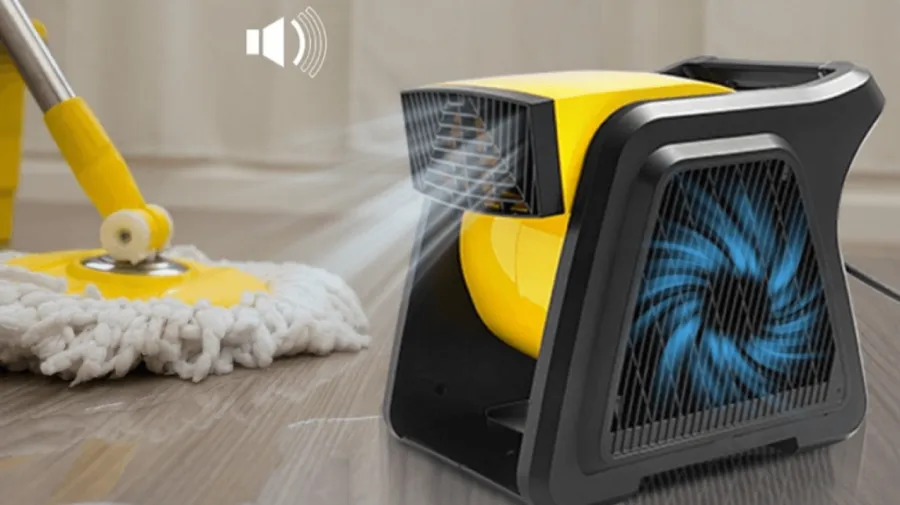
- Tools: A large-capacity dehumidifier and box fans.
- Action: To improve evaporation, direct fans across damp walls and floors rather than straight at them.
- Duration: Keep all cabinet doors open and run a commercial-grade dehumidifier continuously. Depending on the weather, drying typically takes two to five days.
8. Restore the landscape and treat for mould.
Protection is the last phase. The garden has to be fixed after the big things are taken out. Shrubs with jagged stems should have their stems trimmed back; this will keep pests out and recover more quickly than a tear.
- Tools: HVAC filters, an adaptable sprayer, and an antimicrobial spray.
- Take action: Apply an antibacterial solution to all exposed frames.
- Landscape: To help stressed plants regain their vigour and become green again, use a reliable backpack sprayer to administer a mild fungicide or fertiliser.
What to do before storm damage cleanup with its debris
Your first task after the storm is a safety assessment, not cleanup. Make sure there are no downed power lines or structural issues that could endanger you by walking your property line before picking up a single branch.
Evaluate and Record
Before moving anything, take pictures of it. For insurance, this is essential. Stop right away and dial 911 or your local utility company if a tree has fallen on your home or power lines.
Call in the Heavy Hitters
Get in touch with local public works or city hall if the debris is too big for your equipment or is obstructing public highways. After an emergency is declared, several towns provide free pick-up services or designated storm debris drop-off locations.
Handle “Spring-Poles” Carefully
A fallen limb is under extreme tension if it is bent under the weight of another tree. These can snap back with deadly power if you are not familiar with a chainsaw. For anything under stress, give a professional tree service a call.
Consult the fire department
Never presume you can build a burn pile without first consulting the fire department. Check for “No Burn” orders by giving the fire department a call. Burning damp wood is risky because it burns erratically and produces a lot of dense smoke.
Repurpose for the Hearth
Cut smaller, drier sticks and hardwood limbs into manageable lengths, then stack them in a dry place. They will be ideal for your outdoor fire pit or fireplace after a season.
Establish a Backyard Habitat
If you have brush and tiny twigs, think about piling them in a remote area of your land. Backyard birds and small wildlife can use this “brush pile” as a natural haven to construct nests and find shelter during the winter.
Recycle into Mulch
You may turn those branches into premium mulch if you have access to a wood chipper. You may transform a yard catastrophe into a free resource for your garden beds by using a heavy-duty wood chipper.
Mistakes to avoid during storm damage cleanup
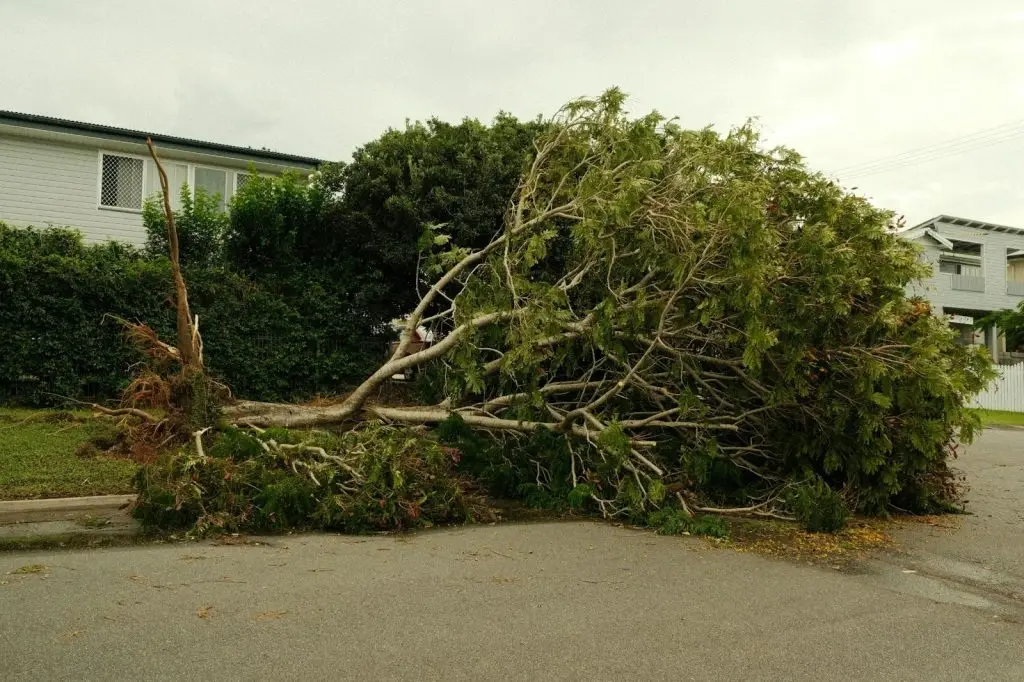
Avoid going to the hospital due to a storm cleanup. To guarantee that the task is completed securely and correctly, steer clear of these typical pitfalls:
- Overestimating your strength: Do not try to manhandle a log if it is too heavy for one person.
- Ignoring hidden roof damage: Never assume your roof is fine just because there isn’t a huge hole; instead, utilise a mechanical advantage like a winch or a long lever to move big parts without hurting your back. Slow-moving leaks can result from even a tiny fallen branch breaking the waterproof seal or cracking the shingles.
- Risking a Fall: While standing securely on the ground, use binoculars to examine your roof. It is risky and unstable to climb a ladder on soft, moist earth.
- Using a chainsaw on a ladder: One of the main causes of serious accidents is using a chainsaw while standing on a ladder. Keep both feet firmly planted on the ground at all times. If you are unable to reach a branch from the floor, use a strong pole saw or hire an expert.
- Rushing the Assessment: Homeowners frequently overlook leaning trees or loose hanging branches in their rush to clear walkways. Before you begin working on the ground, take five minutes to gaze up at the canopy.
FAQs
Is it safe to do storm damage cleanup myself?
Yes, as long as you have the appropriate equipment, it is completely safe for tiny to medium-sized debris. However, contact the experts if large trees are leaning on your home or downed power lines. The cost of hiring a contractor is not as important as your safety.
When should I use a gas chainsaw for cleanup?
The finest tool for heavy-duty tree storm damage cleanup is a gas chainsaw. When logs or limbs are thicker than three inches, use them. Without the inconvenience of a power cord, it offers the speed and power required to swiftly clear big areas.
What should I remove first after a storm?
Prioritise access at all times. First, make sure your driveway and the walks leading to your doors are clear. Next, get rid of anything that is obstructing your windows or leaning against your house. The final stage in your approach should always be to clear the middle of the yard.
Can storm damage cleanup wait?
Small debris may wait, but anything that comes into contact with your home needs to be cleaned up right away. Mould and rot can grow quickly when moisture is trapped against your roof or siding. Additionally, remove any debris obstructing drainage to avoid flooding during subsequent rainy seasons.
How long does storm damage cleanup usually take?
The initial clearing should take a whole weekend for an ordinary yard. A few more weeks may be needed for the fine-tuning, such as raking and replanting. You may quickly cut your work time in half if you have high-quality power tools.
Conclusion
Although managing storm damage cleanup is never enjoyable, it is a necessary aspect of owning a home. You can restore your property by maintaining composure, putting your own safety first, and employing the appropriate tools.
Don’t forget to take things one step at a time, and don’t be scared to seek assistance if the task becomes too difficult. You’ll be happy you did it correctly after the debris is gone and the sun is out. Let’s clear that yard now!