Multiple trips from the car just to get the groceries in, boxes piling up in the garage with no easy way to move them, or bulky supplies slowing you down at work. If that sounds like something you’ve been facing every day, foldable utility carts are just the solution for you.
Heavy-duty plastic rolling carts can offer the best comfort and make time-consuming tasks quick and effortless. When done, just fold them neatly and you’re done. But how do you choose the perfect cart that meets your needs? This blog will discuss all that you should know and keep in mind before you make your buying decision.
But first, what are foldable utility carts?
These are portable, collapsible carts that can be used to move, store, or organize items with ease. When not in use, they can be neatly tucked away and stored somewhere safe. Foldable utility carts can also be used to haul groceries, carry gardening tools, office supplies, or heavy gear in workshops. Given their practical and lightweight characteristics, they are the number one choice for people.
Types:
- Folding Grocery Carts
- Heavy-duty Utility Carts
- Garden & Outdoor Carts
- Platform or Flatbed Carts
- Collapsible Wagons
What you should know?
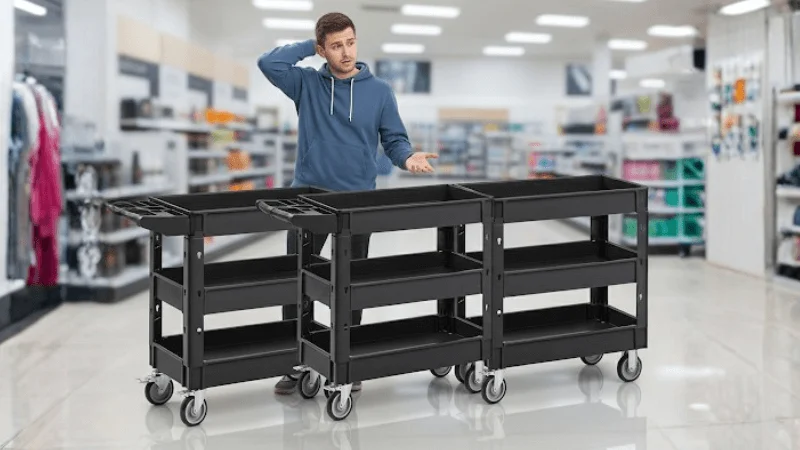
Before you buy the first foldable utility cart you see online, know that the right cart isn’t just “any cart.” It would be the one that matches your load requirements, space, and the kind of application you would use it for, in addition to your lifestyle. While most people only consider the size and price, the real value of a cart comes down to some overlooked details like:
Weight Capacity and Load Requirements
The weight capacity isn’t just a number on the box. It can be the difference between a cart that lasts for years and another that breaks down after just a few uses. Before you buy, think about the heaviest loads you’ll be moving- water bottles, power tools, groceries, or something else.
A majority of people underestimate the number of things they’ll actually carry and then wonder why their cart starts wobbling or cracking after a few uses. A general best practice is looking for utility carts that are rated at least 25-30% above your typical load. This acts as a safety margin for occasional overloading and uneven weight distribution.
Material Selection
Plastic usually holds a bad reputation, but truth be told, modern high-density plastic outperforms cheaper metal options in many situations. Whether it is about rust, dents, or moisture, plastic can handle it all like a pro. The only thing you need to take care of is plastic quality. If you can distinguish well between thin, brittle, and thick plastic, you can find just the right foldable utility cart for your use.
Metal frames on the other hand, whether steel or aluminum, offer maximum strength for heavy loads. They are durable enough, with the only downsides being additional weight and rust buildup if and when the coating chips. Certain materials, like aluminum, may offer decent strength and may be lighter, but they cost more.
So, all in all, the idea is to choose something that sustains through the kind of application needs you have.
Wheels and Their Design
If you are looking for a cart that you can move across your space easily, a heavy duty plastic rolling cart with wheels is the one you should look for. But, even with these options, you should consider the kind of wheels there are.
The size of the wheels affects how the cart handles obstacles. Larger wheels that are 4-5 inches in diameter roll over cracks and uneven surfaces easily. Whereas smaller wheels may struggle in such environments. If you are moving between indoor and outdoor spaces constantly, a larger wheel size is often recommended.
Another variation you may find can be in the form of swivel and fixed wheels. Swivel wheels let the cart spin and maneuver through tight spaces conveniently. If you are looking for even more balance and ease while moving the cart, look for utility carts with swivel wheels and locks.In terms of wheel material, you may have to choose between hard plastic wheels and rubber or polyurethane wheels. While hard rubber lasts longer, it sounds terrible on hard floors and is not so good at shock-absorption. Rubber/Polyurethane wheels, on the other hand, are quieter, protect floors, and can absorb shock more effectively.
Folding Mechanism and Storage Footprint
A folding utility cart can be said to deliver value if the folding and unfolding don’t require much effort. The best folding mechanisms work with one hand and avoid pinching fingers. Carts with push-button mechanisms are preferred over those with complex latch systems. Before you buy, test the folding and unfolding action, if possible. If it feels solid, it’s good to go; if loose, wobbly, or rickety, it is poorly constructed.
In addition to construction, when folded, you should also see if it is stable when opened. Some carts use simple friction to stay open, while others have positive locks. The problem with a simple friction-based system is that it may sometimes collapse when exposed to a heavy load, which is not at all desirable when you are halfway up the stairs. So, looking for models with locks to hold the parts in place is a wise decision.Other than folding and stability, your storage space must also be measured. A foldable utility cart that folds to 4 inches thick still won’t fit in a narrow closet. While some designs fold completely flat, others may still retain a compact upright position. Neither one is inherently better, and it depends on where you are going to store it.
Handle Comfort and Adjustability
The only area that you’ll interact with the most, after the racks, is the handle. You will find yourself gripping the cart handle often, so comfort matters more than you think. The handle height and grip material are two things you should take care of when looking for a cart with a comfortable handle.
While handle height affects your posture and defines how much effort is needed for pulling, grip material and shape prevent hand fatigue. A general handle height of 35-40 inches works just fine for average adults, but if you can get a model with adjustable height, it can be even more convenient. When it comes to grip material, soft rubber or foam padding feels much more comfortable than bare plastic or metal. Adding to it, ergonomic contours let your hands rest naturally instead of clenching the handle tightly. These details might not seem important at first, but if you are to use the cart for extended periods, these details become surprisingly important.
You will also find handles that telescope or fold down completely for better storage. While this may add mechanical complexity, it becomes essential if you have space constraints. However, ensure that the cart has a locking mechanism that holds firm.
Additional Features to Add Value
Basic foldable utility carts can only haul stuff from one point to another. Look for some extra features that add more value, like side panels or railings, built-in compartments, hooks, all-terrain wheels, type of plastic used for construction, like UV-resistant or weather-resistant. etc. Even if you choose a metal cart, see if the material used can sustain for a long time without you having to invest in maintenance frequently.
Price Ranges and What They Mean
Understanding the general price tiers can help set realistic expectations. Budget options like those falling between $30-$50 can handle light and occasional use. They can work fine for simple tasks with basic plastic components and limited-time warranties. Mid-range options, in the $50-$100 price bracket, make sense if you are in need of a cart that balances quality and value. You can find better materials, smoother and sturdier wheels, and some thoughtful design additions. This range is perfect for home use without having to shell out heavy bucks. One of the best recommendations in this category is the VEVOR Foldable Utility Service Cart. Premium foldable utility carts, usually falling in the $100-$200 price range, offer superior commercial-grade construction, specialized features, and extended warranties. They are usually built for daily heavy use in demanding environments. Unless your needs are such that they require a heavy investment, mid-range options typically work best for most applications.
The Final Word
Now that you know what things to look for and consider in your foldable utility cart, you will be able to sort through the sea of options. Start by listing your top three uses you need the cart for. This will clarify what features matter most to you and which are nice but unnecessary.
In addition, ensure that you check the manufacturer’s reputation and customer reviews critically. Look for what existing customers are saying and feeling about the product. If there are any complaints reported, how are they handled by the brand? Responsive customer service indicates that the brand stands behind its products.
Finally, consider future applications beyond the immediate need. Choose a versatile option that can handle 80% of potential tasks without being replaced or modified. Taking care of these things can pay dividends later.
Frequently Asked Questions
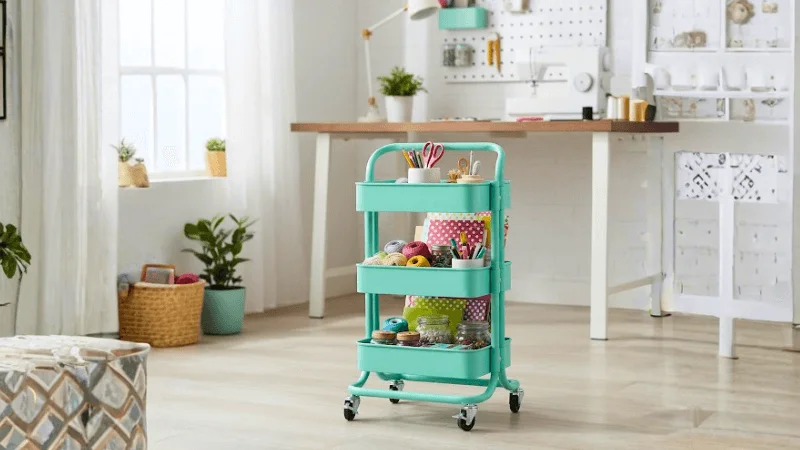
What is the purpose of a utility cart?
A utility cart is designed to make moving, organizing, and transporting items easier and more convenient. Whether you need to carry groceries, shift tools in your workshop, stock office supplies, or move boxes around your house, these carts can help take the strain off your back. Foldable utility cart options are space-saving, so they make more sense to own if you have limited space at home.
How much weight can a utility cart hold?
The weight capacity of a cart depends on its type and construction quality. Where light-duty carts are ideal for groceries and general household chores, medium-duty and heavy-duty foldable utility carts work best for workshops, offices, and warehouses, respectively. When shopping for a utility cart, make sure you choose a cart that holds a slightly higher weight capacity than your estimated load. This way, it will last longer and can sustain occasional heavy loads as well.
What is the difference between a cart and a trolley?
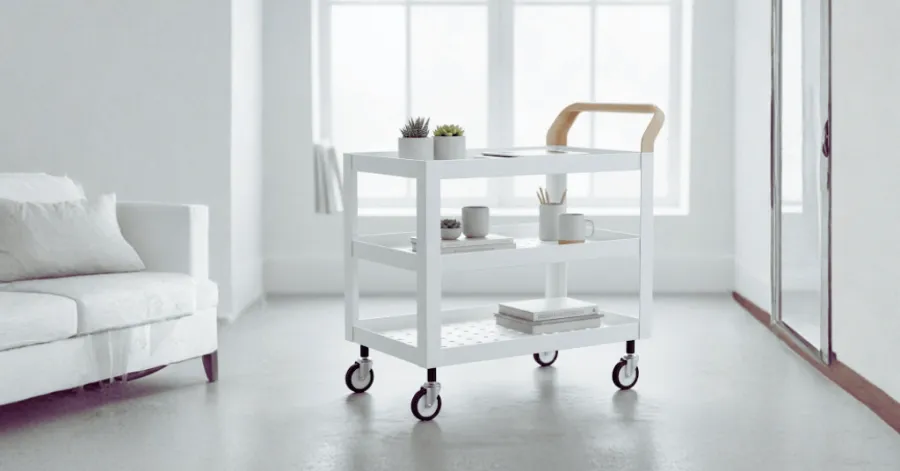
The terms ‘cart’ and ‘trolley’ are often used interchangeably, but there lies a subtle difference. While cart is a more general term, meaning it can be flat, enclosed, foldable, or heavy-duty and can be used for all sorts of tasks, a trolley refers to a specific style of cart, with multiple shelves or compartments.
Can utility carts work on stairs?
Standard utility carts cannot be used on stairs. They need to be lifted. Trying to drag them up and down can damage the wheels and the frame as well. If you have an application that involves moving up and down the stairs, you can explore stair-climbing carts with tri-wheel or rotating wheel setups. Such setups are built to roll smoothly over stairs without tipping.
How do I maintain my utility cart?
Caring for your utility cart goes a long way in ensuring your cart rolls smoothly. Make sure you clean your cart regularly, especially if it is used outdoors. Dust, dirt, and other debris can accumulate over time and may cause issues with efficiency. Remove the debris around the movable parts like wheels, and lubricate them to avoid stiffness. Lubrication is also needed at the joints and folding mechanisms to keep them rust-free and ensure smooth movement.