
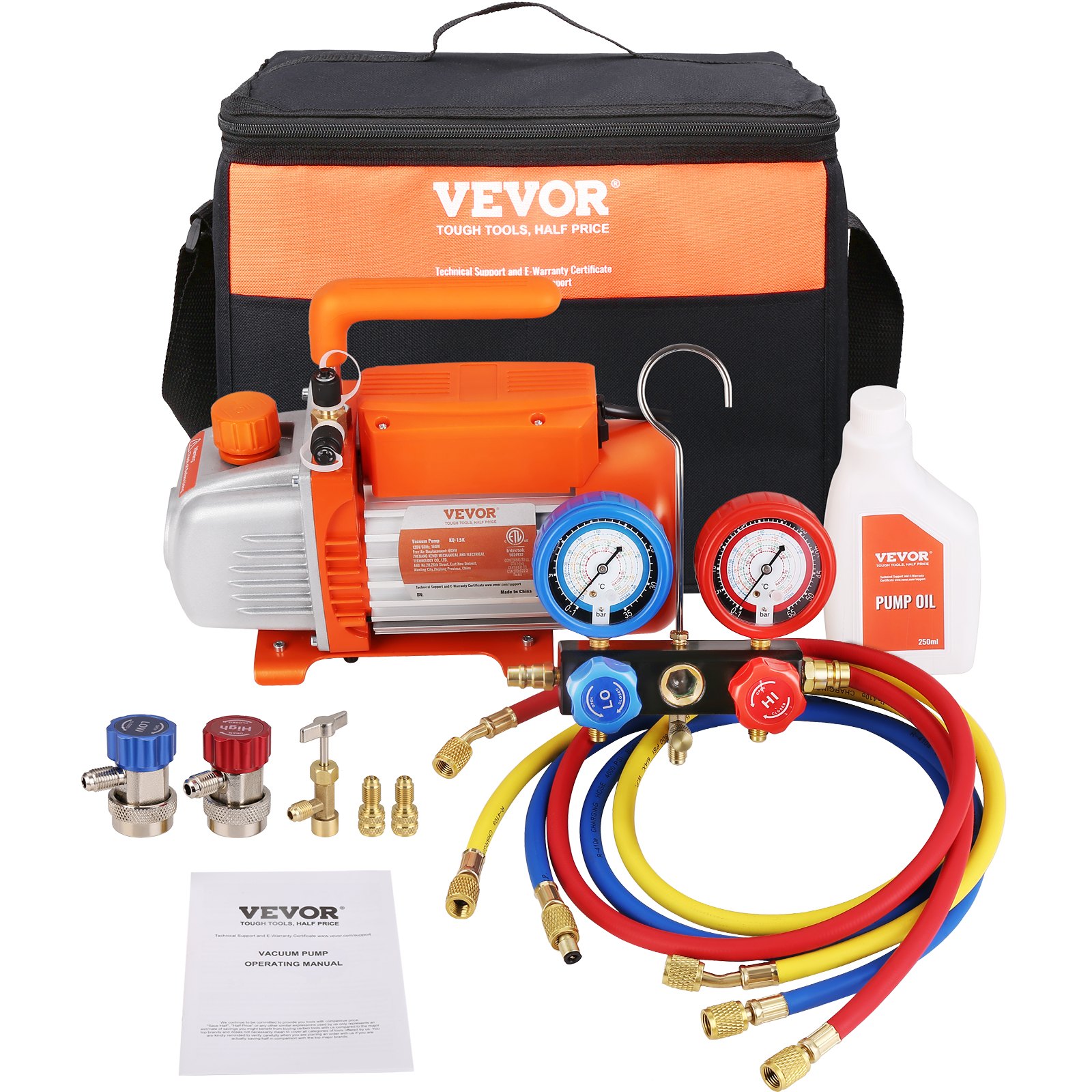
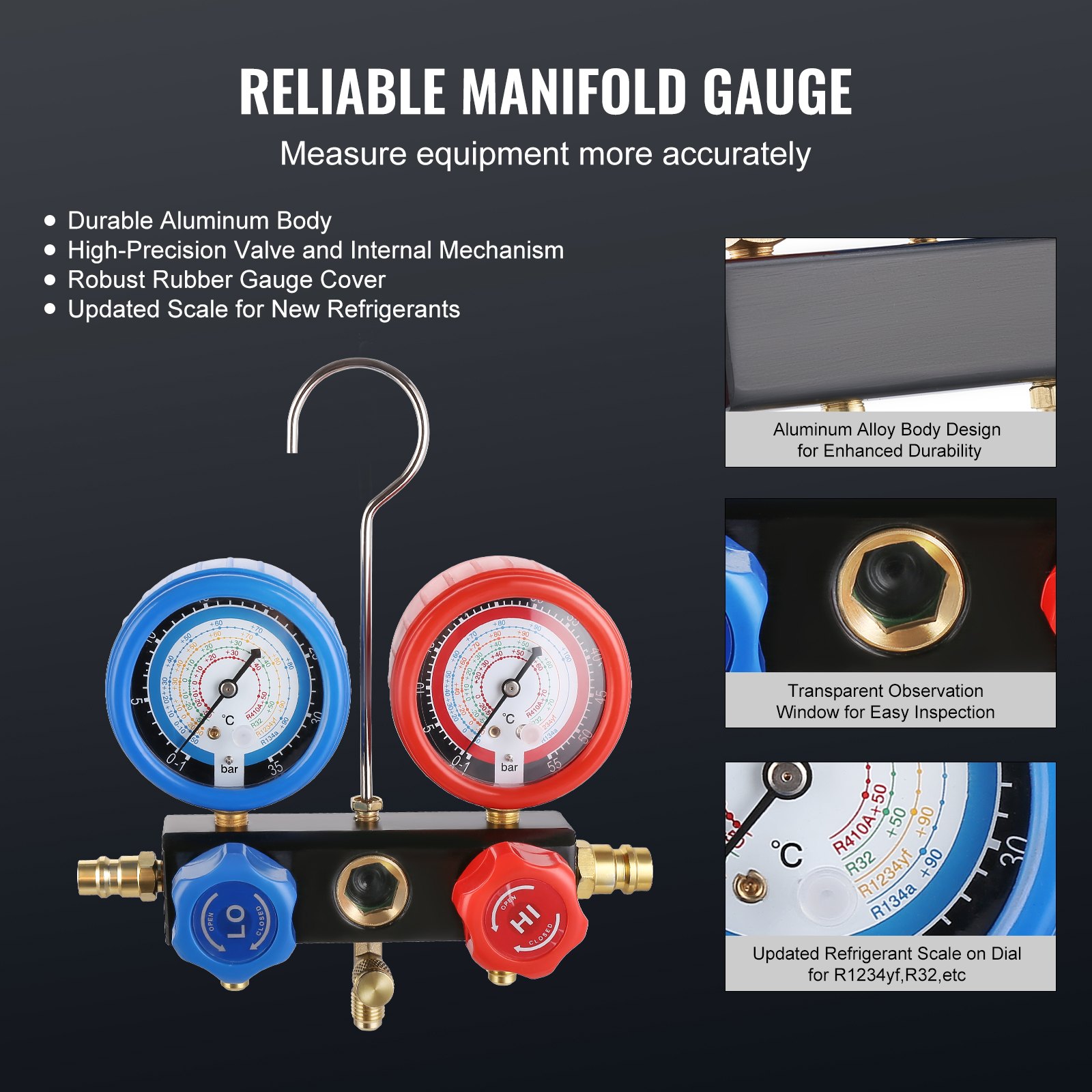
Unlock the full potential of your VEVOR 1/4 HP 4.5 CFM AC Vacuum Pump and Gauge Set with our comprehensive product manual download. This detailed guide is designed to help you easily set up, troubleshoot, and optimize your single-stage rotary vane HVAC air vacuum pump.
Whether you’re a seasoned professional or a first-time user, our manual provides step-by-step instructions and valuable insights to ensure you get the most out of your A/C refrigerant kit manifold gauge set.
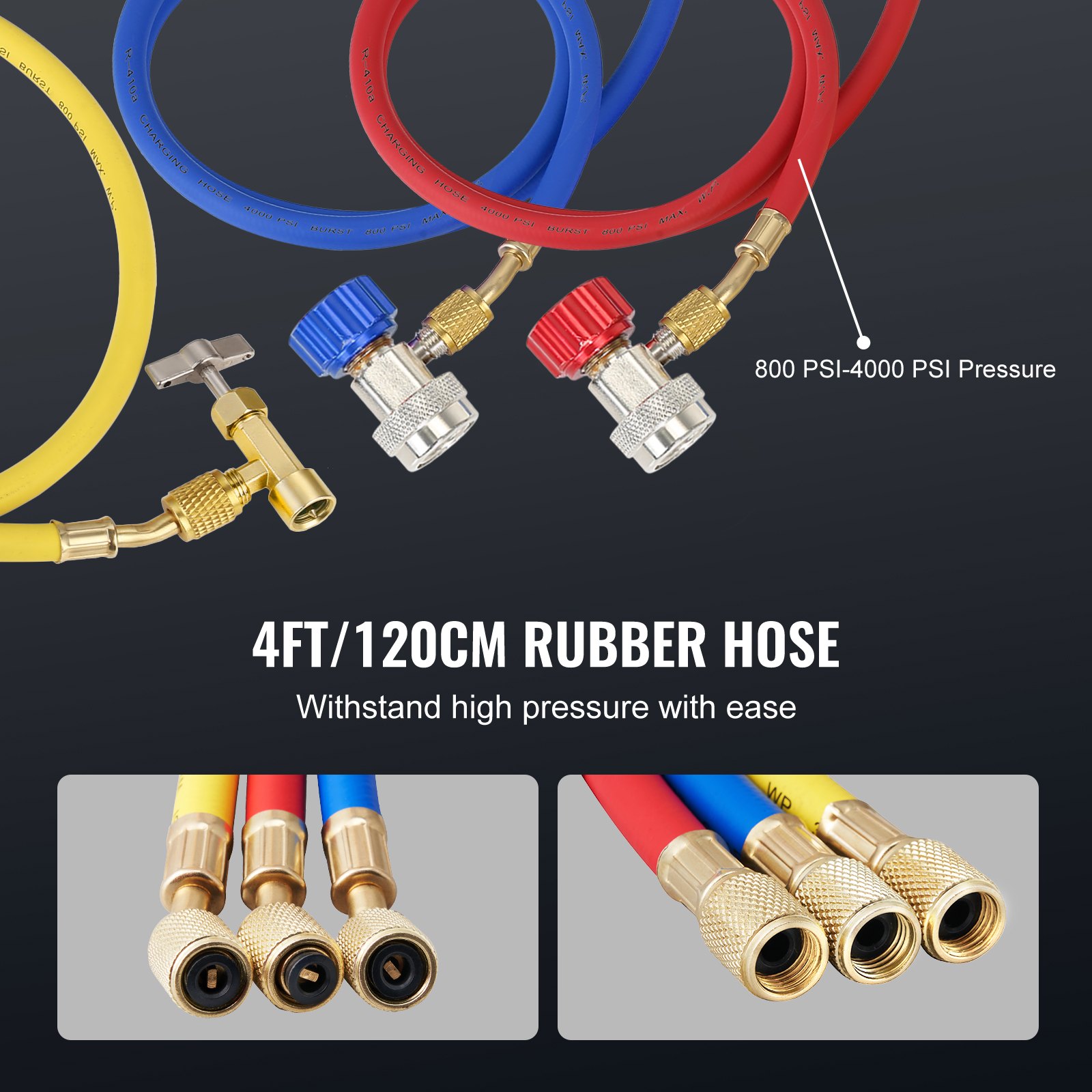
This manual includes easy-to-understand diagrams and clear explanations, from initial assembly to routine maintenance. It carries tips for using the three-color hose carry bag and handling refrigerants like R134a and R410a. Download now and take the guesswork out of your HVAC projects.
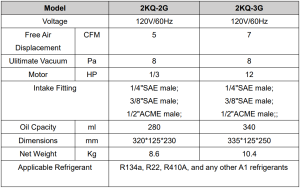
MODEL: 2KQ-2G/2KQ-3G
Introduction
Welcome to the user manual for your vacuum pump. This AC vacuum pump is a versatile tool that can be used in various applications. Particularly well-suited for tasks like HVAC vacuuming, epoxy and siliconed degassing, wood stabilization, and creating milking machines. This pump is also commonly used in medical appliances, printing machinery, vacuum packing, gas analysis, and hot-forming plastics. Its robust and reliable performance makes it a valuable tool for professionals and DIY enthusiasts.
The vacuum pump creates a vacuum or negative pressure, which is used to remove air and other gases from an enclosed space. This process can be used for a range of purposes, including reducing air bubbles in resins or other liquids, evacuating HVAC systems, stabilizing wood by removing air from its cells, and many others. This user manual is designed to help you understand how to operate and maintain your vacuum pump effectively and safely.
We will explain the pump’s key features and components and provide important safety guidelines to help you avoid potential hazards and ensure the proper handling of your vacuum pump. Please read this user manual carefully before operating your vacuum pump. With proper use and maintenance, your vacuum pump can provide years of reliable service and help you achieve your desired results.
If you have any questions or concerns about operating your vacuum pump, please consult this manual or contact our customer support team for assistance.
AC Vacuum Pump and Gauge Set Safety Precautions
Warning about potential hazards and how to avoid them.
Your vacuum pump can pose potential hazards if it is not used correctly. The most common hazards include electrical shock, fire, or explosion due to pumping flammable, explosive, or poisonous gases or gases that can corrode metals and exert chemical charges. To avoid these hazards, always read and follow the instructions in this manual carefully before using your vacuum pump.
Instructions on how to handle the vacuum pump safely
To ensure the safe handling of your vacuum pump, please follow these guidelines:
- Never operate the pump without oil, which can damage the pump and create potential hazards.
- The temperature of the pumped gas should not exceed 80 °C, and the environmental temperature should be around 5°Cto 60°C. This will help prevent damage to the pump and ensure safe operation.
- Do not use the vacuum pump as a compression pump or conveyor pump, as this can cause damage to the pump and create potential hazards.
- The pump’s operating voltage is between 192 and 248V, or 50Hz. Use a grounded outlet to prevent electrical shock.
- When unplugging the pump, pull the plug. Do not unplug the unit by pulling on the wire, as this can cause damage to the cord and create potential hazards.
- Keep the electrical cord free from all shop equipment, and do not let the pump hang by the power cord to avoid damage to the cord and prevent potential hazards.
- Please do not use a damaged plug or outlet, as it can cause an electrical shock or fire.
- Do not plug or unplug the unit with wet hands, as this can cause an electrical shock.
- Do not plug the unit in, unplug it, or use the switch if flammable or explosive gases are present. Always unplug the unit before disassembling it to avoid potential hazards.
Guidelines for handling hazardous materials
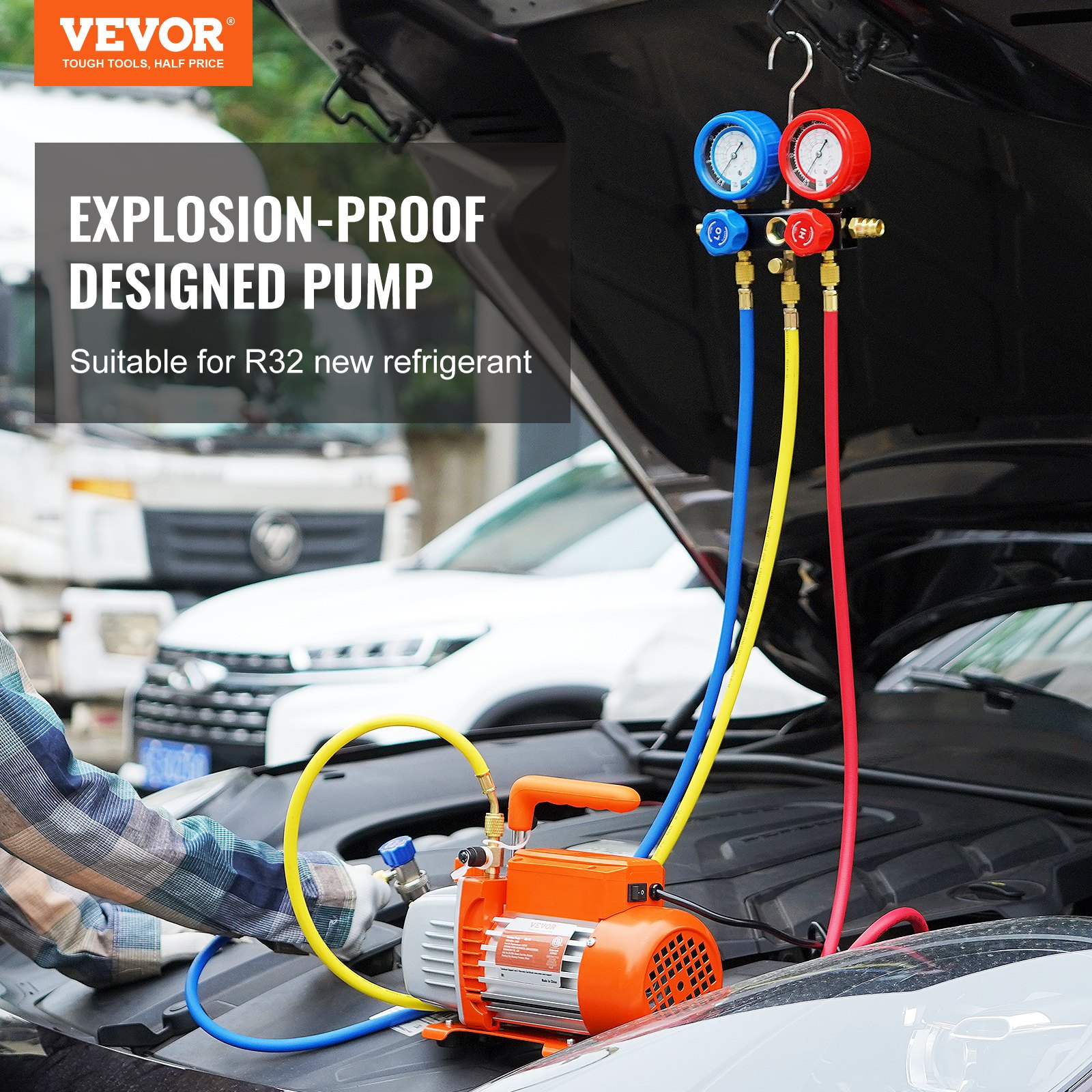
Your vacuum pump should not be used to pump flammable, explosive, or poisonous gases or gases that can corrode metals and exert chemical charges.
Additionally, do not pump gas containing dust or moisture. If you need to handle hazardous materials, use proper personal protective equipment and follow all guidelines for safe handling and disposal.
Getting Started
Introducing the key features of the pump
- Dual-stage Rotary Vane Vacuum Pump with Gas Ballast:
The vacuum pump features a dual-stage rotary vane design with a gas ballast. This feature reduces machine moisture corrosion and extends its life and oil lifespan.
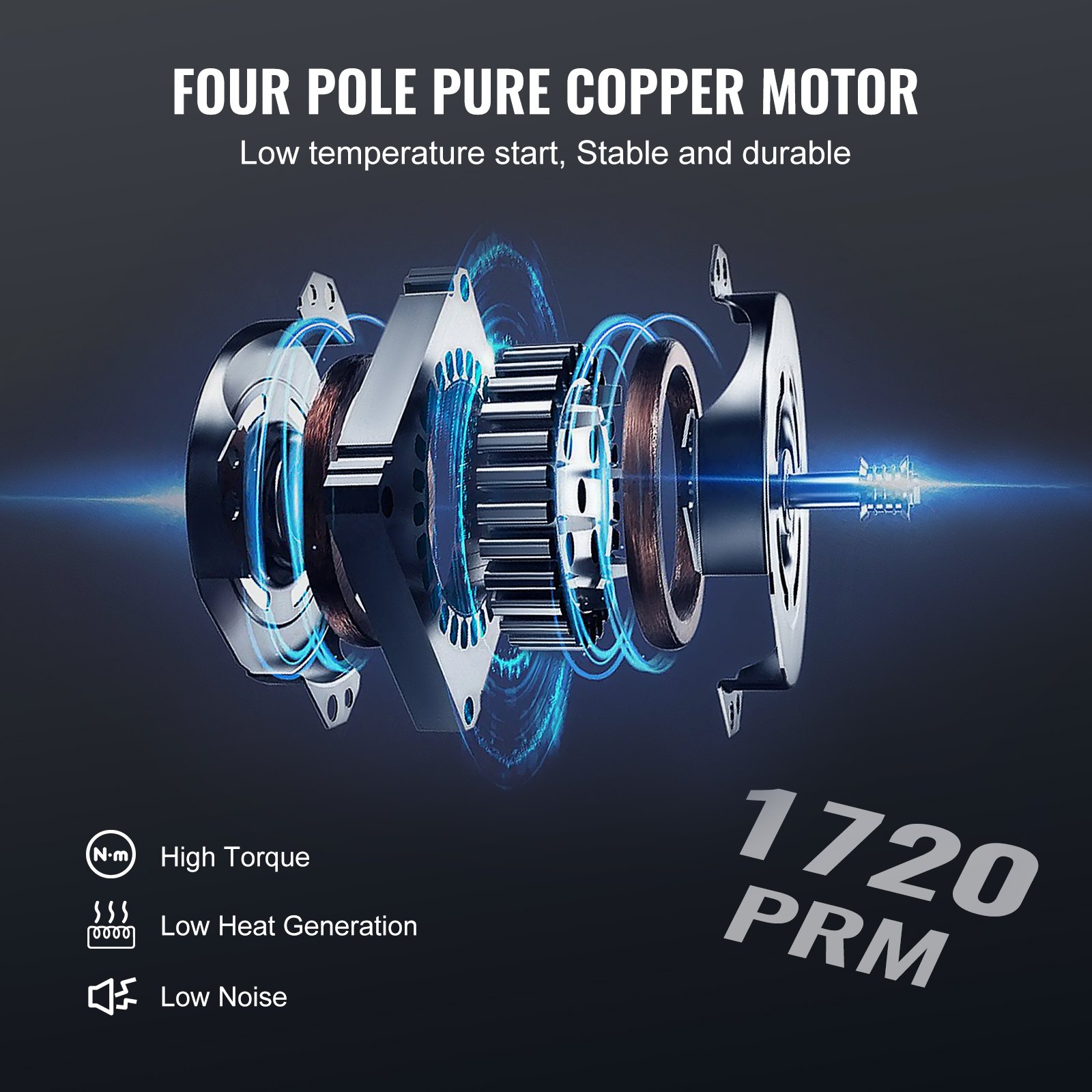
- Copper Coil, Four-Pole Motor:
The pump has a copper coil and a four-pole motor, which provides bigger torque for better starting and produces less heat, making it more durable.
- Die-Cut Aluminum Body and Ventilation Fan:
The vacuum pump features a die-cut aluminum body and a ventilation fan, which allows for easy heat dissipation and guarantees its performance stability.
- Anti-Flow Design:
The vacuum pump is designed with an auto anti-backflow valve and a manual ball valve, which prevent backflow and allow for control of the vacuum, preventing potential damage to the equipment.
Package Contents and Specification
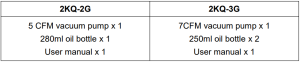
Package List
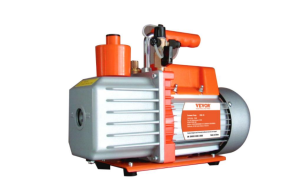
Explanation of the Vacuum Pump’s Components
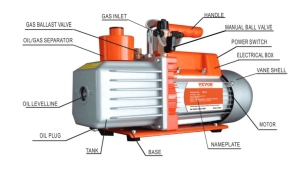
Steps for Setting up the Vacuum Pump
Following these steps will help you correctly set up your vacuum pump and ensure its safe and efficient operation.
- Before use, remove the oil filling port/oil gas separator and fill it with the recommended vacuum pump oil. Check the oil level before use to ensure it’s not lower than the oil-level line. Do not run the pump with a low oil level.
- Connect the container to be pumped to the gas inlet using a short, sealed hose free of dust, dirt, and heavy condensation. Check for leaks before operating the pump.
- If your vacuum pump comes with an exhaust cap, remove it.
- Plug in the power supply and turn on the switch.
- After use, unplug the vacuum pump, remove the connecting hoses, and cover the exhaust cap (if it has one) to prevent oil spills. Also, cover the oil plug to keep the oil clean and prevent dirt from entering the vacuum pump.
Installation and Maintenance of Vacuum Pump
Installation
- To ensure the proper functioning of the AC vacuum pump and gauge set, follow these installation guidelines:
- The pump should be positioned horizontally and in a dry, ventilated area free of dust and other contaminants.
- Maintain a clearance of at least 10cm (4 inches) around the pump to ensure proper airflow.
- If you are permanently mounting the pump, removetherubberpadsfrom the bottom of the base, and use the existing threadedholestomount the unit with ST4.2 screws.
- When permanently mounting the pump, be sure to maintain proper clearances, especially at the air intake at the end of the vaneshell.
- If a special electromagnetic valve is needed, it can be installed at the gas inlet.
Connecting the vacuum pump to the system being evacuated
Following these guidelines and steps, you can effectively control the vacuum pressure and safely connect the vacuum pump to the system being evacuated.
- Identify the gas inlet on the vacuum pump and the gas outlet on the system being evacuated.
- Use a short, sealed hose to connect the gas inlet on the vacuum pump to the gas outlet on the system being evacuated. Make sure the hose is free of dust, dirt, and heavy condensation.
- Check for any leaks in the connection before starting the pump.
Maintenance
Proper maintenance of the vacuum pump is essential to ensure its optimal performance. Here are some maintenance guidelines:
Keep the pump clean and free from foreign matter. Keep the oil filled to the oil level, and never let the pump run without oil.
- Keep the oil clean. If the oil becomes dirty, muddy, or water or other volatile substances get in, it will affect the pump’s performance, and the oil should be replaced. To replace the oil, start the pump and run it for about 30 minutes to thin it. Then stop the pump and drain the oil from the oil drain plug. Open the gas inlet and run the pump for 1-2 minutes while adding a small quantity of clean oil to the gas inlet. This is to replace the residual oil from the inside of the pump. After ensuring that the pump is clean, put the drain plugbackinandfillthe clean pump oil from the gas inlet to the oil level.
- o store the pump when not in use for long periods of time, covertheoil cap and exhaust cap (if applicable) and store it inadryplace.
- Repair of the pump should only be done by a qualified service technician.
Troubleshooting Guide
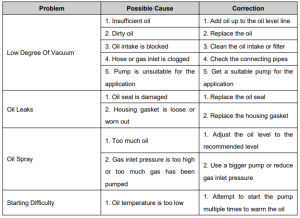
AC Vacuum Pump and Gauge Set Exploded Diagram
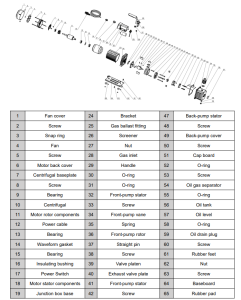
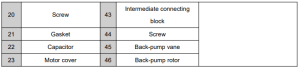
Made in China.
Recommended For Your Project
VEVOR 1/4 HP 4.5 CFM AC Vacuum Pump and Gauge Set applicable to R134a, R410a Manual
Reviews
There are no reviews yet.