A Luftentfeuchter Ein Luftentfeuchter ist ein grundlegendes Haushaltsgerät, das überschüssige Luftfeuchtigkeit reguliert und so für mehr Wohnkomfort sorgt. Hohe Luftfeuchtigkeit lässt Räume stickig, warm und unangenehm wirken. Wenn Sie verstehen, wie ein Luftentfeuchter funktioniert, erkennen Sie leichter, wie dieses Gerät zu einem gesünderen Wohnklima beiträgt. Er saugt feuchte Luft an, entzieht ihr das Wasser und gibt trockene Luft wieder ab. Dieser Prozess minimiert die Feuchtigkeit, schützt Ihr Zuhause und verbessert die Luftqualität. Dieser Ratgeber erklärt Ihnen die grundlegende Funktionsweise eines Luftentfeuchters, seine wichtigsten Komponenten, verschiedene Modelle und seine Vorteile im Alltag.
- Was ist ein Luftentfeuchter und wie funktioniert er?
- Die wichtigsten Bestandteile eines Luftentfeuchters einfach erklärt
- Arten von Luftentfeuchtern einfach erklärt
- Wie ein Luftentfeuchter Gesundheit, Sicherheit im Haus und Luftqualität verbessert
- Wie Sie den richtigen Luftentfeuchter für Ihr Zuhause auswählen
Was ist ein Luftentfeuchter und wie funktioniert er?
Ein Luftentfeuchter ist ein Haushaltsgerät, das überschüssige Feuchtigkeit aus der Luft entfernt. Er trägt dazu bei, die Luftfeuchtigkeit zu reduzieren und das Raumklima angenehmer zu gestalten. Um die Funktionsweise eines Luftentfeuchters zu verdeutlichen, lässt sich der Prozess in einfache Schritte unterteilen. Das Gerät arbeitet in einem Kreislauf: Es saugt feuchte Luft an, entzieht ihr den Wassergehalt und gibt trockene Luft in den Raum ab. Alle Phasen tragen wesentlich zur Regulierung der Luftfeuchtigkeit bei.
Schritt 1: Wie ein Luftentfeuchter feuchte Luft aus dem Raum zieht
Zunächst saugt der Luftentfeuchter Luft aus der Umgebung an. Dies ist der einfachste und erste Schritt zur Regulierung der Luftfeuchtigkeit. Ohne diesen Schritt beginnt das Gerät nicht mit der Luftentfeuchtung.
Die Luft wird mithilfe eines eingebauten Ventilators in das System gesaugt. Dies trägt zur Erklärung der Funktionsweise eines Luftentfeuchters bei, da es zeigt, wie die Raumluft in das Gerät gelangt. Die Feuchtigkeit wird durch die Luft transportiert, die durch die Lüftungsschlitze strömt. Dieser Vorgang ist auch in der schrittweisen Beschreibung der Funktionsweise eines Luftentfeuchters enthalten, da alle Prozesse mit der Luftansaugung beginnen. Der Ventilator läuft kontinuierlich, um dem System eine stetige Zufuhr feuchter Luft zu gewährleisten.
Schritt 2: Wie ein Luftentfeuchter Feuchtigkeit aus der Luft entfernt
Sobald Luft in die Maschine eintritt, gelangt sie in den Kühlbereich, wo die Feuchtigkeit abgeführt wird. Dies ist der entscheidendste Schritt, da er die Luftfeuchtigkeit direkt reduziert. Die Temperaturschwankungen im System tragen zur Trennung von Wasser und Luft bei.
Luft wird in das Gerät gesaugt und über kalte Spulen geleitet. Genau so entzieht ein Luftentfeuchter der Luft Feuchtigkeit. Wenn Feuchtigkeit auf eine kalte Oberfläche trifft, kondensiert sie zu Wassertropfen. Diese Tropfen sammeln sich in einem eingebauten Behälter. Deshalb enthält ein Luftentfeuchter auch Wasser, da die gesamte Feuchtigkeit im Behälter aufgefangen wird. Anschließend ist die Luft deutlich trockener und sauberer.
Schritt 3: Wie ein Luftentfeuchter trockene Luft wieder in den Raum abgibt
Nachdem die Feuchtigkeit entfernt wurde, kann die Luft wieder in den Raum gepumpt werden. Damit ist der Entfeuchtungszyklus abgeschlossen. Dieser Vorgang wiederholt sich, bis die Luftfeuchtigkeit im Gleichgewicht ist.
Die trockene Luft wird entfeuchtet und über einen Auslass wieder in den Raum abgegeben. An diesem Punkt wird die Funktionsweise eines Luftentfeuchters für den Hausgebrauch deutlich: Er verbessert die allgemeine Luftqualität. Die Luft ist nach der Behandlung weniger schwül und leichter. In manchen Fällen arbeitet er mit Klimaanlagen zusammen, daher die Frage, wie ein Luftentfeuchter mit einer Klimaanlage funktioniert. Beide Systeme sorgen für ein angenehmes Raumklima.
Die wichtigsten Bestandteile eines Luftentfeuchters einfach erklärt
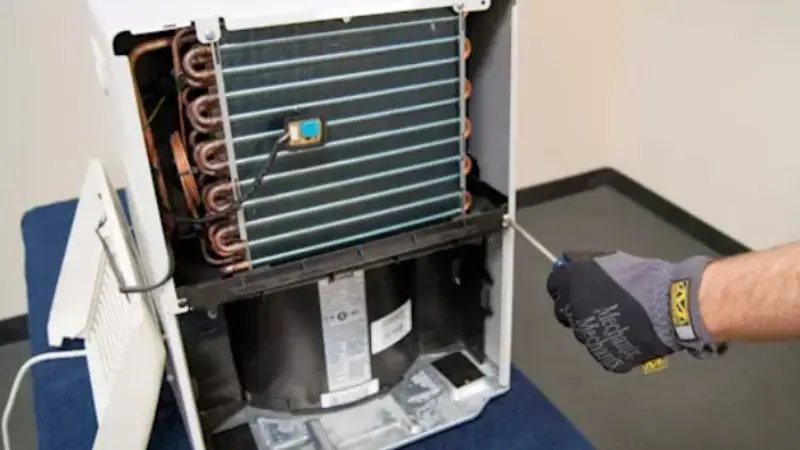
Verschiedene wichtige Komponenten machen ein LuftentfeuchterDiese Komponenten erzeugen zusammen trockene Luft. Jedes Element erfüllt eine bestimmte Funktion, um den Komfort zu erhöhen und die Luftfeuchtigkeit zu regulieren. Sobald man alle Komponenten kennt, ist es viel einfacher zu verstehen, wie ein Luftentfeuchter funktioniert. Alle diese Komponenten sind in einem geschlossenen System miteinander verbunden: Luft strömt ein, Wasser verdunstet und trockene Luft wird wieder in den Raum abgegeben.
Ventilator: Luft in die Maschine saugen
Das erste und wichtigste bewegliche Element eines Luftentfeuchters ist der Ventilator. Er befördert warme, feuchte Luft aus dem Raum in das Gerät, um den Entfeuchtungsprozess zu starten. Ohne ihn wäre der Luftentfeuchter unwirksam, da das System Luft zur Behandlung benötigt. Der Ventilator läuft kontinuierlich, um sicherzustellen, dass stets Luft im Gerät verbleibt. Dies ist der grundlegende Ausgangspunkt für die Funktionsweise eines Luftentfeuchters, denn jeder Zyklus beginnt mit dem Ansaugen von Luft. Der Ventilator gewährleistet, dass ausreichend Luft in das System gelangt, um die Feuchtigkeit während des gesamten Betriebs zu entfernen.
Kaltspulen: Wandeln feuchte Luft in Wasser um
Die in das Gerät einströmende Luft wird durch Kühlrippen gekühlt. Bei warmer, feuchter Luft sinkt die Temperatur rapide, wenn die warme, feuchte Luft über diese Rippen strömt. Durch diese Kühlung kondensiert die Feuchtigkeit in der Luft zu Wassertropfen. So kann ein Luftentfeuchter auf einfache Weise Feuchtigkeit aus der Luft entfernen. Die Tropfen werden von der Luft abgetrennt und im Gerät aufgefangen. Dieser Vorgang ist notwendig, da er die Luftfeuchtigkeit im Raum direkt reduziert. Ohne die Kühlrippen könnte der Luftentfeuchter weder Feuchtigkeit aus der Luft entfernen noch den Raumkomfort verbessern.
Wassertank: Entfernte Feuchtigkeit sammeln
Die gesamte entzogene Feuchtigkeit wird nach der Abkühlung der Luft im Wassertank aufgefangen. Bei Regen tropfen die Wassertropfen herab und sammeln sich durch Kondensation im Tank. Dies ist ein wichtiger Mechanismus zur Wassergewinnung im Luftentfeuchter, da er zeigt, wohin die entzogene Feuchtigkeit gelangt. Das Wasser verbleibt im Tank, bis er vom Benutzer geleert wird. Ist der Tank voll, schaltet sich das Gerät automatisch ab, um ein Überlaufen zu verhindern. Diese grundlegende Speichermethode ermöglicht den effektiven Betrieb des Luftentfeuchters und die präzise Steuerung der aus der Luft entzogenen Feuchtigkeit.
Filter: Reinigen Sie die einströmende Luft
Der Filter reinigt die Luft vor und während der Entfeuchtung. Er fängt Staub, Schmutz und kleine Partikel aus der Raumluft auf. So wird sichergestellt, dass die durch das System strömende Luft sauber ist, was die Leistung und die Luftqualität verbessert. Ein sauberer Filter trägt außerdem zur Langlebigkeit des Geräts bei. In diesem Abschnitt wird die Funktionsweise eines Luftentfeuchters für den Hausgebrauch erklärt. Er reduziert nicht nur die Luftfeuchtigkeit im Raum, sondern sorgt auch für gesündere und sauberere Atemluft – jeden Tag.
Bedienfeld: Luftfeuchtigkeitswerte einstellen
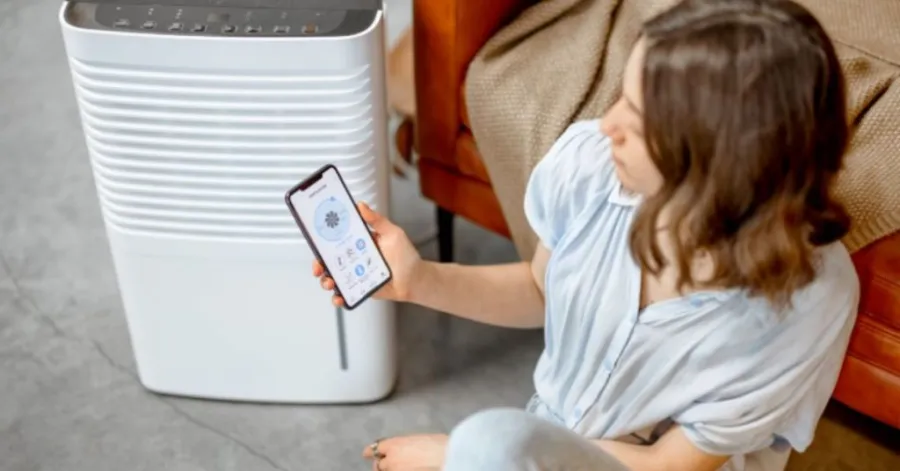
Das Bedienfeld des Luftentfeuchters ermöglicht die Einstellung der Parameter. Die Luftfeuchtigkeit lässt sich individuell an Ihre Bedürfnisse anpassen. Dies vereinfacht die Kontrolle des Raumklimas und die Leistungsanpassung. Mithilfe dieses Systems können Sie die Funktionsweise des Luftentfeuchters im Raum besser verstehen, indem Sie seine Reaktion auf die gewählten Einstellungen beobachten. Das Bedienfeld gestaltet die Bedienung einfach und benutzerfreundlich, indem es den automatischen Betrieb des Geräts und die Aufrechterhaltung der gewünschten Luftfeuchtigkeit ohne manuelle Eingriffe gewährleistet.
Arten von Luftentfeuchtern einfach erklärt
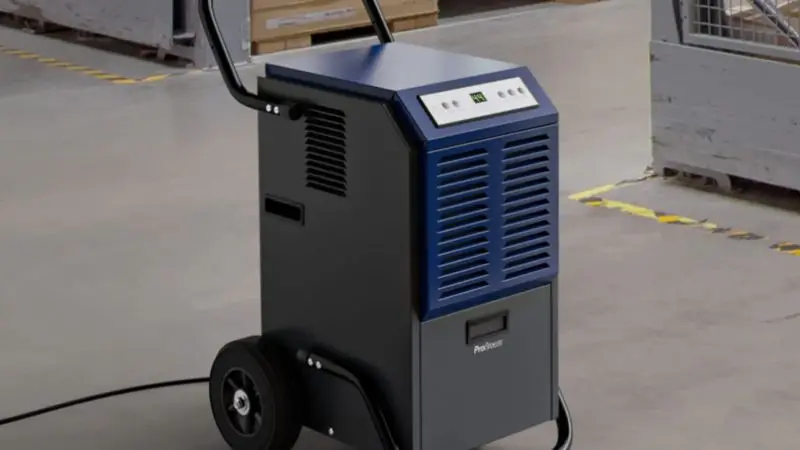
Generell gibt es zwei Arten von Luftentfeuchter Bei der Auswahl eines Luftentfeuchters sollten Sie Folgendes beachten: Beide Geräte zielen darauf ab, die Luftfeuchtigkeit zu reduzieren, jedoch auf unterschiedliche Weise. Diese Unterschiede helfen Ihnen, das für Ihr Zuhause am besten geeignete Gerät zu finden. Es ist außerdem wichtig zu verstehen, wie ein Luftentfeuchter funktioniert, da jeder Typ die Luftfeuchtigkeit auf unterschiedliche Weise reduziert. Wir werden die beiden Möglichkeiten zunächst vereinfacht betrachten.
Kondenswasser-Luftentfeuchter: So funktioniert er in warmen Räumen
Der am häufigsten in Haushalten verwendete Luftentfeuchter ist der Kondensat- oder Kältemittel-Luftentfeuchter. Er kühlt warme, feuchte Luft mithilfe von Kühlrippen. Wenn die Luft über diese Rippen geleitet wird, kondensiert die Feuchtigkeit zu Wassertropfen. Hier sehen wir gut, wie ein Luftentfeuchter die Luftfeuchtigkeit reduziert, da während des Kühlprozesses Wasser von der Luft getrennt wird. Das gewonnene Wasser wird in einem Behälter aufgefangen, überschüssiges Wasser abgepumpt und trockene Luft wieder in den Raum abgegeben. Dieser Luftentfeuchter ist besonders effizient in warmen und feuchten Umgebungen wie Kellern oder Wohnzimmern. Er absorbiert schnell viel Feuchtigkeit und eignet sich daher ideal für heißes, schwüles Wetter.
Adsorptions-Luftentfeuchter: Wie er Feuchtigkeit in kühlen Räumen absorbiert
Ein Adsorptions-Luftentfeuchter unterscheidet sich von anderen Luftentfeuchtern dadurch, dass er keine kalten Spulen verwendet. Stattdessen enthält er ein spezielles Feuchtigkeits absorbierendes Mittel, das sogenannte Trockenmittel. Dieses Material wird von der Luft durchdrungen, und die Feuchtigkeit wird darin eingeschlossen. Dieses Prinzip verdeutlicht die Funktionsweise eines Luftentfeuchters in Räumen mit niedrigen Temperaturen. Sobald das Gerät Feuchtigkeit aufgenommen hat, gibt es trockene Luft an den Raum ab. Dieser Luftentfeuchtertyp eignet sich ideal für kalte Räume, Schlafzimmer, Abstellkammern oder kleine Zimmer. Er arbeitet leise und ist in der Regel leichter als andere Modelle; daher ist er eine gute Wahl für den Innenbereich, wo Geräusche keine große Rolle spielen.
Einfacher Vergleich beider Luftentfeuchtertypen
Beide Luftentfeuchter reduzieren die Luftfeuchtigkeit, sind aber nicht für denselben Einsatzbereich konzipiert. Modelle mit Kältemittel eignen sich für heiße und feuchte Räume, da sie Feuchtigkeit schnell entfernen. Adsorptionsgeräte sind in kühlen Räumen besser geeignet und arbeiten leiser. Die Wahl des richtigen Geräts hängt von der Temperatur und der Luftfeuchtigkeit in Ihrem Raum ab. Wenn Sie wissen, wie ein Luftentfeuchter funktioniert, können Sie das passende Modell auswählen. Beide Systeme regulieren die Luftfeuchtigkeit gleichermaßen effektiv, arbeiten aber jeweils in einer bestimmten Umgebung optimal. Die Wahl des richtigen Systems kann daher die Ergebnisse erheblich beeinflussen.
Wie ein Luftentfeuchter Gesundheit, Sicherheit im Haus und Luftqualität verbessert
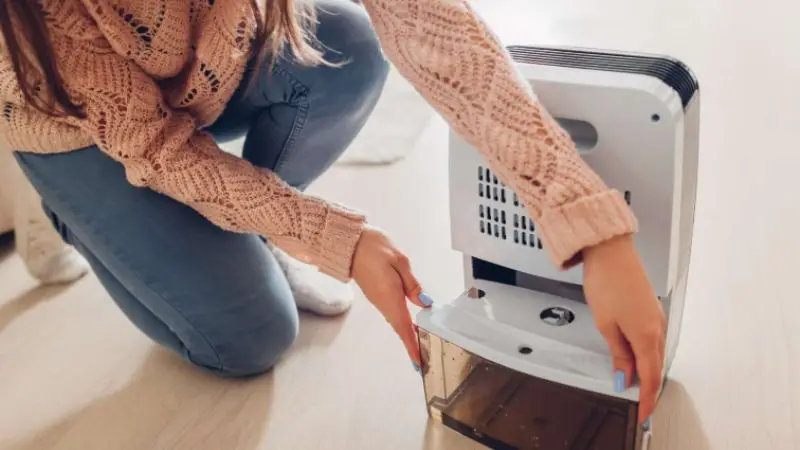
Ein Luftentfeuchter entzieht der Luft nicht nur Feuchtigkeit. Er erhöht den Wohnkomfort, schützt Ihr Zuhause vor Schäden und reinigt die Raumluft. Wenn Sie wissen, wie ein Luftentfeuchter funktioniert, verstehen Sie schnell, warum dieses Gerät im Alltag so praktisch ist. Er reguliert die Luftfeuchtigkeit und sorgt so für sauberere, sicherere und angenehmere Raumluft.
Luftentfeuchter verbessert den Atemkomfort und reduziert Allergien.
Ein Luftentfeuchter sorgt für mehr Wohnkomfort, indem er überschüssige Feuchtigkeit aus der Luft entfernt. Bei niedriger Luftfeuchtigkeit fühlt sich die Luft weniger dicht, sauberer und angenehmer zum Einatmen an. Dies ist besonders vorteilhaft für Allergiker, da Allergene wie Hausstaubmilben und Schimmelpilze, die sich in feuchter Umgebung besonders wohlfühlen, reduziert werden. Auch die Schlafqualität kann sich verbessern, da die Raumluft weniger schwül und angenehmer wird. Um die Funktionsweise eines Luftentfeuchters zu verstehen, ist es hilfreich zu wissen, wie er die Luftfeuchtigkeit im Raum reguliert und so für ein angenehmes Raumklima sorgt. Dadurch entsteht nach und nach ein gesünderes Raumklima, in dem das Atmen leichter fällt und der Alltag komfortabler wird.
Luftentfeuchter schützt Ihr Zuhause vor Feuchtigkeitsschäden und Schimmel.
Unkontrollierte, übermäßige Luftfeuchtigkeit kann Ihr Haus schleichend zerstören. Luftentfeuchter Ein Luftentfeuchter beugt Problemen wie verzogenem Holz, abblätternder Farbe und unangenehm riechender Kleidung oder Möbeln vor. Er reduziert außerdem das Risiko von Schimmelbildung an Wänden, Decken und in versteckten Bereichen. All dies ist eine direkte Folge der Funktionsweise eines Luftentfeuchters, da er der Luft kontinuierlich Feuchtigkeit entzieht, bevor diese Schaden anrichten kann. Die Aufrechterhaltung einer optimalen Luftfeuchtigkeit trägt zum Erhalt von Möbeln, Elektronikgeräten und Lagerwaren bei. Dadurch sparen Sie sich teure Reparaturen und verlängern die Lebensdauer Ihres Hauses.
Luftentfeuchter verbessert die Raumluftqualität und reduziert Gerüche
Ein Luftentfeuchter ist unerlässlich für die Verbesserung der Raumluftqualität. Durch die Regulierung der Luftfeuchtigkeit wird die Luft weniger feucht, sauberer und leichter. Dies minimiert unangenehme Gerüche aufgrund von Feuchtigkeit und beugt der Bildung von Schimmel und Bakterien vor. Auch Staub in der Luft wird reduziert, was zu einem gesünderen Raumklima beiträgt. Dies hängt mit der Funktionsweise eines Luftentfeuchters zusammen, da die direkte Reduzierung der Luftfeuchtigkeit die Luftqualität verbessert. Das Gerät arbeitet leise im Hintergrund und trägt so zu einer sauberen und behaglichen Atmosphäre bei, die sich täglich verbessert.
Wie Sie den richtigen Luftentfeuchter für Ihr Zuhause auswählen
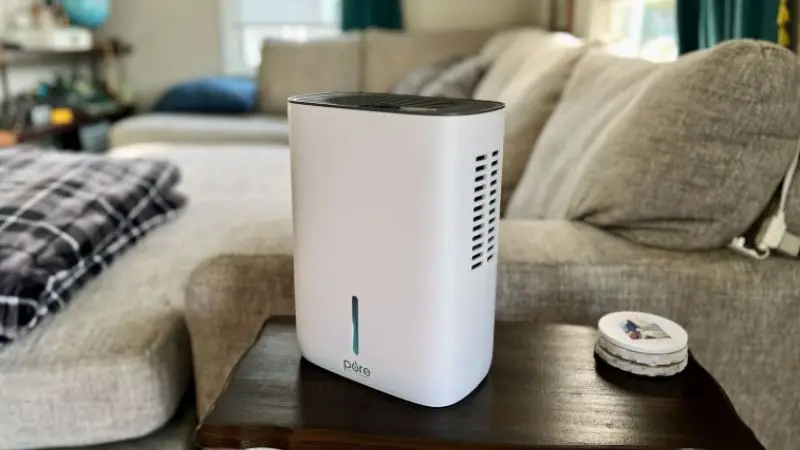
Um einen Luftentfeuchter in Ihren Räumlichkeiten effektiv nutzen zu können, ist die Wahl des passenden Geräts entscheidend. Ein optimal ausgewähltes Gerät reguliert die Luftfeuchtigkeit effizienter, sorgt für mehr Komfort und arbeitet leistungsfähiger. Sobald Sie die Funktionsweise eines Luftentfeuchters verstehen, können Sie leichter die richtige Größe auswählen, ihn korrekt platzieren und warten. Ziel ist es, das Gerät an die Raumluft anzupassen, damit es die Luftfeuchtigkeit problemlos bewältigen kann.
Wählen Sie die richtige Luftentfeuchtergröße anhand der Raumgröße.
Das wichtigste Kriterium bei der Auswahl eines Luftentfeuchters ist die Raumgröße. Kleinere Räume benötigen Geräte mit geringerer Kapazität, während größere Räume leistungsstärkere Geräte benötigen, die mehr Feuchtigkeit pro Tag entziehen können. Dies ist wichtig, da die Betriebsweise eines Luftentfeuchters von der zu behandelnden Luftmenge abhängt. Ist das Gerät zu klein, kann es die Luftfeuchtigkeit nicht ausreichend regulieren. Ist es zu groß, verbraucht es unter Umständen mehr Energie als nötig. Größere Wohnräume und Keller benötigen in der Regel Geräte mit höherer Kapazität, während kleinere Räume wie Schlafzimmer und Abstellräume mit kleineren Geräten ausgestattet werden können. Die richtige Größe sorgt für optimale Leistung und mehr Komfort.
Platzieren Sie einen Luftentfeuchter für maximalen Luftstrom und höchste Effizienz.
Die richtige Positionierung trägt wesentlich zur Effektivität des Luftentfeuchters in Ihrem Raum bei. Das Gerät benötigt ausreichend Freiraum, damit die Luft ungehindert ein- und ausströmen kann. So kann das System reibungslos und ohne Verstopfungen oder Behinderungen des Luftstroms arbeiten. Am besten platzieren Sie das Gerät in der Raummitte, damit die Luft gleichmäßig zirkulieren kann. Achten Sie darauf, dass es keine Wände, Möbel, Vorhänge oder andere Gegenstände berührt, die Lüftungsschlitze verdecken. In Kellern oder Feuchträumen ist eine ebene, stabile Oberfläche wichtig. Eine günstige Positionierung fördert die Luftzirkulation und beschleunigt die Entfeuchtung.
@jeromy_henson_bfss VEVOR 125-PINT-Gewerbe-Luftentfeuchter mit Abflussschlauch. Hochleistungs-Luftentfeuchter für die Wasserschadenbeseitigung. #fyp #Luftentfeuchter #vevorttshop #fy #gewerblicheLuftentfeuchter #fypシ゚viral #Luftentfeuchter #vevor #Wasseraufnahme #viral #Tick Tack #Feuchtigkeitsabsorber #fypage #fypシ゚viral #vevorproducts #Werkzeuge #ttslevelup #ttsdelightnow #Frühlingsverkauf #springtok #Frühlingsangebote #Angebote #Frühlingsangebote #tiktokstore #tiktokshopcreatorpicks #Verkauf #tiktokshopspringglowup #Deal #tiktokshoprestock #jetzt im Sonderangebot #tiktokshopsummersale #aussehen #Sommerfeeling #Ersparnisse #sommergefühl #Sommerangebote #tiktokshopsummerturnup #verkaufen #tiktokshop #tiktokshopping #trending2025 #Virenvideos #imAngebot #Blitzverkauf #Geschenkideen #Geschenkidee #tiktokshopfinds #tiktokmademebuyit #für dich #fürdichseite #trending #Beeindruckend #tiktokmademedoit #holdirdir #heute #tiktokfinds #tiktokfind #tiktokviral #tiktokviralvideo #tiktokviraltrending #ttsacl #Vatertag #Vatertagsgeschenk #Vatertagsangebot #vevorsummerlife @Vevor_US @vevor shop @HAIDEE_collab
♬ Originalton – JEROMY HENSON-BFSS☑️
Pflegen Sie Ihren Luftentfeuchter für eine langfristige Leistung.
Regelmäßige Reparaturen gewährleisten, dass Ihre Luftentfeuchter Das Gerät ist in einwandfreiem Zustand und hat eine längere Lebensdauer. Dies ist besonders wichtig, da der Wassertank geleert werden muss, sobald er voll ist. Das ist eng mit der Funktionsweise des Luftentfeuchters verbunden: Er entzieht dem Gerät die Feuchtigkeit und speichert sie im Tank. Reinigen Sie außerdem den Filter alle paar Wochen, um einen gleichmäßigen Luftstrom und optimale Leistung zu gewährleisten. Durch die Reinigung des Gehäuses wird Staub entfernt. Spezielle Anweisungen für Ihr Modell finden Sie in der Bedienungsanleitung. Diese einfache Wartung genügt, damit das Gerät weiterhin Feuchtigkeit entzieht und Ihre Raumluft sauber und angenehm hält.
Einpacken
Ein Luftentfeuchter ist eine ideale Lösung zur Regulierung der Luftfeuchtigkeit in Innenräumen und sorgt für ein angenehmeres Wohnklima. Er saugt feuchte Luft an, entzieht ihr überschüssige Feuchtigkeit und gibt trockene Luft an den Raum ab. Wenn man die Funktionsweise eines Luftentfeuchters kennt, wird schnell deutlich, wie vorteilhaft er für die Gesundheit, die Möbel und die Raumluftqualität ist. In Schlafzimmern und Kellern hält er die Luftfeuchtigkeit konstant und beugt Feuchtigkeitsproblemen wie Schimmel und unangenehmen Gerüchen vor. Die Wahl des richtigen Typs und der passenden Größe garantiert optimale Leistung. Insgesamt ist er ein sehr einfaches, aber effektives Gerät für ein sauberes und gesundes Raumklima.
FAQ
Wie oft leeren Sie den Wassertank?
Sie sollten den Wassertank täglich kontrollieren. Bei hoher Luftfeuchtigkeit im Raum müssen Sie ihn möglicherweise häufiger leeren. Andere Modelle verfügen über eine Kontrollleuchte, die anzeigt, wenn der Tank voll ist.
Kann man den Luftentfeuchter nachts eingeschaltet lassen?
Ja, Sie können Ihren Luftentfeuchter auch nachts benutzen. Er arbeitet geräuschlos und sorgt für trockene Luft, während Sie schlafen. Achten Sie nur darauf, dass der Wassertank vor dem Schlafengehen geleert wird.
Wo stellst du deinen Luftentfeuchter auf?
Stellen Sie Ihren Luftentfeuchter in die Mitte des Raumes. Vermeiden Sie es, ihn an Wänden oder Möbeln zu platzieren. Dies fördert die Luftzirkulation und ermöglicht dem Gerät eine optimale Leistung. Schließen Sie am besten Türen und Fenster.
Verbraucht ein Luftentfeuchter Strom?
Die meisten Luftentfeuchter verbrauchen weniger Energie als man denkt. Sie können Energie sparen, indem Sie die richtige Größe für Ihren Raum wählen. Achten Sie auf Modelle mit energieeffizienten Funktionen.