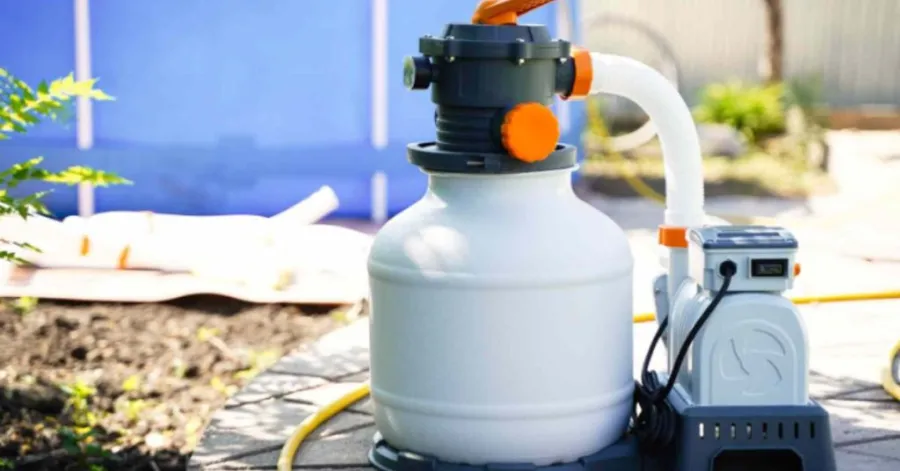
Før du køber, udskifter eller opgraderer dit pooludstyr, er det vigtigt at kende prisen på swimmingpoolpumpen. Poolpumpe Priserne afhænger af pumpens type, størrelse, energiforbrug, mærke og installation. Ud over købsprisen skal du også overveje elforbrug, vedligeholdelse og fremtidige reparationsomkostninger for at bestemme, hvor meget du skal investere. Uanset hvilken type pool du har, overjordisk eller nedgravet, Du kan altid vælge den rigtige pumpe for at forbedre vandcirkulationen og minimere driftsomkostningerne på lang sigt. Vejledningen beskriver omkostningerne ved en swimmingpoolpumpe, installation og udskiftning, samt de variabler, der påvirker den samlede pris.
Indholdsfortegnelse
Hvad påvirker prisen på en poolpumpe?
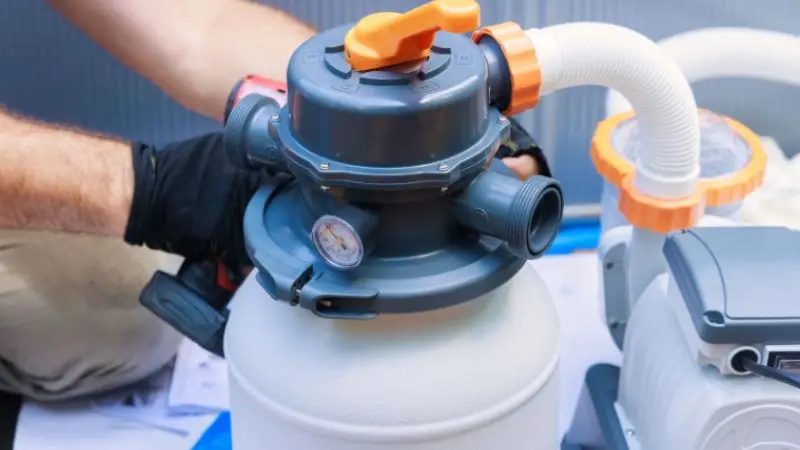
Den samlede pris for en swimmingpoolpumpe bestemmes af forskellige faktorer, herunder pumpetype, motorstørrelse, energieffektivitet og installation. Der findes pumper, der er billige i starten, men dyre i drift i det lange løb, og andre, der er dyre i indkøb, men som giver langsigtet energieffektivitet.
At kende disse faktorer vil gøre det muligt for dig at sammenligne og vælg den mest passende pumpe der ville opfylde dine behov og dit budget. Det er også værd at overveje både de indledende omkostninger og fremtidige driftsomkostninger, før du træffer en beslutning.
Anbefalet til dit projekt
Poolpumpetype og -teknologi
type poolpumpe Det, du vælger, påvirker pumpens samlede pris. Pumper med én hastighed er normalt de billigste at købe, men de bruger mere energi, da de kører kontinuerligt. Pumper med to hastigheder er mere fleksible, da de giver dig mulighed for at bruge høje og lave hastigheder, hvilket hjælper med at spare energi. Ikke desto mindre er priserne på poolpumper med variabel hastighed normalt højere, fordi disse modeller bruger mere avancerede motorer og intelligent styring. Selvom de er dyrere at installere, sparer de fleste husejere på deres forbrugsregninger. Modeller med variabel hastighed kan være de mest omkostningseffektive i det lange løb sammenlignet med priserne på energieffektive poolpumper.
Pumpestørrelse og hestekræfter
pool pumpe Størrelse og hestekræfter påvirker også prisen på en swimmingpoolpumpe. Store pools kræver pumper med højere flowkapacitet, og dette indebærer generelt en højere købspris. Installation af en overdimensioneret pumpe kan forbruge mere energi, hvorimod en underdimensioneret pumpe muligvis ikke pumpe vand effektivt. Det er vigtigt at matche pumpen med størrelsen på din pool, VVS-system og filtreringsudstyr for at opnå effektiv ydeevne. En pumpe af en passende størrelse er i stand til at opretholde rent vand og samtidig minimere unødvendige driftsomkostninger. At vælge den rigtige hestekræfter hjælper i de fleste tilfælde med at reducere fremtidige vedligeholdelses- og udskiftningsomkostninger for poolpumper.
Mærke, energieffektivitet og funktioner
Den endelige pris for en poolpumpe afhænger af mærkenavn, energieffektiv teknologi og andre egenskaber. Kendte producenter koster normalt mere, fordi de er mere pålidelige, tilbyder en bedre garanti og yder bedre kundeservice. Innovative funktioner som programmerbare ure, computerstyrede kontroller, Wi-Fi-forbindelse og lydløs drift øger også købsprisen. Disse muligheder øger dog den indledende pris, men de kan forbedre bekvemmeligheden og spare på strømmen i det lange løb. Når du budgetterer for et nyt system, skal du ikke glemme at inkludere omkostningerne til installation af poolpumpen samt købsprisen for det nye system, da professionel installation vil garantere god ydeevne og forhindre unødvendigt tab af investeringer.
Gennemsnitlige omkostninger til swimmingpoolpumper
Poolpumper findes i forskellige typer, hvor priserne varierer afhængigt af motortype, hestekræfter, mærke og energibesparende funktioner. Nogle modeller er billige, mens andre kræver mere startkapital, men er mindre dyre i drift. Kendskab til det generelle prisinterval for de forskellige typer pumper vil give dig en nemmere sammenligning af dine valg.
Når spørgsmålet er, hvor meget en swimmingpoolpumpe koster, afhænger svaret af, om du skal have en pumpe med én hastighed, to hastigheder eller variabel hastighed. Alle alternativer har varierende ydeevne, effektivitet og værdi på lang sigt.
Priser på poolpumper med én hastighed
Pumper med én hastighed er de billigste og findes typisk i ældre poolsystemer. En swimmingpoolpumpe med én hastighed koster mellem 150 og 500 dollars, afhængigt af mærke, hestekræfter og byggekvalitet. Disse pumper har en lavere anskaffelsespris, men de kan kun køre med en enkelt konstant hastighed, hvilket fører til øget elforbrug i det lange løb. De kan bruges i mindre pools eller af husejere med et stramt budget, men stigende energipriser har en tendens til at gøre dem mindre omkostningseffektive i det lange løb. I tilfælde af professionel installation vil de samlede omkostninger ved installation af poolpumpen være højere.
Priser på dobbelthastigheds-poolpumper
Poolpumper med to hastigheder tilbyder overkommelige priser og energieffektivitet. Størstedelen af modellerne ligger i prisklassen 300-800 dollars og er en bæredygtig forbedring i forhold til pumper med én hastighed. Disse pumper giver dig mulighed for at skifte mellem høje og lave driftshastigheder, hvilket vil hjælpe med at minimere elforbruget under normal filtrering. Selvom de ikke er så effektive som modellerne med variabel hastighed, kan de stadig reducere de månedlige energiregninger sammenlignet med traditionelle pumper. Denne mulighed vælges af husejere, der ønsker moderate besparelser uden at betale en højere pris. Udover købsprisen skal du også overveje omkostningerne ved... pool pumpe installation, hvis det kræver professionel installation.
Priser på poolpumper med variabel hastighed
Poolpumpen med variabel hastighed er generelt dyrere end andre typer pumper, med en gennemsnitspris mellem 800 og 2000, eller endda højere, afhængigt af mærke og specifikationer. Disse pumper har avancerede motorer, der automatisk justerer hastigheden efter din pools behov, hvilket sparer dig betydelig energi. Selvom startomkostningerne er højere, sparer de fleste husejere på startomkostningerne ved at betale lavere elregninger over et par år. Modeller med variabel hastighed er altid de mest omkostningseffektive på lang sigt, når man sammenligner energieffektive poolpumper. De er også sandsynligvis også lydsvage, holder længere og kan sænke udskiftningsomkostningerne for poolpumpen i fremtiden, da de slides mindre, når de bruges dagligt.
Omkostninger til installation af poolpumpe
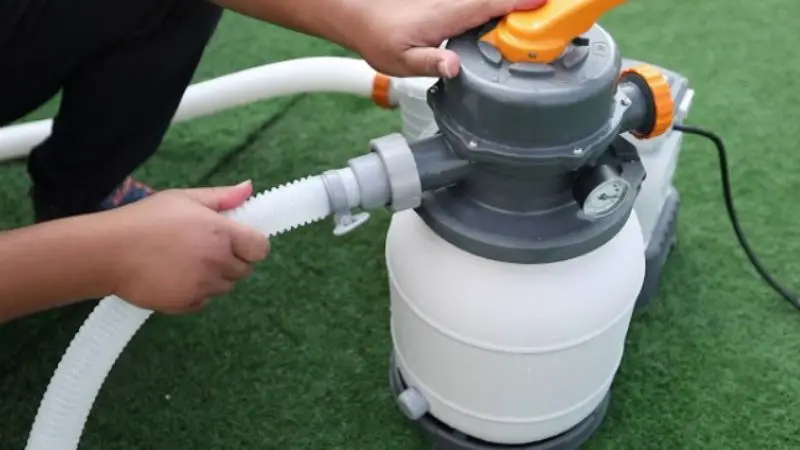
Der er mere at gøre med at installere en ny poolpumpe end blot at købe udstyr. Arbejde, elektriske opgraderinger, VVS-ændringer og andre materialer lægges alle til den endelige pris. Installationen vil også være kompliceret afhængigt af, om du blot udskifter en eksisterende pumpe eller installerer et helt nyt system.
At kende disse omkostninger vil give dig mulighed for at forudsige omkostningerne ved installation af hele poolpumpen før projektet påbegyndes. Professionel installation vil sikre, at pumpen er effektiv, overholder lokale elstandarder og fungerer pålideligt i årevis.
Arbejdsomkostninger for installation
En af de største komponenter i installationsomkostningerne for en poolpumpe er arbejdsløn. Professionelle installatører opkræver typisk mellem 200 og 600 dollars, afhængigt af jobbets kompleksitet og lokale arbejdslønssatser. Når en pool allerede har en pumpe, er det normalt billigere at udskifte den end at installere en i en nyoprettet pool, da VVS- og elforbindelserne allerede er på plads. Arbejdsomkostningerne kan stige, hvis der er behov for ændringer. At have en dygtig tekniker vil sikre, at pumpen er korrekt installeret, hvilket minimerer risikoen for lækager, elektriske problemer og for tidlig udstyrsfejl.
Yderligere materialer og elarbejde
Udover arbejdskraft er der materialer, der kan øge den samlede installationspris. Nye PVC-rør, ventiler, fittings, monteringspuder og elektriske ledninger kan være nødvendige, hvis udstyret er forældet eller uforeneligt med det nye. pumpeDer findes også energieffektive poolpumper med avancerede funktioner, der kræver nye elektriske tilslutninger eller programmerbare styringer. Disse ekstra materialer kan koste projektet yderligere 100 til 500 dollars, afhængigt af din aftale. Der bør budgetteres med de ekstra udgifter for at undgå uforudsete omkostninger under installationen og for at sikre, at systemet kører sikkert og effektivt.
Samlet overslag over installationsomkostninger
Den samlede pris ved at installere en pool pumpe Prisen varierer typisk fra 500 til 2,500 dollars, afhængigt af pumpetypen, arbejdsløn og andre VVS- eller eludgifter. Udskiftning med eksisterende tilslutninger vil typisk være meget billigere end en fuld installation med nyt udstyr og ledninger. Hvis du vælger at købe en high-end model, som en pumpe med variabel hastighed, vil du bruge flere penge på den samlede investering, men kan reducere energiudgifterne på lang sigt. Kombinationen af installations- og driftsomkostninger giver en bedre idé om de samlede omkostninger for en swimmingpoolpumpe.
Omkostninger til udskiftning af poolpumpe
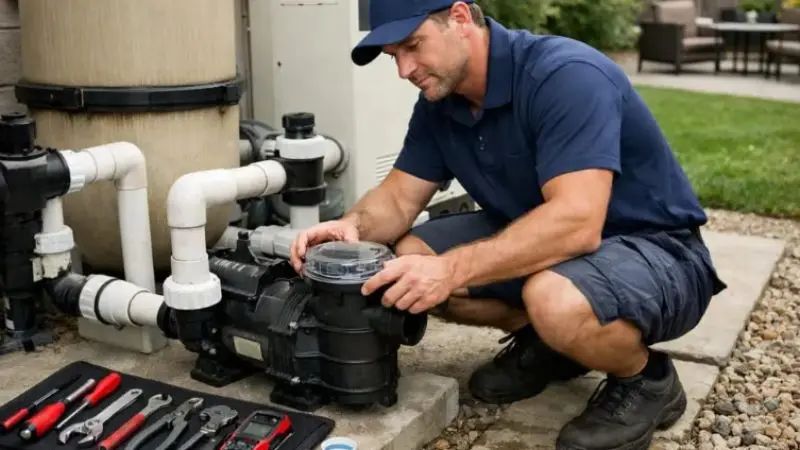
Det kan være mere økonomisk at udskifte en pool pumpe i stedet for at lave reparationerne om på en gammel hver gang. De samlede omkostninger vil blive bestemt af, om motoren alene skal udskiftes, eller hele pumpemekanismen, hvis den er nået til slutningen af sin levetid. En analyse af det nuværende udstyr vil hjælpe med at bestemme den mest levedygtige løsning.
At være opmærksom på den gennemsnitlige pris for udskiftning af en poolpumpe vil gøre det muligt for dig at planlægge fremadrettet for at dække reparationsomkostningerne og forhindre unødvendige fejl. I de fleste tilfælde kan vedligeholdelsesomkostninger og månedlige elregninger reduceres ved at investere i en nyere, energieffektiv model.
Udskiftning af kun pumpemotoren
Når pumpehuset og andre dele er i god stand, kan det være omkostningseffektivt at udskifte motoren. Afhængigt af motorens størrelse og mærke kan det koste mellem 300 og 900 dollars for reservedele og arbejdsløn at udskifte motoren. Denne løsning kan bruges til at forlænge levetiden på den eksisterende pumpe uden at udskifte hele systemet. Men når pumpehuset er brækket, utæt eller meget slidt, er det muligvis ikke holdbart kun at udskifte motoren. Du kan sammenligne omkostningerne ved at reparere pool pumpe med omkostningerne ved at udskifte hele pumpen for at afgøre, hvilken der er mest økonomisk.
Udskiftning af hele pumpesystemet
Udskiftning af hele pumpesystemet koster typisk mellem 800 og 2,500 dollars eller mere, afhængigt af pumpetypen, hestekræfterne og installationsbehovene. Poolpumper med variabel hastighed er dyrere end konventionelle; de er dog meget mere energieffektive og mere støjsvage. Når en række komponenter svigter, eller det nuværende system er gammelt, anbefales en fuldstændig udskiftning normalt. Moderne pumper er også mere pålidelige og kan hjælpe med at reducere langsigtede vedligeholdelses- og elomkostninger på trods af den højere initiale investering. De forbedrer vandcirkulationen og poolens ydeevne.
Tegn på, at det er tid til en udskiftning
Der er en række tydelige tegn på, at din poolpumpe muligvis skal udskiftes i stedet for repareres. De almindelige nedbrud, høje skurrende lyde, utætte pakninger, overophedning, utilstrækkelig vandcirkulation og stigende elregninger indikerer normalt, at pumpe nærmer sig sin endelige levetid. Hvis reparationsomkostningerne fortsætter med at stige, kan det være mere omkostningseffektivt at udskifte enheden. Selvom prisen på en swimmingpoolpumpe varierer afhængigt af den type, du køber, kan udskiftning af din nuværende pumpe med en nyere, energieffektiv model hjælpe med at spare penge på driftsomkostninger og på dyre reparationer, der kan komme i fremtiden.
Løbende omkostninger ved at eje en poolpumpe
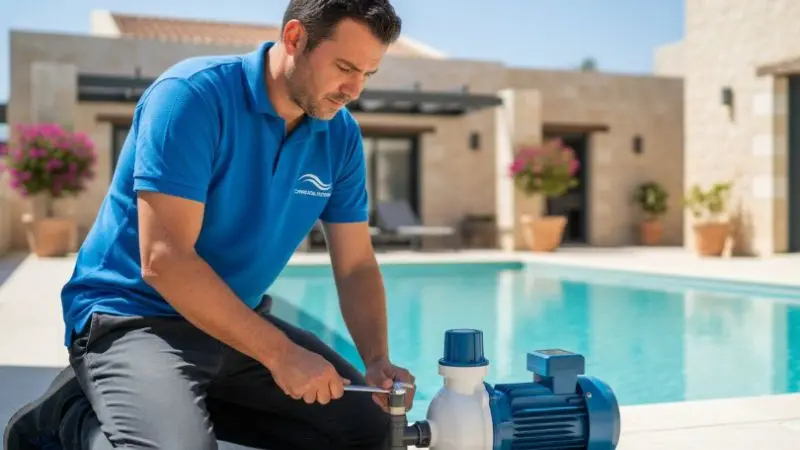
Den samlede investering inkluderer køb af en poolpumpe. De langsigtede ejeromkostninger dækkes af regelmæssigt elforbrug, rutinemæssig vedligeholdelse og lejlighedsvise reparationer. Kendskab til disse driftsomkostninger vil give dig mulighed for at budgettere mere effektivt og vælge udstyr, der opfylder din pools krav og dit månedlige budget.
Selvom den oprindelige pris for en swimmingpoolpumpe er betydelig, er driftsomkostningerne i hele pumpens levetid nogle gange vigtigere. At vælge en effektiv model og vedligeholde den korrekt kan hjælpe med at reducere omkostningerne og forlænge pumpens levetid.
Månedlige elomkostninger
Elektricitet er en af de største løbende udgifter forbundet med at have en pool pumpeOmkostningerne ved at drive pumpen ligger normalt mellem 20 og 150 dollars om måneden, afhængigt af pumpetypen, lokale forsyningstakster, poolstørrelsen og hvor ofte den bruges. Pumper med én hastighed er typisk de mest energikrævende, da de kører med fuld kapacitet. Til sammenligning forbruger modeller med variabel hastighed meget mindre energi, fordi deres hastighed reguleres i henhold til poolens cirkulationsbehov. Selvom den oprindelige pris for en energieffektiv poolpumpe er høj, kan den spare brugeren en betydelig sum penge i form af månedlige forbrugsregninger og er derfor en meget omkostningseffektiv langsigtet investering.
Rutinemæssige vedligeholdelsesudgifter
Ved regelmæssig vedligeholdelse af din poolpumpe kan du undgå dyre reparationer og holde den kørende effektivt. Regelmæssige aktiviteter omfatter rengøring af pumpekurven, kontrol af tætninger og lækager, smøring af O-ringe efter behov og overvågning af vandgennemstrømningen. Den gennemsnitlige husejer bruger mellem 100 og 300 dollars på vedligeholdelse om året, afhængigt af om de selv håndterer det eller hyrer en professionel. At holde pumpen ren og udbedre enkle problemer, før de opstår, kan forbedre effektiviteten og minimere risikoen for uforudsete fejl. Korrekt vedligeholdelse hjælper også med at beskytte din investering og reducerer omkostningerne ved udskiftning. pool pumper i fremtiden, da det forlænger udstyrets levetid.
Reparationsomkostninger for almindelige problemer
Trods vedligeholdelsesindsatsen, poolpumper kan i sidste ende gå i stykker på grund af normal slitage. Nogle af de almindelige problemer er slidte lejer, beskadigede pakninger, utætte huse, tilstoppede impeller, dårlige kondensatorer og motorfejl. Omkostningerne ved at reparere maskinen varierer normalt fra 100 til 800 USD, afhængigt af problemet og de nødvendige dele. I visse tilfælde kan det være lige så dyrt at reparere en ældre pumpe som at udskifte den. Reparationsomkostningerne i forhold til de samlede omkostninger ved udskiftning af poolpumpen bruges til at bestemme, hvilken mulighed der er den mest omkostningseffektive. Når reparationsfrekvensen stiger, kan en nyere, mere energieffektiv model være en bedre investering end at reparere en gammel pumpe.
Wrap Up
Når det gælder om at vælge den passende pool pumpeDet handler ikke kun om købsprisen. Der er meget at tage højde for, når man skal beslutte sig for energieffektivitet, installationsomkostninger, vedligeholdelse og forventet levetid. Hvor billigere modeller er billigere at installere, kan en mere energieffektiv pumpe være billigere med hensyn til månedlige elregninger og langsigtede ejeromkostninger. Kendskab til installation af poolpumper, poolpumper med variabel hastighed og udskiftning af poolpumper vil gøre det muligt for dig at planlægge dit budget med større sikkerhed. Med den rigtige pumpe i den rigtige størrelse, god kvalitet og en regelmæssig vedligeholdelsesplan vil du kunne få pålidelig poolydelse, renere vand og færre overraskelser i form af reparationsregninger i løbet af de næste mange år.
Ofte stillede spørgsmål
Hvad koster en swimmingpoolpumpe?
Prisen på en swimmingpoolpumpe ligger normalt mellem 150 og 2000 dollars eller endda mere. Den endelige pris afhænger af pumpetype, hestekræfter, mærke, energieffektivitet og andre installationsbehov.
Hvad koster poolpumper?
Omkostningerne forbundet med installation af poolpumper ligger normalt mellem 200 og 600 dollars i arbejdsløn og 500 og 2,500 dollars i total installation inklusive materialer, afhængigt af projektets kompleksitet.
Retfærdiggør poolpumper med variabel hastighed den øgede pris?
Ja. Poolpumpen med variabel hastighed er dyrere, men den bruger mindre strøm, er mere støjsvag og kan normalt spare forbrugs- og vedligeholdelsesomkostninger på lang sigt.
Hvad er den gennemsnitlige pris for at udskifte poolpumpen?
Den gennemsnitlige pris for at udskifte en poolpumpe ligger mellem $800 og $2,500, afhængigt af pumpetypen, installationskravene og eventuelle VVS- eller el-opgraderinger.
Hvad kan jeg gøre for at sænke mine omkostninger til drift af min poolpumpe?
Minimer driftsomkostningerne ved at vælge en energieffektiv pumpe, kun bruge den når det er nødvendigt, rengøre den regelmæssigt, udskifte slidte komponenter med det samme og planlægge periodisk vedligeholdelse for at holde pumpen i optimal stand.