One of the biggest skills you can pick up in DIY flooring and renovation is cutting floor tiles. Good cuts create a neat finish on ceramic, porcelain, or other tile types. Measure the space. Mark the tile. Follow the marked line and trim to check fit before installing. For straight cuts, use a manual tile cutter, but for harder materials, use a wet tile saw for more precise cuts. You can also use a good vinkelslipmaskin to cut notches and complex shapes.
This guide helps you learn how to cut floor tiles step by step, what tools to use, how to avoid common mistakes, and how to plan for obstructions like pipes and door frames.
Vilka verktyg behöver du för att såga golvplattor?
Knowing which tools to use makes it much easier to learn how to cut floor tile. The manuell kakelskärare, wet tile saw, and angle grinder are the three most useful tools for most applications. How to cut floor tiles around pipes? Each tool has advantages and disadvantages, so the best tool depends on the tile type, thickness, cut shape, and project size. You’ll also need a measuring tape, a pencil or tile marker, a straightedge, a square, safety glasses, work gloves, and a sturdy work platform before you begin. After cutting, a tile file or diamond sanding pad can smooth out sharp edges.
Rekommenderas för ditt projekt
Manuell kakelskärare
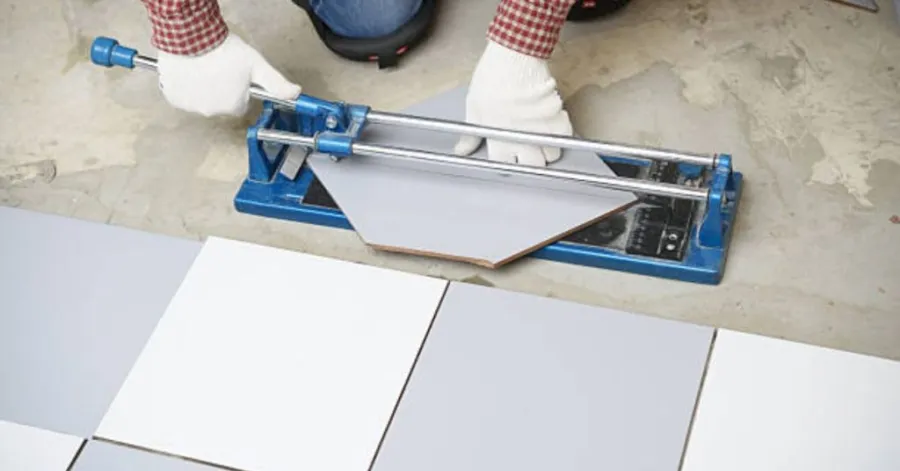
What are the steps involved in cutting the floor tiles for the first time? A manual kakelskärare is a simple yet effective tool for making straight tile cuts. It uses a carbide scoring wheel to cut a controlled line on the tile surface, which a brake mechanism then breaks along the score. With the right hardness and thickness, manual cutters work for ceramic and many porcelain tiles. If you do, press the tile flush against the guide, line up the marked line with the scoring wheel, and glide with consistent pressure in a single stroke. Next, use the breaker to snap the tile in half. Manual cutters are quiet, portable,e and ideal for indoor projects.
Våt kakelsåg
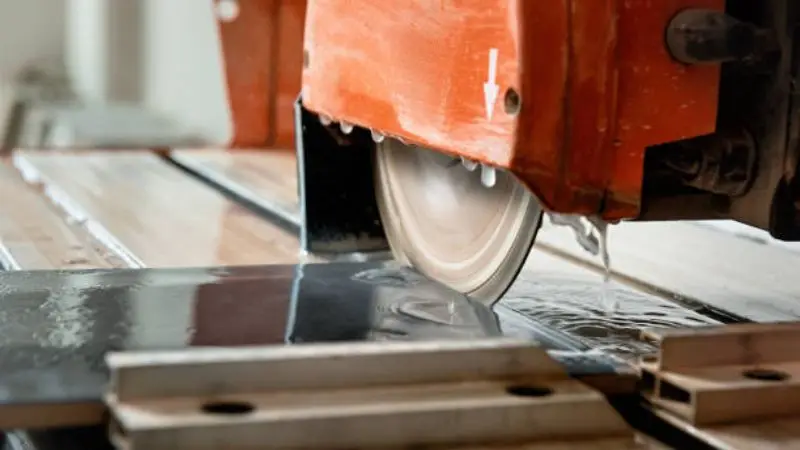
How to cut floor tiles in a straight line? A våt kakelsåg uses a diamond blade to cut tiles and a flow of water to cool the blade and prevent dust. Ideal for thick tile, hard porcelain, long straight cuts, and projects with sharp edges. Place the tile on a slippery surface and slowly push it into the rotating blade. A hand cutter won’t cut through these materials, but a wet saw will. Fill the water tank and choose the proper blade for the tile you are cutting. Use eye protection; do not put your hands on the blade; and do not push the tile. Position the saw away from any surfaces that water could affect.
Vinkelslip
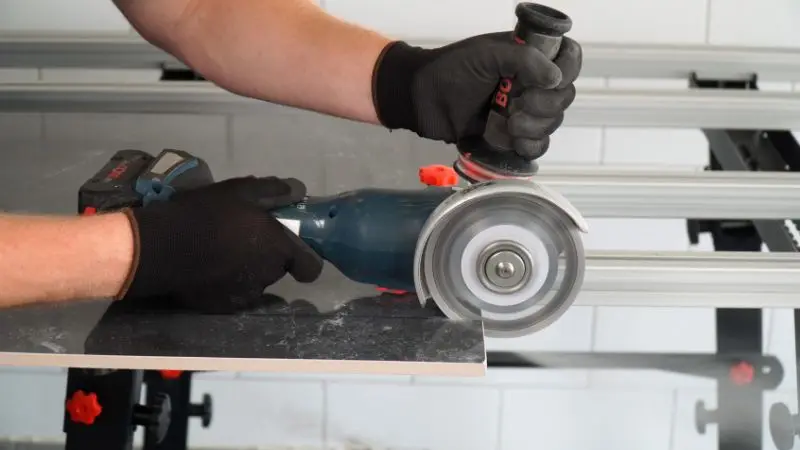
How to cut tiles around corners on the floor? Manual cutters may struggle with curved cuts, notches, and other odd shapes. But a diamond blade on an angle grinder can come in handy for doing these things. You can use it to cut around pipes, floor drains, entrances, and uneven corners by gradually removing material. Vinkelslipar create a lot of dust, so use them carefully. Wear other required eye protection and adequate respiratory protection if necessary. Before cutting the tile, clamp it in place. Movements should be performed carefully. Do not stab the blade into the material at any time.
Steg-för-steg-guide: Hur man skär golvplattor
Ordentligt cutting floor tiles takes preparation, the right instrument, and a steady hand. Here’s how to measure, mark, cut, and polish your tiles for accurate, professional-looking results.
Step 1: Measure the Floor and Plan Your Cuts
Before cutting any tiles, you should measure the space where the tile will be set. How to cut floor tiles around a toilet? If you measure accurately, you can avoid mistakes and waste expensive tile. Measure from fixed objects such as walls, corners, and doorways. Be sure to leave enough clearance for installation and movement. Never assume the walls are perfectly straight and square, especially in old homes. If needed, measure in multiple locations. Lay out your tiles before cutting so you know where to place each tile and which ones to cut. Please change the plan to eliminate the thin strips surrounding the walls. Finally, take very accurate measurements, and check again before cutting.
Step 2: Mark the Tile
Hur man cut floor tiles around pipes? Measure the space, then mark the tile with a pencil, a wax pencil, or a suitable tile marker. Measure twice, cut once. Avoid costly errors. Draw a straight line across the tile with a square or straightedge. If the tile has a pattern or directional design, especially wood-look porcelain or decorative tiles, verify alignment before marking. For awkward cuts around pipes, drains, or corners, first construct a template from cardboard or paper. Test the template at the installation location, make any necessary adjustments, then transfer the shape to the tile before cutting.
Step 3: Choose the Right Cutting Method
How to cut floor tiles without chipping? Mark the tile, select the proper tool for the material, and cut. If you are using ceramic or porcelain tiles, a manual tile cutter is often the fastest way to make small cuts. A våt kakelsåg is suitable for thick porcelain, tougher materials, and cuts that require greater precision. Use an angle grinder to cut curves, notches, and other strange shapes that are not easily cut with a scoring tool. Don’t choose a tool just because it is cheap. Consider the tile’s thickness and hardness, size, and cutting requirements. The right tool improves tiling accuracy, reduces chipping, and cuts down on waste.
Step 4: Score the Tile With a Manual Cutter
How to cut floor tiles in a straight line? If you are using a manuell kakelskärare, push the tile firmly against the guide and align the designated line with the scoring wheel. Use steady, even pressure to move the wheel across the tile in one smooth stroke. Chipping can be increased if you score the same location repeatedly, so try to score along a continuous line. Don’t press too hard; this could damage the surface or create an uneven groove. If the cutter is struggling, verify that the scoring wheel is suitable for the tile and replace it if it is worn. After scoring, press along the groove with the breaking mechanism until the tile snaps apart smoothly.
Step 5: Cut the Tile With a Wet Saw
How to cut floor tiles around a toilet? When using a wet saw, mark where you want to cut, then secure the tile on the saw table. Turn on the water and let the blade reach full speed before you begin cutting. Bring the tile slowly to the diamond blade; don’t rush or push too hard. Let the blade cut at its own speed to avoid chipping and maintain control. Follow the manufacturer’s recommended procedure for cutting thick tiles. When the cut is complete, turn off the saw and wait for the blade to stop before removing the tile. A wet saw is the best way to cut dense porcelain tile.
Step 6: Make Notches and Cuts Around Obstacles
When installing floors, you often need to cut around door frames, pipes, cabinets, vents, and other obstructions. How to cut floor tiles around pipes? For small notches and irregular shapes, you can slowly remove material with an angle grinder and a suitable diamond blade. Carefully mark the desired shape and work gently for better control. When cutting around pipes, measure the pipe’s location from two reference points, then accurately transfer those measurements to the tile. Another option for neat circular apertures is a tile-rated hole saw. If the opening is too small, never force a tile into place. Remove small quantities of material and test the fit until the tile rests properly, without pressure.
Step 7: Smooth the Cut Edges
How to cut floor tiles around corners? Newly cut tile edges can be sharp, rough, or slightly uneven, so check them carefully after cutting. Smooth any rough edges and refine them with a tile file, diamond sanding pad, or other suitable abrasive tool. Work slowly, and don’t remove more than you need to. Any minor defects may be invisible if the cut edge is concealed by trim or a wall. But the exposed edges require greater care since they will be visible after installation. Spend a little more time cleaning up those noticeable cuts for a cleaner, smoother look. Finished edges also make the tiles safer to handle during installation.
Common Mistakes to Avoid When Cutting Floor Tiles
Lärande how to cut floor tiles as a beginner is easier when you know which pitfalls to avoid. Neglecting layout planning can lead to narrow, ill-placed pieces. Measuring only once can waste tiles; always double-check your measurements. Using the wrong tool can cause chipping or cracking, especially on thick porcelain. Don’t cut the same line over and over again, use too much pressure, or use a dull cutting wheel. Large tiles also require sufficient support to prevent flexing and cracking. Finally, never forget safety gear. Use the appropriate eye, respiratory, and other protective equipment (depending on the cutting instrument and working conditions).
| Misstag | Resultat | Lösning |
| Dålig planering | Ojämna snitt | Planera layouten |
| Fel mått | Wasted tiles | Mät två gånger |
| Fel verktyg | Sprickor eller flisor | Use the right cutter |
| För mycket press | Trasiga kakelplattor | Applicera ett stadigt tryck |
| Dull blade | Vassa kanter | Byt ut bladet |
| Dåligt stöd | Tile breaks | Support the tile |
| Ingen säkerhetsutrustning | skaderisk | Använd skyddsutrustning |
Hur man skär golvplattor Utan chips
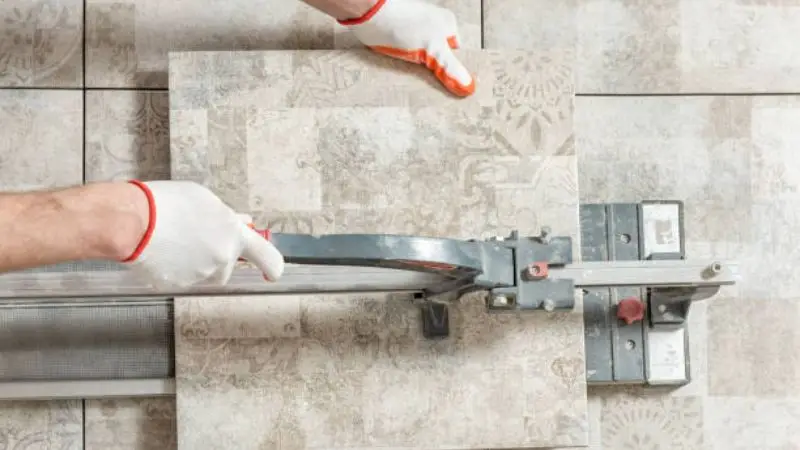
How to cut floor tiles without chipping? Chip marks are a common problem when cutting tiles, but the right procedure can prevent them. If med hjälp av en manuell skärare, position the cutter on the paper and make a smooth, even pass with consistent pressure. If using a wet saw, use a suitable diamond blade, and feed the tile through at a controlled speed without force. Keep your scoring wheel or blade sharp. Dull parts can generate ragged edges and require increased pressure. Practice on scrap tile for any exposed cuts. Adjust your cutting speed and pressure to the material, thickness, and tool you’re using.
Slutsats
How to cut floor tiles? Cutting floor tiles does not have to be daunting. With the right tools and skill, you can make accurate cuts on a variety of flooring jobs, but they still require careful planning. A manuell kakelskärare works well for straight cuts, while a wet tile saw is better for hard or thick material. It’s handy for curves, notches, and unusual shapes. Angle grinder. Always measure and mark carefully, test cuts on spare tiles, and support heavy pieces appropriately. Work slowly on difficult cuts, removing material in stages. Safety is the most crucial thing of all. Wear your safety gear, read your tool directions, and keep your work area clean and stable.
FAQ
What is the easiest tool for a beginner?
A manual snap cutter offers the simplest way to learn how to cut tile. You score the surface once. Then you press the handle to snap the tile. The tool needs no electricity. It works best for ceramic tile.
Can you cut tile without a wet saw?
Yes, you can cut tile with a manual snap cutter for straight lines. This method works for ceramic tile. You need a wet saw for porcelain. The water keeps the blade cool and prevents chips.
How do you make curved cuts on a floor tile?
You use an angle grinder with a diamond blade. You mark the curve on the tile. Then you slowly grind along the line. This technique helps you fit tiles around pipes and floor obstacles.
What is the best way to cut porcelain tile?
A wet saw with a diamond blade gives the best results. You slide the tile through the water-cooled blade. This method prevents chipping. Cutting porcelain tile well requires the right tool.