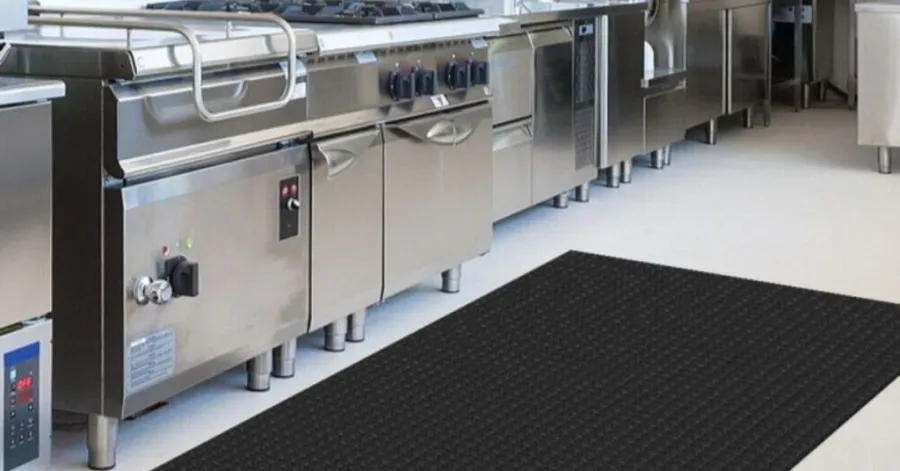
A glossy mat surface can hide a potential hazard. Greasy deposits, moisture, and other slick residues can build up quickly. Dirty mats in your commercial kitchen put your employees at risk of slipping. Bacteria can grow, and you may fail a health department inspection. Knowing what makes clean commercial kitchen mats necessary is crucial for your workers’ safety.
You need a systematic approach to keeping esteras entrelazadas clean. Wash your mats with warm, soapy water every day. Wash both sides of each mat, rinse, and apply disinfectants. This procedure will remove grease and oil deposits before they harden. Moisture buildup underneath the mats is also extremely dangerous.
Cómo limpiar Commercial Kitchen Mats Paso a Paso
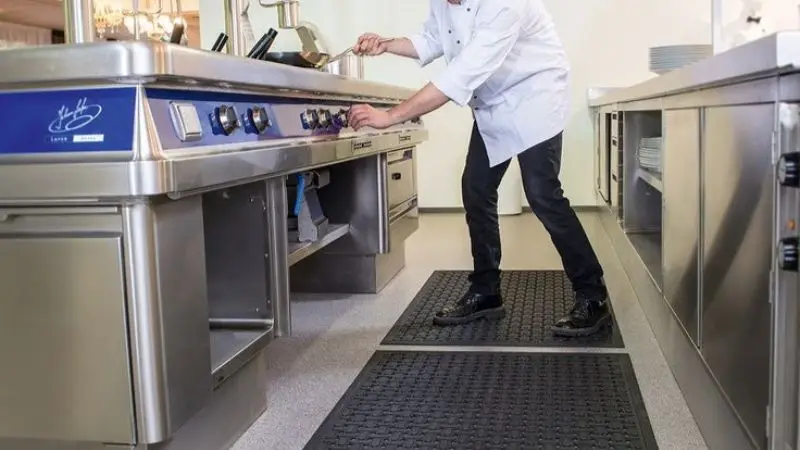
A systematic cleaning procedure lets you wash kitchen mats effectively and consistently. Start by removing the mats, clearing the surface, rinsing, and washing and disinfecting the mats. Every step leads to another one. Repeat this procedure whenever you clean commercial kitchen mats.
Recomendado para su proyecto
Step 1: Remove the Mats From the Kitchen Floor
Lift every mat off the floor before you begin. This first move exposes the floor underneath and lets you check for trapped moisture. Wet floors under mats grow bacteria and create odors. Pull each mat toward you and stack them near a floor drain or outdoor wash area.
As you lift, inspect both the mat and the floor. Note any cracks, curled edges, or worn spots. These signs tell you when replacement makes more sense than repair. Sweep or mop the floor before returning clean mats. A clean floor keeps your commercial floor mats from picking up new grime right away.
Step 2: Remove Loose Dirt, Food, and Debris
Turn each estera de drenaje upside down and shake it firmly. A good shake loosens food scraps, crumbs, and hair. Use a stiff brush to sweep the back side and push debris into a trash bin. This step stops loose particles from turning into muddy paste during washing.
Scrape stuck food off with a plastic scraper. Metal tools can gouge the mat surface and create places for grease and oil to collect. Pay attention to beveled edges and drainage holes. Debris hides in these spots during regular cleaning. Removing it now gives your best commercial tapete de cocina cleaning products a clear surface to work on.
Step 3: Rinse the Mats With Water
Spray each mat with a hose or a bucket of water. Warm water loosens grease better than cold water. Rinse the top side first, then flip the mat and rinse the bottom. This pre-rinse removes the loose dirt you just loosened.
This is an important step before scrubbing because water softens dried grease and oil, which the soap can then remove. The cleaning process becomes harder if the mat is dry because you have to scrub more and use more cleaning products. Rinse until the water is free of dirt. The washing phase follows, using warm water and mild soap.
Step 4: Apply a Suitable Cleaning Solution
Dilute mild soap in warm water according to the manufacturer’s guidelines. Choose a cleaning product suitable for your mat that removes grease without damaging it. Spread the diluted mixture on the mat using a sponge, soft brush, or spray bottle. Let the mixture stay for the recommended period. Never allow the cleaning solution to dry on the mat. Wait long enough for the solution to dissolve the dirt.
Step 5: Scrub Away Grease and Stubborn Stains
Scrub the mat surface with a stiff nylon brush, working in small patches and focusing on greasy stains, food stains, and drainage holes. Apply enough pressure to lift the stain without damaging the mat.
Turn the mat over and clean the underside. Grease and dirt tend to accumulate on both sides when cooking in commercial kitchens. Be careful to clean around corners and textured surfaces, since grease tends to accumulate there.
Step 6: Rinse Thoroughly to Remove Soap
Clean the mats with clear water and ensure that all soap, dirt, and grease are washed away. Start on one side and continue until you reach the other end. Turn over the mat and rinse the other side, including the edges and drainage points. The mats may become slippery due to soap.
Ensure the water running off the mat is clear, and no soapy residue remains. Continue rinsing until all soap is washed away. Proper rinsing will help the mat dry.
Step 7: Drying the Commercial KitchenMats Properly Before Reusing Them
Dry off any remaining water and leave the mats in a clean, well-ventilated area where they can stand upright or have air pass through both sides. Never leave them on unclean surfaces, and allow them to dry thoroughly.
Never use wet mats in the kitchen because they increase the chance of foul smells and bacterial growth, and they also make the mats slippery. Check the mats for any signs of wear and tear before placing them back on the clean, dry floor.
How to Remove Grease and Stubborn Stains From Kitchen Mats
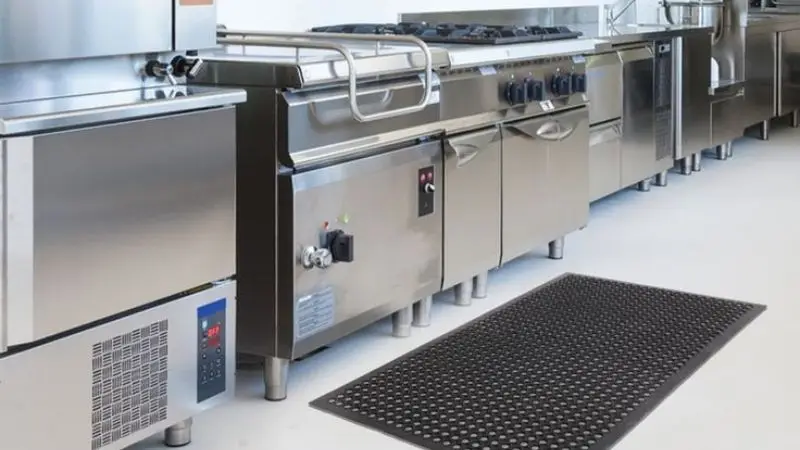
Choose a Cleaner That Works With Your Mat Material
Check the mat manufacturer’s cleaning instructions before choosing a product. Rubber, foam, and other materiales de tapete may react differently to detergents and solvents. A mild, material-compatible cleaner is usually a good starting point for everyday grease and food stains.
Test an unfamiliar product on a small, inconspicuous area first. Follow the label’s recommended dilution and contact time. Avoid mixing different cleaning products, as some combinations can release dangerous fumes. The right cleaner removes residue without weakening the mat or affecting its grip.
Use a Degreaser for Heavy Grease Buildup
Heavy grease can cling to commercial esteras de cocina even after regular washing. Choose a commercial degreaser approved for your mat material and suitable for the kitchen environment. Apply it as directed on the label, paying attention to greasy corners, textured surfaces, and drainage openings.
Allow the product to work for the specified contact time, then scrub with a suitable brush. Rinse thoroughly to remove loosened grease and cleaner residue. If buildup remains, repeat the process as directed instead of using a stronger chemical without checking compatibility. Regular degreasing helps keep mats cleaner and safer underfoot.
Avoid Harsh Chemicals That Can Damage Mats
Strong solvents, concentrated chemicals, and abrasive cleaners can damage certain commercial kitchen mat materials. They may cause swelling, cracking, discoloration, or loss of grip. Use bleach and other disinfectants only when the manufacturer confirms they are suitable for the mat.
Before using cleaning products, read their labels and instructions to avoid safety risks. Do not combine bleach with ammonia, acids, or other chemicals. Put on all required safety equipment and ensure good ventilation. Using proper cleaning products will keep both your employees and your commercial kitchen mats safe.
Remove Food and Liquid Spills as Soon as Possible
Clean spills as soon as it is safe to do so. Food, cooking grease, sauces, and sweet liquids can adhere to the mat’s surface and make it dirty. It is usually easier to clean up fresh spills than those that have dried inside the textured parts of the surface.
If necessary, take the anti-slippery mat out, then absorb the spill and clean up any solid waste. Clean the contaminated surface with the right cleaning agent and then rinse off any residue. Allow the mat and the floor below it to dry.
How to Clean Different Types of Commercial Kitchen Mats
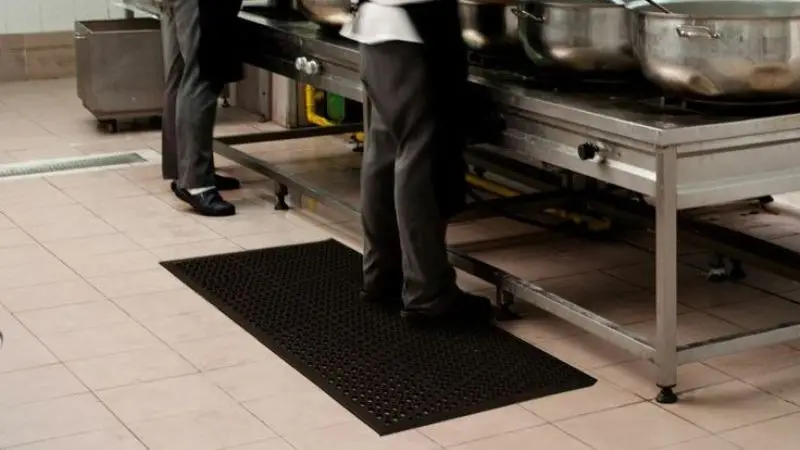
How to Clean Rubber Kitchen Mats
Caucho esteras de cocina are durable, but grease and food residue can build up in their textured surfaces. Remove loose debris, then wash the mats with warm water and a mild, rubber-safe detergent. Scrub both sides with a nylon brush, paying attention to grooves and drainage holes.
Rinse thoroughly and let the mats air-dry completely. Avoid petroleum-based solvents and other products that the manufacturer warns may damage rubber. During cleaning, check the surface for cracks, brittleness, or worn areas. Regular care helps preserve the mat’s flexibility and traction.
How to Clean Anti-Fatigue Kitchen Mats
Alfombras antifatiga cushion staff who stand for long periods. Some use solid rubber, while others contain foam or layered materials that need gentler care. Check the manufacturer’s instructions before soaking the mat or applying cleaning products. The best floor mats for restaurant kitchens are also easy to clean.
Remove crumbs and debris, then wipe or wash the surface with a compatible detergent and a soft or medium-bristle brush. Avoid excessive scrubbing, prolonged soaking, or harsh chemicals that may weaken the cushioning. Rinse only as recommended and dry both sides thoroughly. Proper cleaning helps maintain comfort, hygiene, and reliable footing.
How to Clean Anti-Slip and Drainage Mats
Antideslizante y drainage mats often have raised patterns, holes, or open channels that allow liquids to flow away from the standing surface. These spaces can trap grease, food scraps, and other debris. Shake off loose dirt, then rinse the mat from both sides to flush out the openings.
Always use high-quality, non-slip mats in your commercial kitchens. Clean the rough surface and drainage channels using an appropriate brush. Use a suitable detergent to loosen grease, then rinse until no residue remains. Ensure the drainage channels are clear before drying the mat completely. Clear channels facilitate drainage and improve traction.
How to Clean Grease-Resistant Kitchen Mats
These commercial kitchen mats are designed for oily kitchen environments; however, that doesn’t mean they don’t need cleaning. Remove loose dirt and clean the surface with a cleaner appropriate for the mat’s material. Areas near the cooking zones that usually collect oil and other residues should receive extra attention.
You may use an appropriate degreaser if the regular detergent fails to loosen the residue. Follow the manufacturer’s instructions carefully and rinse after use. Don’t assume these mats don’t require maintenance.
Errores comunes que se deben evitar al limpiar Commercial Kitchen Mats
Usar los productos de limpieza incorrectos
The wrong cleaner can damage mats and their surfaces, accelerate deterioration, and reduce traction. Highly concentrated chemicals can be especially dangerous for certain rubber and foam materials. A cleaner suitable for one mat may not be safe for another.
Follow the manufacturer’s instructions and read the label. Follow the dilution directions and, when needed, test unknown cleaners on a small surface. Do not combine cleaning substances. Using the right product ensures effective dirt removal without causing extra maintenance issues.
Leaving Soap or grease residue on Mat
Wash the whole mat with water. Make sure the top and bottom, edges, and grooves are clean. When the surface feels slippery or greasy, wash and rinse it again.
Putting Wet Mats Back on the Floor
Putting a wet mat back on the kitchen floor can cause moisture to build up underneath it, creating slippery spots. Damp spots would also create a smell and be a breeding ground for microbes due to poor air circulation.
Make sure that the mat is dried well on both sides before returning it. Also clean and dry the floor where the mat will be placed. If you need to remove a mat while serving, provide a suitable temporary solution.
Ignoring the Underside of Kitchen Mats
The undersides of mats can have dirt, water, oils, crumbs, and cleaning products even though the surface seems clean. Neglecting this can let dirt build up against the floor, making the area prone to smells. Moisture trapped under mats can also influence how clean the floor is.
Inspect the underside of the alfombrillas de goma during every cleaning and wash off any residue with a suitable cleaner. Rinse the area thoroughly, then clean the floor underneath.
Conclusión
Clean mats protect your team and your business. You now know how to clean commercial kitchen mats properly. Warm, soapy water, scrubbing both sides, rinsing, sanitizing, and fully drying keep them safe and hygienic. These steps also make your commercial kitchen mats durar más.
Add mat care to your weekly cleaning checklist. This habit makes daily maintenance simple. If you’re short on time or labor, a mat rental service handles cleaning, maintenance, and replacement. You clean mats weekly with less stress. Protect your staff and your kitchen’s reputation with consistent care.
Preguntas Frecuentes
Best Commercial Mats That Are Machine Washable or Easy to Clean
Commercial rubber, vinyl, and polypropylene mats are easy to maintain. Choose removable, washable mats or smooth, nonporous surfaces that resist stains, moisture, and dirt for easy routine cleaning.
Best Commercial Mats for Food Service Prep Areas
Food service prep areas benefit from NSF-listed, food-service-appropriate rubber or vinyl mats with drainage holes. These mats improve grip, support standing workers, and let spills drain, making cleaning easier.
Best Commercial Floor Mats for Restaurant Kitchens
NoTrax Ultramat suits general kitchen use because it provides drainage, traction, and cushioning. NoTrax Optimat suits greasy areas, while San-Eze II supports comfortable standing and food-service work.
Best Commercial Floor Mats for Wet Areas and Slip Resistance
NoTrax Challenger provides textured grip, drainage, and cushioning. NoTrax Superflow supports water drainage with its reversible design, while Ultramat Max offers heavy-duty rubber construction for demanding, wet working environments.
Best Commercial Floor Mats for Oil and Grease Cleanup
NoTrax Optimat uses nitrile rubber to resist oils and grease. San-Eze II offers drainage and cushioning, while Ultramat Max provides durable support for demanding industrial and commercial kitchen environments.