
Unlock the full potential of your VEVOR Confined Space Tripod Kit with our comprehensive product manual. Whether you’re setting up the 7′ legs bracket, managing the 98′ cable, or ensuring optimal fall protection with the 32.8′ rescue tripod, our detailed guide has you covered.
This manual provides step-by-step instructions, troubleshooting tips, and optimization strategies for both beginners and experienced users. Its focus on safety and efficiency helps you maximize the 1200 lb winch capacity and effectively use the included storage bag.
Download now to ensure your confined space operations are seamless and secure.
CONFINED SPACE TRIPOD KIT USER MANUAL
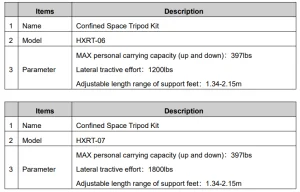
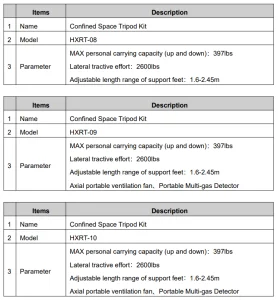
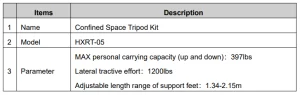
MODEL: HXRT-06/HXRT-07/HXRT-08HXRT-09HXRT-10/HXRT-05
SAFETY INSTRUCTIONS AND PRECAUTIONS
WARNING:
Read this material before using this product. Failure to secure can result in serious injury.
- This product is not a toy. Do not allow children to play with this item.
- Use as intended only.
- Never exceed the load capacity of the Confined Space Tripod Kit.
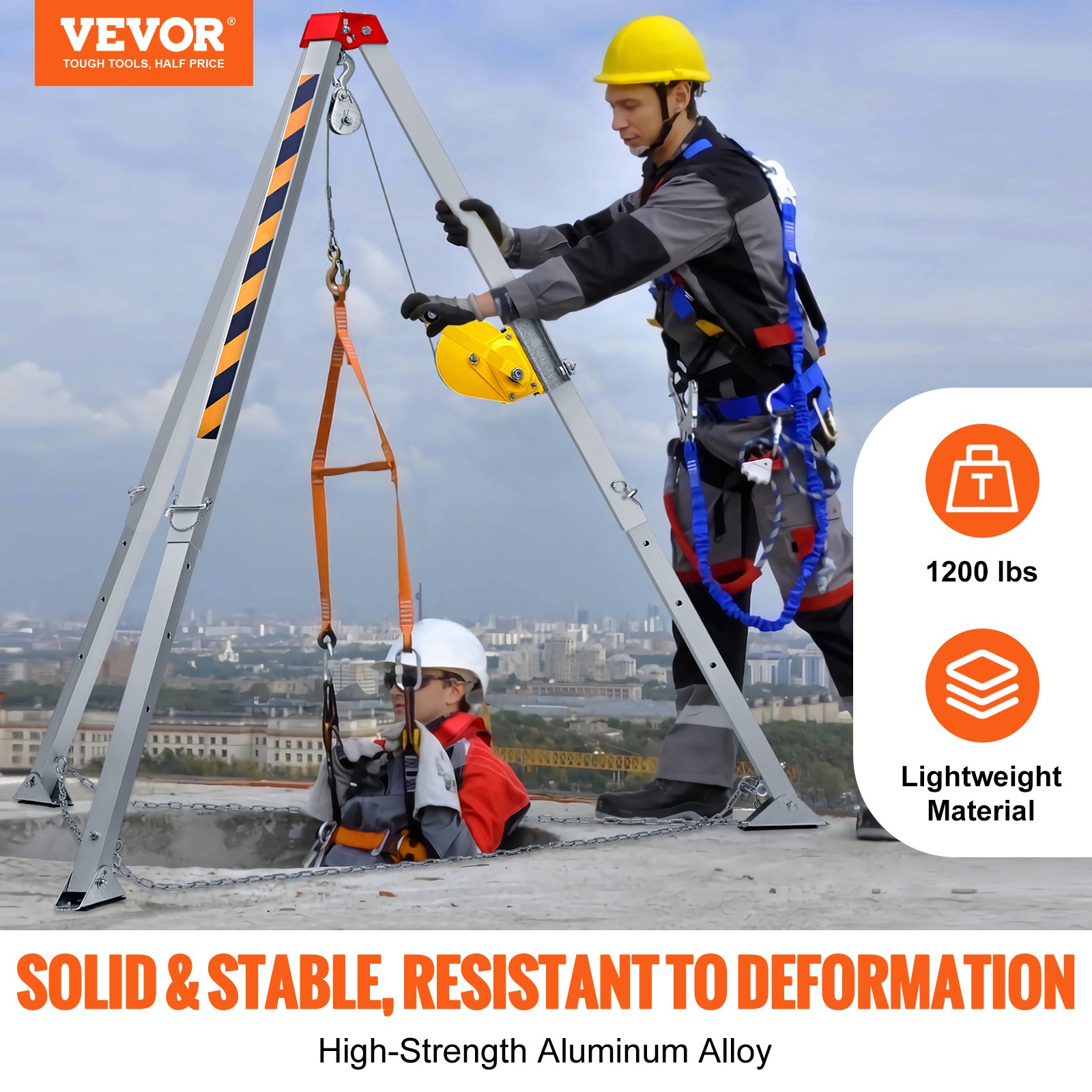
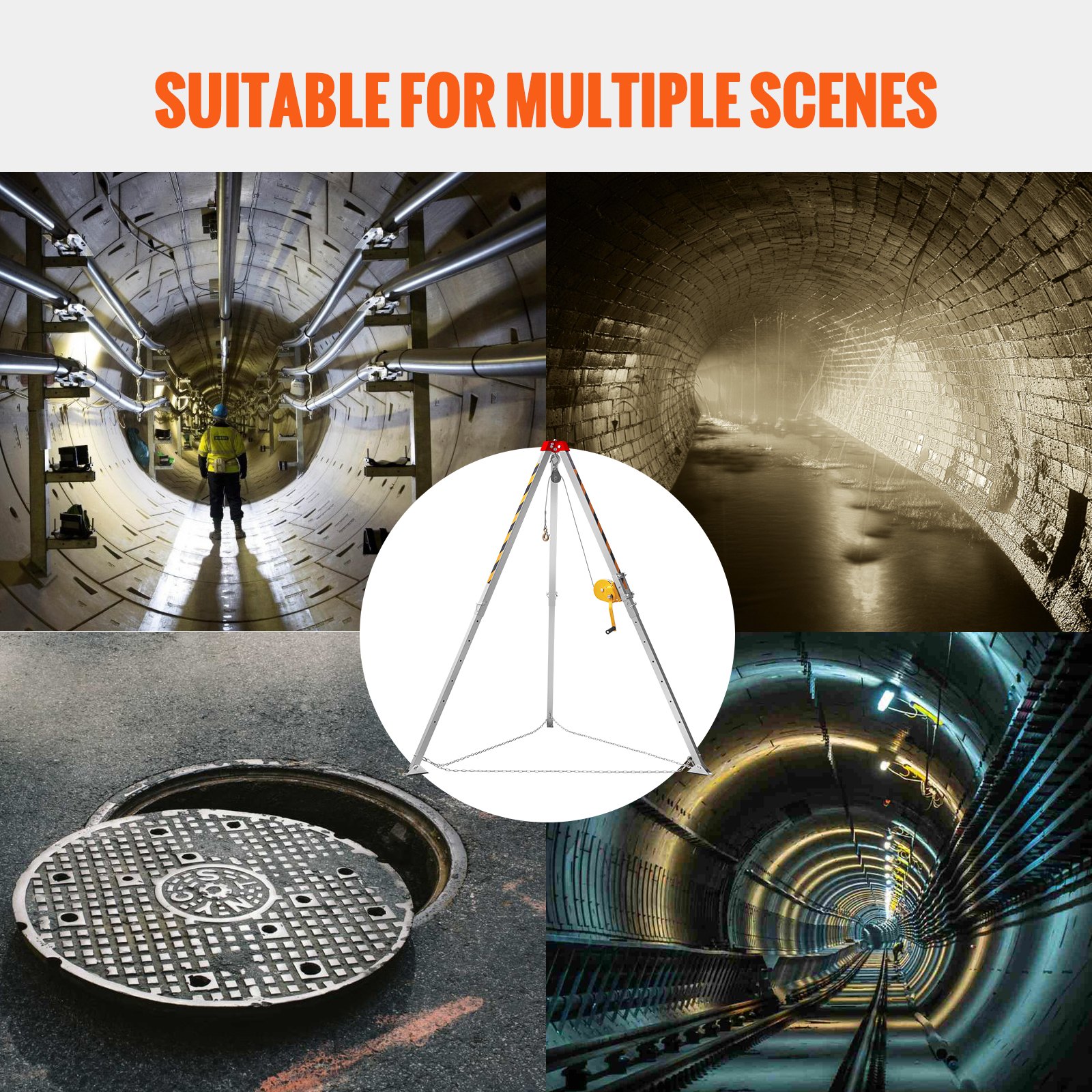
- HXRT-Rescue Tripod is suitable for sewer operations and limited spaces, including manholes, buckets, cabins, power or telecommunications, and other operations to prevent falls. The tripod is used with a hand winch to perform rescue operations quickly and safely. This device is for one person only.
- Before using this equipment for fall protection and rescue lifting, please read the instructions carefully and use them accurately.
- Please keep the instructions properly and read them whenever necessary.
Tripod assembly
(This section describes only the component names. The actual configuration depends on the specific model)
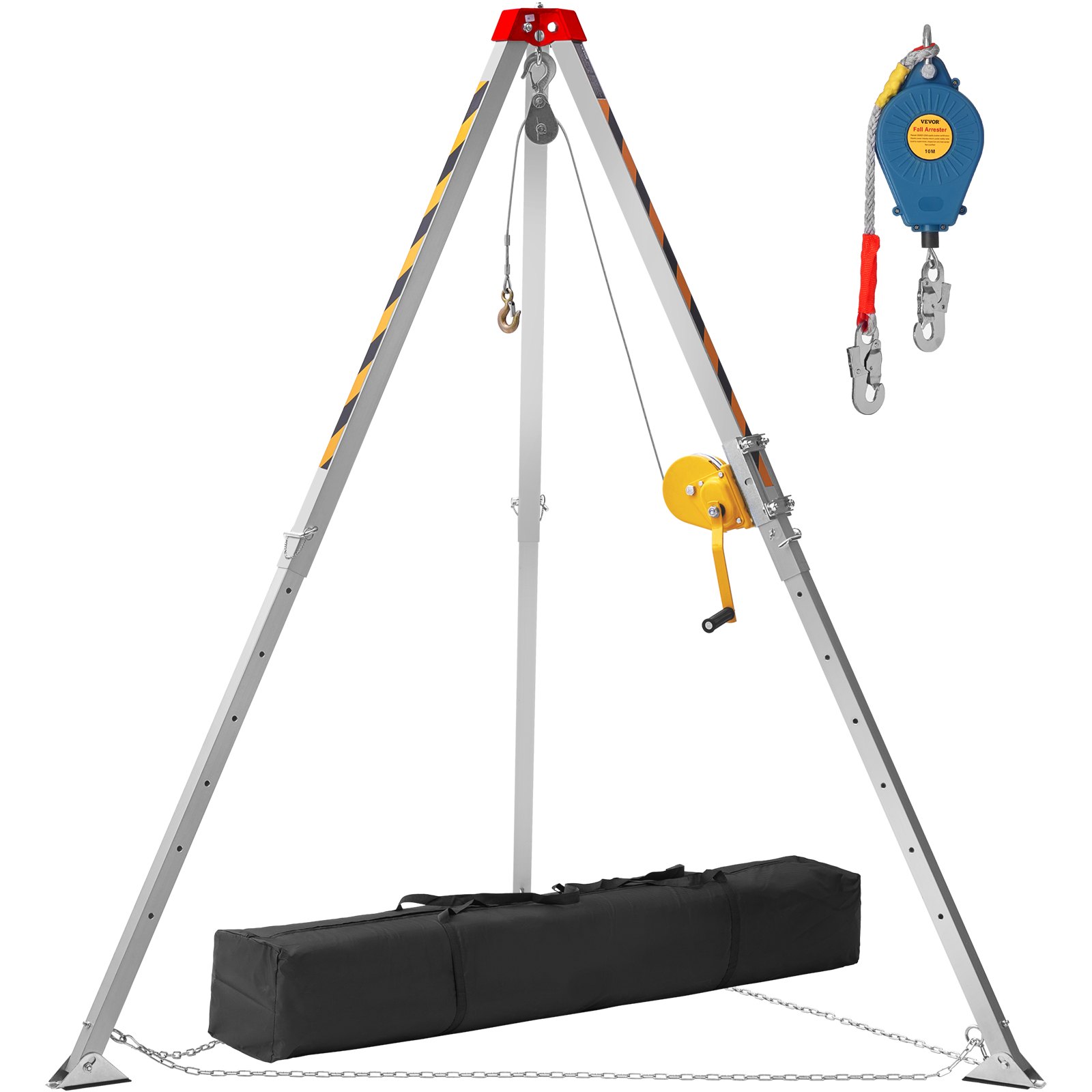
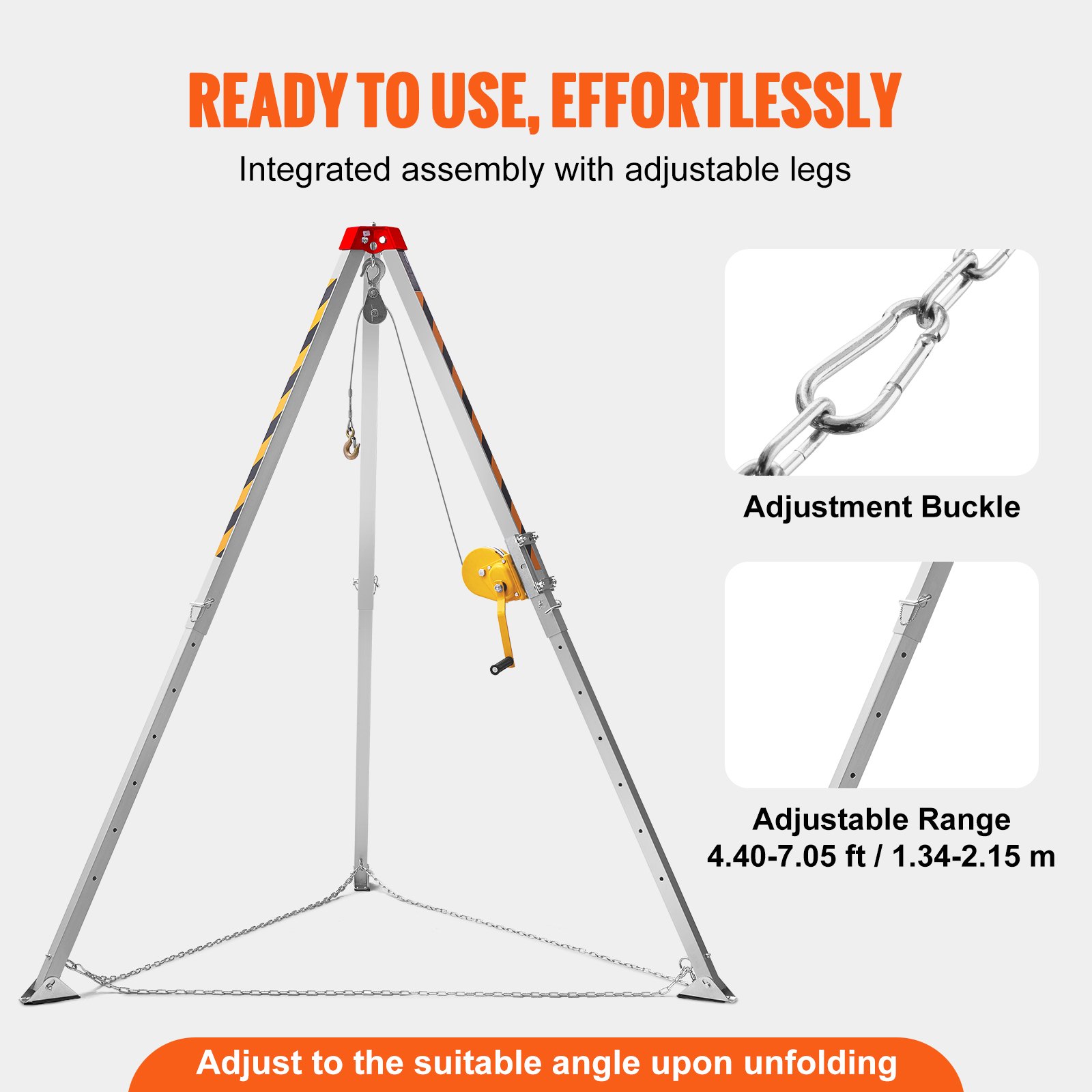
- Top: Red top hat
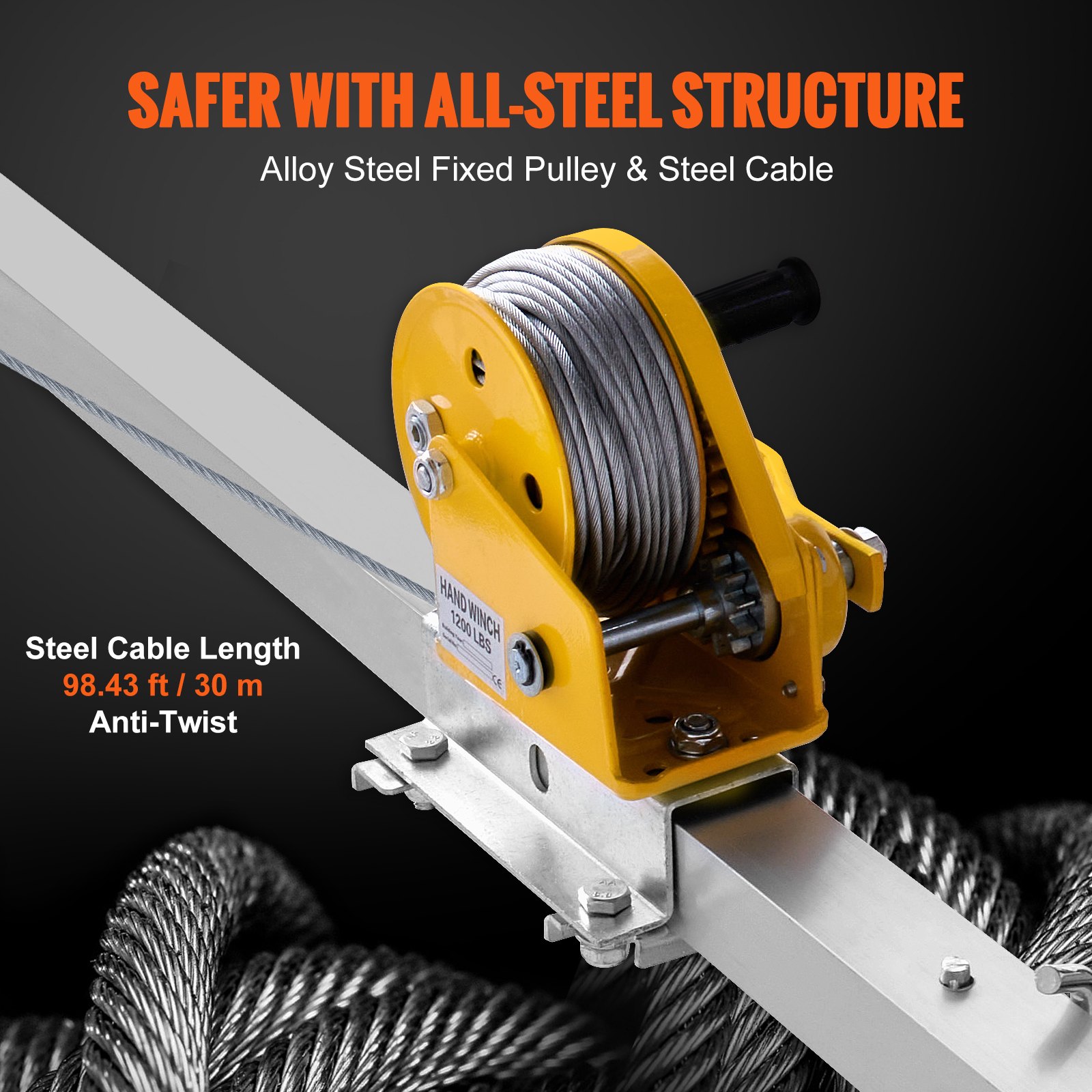
- Hand winch: 1200 lbs/1800 lbs/2600 lbs (Indicates the model only, not the load-bearing capacity of the tripod)
- Mounting bracket: The hand winch is mounted on the bracket
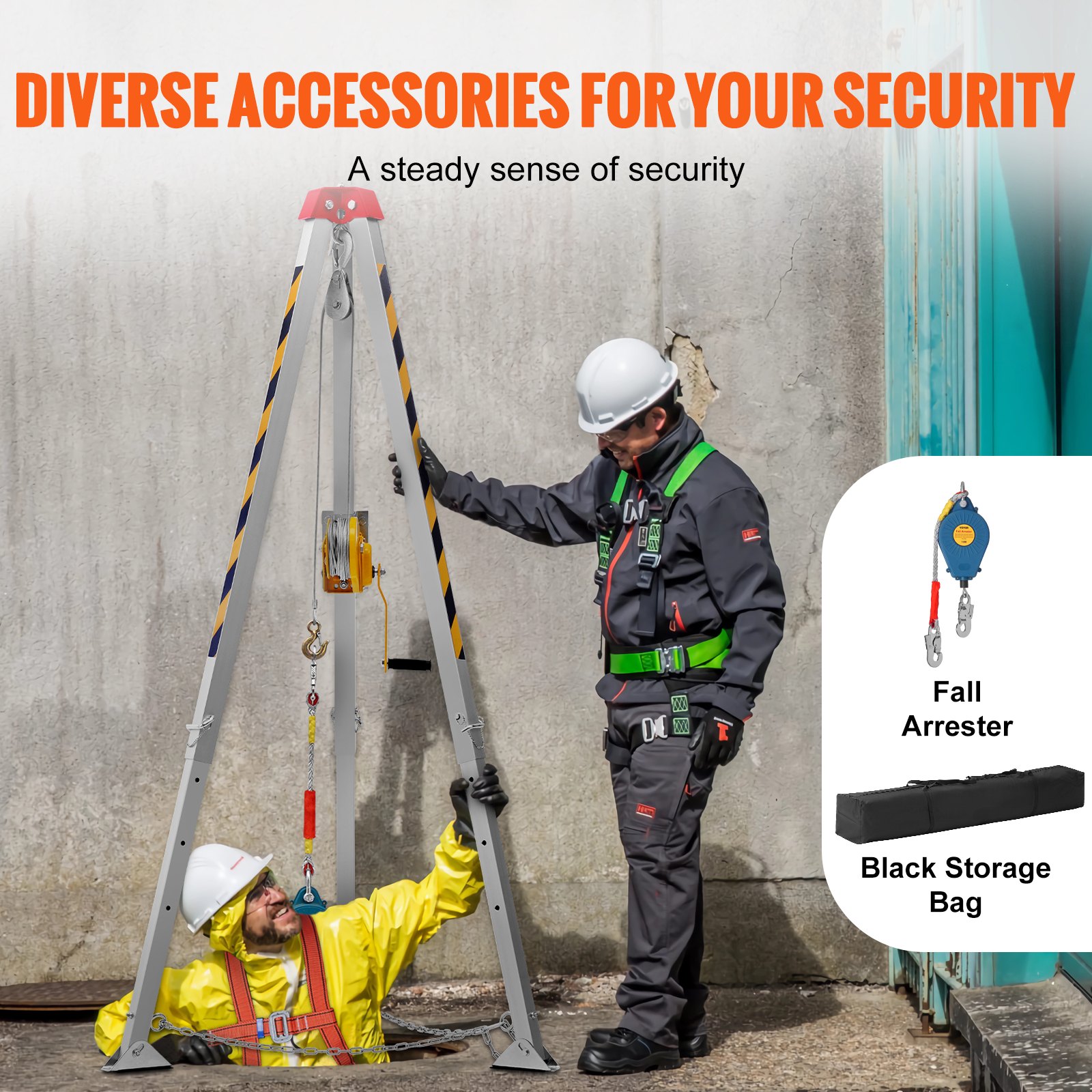
- Fall Arrester: 10m
- 48x48mm Leg: Outer tube: Size: 48x48mm
- Foot: Inner tube: Size: 42*42mm
- Anti-skid foot pad: anti-skid rubber bottom steel
- Chain: 4 mm*7.5 m
- Locating pins
- Seat belts
- Blower
- Gas detector
BEFORE USE
[A] Tripod
Check the;
- Consistency of product identification.
- Loose screws, bent or damaged parts. It shouldbecompleteandtight screws and rivets.
- Whether the order is bent, has exceptional goods, or has other damages.
- Legs and feet are prone to distortion, cracks, or other damage.
- Whether the chain is distorted, cracked or damaged.
[B] Hand Winch & Wire Rope & Support
Check;
- Consistency of product identification.
- Screws sent, bent or damaged parts. It should be complete and tight screws and rivets.
- Hook for any damage, corrosion or other damage.
- If the wire rope has cutting, kinking, corrosion, chemical contact areas, or severe wear areas.
- Whether the bracket and winch are twisted, cracked, or damaged.
MAINTENANCE
Operate strictly according to the following instructions, and do not cause adverse effects on the equipment.
Use professional detergents. If using mild, neutral pH soap or warm water, the equipment should be pre-cleaned to remove dirt (belt parts) or debris(wire rope parts).
Wipe disinfection equipment with 70% ethanol with a cloth or sponge.
OPERATION AND USE
Tripod Installation Procedures
- Remove the tripod from the bag

- Pull out the locating bolt and the inner pipe to a proper position.
- Repeat the above actions on the other two legs and pull out the inner tube to the appropriate position.
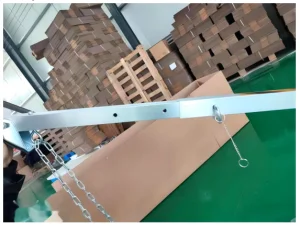
- Lift the tripod and move each foot outward to the maximum position.
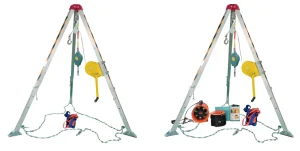
Winch Installation Procedures
- Unscrew the nut with an open-ended wrench.
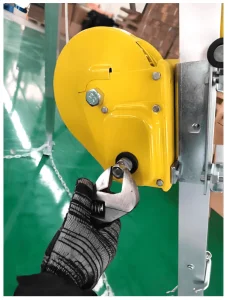
- Place the handle on top and tighten the nut.
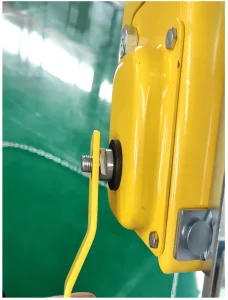
- Tighten the screws on the winch mounting plate with an open-ended wrench.
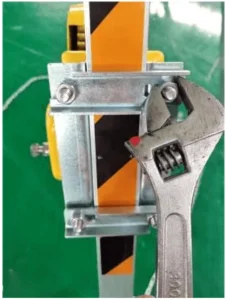
Confined Space Tripod Kit Operating Procedure
- Connect to full-body seat belts and fall arresters. Rotatinghooksonwinches or hanging point rotating ring equipment.
- Working environment
Regarding hazards that may affect the performance of equipment and the corresponding safety precautions must be observed, such as temperature and sharp edge influence, Chemical reagents, electrical conductivity, cutting, wear, ultraviolet degradation, and other climatic conditions.
- Rescue lifting
Class A rescue lifting device. Rescue lifting device can only be used in unimpeded lifting processes, and should not be used if obstacles are dangerous.
When using this equipment for rescue, the correct method is to connect the hitch fastening device to the D-ring at the front end of the seat belt.
- Hoist and fixed hanging point device. Warning: The hoist is used for lifting function only for rescue purposes, not for lifting loads.
Warning!
Before use
- It must be used by people who can use it correctly, and the user must be in good health before entering this operation.
- Do not place the tripod in chemical gas environment for a long time, which will cause corrosion of metal parts.
- The tripod is only used by one person and must not be overloaded.
- Equipment combinations whose safety performance is affected by other equipment or conflicts with other safety equipment are not allowed.
In the following cases, the equipment will be revoked immediately
1) There are doubts about the safe use conditions.
2) The function of safe use is in doubt.
3) It has been used to fall and can no longer be used until qualified personnel confirm.
- Before each use, it is necessary to ensure the free space required by the user under the workplace, so that in case of falling, it will not collide with the ground or other obstacles in the falling path.
- There should be direct or indirect visual contact or other means of communication with rescuers at all times during the rescue process.
- During installation; If the hanging point is deformed or damaged, please stop using it.
- When working on uneven ground, the tripod should be tied with chains to balance the force opposite to the front facing the tripod.
After use
- Regular inspection is required, and product safety depends on continuous maintenance and maintenance of equipment.
- When the equipment becomes wet, whether in use or clean, it should be dried naturally and avoid direct heating.
- The frequency of regular inspection should be at least once every March.
- Periodic inspection is only suitable for qualified personnel, and is carried out in strict accordance with the manufacturer’s periodic inspection procedures.
- This product is a complete system, and no parts can be replaced at will.
- Storage procedures: Including all necessary precautionary requirements, environmental or other factors may affect the condition of parts.
For example: humid environment, sharp angle, vibration, and ultraviolet decomposition.
 Made in China.
Recommended For Your Project
VEVOR Confined Space Tripod Kit, Confined Space Tripod 7' Legs Bracket and 98' Cable Manual



Reviews
There are no reviews yet.