
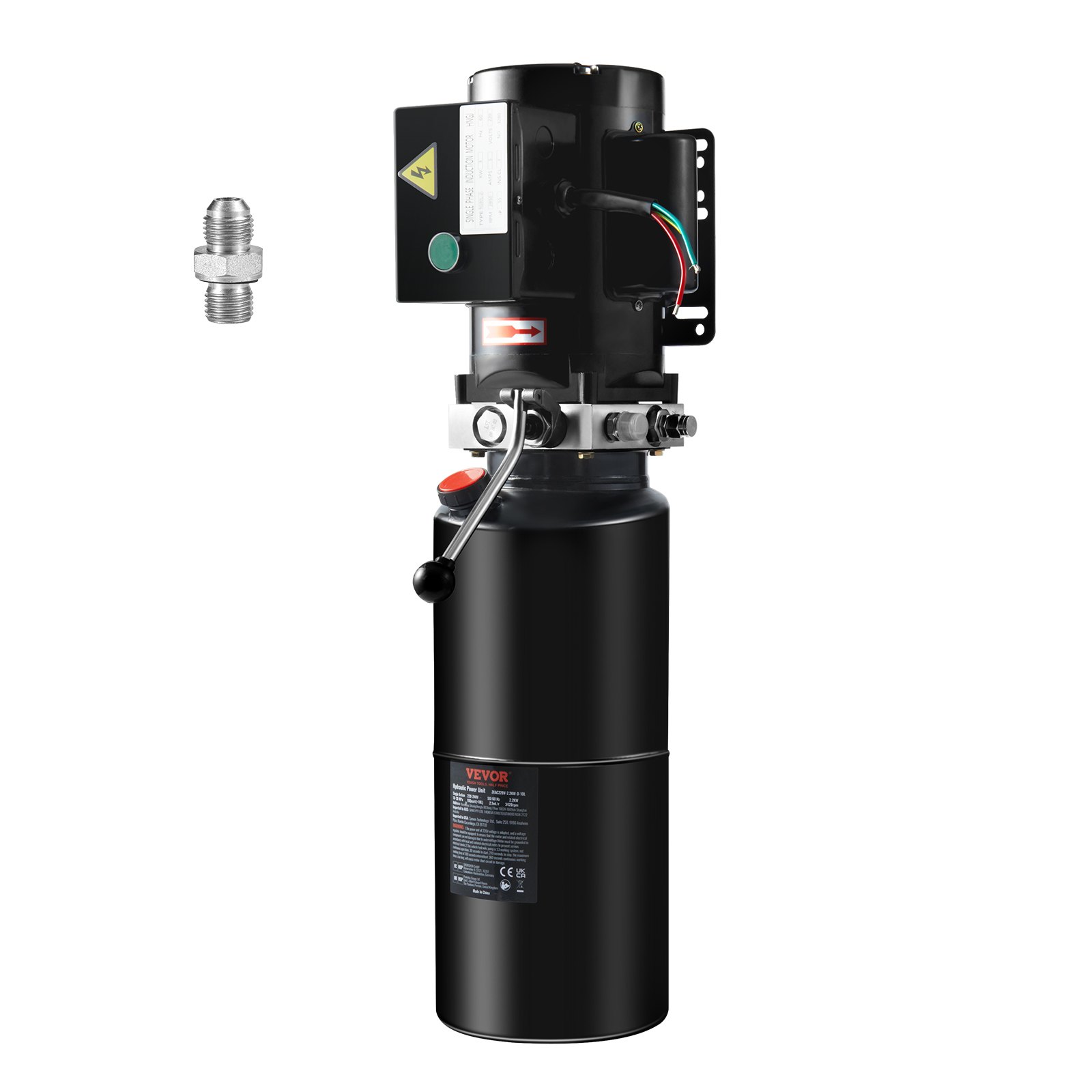
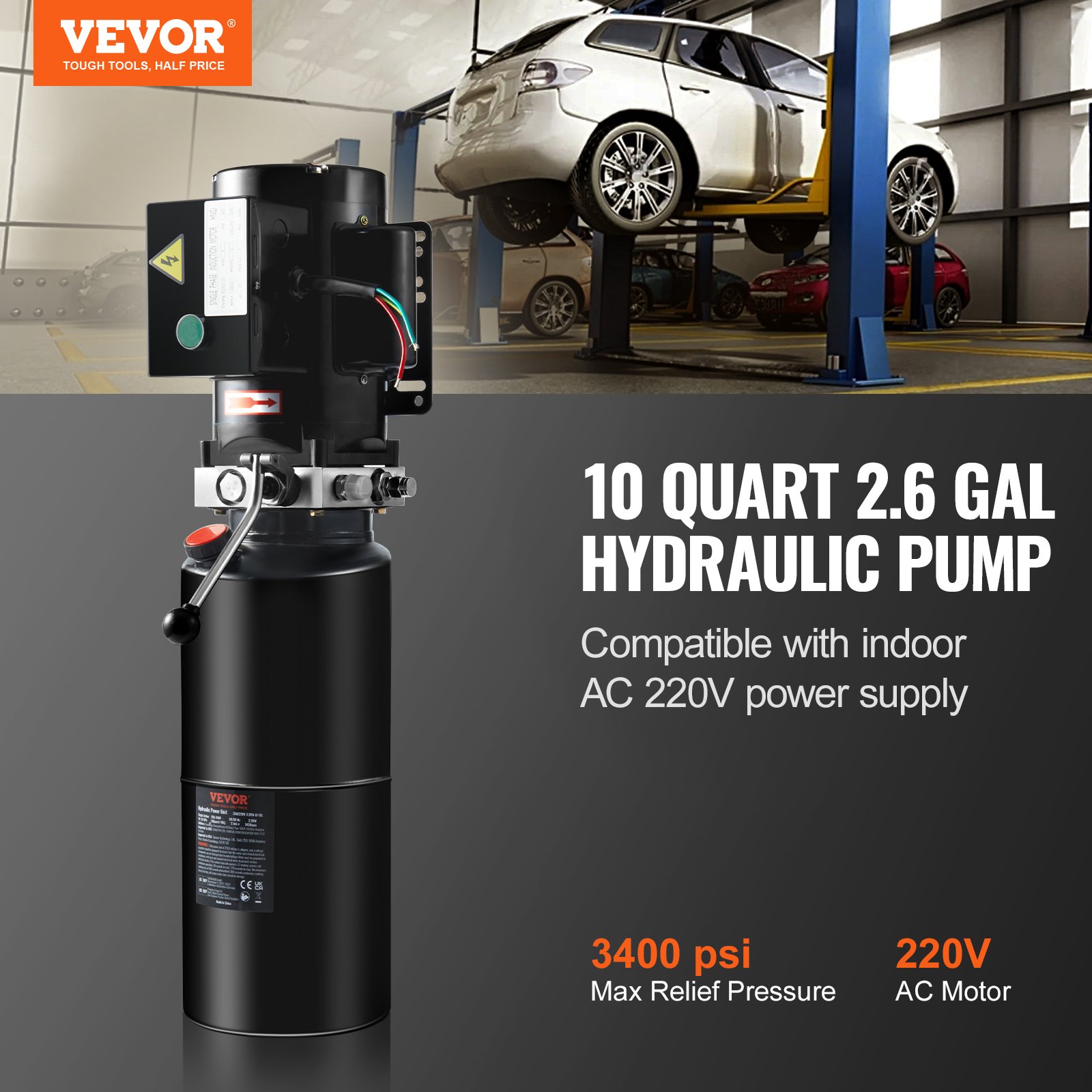

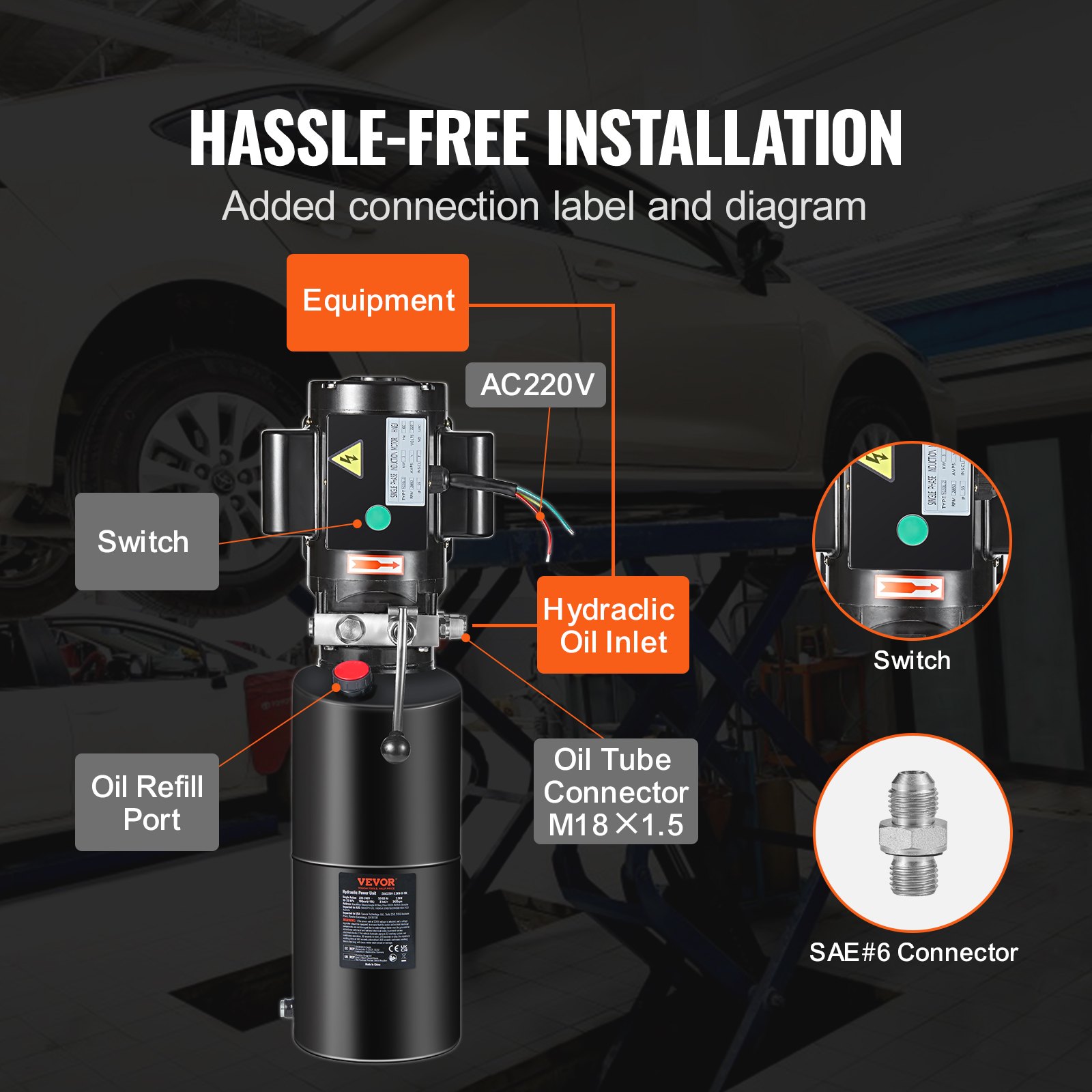
Unlock the full potential of your VEVOR Hydraulic Pump with our comprehensive product manual, available for immediate download. This manual is meticulously crafted to guide you through every aspect of your 10 Quart Hydraulic Power Unit, ensuring seamless setup, optimal performance, and efficient troubleshooting.
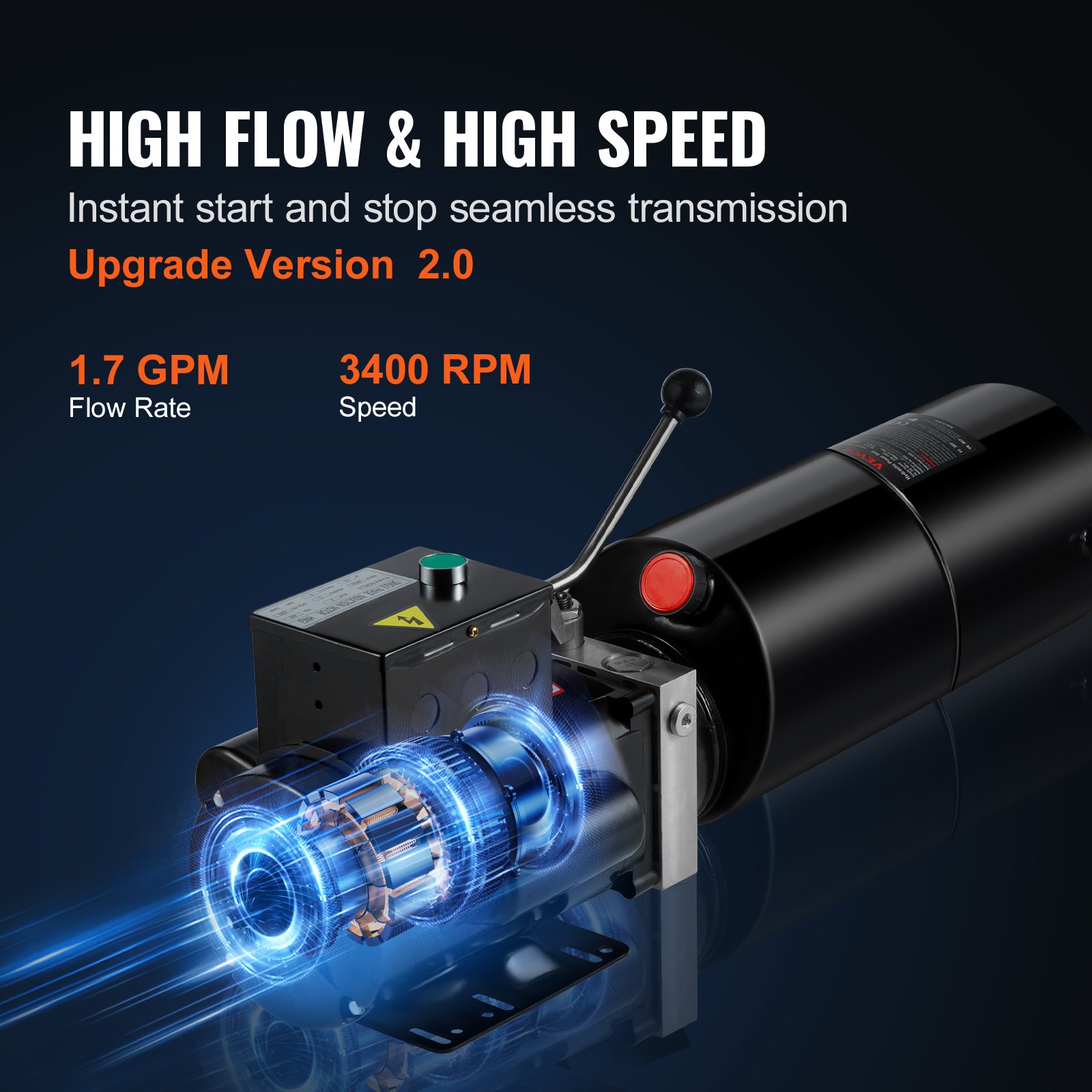
Designed for both novice and experienced users, the manual covers the Single Acting Dump Trailer Pump with a 1.7 GPM Flow Rate and 3200 PSI Max Relief Pressure, operating on AC 220V.
Whether you’re lifting a dump trailer or a car, our user-friendly guide provides step-by-step instructions, detailed diagrams, and valuable tips to enhance your hydraulic pump’s performance and longevity. Don’t waste time with trial and error; download our VEVOR Hydraulic Pump manual today and learn to maintain and operate your equipment like a pro.
VEVOR HYDRAULIC PUMP USER MANUAL
SERIES: ZXAC220V-2.2KW-D- XL
TIPS: X IS 10/12/14/15
INSTRUCTIONS
The hydraulic power unit is formed by the variation of the hydraulic station.
To make the hydraulic station small in size, light in weight, beautiful in appearance, and have unique functions, the gear oil pump, various control valves, motors, and fuel tanks are closely connected together, thus forming the current hydraulic power unit.
CAUTION
- This vehicle hydraulic pump is an S3 working system, not continuousoperation, 30 seconds to start, 270 seconds to stop, the maximum workingwith a time of 180 seconds, intermittent 360 seconds of continuous working time is too long, will cause motor short circuit or damage.
- When the hydraulic power unit produced by our company leaves the factory, the system pressure is set. If changes are needed, users can adjust the system pressure themselves through a pressure regulator knob according to the actual situation, but it cannot exceed the system’s nominal pressure.
- Check the connection of the motor and electromagnetic valve carefully. Making a virtual connection is strictly forbidden.
- During the first installation and debugging, pay attention to keeping the oil level inside the oil tank. After a working cycle, the oil tank should be filled, but it cannot be overfilled.
- The hydraulic oil must be filtered when the oil tank isfilled, withafiltering accuracy of no less than 25µm.
- The power unit cannot filter out impurities inside the hydraulic cylinder.
Therefore, the inside of the hydraulic cylinder must be clean to prevent the valve from failing, and the tubing must also be clean.
SAVE THESE INSTRUCTIONS
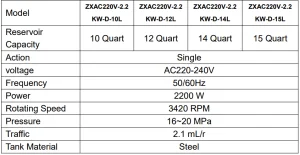
HYDRAULIC PUMP TECHNICAL PARAMETERS
PARTS ILLUSTRATION
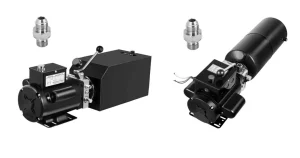
The Hydraulic Power Unit has been fully assembled. It has a hand-held remote control and 1 additional SAE#6 connector for replacement. The whole power unit is easy to wire and easy to operate
SCHEMATIC DIAGRAM
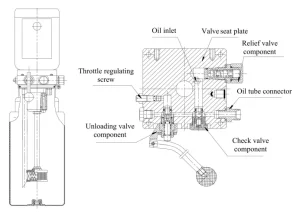
WORKING PRINCIPLE AND WIRING METHOD
- Please add hydraulic oil from the reservoir filler until it is 3 cm to 5 cm below the reservoir’s upper surface.
- Rise of the lifter:
After the motor starts, the gear oil pump ② starts to work, and the hydraulic oil passes the oil filter ① to the check valve ⑤ through the gear oil pump ② into the oil cylinder ⑨ to raise the lifter.
After the motor stops, gear oil pump ② stops working, and the lifter stops at the raised height. In this case, check valve ⑤ and manual unloading valve ⑦ are used to maintain its pressure. - Drop of the lifter:
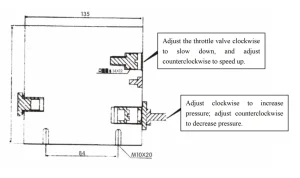
To drop the lifter, press down the manual unloadingvalve⑦ and release the handle to stop dropping. The dropping speed can be realized by adjusting the throttle valve ⑧. When rotating inwards, it slows down; when rotating outwards, it speeds up. - System pressure adjustment of the power unit:
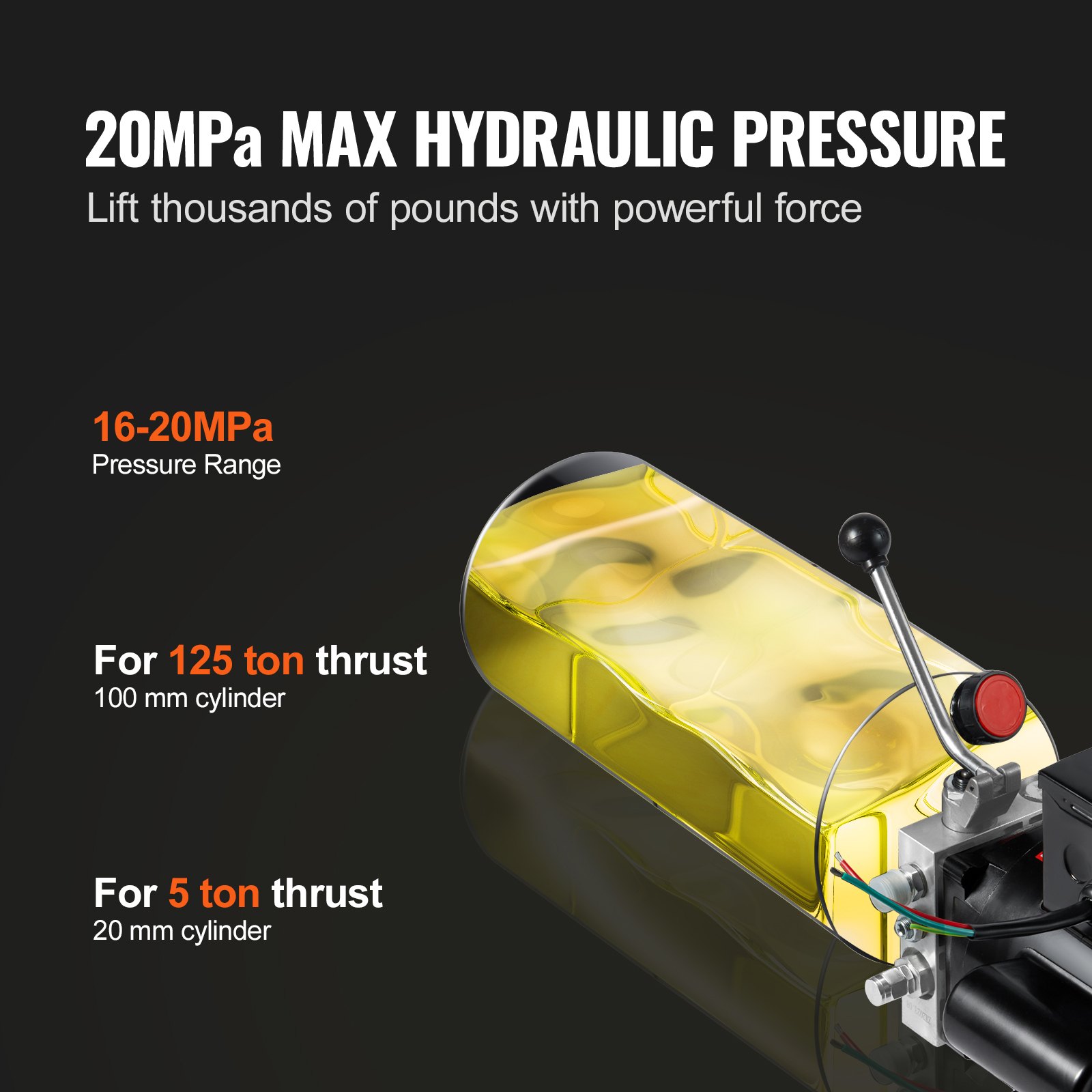
Generally, when the power unit leaves the factory, it has been adjusted to the normal using pressure by the manufacturer (18-20MPa). If the user needs to adjust the pressure, he or she can do so through the relief valve⑥. The relief valve ⑥ is not only used to adjust the pressure in the system but also as a safety pressure limiting element. So, users should try not to adjust the relief valve during use. - To protect the working life of the motor and gear oil pump, reduce the noise during starting, and make the power unit start under load, the cushion valve ④ is specially configured in the system.
- A power unit of 220V voltage is adopted, and a voltage regulator should be equipped to ensure that the motor and related electrical components are not damaged by undervoltage.
- The hydraulic oil should be changed 3 months after the system’s first operation. After that, it should be changed every 12 months. Please use the ISO46# hydraulic oil.
COMMON FAILURES AND TROUBLESHOOTING
1. Do not rise (advance) or rise (advance) unstable.
- Too low oil level in the oil tank; add oil to the specified level.
- The hydraulic power unit should use anti-wear hydraulic oil with a kinematic viscosity of 22-46mm2 /s (50°C). ISO VG46 is recommended when the oil temperature is below 50°C, while ISO VG68 is recommended when it is above 50°C.
The added oil should be filtered by a filter with a filtration accuracy of 30 μm. The oil volume should be 80% of the adequate capacity of the oil tank.
The oil temperature is usually between -10~80°C, and low-temperature hydraulic oil should be used for extremely cold areas, such as ISO VG32. These measures can effectively prolong the service life of the hydraulic system and components, and improve the stability and reliability of the hydraulic power unit. - Blocked oil filter screen, wash or replace the filter screen.
- If the oil suction pipe is unsealed or leaking, check the leakage or unsealed place and repair or replace the pipe.
- Unclose the electromagnetic valve or hand valve, wash the electromagnetic valve and hand valve, or replace the oil.
2. Do not drop or drop unstable.
- Blocked electromagnetic valve or hand valve filter screen, clean the filter screen and electromagnetic valve.
- The throttle valve is blocked; adjust the throttle valve.
3. Do not pressurize
- Unsealed check valve, wash the check valve, or replace the oil seal and oil.
SIMPLE COMMISSIONING DIAGRAM
HYDRAULIC PUMP MAINTENANCE
- Actuators and pipelines should be kept clean to prevent introducing foreign material.
- The reservoir should be adequately filled with oil. Proper refilling is needed after a specific working cycles. If the oil pump sucks air, it may damage the oil pump and the enclosure.
- The hydraulic oil should be replaced after 100 hours since the initial filling. Subsequently, it should be replaced once per year or after about 1500 working hours.
- The viscosity of the hydraulic oil should be 22-46mm2/s. 5. High-viscosity hydraulic oil should be used in high-temperature working environments, while low-viscosity hydraulic oil should be used in low-temperature environments.
Recommended For Your Project
VEVOR Hydraulic Pump, 10 Quart Hydraulic Power Unit Manual

Reviews
There are no reviews yet.