
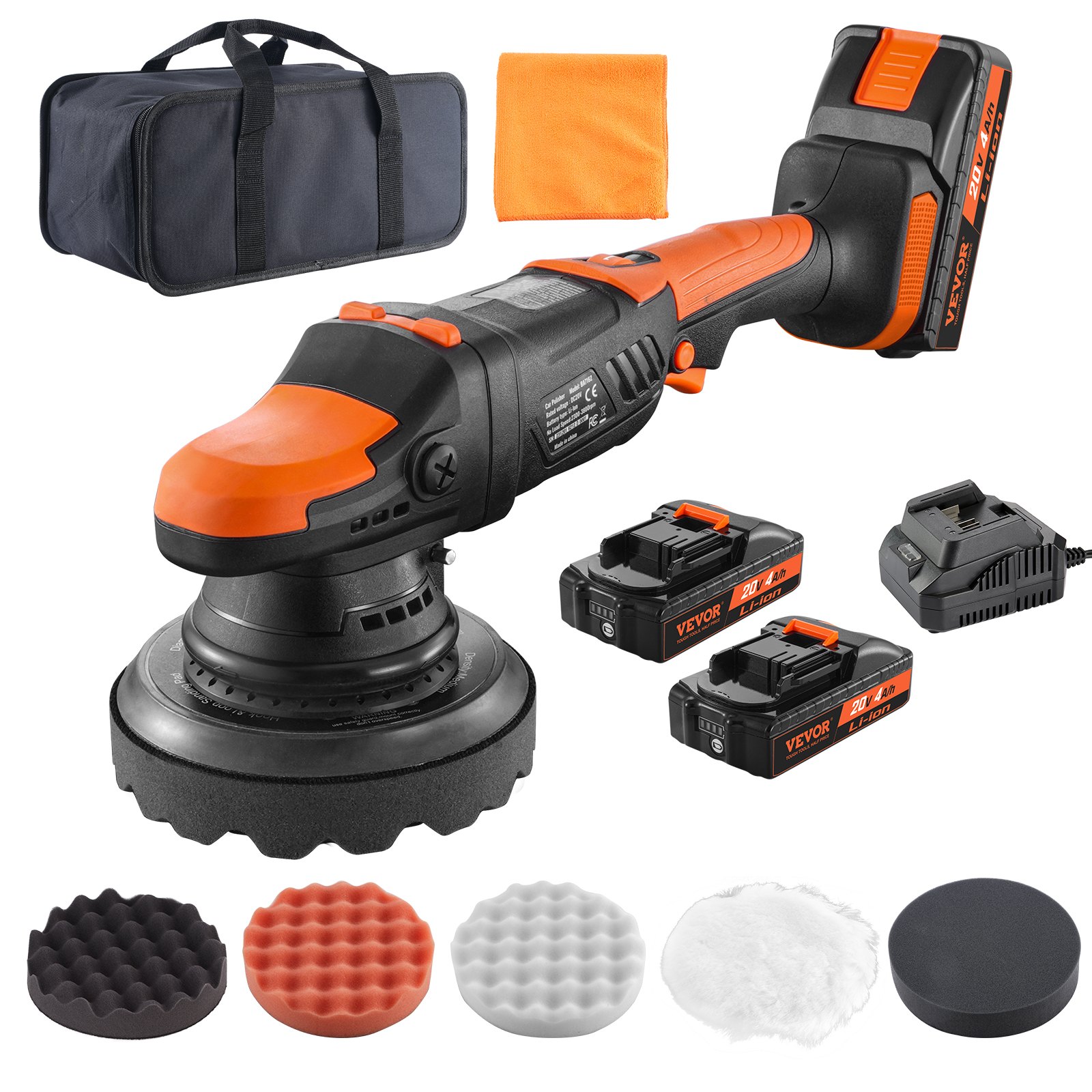
Looking to optimize the performance of your VEVOR 20V Cordless Buffer Polisher 6″ Brushless Polisher with 2PCS 4.0Ah Battery? Download the comprehensive product manual today and unlock detailed guidance for setup, maintenance, and troubleshooting.
Designed to enhance your user experience, this manual provides step-by-step instructions, safety tips, and pro-level insights to achieve flawless polishing results.
Whether you’re a professional detailer or a DIY enthusiast, this user-friendly manual is your go-to resource for maximizing the potential of your cordless buffer polisher. Everything you need from battery care to brushless motor optimization is just a click away. Download now and polish smarter with VEVOR!
VEVOR Cordless Buffer Polisher User Manual
Model No: R7171
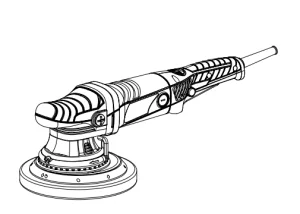
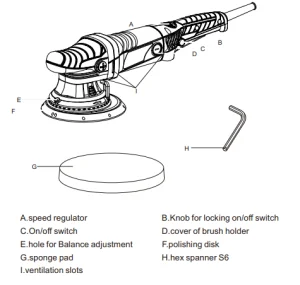
VEVOR Cordless Buffer Polisher Parts
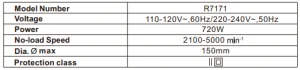
Cordless Buffer Polisher Technical Specifications
Safety
General Safety Instructions
WARNING! Read all safety warnings and all instructions. Failure to follow the warnings and instructions may result in electric shock, fire, and/or serious injury.
Save all warnings and instructions for future reference. The term “power tool” in the warnings refers to your mains-operated (corded) or battery-operated cordless power tool.
Work Area Safety
- Keep the work area clean and well-lit. Cluttered or dark areas invite accidents.
- Do not operate power tools in explosive atmospheres, such as those containing flammable liquids, gases, or dust. Power tools create sparks, which may ignite the dust or fumes.
- Keep children and bystanders away while operating a power tool. Distractions can cause you to lose control.
ELECTRICAL SAFETY
- Power tool plugs must match the outlet. Never modify the plug in any way. Do not use any adapter plugs with earthed (grounded) power tools. Unmodified plugs and matching outlets will reduce risk of electric shock.
- Avoid body contact with earthed or grounded surfaces such as pipes, radiators, ranges, and refrigerators. If your body is earthed or grounded, you are at an increased risk of electric shock.
- Do not expose power tools to rain or wet conditions. Water entering a power tool will increase the risk of electric shock.
- Do not abuse the cord. Never use the cord for carrying, pulling or unplugging the power tool. Keep cord away from heat, oil, sharp edges or moving parts. Damaged or entangled cords increase the risk of electric shock.
- When operating the cordless buffer polisher outdoors, use an extension cord suitable for outdoor use. A cord suitable for outdoor use reduces the risk of electric shock.
- If operating a power tool in a damp location is unavoidable, use an earth leakage circuit breaker. This reduces the risk of electric shock.
PERSONAL SAFETY
- Stay alert, watch your actions, and use common sense when operating a power tool. Do not use a power tool while you are tired or under the influence of drugs, alcohol, or medication.
A moment of inattention while operating power tools may result in serious personal injury - Use personal protective equipment. Always wear eye protection. Protective equipment, such as a dust mask, non-skid safety shoes, a hard hat, or hearing protection, used for appropriate conditions, will reduce personal injuries.
- Prevent unintentional starting. Ensure the switch is off before connecting to the power source and/or battery pack. Picking up or carrying the tool, carrying power tools with your finger, or energising power tools with the switch on invite accidents.
- Remove any adjusting key or wrench before turning the power tool on. A wrench or a key left attached to a rotating part of the power tool may result in personal injury.
- Do not overreach. Keep proper footing and balance at all times. This enables better control of the power tool in unexpected situations.
- Dress properly. Do not wear loose clothing or jewelry. Keep your hair, clothing, and gloves away from moving parts. Loose clothes, jewelry, or long hair can be caught in moving parts.
- If devices are provided for connecting dust extraction and collection facilities, ensure these are connected and properly used. Dust collection can reduce dust-related hazards.
Power Tool Use and Care
- Do not force the power tool. Use the correct power tool for your application. The correct power tool will do the job better and safer at the rate for which it was designed.
- Do not use the power tool if the switch does not turn it on and off. Any power tool that cannot be controlled with the switch is dangerous and must be repaired.
- Disconnect the plug from the power source and/or the battery pack from the power tool before making any adjustments, changing accessories, or storing power tools.
Such preventive safety measures reduce the risk of starting the power tool. - Store idle power tools out of the reach of children, and do not allow persons unfamiliar with the power tool or these instructions to operate them.
Power tools are dangerous in the hands of untrained users. - Maintain power tools. Check for misalignment or binding of moving parts, breakage of parts, and any other condition that may affect the tool’s operation. If damaged, have the tool repaired before use. Poorly maintained power tools cause many accidents.
- Keep cutting tools sharp and clean. Properly maintained cutting tools with sharp edges are less likely to bind and are easier to control.
- Use the power tool, accessories, tool bits, etc., per these instructions, considering the working conditions and the work to be performed. Using the power tool for operations different from those intended could result in a hazardous situation.
Service
Have a qualified repair person service your power tool using only identical replacement parts. This will ensure the tool’s safety.
Safety Instructions for Cordless Buffer Polishers
Safety Instructions for All Operations
- This power tool is intended to function as a polisher. Read all safety warnings, instructions, illustrations, and specifications provided with it. Failure to follow all instructions listed below may result in electric shock, fire, and/or serious injury.
- This power tool is not recommended for grinding, sanding, wire brushing, or cutting off operations. Operations for which the power tool was not designed may create a hazard and cause personal injury.
- Please do not allow any loose portion of the polishing bonnet or its attachment strings to spin freely. Tuck away or trim any loose attachment strings. Loose and spinning attachment strings can entangle your fingers or snag on the workpiece
- Do not use accessories not specifically designed and recommended by the tool manufacturer. Just because an accessory can be attached to your power tool does not assure safe operation.
- The accessory’s rated speed must equal the maximum speed marked on the power tool. Accessories running faster than their rated speed can fly apart.
- Your accessory’s outside diameter and thickness must be within the power tool’s capacity rating. Incorrectly sized accessories cannot be adequately guarded or controlled.
- Wheels, flanges, backing pads, or any other accessory’s arbour size must properly fit the power tool’s spindle. Accessories with arbour holes that do not match the mounting hardware of the power tool will run out of balance, vibrate excessively, and may cause loss of control.
- Do not use a damaged accessory. Before each use, inspect the accessory, such as abrasive wheels for chips and cracks, backing pads for cracks, tears, or excess wear, and wire brushes for loose or cracked wires. If the power tool or accessory is dropped, inspect for damage or install an undamaged accessory. After inspecting and installing an accessory, position yourself and bystanders away from the plane of the rotating accessory and run the power tool at maximum no-load speed for one minute.
Damaged accessories will usually break apart during this test time.
- Wear personal protective equipment. Use a face shield, safety goggles, or safety glasses depending on the application. Wear a dust mask, hearing protectors, gloves, and a shop apron capable of stopping small abrasive or workpiece fragments.
The eye protection must stop flying debris generated by various operations. The dust mask or respirator must be capable of filtering particles that your operation generates. Prolonged exposure to high-intensity noise may cause hearing loss. - Keep bystanders a safe distance away from the work area. Anyone entering the work area must wear personal protective equipment. Fragments of the workpiece or a broken accessory may fly away and cause injury beyond the immediate vicinity of operation.
- Position the cord clear of the spinning accessory. If you lose control, the cord may be cut or snagged, and your hand or arm may be pulled into the spinning accessory.
- Never lay the power tool down until the accessory has completely stopped. The spinning accessory may grab the surface and pull the power tool out of your control.
- Please do not run the power tool while carrying it at your side. Accidental contact with the spinning accessory could snag your clothing and pull the accessory into your body.
- Clean the power tool’s air vents regularly. The motor’s fan draws dust inside the housing, and excessive accumulation of powdered metal may cause electrical hazards.
- Do not operate the power tool near flammable materials. Sparks could ignite these materials.
- Do not use accessories that require liquid coolants. Using water or other liquid coolants may result in electrocution or shock.
2) Kickback and Related Warnings
Kickback is a sudden reaction to a pinched or snagged rotating wheel, backing pad, brush, or other accessory. Pinching or snagging causes rapid stalling of the rotating accessory, which in turn causes the uncontrolled power tool to be forced in the direction opposite to the accessory’s rotation at the binding point.
For example, if the workpiece snagged or pinched an abrasive wheel, the edge of the wheel entering the pinch point can dig into the material’s surface, causing the wheel to climb out or kick out.
The wheel may either jump toward or away from the operator, depending on the direction of the wheel’s
movement at the point of pinching. Abrasive wheels may also break under these conditions.
A kickback results from power tool misuse and/or incorrect operating procedures or conditions and can be avoided by taking proper precautions as given below.
- Maintain a firm grip on the power tool and position your body and arm to resist kickback forces. Always use the auxiliary handle, if provided, for maximum control over kickback or torque reaction during start-up. If proper precautions are taken, the operator can control torque reactions or kickback forces.
- Never place your hand near the rotating accessory. The accessory may kick back over your hand.
- Do not position your body in the area where the power tool will move if kickback occurs. Kickback will propel the tool in the direction opposite to the wheel’s movement at the point of snagging.
- Use special care when working corners, sharp edges etc. Avoid bouncing and snagging the accessory. Corners, sharp edges or bouncing have a tendency to snag the rotating accessory and cause loss of control or kickback.
- Do not attach a saw chain woodcarving blade or toothed saw blade. Such blades create frequent kickback and loss of control.
General
- Only use this tool for dry polishing
- Only use the flanges that are supplied with this tool
- This tool should not be used by people under the age of 16 years
- Always disconnect the plug from the power source before making any adjustments or changing any accessories
- Do not work with materials containing asbestos (asbestos is considered carcinogenic)
Accessories
- Use only accessories with an allowable speed matching at least the highest no-load speed of the tool
- Never use accessories with a “blind” threaded hole smaller than M14 x 21 mm
- Do not use damaged, deformed, or vibrating accessories
Outdoor Use
• When used outdoors, connect the tool via a fault current (FI) circuit breaker with a triggering current of 30 mA maximum, and only use an extension cord that is intended for outdoor use and equipped with a splashproof coupling socket.
Before Use
- Always check that the supply voltage is the same as the voltage indicated on the nameplate of the tool (tools with a rating of 230V or 240V can also be connected to a 220V supply)
- Dust from material such as paint containing lead, some wood species, minerals, and metal may be harmful (contact with or inhalation of the dust may cause allergic reactions and/or respiratory diseases to the operator or bystanders); wear a dust mask and work with a dust extraction device when connectable.
- Certain kinds of dust are classified as carcinogenic (such as oak and beech dust) especially in conjunction with additives for wood conditioning; wear a dust mask and work with a dust extraction device when connectable
- Follow the dust-related national requirements for the materials you want to work with
- Secure the workpiece (a workpiece clamped with clamping devices or in a vice is held more securely than by hand)
- Do not clamp the tool in a vice
- Use completely unrolled and safe extension cords with a capacity of 10 Amps
After Use
• Before you put down the tool, switch off the motor and ensure that all moving parts have come to a complete standstill
• After switching off the tool, never stop the rotation of the accessory by a lateral force applied against it
Use
Mounting of accessories
- Disconnect the plug
- Press sponge pad G onto VELCRO polishing disk F
- For removing accessories, handle vice versa
Before using the cordless buffer polisher
- Ensure that the accessory is correctly mounted and firmly tightened
- Check if the accessory runs freely by turning it by hand
- Test-run tool for at least 30 seconds at the highest no-load speed in a safe position
- Stop immediately in case of considerable vibration or other defects, and check the tool to determine the cause
On/off
- Switch on/off the tool by pulling/releasing trigger C
Electronic soft-start
- Ensures reaching the maximum speed smoothly without a sudden impact when tool is switched on
Switch locking for continuous use
- pull trigger C
- Press knob B with your thumb
- Unlock the switch by pulling again trigger C and then releasing it
Speed control
- With wheel A, the maximum speed can be adjusted from low to high (MIN-6)
- Start with wheel A in position MIN (lower speed)
- If needed, select a higher speed while the tool runs
- The optimal working speed depends on the material and can be determined with practical trials
Operating the Cordless Buffer Polisher
- First, switch on the tool. Then, place the tool fully on the surface to be polished and move it evenly by sections.
- Before switching off the tool, you should lift it from the workpiece
- The accessory continues to rotate for a short time after the tool has been switched off
Holding and guiding the tool
- While working, always hold the cordless buffer polisher at the soft grip area(s)
- Always hold the tool firmly with both hands so that you will have complete control of the tool at all times
- Provide for a secure stance
- Do not apply so much pressure on the tool that it comes to a standstill
- Keep the ventilation slots I uncovered
MAINTENANCE / SERVICE
- Protect the cordless buffer polisher from impact, shock, and grease
- Always keep the tool and cord clean (especially the ventilation slots I)
- Disconnect the plug before cleaning
- Do not attempt to clean ventilation slots by inserting pointed objects through openings.
ENVIRONMENT
- Do not dispose of electric tools, accessories, and packaging together with household waste material (only for EU countries)
- In observance of the European Directive on waste of electric and electronic equipment and its implementation in accordance with national law, electric tools that have reached the end of their life must be collected separately and returned to an environmentally compatible recycling facility

Reviews
There are no reviews yet.